

The Authority in Global Agricultural Chemistry & Bio-Resources
China Customs Launches New Agrochemical Export Module
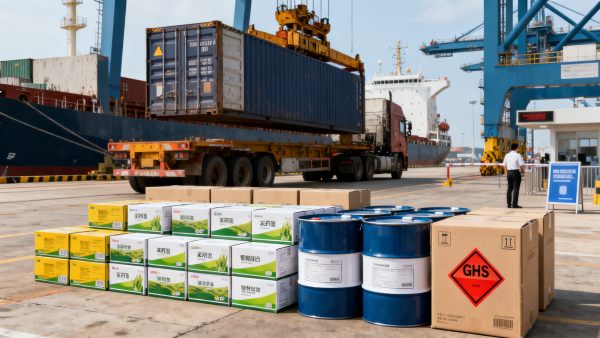
On June 15, 2026, China Customs began rolling out a new export inspection module for agrochemicals across 12 major ports, combining automated document and label checks with cross-market compliance alerts. For exporters, manufacturers, traders, and supply chain service providers, the development is worth close attention because it does not only shorten clearance time from 72 hours to 43 hours on average, but also signals a more system-driven approach to export compliance at the customs stage.
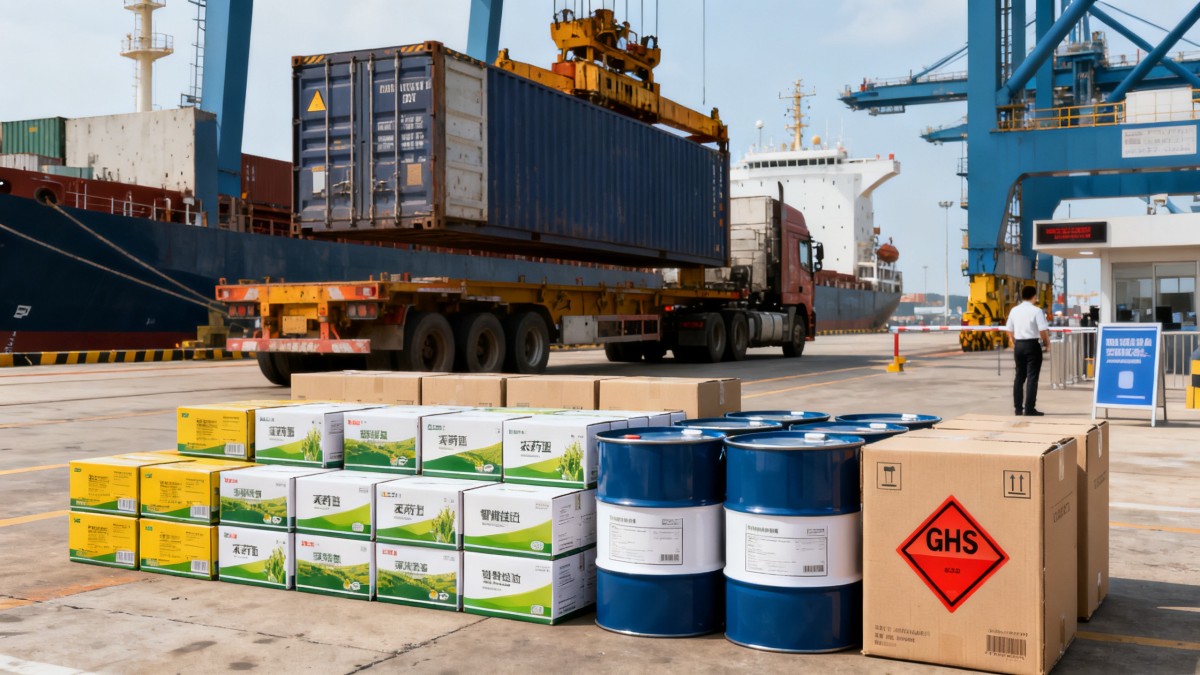
What the new customs module changes
According to the provided information, the General Administration of Customs launched the “Agrochemicals Smart Clearance 2.0” system at 12 major ports nationwide starting June 15, 2026. The module integrates three functions: AI verification of pesticide registration certificates, automatic comparison of residue limit requirements, and OCR recognition of GHS labels.
The same information states that the average export clearance time for agrochemicals has been reduced from 72 hours to 43 hours. It also notes that the share of shipments achieving immediate release upon declaration has reached 61% for the first time. In addition, the system is connected with the EU CLP and US EPA databases and can provide real-time compliance alerts.
Where the impact is likely to be felt first
Exporters may see time gains, but only if documents are ready
From an industry perspective, direct trading companies are likely to feel the most immediate impact in customs filing and release. A shorter average clearance window can improve shipment planning and customer communication, but the practical benefit will still depend on whether registration certificates, residue-related data, and label information can pass automated checks smoothly.
Manufacturers face more direct pressure on compliance data quality
For processing and manufacturing companies, the update may affect the handoff between production, regulatory documentation, and export execution. Because the system now includes AI certificate verification and GHS label OCR recognition, inconsistencies in source documents or label presentation may become more visible during the clearance process.
Logistics and customs service providers need to adjust operating rhythm
Supply chain service providers, including customs brokers and logistics coordinators, may be affected through changes in document preparation timing, exception handling, and release forecasting. Analysis shows that faster clearance can improve operational efficiency, but it may also raise expectations for earlier error detection and faster response when the system issues a compliance alert.
Overseas buyers may focus more on delivery reliability
For buyers and downstream counterparties, the main relevance is not the customs system itself but whether shorter clearance times translate into more predictable delivery schedules. What deserves closer attention is whether exporters can convert system efficiency into more stable fulfillment performance in real transactions.
What companies should watch now
Monitor how automated checks are applied in practice
Companies should pay close attention to how the new module operates at the transaction level, especially in cases involving certificate verification, residue limit comparison, and GHS label identification. The policy signal is clear, but actual business impact depends on how frequently alerts appear and how exceptions are handled in day-to-day clearance.
Review document consistency before filing
Given that the system uses AI and OCR functions, exporters and manufacturers should focus on the consistency of registration certificates, product-related compliance information, and label content before declaration. This is a practical issue rather than a general management topic, because automated review tends to make mismatches easier to detect at the filing stage.
Track market-facing compliance exposure
Because the system is connected with the EU CLP and US EPA databases, companies serving those destinations should watch for any compliance alerts that could affect shipment release or customer communication. Observably, this makes destination-market compliance information more relevant at the customs checkpoint, not only at the sales or regulatory planning stage.
Revisit delivery promises and contingency planning
With average clearance time falling from 72 to 43 hours, commercial teams may be tempted to reset lead-time expectations quickly. A more cautious approach is to align customer communication, shipping schedules, and contingency plans with actual operational results rather than with the headline improvement alone.
Why this looks like more than a one-off efficiency update
Analysis shows that this development can be read as both a short-term operational change and a longer-term signal. The short-term change is clear in the reported reduction in clearance time and the higher share of immediate release. The longer-term signal is the deeper integration of automated verification, label recognition, and overseas database matching into the customs process.
It is more appropriate to understand this as an industry dynamic that has already produced a measurable operational result, while still requiring continued observation on implementation quality. The reported gains are concrete, but the broader effect on different shipment types, product categories, and compliance workflows is not fully described in the input information.
How this update is best understood at this stage
At this stage, the most balanced reading is that China’s agrochemical export clearance process is becoming faster and more data-driven at key ports, with compliance screening playing a more visible role inside customs operations. For the industry, the main takeaway is not simply that shipments move faster, but that document quality, label accuracy, and destination-market compliance readiness may matter more in achieving that speed.
This means the update should be viewed neither as a routine technical adjustment nor as a fully settled end result. It is better understood as a meaningful operational shift with clear early outcomes and with further industry relevance depending on how it performs in ongoing use.
Basis of this article and points for follow-up
This article is based on the user-provided news title, event date, and event summary. The available facts are limited to the stated launch date of June 15, 2026, the deployment across 12 major Chinese ports, the named functions of the “Agrochemicals Smart Clearance 2.0” system, the reduction in average clearance time from 72 hours to 43 hours, the 61% immediate-release share, and the system’s linkage with the EU CLP and US EPA databases for real-time compliance alerts.
No specific official source link was provided in the input, so the exact official release and any later implementation updates still need to be verified on an ongoing basis. For this type of industry development, the follow-up direction typically includes official notices, company disclosures, industry association updates, authoritative media reporting, and relevant standards or regulatory documents where available.
Related Intelligence
- AgrochemicalsGrain Production: Key Practices for Improving Yield While Protecting Soil HealthGrain production strategies to improve yield, protect soil health, manage nutrients, reduce compaction, and build resilient fields for lasting results.
- AgrochemicalsHow Do New FDA Rules Affect Agri-Chemical Sourcing Strategies?How do new FDA rules impact agri chemical sourcing strategies? Explore practical supplier screening, traceability, contaminant control, and risk-based compliance steps.
- AgrochemicalsBrazil Eases Entry for Chinese Visitors Ahead of August Agrochemical ShowBrazil eases entry for Chinese visitors ahead of AgrochemShow, helping agrochemical businesses plan faster meetings, visits, and exhibition travel in Sao Paulo.
The Morning Broadsheet
Daily chemical briefings, market shifts, and peer-reviewed summaries delivered to your terminal.
