

The Authority in Global Agricultural Chemistry & Bio-Resources
China Customs Launches New Agrochemical Export Inspection Module
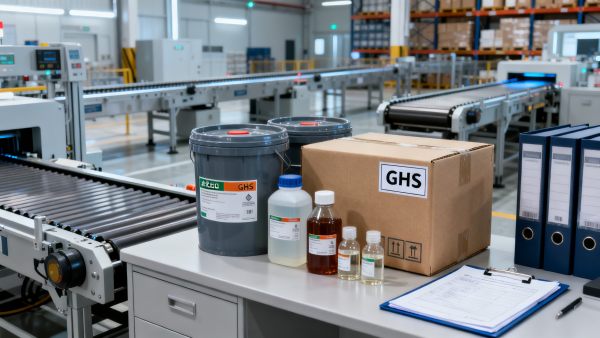
On June 16, 2026, China Customs put into operation a new smart inspection and supervision module for agrochemical exports, marking a concrete procedural change in how export declarations, inspections, and release are handled for active ingredients, formulations, and adjuvants. For exporters, overseas buyers, compliance teams, and supply-chain service providers, the update is worth close attention because it links customs clearance efficiency more directly to digital document accuracy, GHS label review, and residue limit checks within the export process.
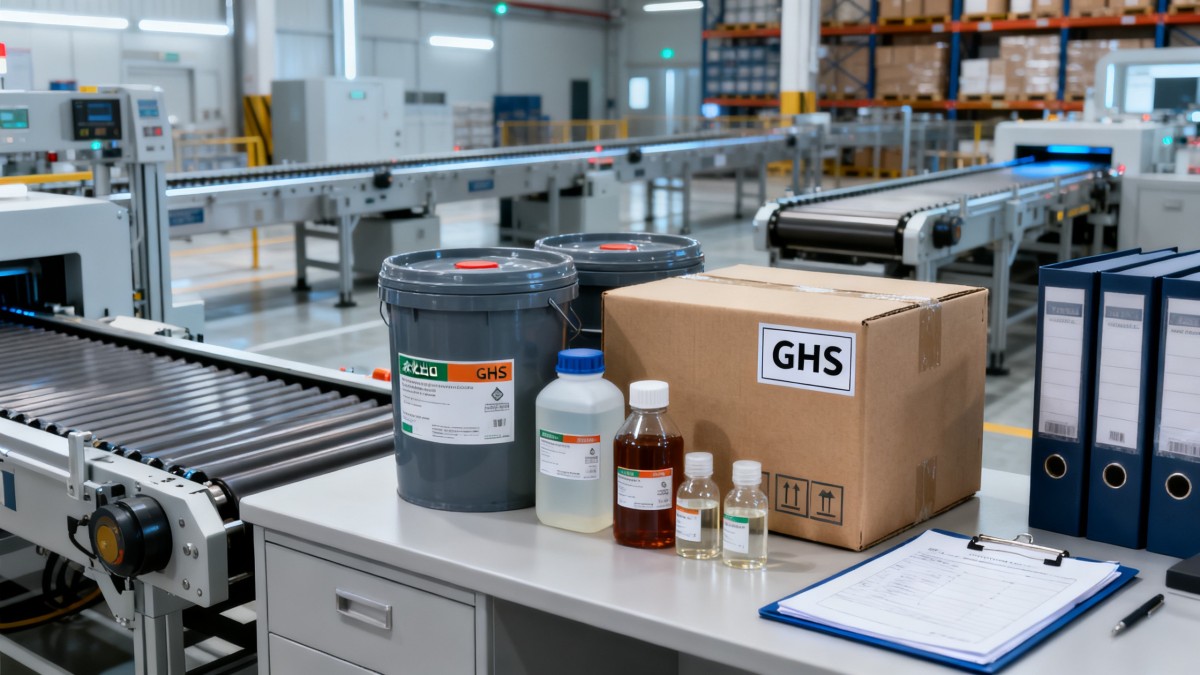
A digitalized inspection process is now in place
The confirmed change is that, starting on June 16, 2026, China Customs officially launched a new intelligent inspection regulatory module for agricultural chemical exports. The module covers the full product range of technical materials, formulations, and additives, and creates a digital closed loop across declaration, inspection, and release.
The same confirmed information shows that the module includes AI-based recognition of GHS labels and automatic comparison against residue limit requirements. Based on the provided summary, this has significantly shortened the inspection cycle, and the reported customs clearance time for agrochemicals has improved by 40%.
The provided information also indicates a practical trade effect for overseas importers: more predictable arrival timing, lower risk of rejection or return during customs clearance, and stronger supply-chain certainty.
Where the rule change may be felt first
Export execution becomes more document-sensitive
From an industry perspective, agrochemical exporters are likely to feel the impact most directly because the module connects inspection efficiency with digital processing across the full clearance chain. The practical effect may appear in declaration preparation, label consistency checks, shipment release timing, and the handling of supporting compliance materials.
What deserves closer attention is whether export teams have documentation, product descriptions, and GHS label content prepared in a format that can pass digital review more smoothly. Even though the summary confirms faster processing, companies still need to watch how operational practice develops in day-to-day filings.
Overseas buyers gain planning value, not just speed
For overseas importers and procurement teams, the most relevant change is not only shorter inspection time but also greater predictability in delivery scheduling. Analysis shows that when clearance timing becomes more stable, buyers can plan inventory, receiving windows, and downstream customer commitments with less uncertainty.
At the same time, import-side teams should pay attention to whether their purchase documents, product specifications, and labeling expectations remain aligned with the export-side compliance materials used in customs processing. A faster system can still expose mismatches more quickly if records are inconsistent.
Supply-chain and service providers may need tighter coordination
Customs brokers, logistics coordinators, testing-related service providers, and other supply-chain participants may also be affected because the new module creates a more integrated review path between declaration, inspection, and release. Their role may shift further toward ensuring data completeness, document consistency, and traceable handoff between shipment stages.
Observably, the areas to watch are submission quality, supporting technical files, and coordination around any inspection-related queries. The confirmed facts do not provide detailed execution rules, so the exact operational adjustment still needs follow-up observation.
What companies should watch in current practice
Check whether GHS-related materials are internally consistent
Because the module includes AI recognition of GHS labels, companies should pay close attention to consistency between labels, declaration content, and product documentation. The available information does not describe a new standalone certification requirement, but it does indicate that labeling review is now embedded more directly into the inspection workflow.
Review residue-limit references used in export files
The summary confirms that the module performs automatic comparison against residue limit requirements. For that reason, exporters and trade compliance teams should focus on whether the supporting materials they use for product filings, testing references, and shipment documents are complete and internally aligned. It is more appropriate to understand this as a compliance attention point rather than as proof of a new substantive rule until more execution detail is available.
Reassess delivery promises and procurement scheduling
The reported 40% improvement in customs clearance time may affect how companies structure delivery commitments, shipment buffers, and replenishment planning. Analysis shows that firms should be careful not to treat the efficiency gain as a blanket guarantee across every transaction, but they can begin reviewing whether current lead-time assumptions remain overly conservative.
Continue tracking operational wording and implementation signals
The provided information confirms the module launch and its main functions, but it does not include detailed official wording on inspection thresholds, exception handling, or filing guidance. Companies should therefore continue monitoring later operational signals, including any clarification that may affect documentation practice, technical submissions, or trade execution standards.
Why this looks more like an execution signal than a policy slogan
Analysis shows that this update is best understood as an implemented procedural change rather than a broad policy statement. The significance lies in the fact that digital review tools are now tied to actual export inspection handling for agrochemicals, which means compliance quality and clearance efficiency are becoming more closely linked in practice.
Observably, the event also serves as a signal that export supervision in this category is moving toward more standardized digital validation. Even so, it would be premature to infer wider regulatory outcomes beyond the confirmed facts. What deserves closer attention is how consistently the module is applied in real transactions and whether market participants adjust their documentation and delivery processes accordingly.
How the market may read this update for now
At this stage, the development is more appropriately understood as a rule implementation signal with immediate operational relevance. It indicates that China Customs has already placed a digitalized inspection path into use for agrochemical exports, and that the change may improve timing predictability and reduce clearance-related friction for the trade chain.
That said, the event should not be overstated as a complete resolution of all export compliance or delivery risks. A rational reading is that the module creates a more structured and potentially faster customs process, while the full market effect still depends on how companies adapt their documents, labels, and shipment coordination to the new workflow.
Basis of this article and follow-up verification
This article is generated from the user-provided news title, event date, and event summary. The information available for this piece is limited to the stated launch date of June 16, 2026, the activation of a new China Customs smart inspection module for agrochemical exports, its coverage of technical materials, formulations, and adjuvants, its digital closed-loop process, its GHS label AI recognition and automatic residue-limit comparison functions, and the stated effect on inspection time and supply-chain predictability.
For this type of event, relevant source categories would usually include official customs notices, releases from regulatory or trade authorities, industry association updates, standards-related documents, and reporting by authoritative trade media. No specific official source link was provided in the input, so the exact source documentation still requires ongoing verification. It remains necessary to watch for later details on implementation language, compliance interpretation, tender-document changes, market feedback, and actual execution experience among exporters and buyers.
Related Intelligence
- AgrochemicalsGrain Production: Key Practices for Improving Yield While Protecting Soil HealthGrain production strategies to improve yield, protect soil health, manage nutrients, reduce compaction, and build resilient fields for lasting results.
- AgrochemicalsHow Do New FDA Rules Affect Agri-Chemical Sourcing Strategies?How do new FDA rules impact agri chemical sourcing strategies? Explore practical supplier screening, traceability, contaminant control, and risk-based compliance steps.
- AgrochemicalsBrazil Eases Entry for Chinese Visitors Ahead of August Agrochemical ShowBrazil eases entry for Chinese visitors ahead of AgrochemShow, helping agrochemical businesses plan faster meetings, visits, and exhibition travel in Sao Paulo.
The Morning Broadsheet
Daily chemical briefings, market shifts, and peer-reviewed summaries delivered to your terminal.
