

The Authority in Global Agricultural Chemistry & Bio-Resources
ANVISA Opens Fast-Track Remote GMP Review for China
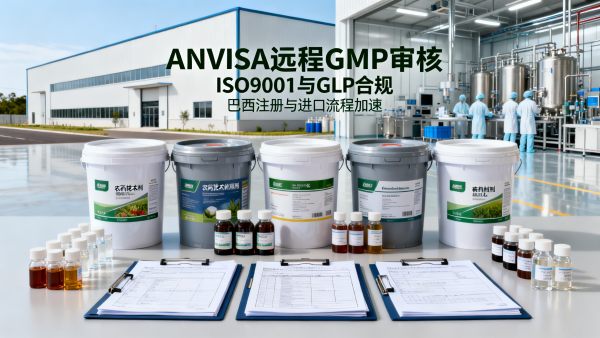
On June 30, 2026, Brazil's ANVISA introduced a fast-track remote GMP audit channel for agrochemicals that is open to Chinese technical material and formulation manufacturers already filed under ISO 9001 and GLP systems. The change matters because it directly affects how quickly eligible suppliers may move into Brazil registration and import permit procedures, while also changing the compliance timing, document readiness, and delivery planning assumptions for exporters, buyers, and supply chain partners working on the Brazil market.
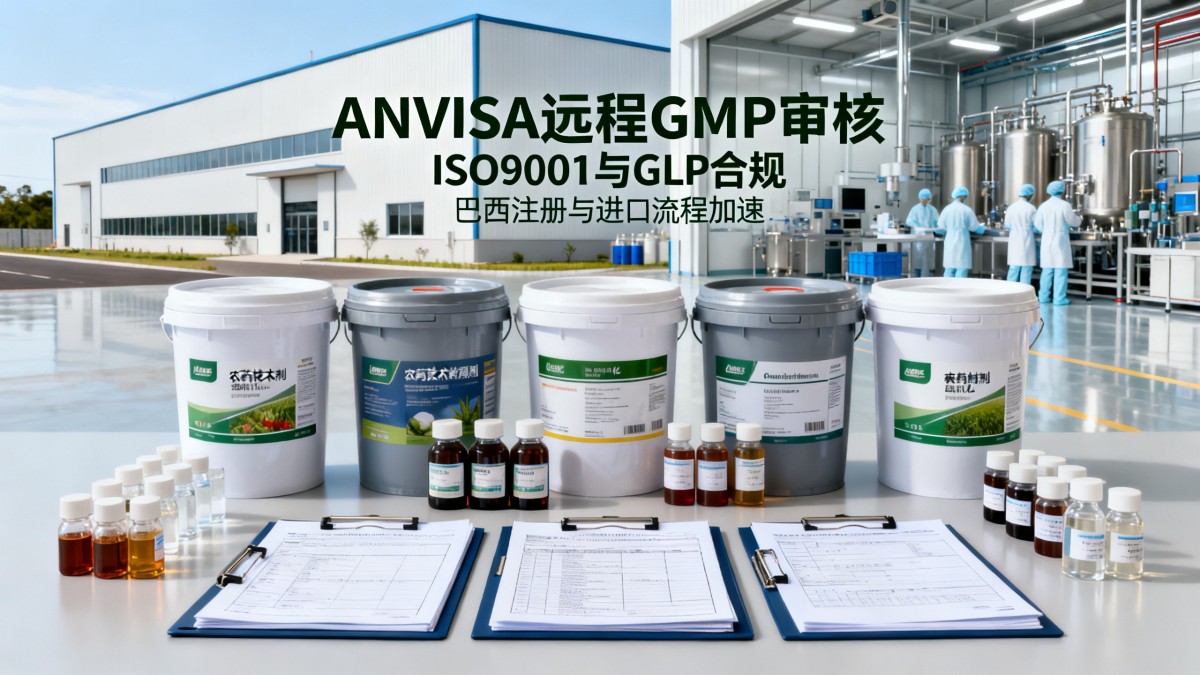
A new review route with a defined temporary certificate window
According to the information provided, ANVISA announced the launch of a fast-track remote audit channel for Agrochemicals GMP on June 30, 2026.
The channel is open to Chinese manufacturers of technical materials and formulations that have already completed filing for ISO 9001 and GLP systems.
For applicants that meet the conditions and submit the required materials, ANVISA stated that it will complete the remote review within 8 working days and issue a temporary GMP certificate valid for 6 months.
The temporary certificate is intended to accelerate applications related to Brazil market registration and import permits.
Where the immediate pressure points may shift
Export-facing manufacturers may see the timing of compliance preparation change
From an industry perspective, Chinese manufacturers targeting Brazil are the most directly affected group because the new channel links eligibility to prior ISO 9001 and GLP filing status. The practical effect may appear first in document preparation, internal compliance review, and scheduling for Brazil-facing submissions. What deserves closer attention is whether companies can organize audit materials, quality records, and supporting files quickly enough to make use of the 8-working-day review commitment.
Registration and import planning teams may need to revise submission sequencing
For teams handling Brazil registration or import permit applications, the availability of a 6-month temporary GMP certificate may affect the order in which compliance and market-access steps are planned. Analysis shows that the main impact is not simply faster review, but a potentially shorter gap between audit completion and downstream application activity. Companies involved in regulatory coordination should therefore pay attention to whether their internal filing calendars, product documentation, and transaction timelines are aligned with a temporary certificate rather than a longer-duration approval document.
Procurement and channel partners may need clearer supplier qualification checks
Buyers, distributors, and other commercial partners connected to Brazil-bound agrochemical supply may also be affected because supplier readiness could become more dependent on whether the manufacturer meets the stated entry conditions for the fast-track route. Observably, this shifts some attention toward qualification status, documentary completeness, and certificate validity tracking. In practical terms, procurement and channel decisions may need to account for whether a supplier is operating under a temporary GMP certificate and how that status fits with contract timing, shipment planning, and partner review requirements.
Compliance and service providers may face a tighter documentation cycle
Certification support firms, testing-related service providers, and other compliance intermediaries may see pressure move toward faster file organization and consistency checks. The rule change does not confirm any broader procedural simplification beyond the remote audit channel itself, so the likely effect is a tighter preparation cycle around existing records, supporting materials, and submission discipline rather than a reduced compliance burden.
What companies should watch before treating the channel as routine
Check eligibility before building a fast registration timetable
Analysis shows that the first practical threshold is not speed alone, but whether the applicant has already completed ISO 9001 and GLP filing in the way required for access to the new channel. Companies should avoid assuming that all China-based producers can use the route immediately, and should verify internal status before committing to customer timelines or shipment expectations tied to Brazil market entry.
Prepare for temporary-certificate management, not only initial approval
The certificate described in the provided information is temporary and valid for 6 months. What deserves closer attention is how businesses manage activities that depend on a document with a defined short validity window. For exporters and regulatory teams, this means watching submission timing, certificate use in related applications, and any business process that could be affected if follow-on steps extend beyond that period.
Keep submission files consistent across audit, registration, and import use
Because the announced mechanism is intended to accelerate registration and import permit applications, companies should pay close attention to consistency across quality files, technical documents, and any materials used in downstream market-access processes. The provided information does not specify detailed execution standards, so it is more appropriate to treat document consistency as a current risk-control priority rather than assume a settled review practice.
Monitor later clarifications in execution language
Observably, the announcement signals an operational path, but the input does not provide further detail on review scope, material format, or how the remote audit may be applied in edge cases. For that reason, companies should continue watching for later official wording, implementation clarifications, and any changes in how the channel is referenced in regulatory communication or commercial documentation.
Why this looks like an execution signal, with details still worth tracking
Analysis shows that this development is more than a general policy statement because it includes a named remote audit route, a defined applicant group, a stated 8-working-day review period, and a temporary certificate validity period of 6 months. At the same time, it is not yet appropriate to read it as a fully transparent end-state rule environment based only on the supplied information. It is more appropriate to understand this as a concrete execution signal that may shorten market-entry timing for eligible applicants, while still requiring close observation of implementation details, document expectations, and market response.
How the market is likely to interpret the change for now
At this stage, the announcement is best understood as a targeted procedural opening for eligible Chinese agrochemical manufacturers seeking faster progress in Brazil registration and import permit workflows. The immediate significance lies in timing, eligibility, and temporary certificate use rather than in any confirmed broader restructuring of Brazil's agrochemical compliance framework. A neutral reading is that the channel may improve operational speed for qualified applicants, but companies should treat the execution details and downstream acceptance practices as matters that still require active monitoring.
Basis of this article and what still needs verification
This article is based on the user-provided news title, event date, and event summary. For events of this type, relevant source categories commonly include official regulatory announcements, notices issued by supervisory authorities, trade or customs-related releases, industry association updates, standards documentation, and reporting by authoritative media.
No specific official source link was provided in the input, so the exact official publication path still needs to be verified on an ongoing basis. What still requires observation includes later policy detail, certification implementation language, any changes in filing or tender documentation, market feedback from affected participants, and how companies actually execute against the announced remote audit channel.
Related Intelligence
- AgrochemicalsWhat Are the Main Risks of Non-Transparent Agricultural Supply Chains?what are the main risks of non transparent agri supply chains? Explore traceability, compliance, contamination, disruption, and cost risks—plus practical controls.
- AgrochemicalsGrain Production: Key Practices for Improving Yield While Protecting Soil HealthGrain production strategies to improve yield, protect soil health, manage nutrients, reduce compaction, and build resilient fields for lasting results.
- AgrochemicalsHow Do New FDA Rules Affect Agri-Chemical Sourcing Strategies?How do new FDA rules impact agri chemical sourcing strategies? Explore practical supplier screening, traceability, contaminant control, and risk-based compliance steps.
The Morning Broadsheet
Daily chemical briefings, market shifts, and peer-reviewed summaries delivered to your terminal.
