

The Authority in Global Agricultural Chemistry & Bio-Resources
SCA Security Checks Delay RAS System Shipments

On June 30, 2026, the Suez Canal Authority (SCA) introduced a new temporary inspection classification affecting RAS Systems equipment that contains electronic control units, PLC modules, and remote monitoring components. For companies moving these modules on Asia-Europe routes, the change matters less as a headline event and more as an immediate logistics and compliance issue: cargo handling at Port Said now includes additional manual container opening checks, with confirmed effects on transit time and replacement transport costs.
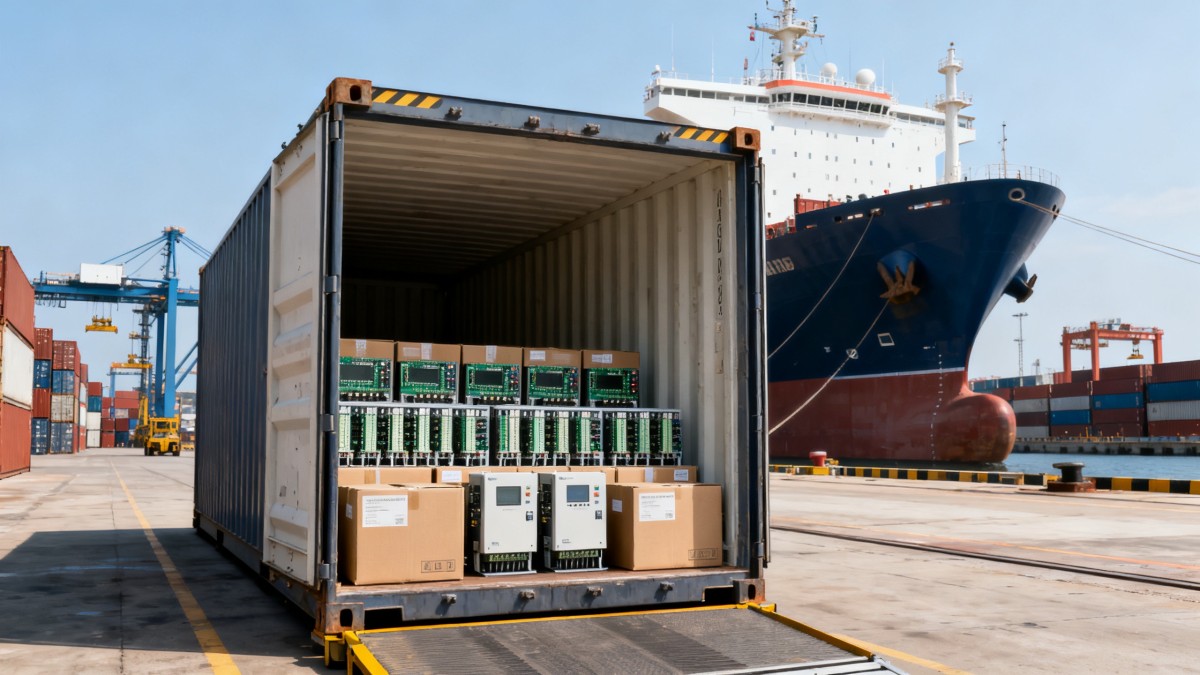
A temporary inspection rule is now affecting cargo handling
According to the provided information, the SCA announced on June 30, 2026 that RAS Systems equipment containing electronic control units, PLC modules, and remote monitoring components is now subject to a temporary "high-sensitivity aquatic technology" security inspection classification. Under this measure, all relevant containers must undergo an additional 48-hour manual opening inspection at Port Said.
The same information states that multiple international logistics service providers have confirmed a direct operational impact on Asia-Europe traffic involving RAS Systems. Average ocean delivery time has extended to 32 days from 21 days, and airfreight substitution costs have increased by 37%.
The disruption is spreading across delivery, purchasing, and service links
For exporters and direct trading companies, delivery commitments become harder to manage
Companies shipping affected RAS Systems modules may face immediate pressure in shipment scheduling, customer delivery promises, and contract execution. From an industry perspective, the main issue is that a transport rule change is now interacting with commercial timelines. What deserves closer attention is whether shipping documents, cargo descriptions, and technical declarations are sufficiently clear to avoid further friction during inspection handling.
For buyers and project procurement teams, lead-time assumptions need to be reassessed
Purchasers relying on ocean freight for RAS Systems equipment may need to revisit ordering cycles, buffer time, and installation planning. Analysis shows that the longer transit window and higher airfreight alternative cost can affect procurement sequencing, especially where control modules and monitoring components are tied to fixed commissioning dates. The practical concern is not only price, but also whether current procurement terms still reflect the new delivery reality.
For manufacturers and integrators, component flow and outbound planning may tighten
Manufacturing and system integration businesses linked to these modules may feel the impact through slower outbound movement and more complicated handover planning. Observably, where shipments include electronic control assemblies or remote monitoring parts, firms should pay closer attention to technical file consistency, packing identification, and traceability records that may become more relevant when cargo is opened and checked manually.
For logistics and after-sales operators, execution risk moves downstream
Supply chain service providers and after-sales teams may also be affected because delivery uncertainty can shift installation, spare-parts timing, and service response arrangements. It is more appropriate to understand this as an operational rule signal that reaches beyond freight booking and into fulfillment and post-delivery coordination.
What companies should monitor now
Check whether technical and cargo documentation is aligned
Because the temporary classification specifically refers to equipment containing electronic control units, PLC modules, and remote monitoring components, companies should closely review how these goods are described across shipping documents, technical files, and commercial paperwork. Analysis shows that alignment between product description and cargo documentation may become more important when inspections involve manual opening and cargo-level review.
Rework delivery plans around the new transit baseline
With average ocean transit reportedly extended from 21 to 32 days, businesses should pay attention to whether existing delivery schedules, internal planning milestones, and customer commitments still remain workable. For shipments that may otherwise move by air, the reported 37% increase in substitution cost also deserves attention in cost approval and contingency planning.
Follow later clarifications in enforcement language
The available information confirms the new temporary classification and inspection requirement, but it does not provide fuller enforcement detail beyond the announced checks. For that reason, companies should continue monitoring subsequent official wording, practical inspection interpretation, and any changes in how the affected equipment scope is described in execution.
Watch for knock-on changes in tender and service documents
Observably, when a transport control measure starts to alter delivery timing, related business documents may also need adjustment. Firms involved in bids, procurement packages, service commitments, or warranty execution should watch for updates in delivery clauses, technical submission requirements, and implementation schedules, while treating such adjustments as a matter for ongoing review rather than as a confirmed universal outcome.
Why this looks like an execution signal, not just a transit delay
Analysis shows that this development is better understood as a rule-driven logistics event rather than a routine shipping disruption. The key change is the temporary security classification itself, because it creates an inspection trigger tied to the content of the equipment being moved. At the same time, it would be premature to treat the present information as a complete long-term rule framework. The industry still needs to observe how consistently the measure is applied, whether its scope remains stable, and how market participants adjust documentation and scheduling in response.
The immediate takeaway for the market
At this stage, the most reasonable reading is that the SCA measure has already become an operational factor for affected RAS Systems shipments, with visible implications for transit time and transport cost. It should be understood neither as a minor paperwork issue nor as a basis for sweeping conclusions. For industry participants, the priority is to treat it as a live execution change that may influence compliance handling, procurement timing, and delivery planning while further practical detail is still being watched.
Basis of this article and what still needs verification
This article is generated from the user-provided news title, event date, and event summary. For developments of this kind, relevant source categories typically include official announcements, regulator releases, customs or trade authority information, industry association updates, standards-related documents, and reporting from authoritative media. A specific official source link was not provided in the input, so the underlying announcement path still requires continued verification. What also remains under observation are later policy details, enforcement interpretation, tender document changes, market feedback, and how affected companies implement adjustments in practice.
Related Intelligence
- RAS SystemsSustainable Aquaculture Practices That Cut Feed Waste and Protect Fish Farm Water QualitySustainable aquaculture for fish farms: reduce feed waste, protect water quality, and build resilient, efficient systems with practical strategies.
- RAS SystemsDrum Filter System Price: How Flow Rate, Micron Rating, and Automation Affect CostDrum filter system price depends on flow rate, micron rating, automation, materials, and lifecycle costs. Compare quotes confidently and choose the right system.
- RAS SystemsHow to Specify Large-Scale Fish Farming Equipment for High-Output RAS ProjectsLarge scale fish farming equipment guide for high-output RAS projects—specify tanks, filtration, oxygen, automation, and redundancy for reliable growth.
The Morning Broadsheet
Daily chemical briefings, market shifts, and peer-reviewed summaries delivered to your terminal.
