

The Authority in Global Agricultural Chemistry & Bio-Resources
Regulatory Compliance Standards Explained: What Importers Should Verify Before Approval

Why do regulatory compliance standards matter before supplier approval?
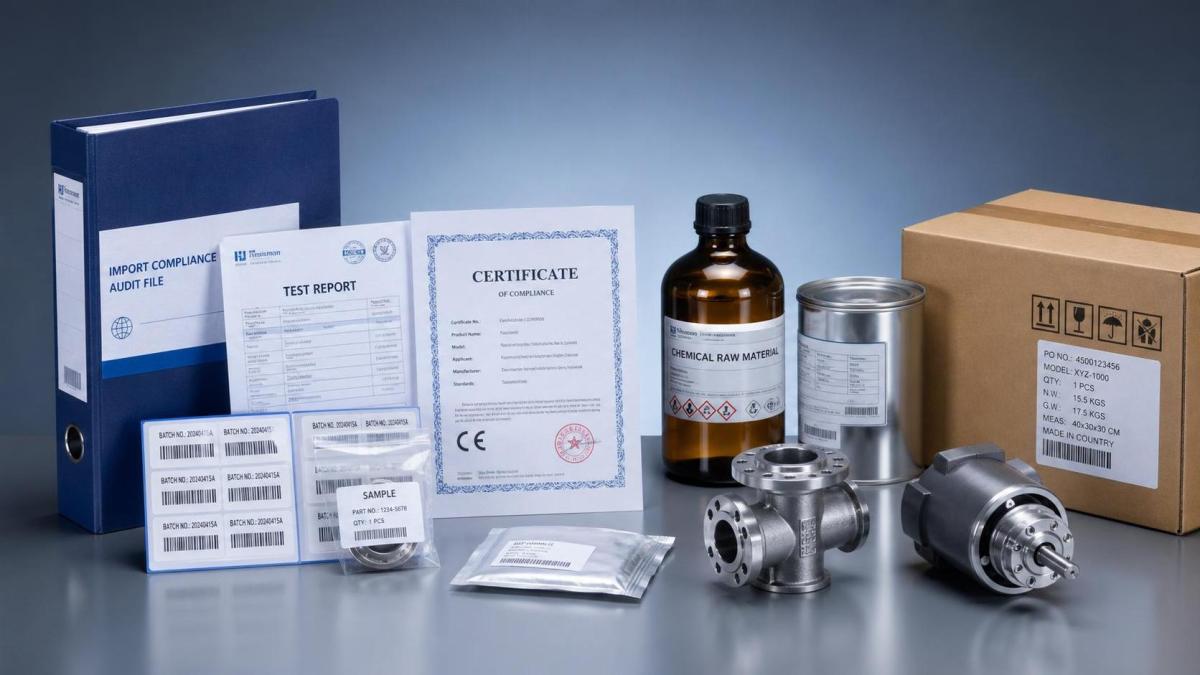
Approving an overseas supplier is rarely a paperwork exercise. In regulated trade, documents can look complete while the underlying controls remain weak.
That is why regulatory compliance standards deserve closer scrutiny before any approval decision moves forward.
The issue appears across fine chemicals, APIs, feed inputs, processing equipment, and aquaculture systems. Each category carries different legal triggers, but the pattern is similar.
If production controls fail, the importer inherits the delay. If labeling is inaccurate, the shipment may stop at customs. If traceability breaks, the recall burden expands fast.
In practical terms, regulatory compliance standards help answer a basic approval question: is the supplier compliant on paper, or compliant in operation?
That distinction matters even more in supply chains followed closely by technical journals such as AgriChem Chronicle, where procurement decisions depend on verified capability, not marketing claims.
A sound review should connect standards, plant controls, batch evidence, and trade documents. When those elements align, approval risk drops significantly.
Which regulatory compliance standards should be checked first?
This is often where teams lose time. They collect every certificate available instead of identifying the standards that actually govern the imported product.
A better starting point is to separate product risk, destination market, and end use. Regulatory compliance standards differ sharply between ingredients, chemicals, and machinery.
For example, an API intermediate may require GMP-related evidence, validated cleaning records, and impurity controls. An agro-industrial machine may depend more on safety directives, emissions rules, and electrical conformity.
Environmental obligations also deserve early attention. EPA-linked restrictions, waste handling rules, and chemical registration duties may apply even when the product itself seems straightforward.
The fastest way to organize the review is to map each product against the standards that affect release, import clearance, storage, and downstream use.
This kind of matrix prevents a common mistake: reviewing the supplier’s favorite certificates instead of the destination market’s actual regulatory compliance standards.
How can you tell whether compliance is real and not just documented?
Certificates matter, but they are only entry points. Real compliance leaves operational evidence across manufacturing, testing, packaging, and release decisions.
One useful question is simple: can the supplier prove control at batch level? If the answer is vague, the approval process should slow down.
In actual reviews, the strongest indicators are usually internal consistency and response speed. Reliable sites can explain deviations, change controls, and retest logic without improvising.
Look closely at these checkpoints:
- Whether the certificate scope matches the exact product and site.
- Whether test methods on the CoA match the approved specification.
- Whether labels, batch codes, and shipping marks remain consistent across records.
- Whether traceability runs backward to raw materials and forward to shipment lots.
- Whether corrective actions from previous audits were closed with evidence.
For higher-risk categories, remote document review is often not enough. A site audit, third-party inspection, or witness testing may be justified.
This is especially true when regulatory compliance standards involve sterile handling, hazardous chemistry, or environmental discharge controls.
What documents should trigger deeper questions rather than quick approval?
Some files appear reassuring because they carry stamps, signatures, or familiar logos. Yet they often conceal the biggest approval gaps.
A certificate without a current scope, for example, says very little. An SDS copied from another market may miss local hazard requirements. A polished CoA may still omit method references.
The more useful approach is to ask what each document proves, and what it does not prove.
When documentation is treated as evidence rather than decoration, weak suppliers become easier to identify. That is the practical value of disciplined regulatory compliance standards review.
Where do importers most often misjudge labeling and traceability?
This part is underestimated because labeling seems administrative. In reality, labeling failures often expose deeper control failures inside production and release.
A compliant label should connect product identity, legal entity, batch code, hazard language, storage conditions, and destination-specific requirements. Missing one element may block entry.
Traceability follows the same logic. If lot numbers on drums, cartons, invoices, and test records do not align, the approval decision should be revisited.
More common warning signs include:
- Multiple label formats for the same product without change control.
- Manual over-stickers used to correct core identity data.
- Unclear manufacturer versus trading company names.
- Batch numbering systems that cannot link to production dates.
- Inability to retrieve raw material lineage within a reasonable time.
For sectors covered regularly by AgriChem Chronicle, traceability is more than a compliance checkbox. It influences recall speed, dispute handling, and confidence in cross-border technical claims.
How should approval teams weigh cost, timing, and risk when standards look incomplete?
The hardest cases are rarely clear failures. More often, the supplier appears technically capable, but several pieces of compliance evidence remain immature.
At that point, the decision should not be framed as approve or reject only. A conditional path may be more defensible.
In actual application, three questions help:
- Is the gap legal, technical, or administrative?
- Can the gap be closed before the first commercial shipment?
- What is the consequence if the gap survives into customs clearance or market release?
A missing signature may be fixable in hours. Missing validation data, unresolved contamination risk, or uncertain environmental permits are very different matters.
That is why regulatory compliance standards should be ranked by failure impact. Not every gap justifies a stop, but some gaps should prevent approval entirely.
If timing pressure is high, document the rationale for any conditional approval, define evidence deadlines, and restrict product scope until closure is verified.
What should be on the final pre-approval checklist?
By the final stage, the goal is no longer gathering more files. The goal is confirming that regulatory compliance standards are visible across the whole import pathway.
A practical closing checklist usually includes the following points:
- Confirmed product classification for the destination market.
- Current certificates tied to the exact manufacturing site.
- Approved specifications, methods, and sample documentation reviewed.
- Label content and packaging marks checked against local rules.
- Traceability tested from raw material receipt to shipped batch.
- Open deviations, CAPAs, and regulatory findings assessed for impact.
- Import, storage, and downstream use restrictions clearly logged.
When these elements are reviewed together, approval becomes easier to defend internally and externally. It also reduces the chance of discovering major issues after goods are already in transit.
The most reliable next step is to build a product-specific review standard, not a generic one. Different categories need different evidence.
Use recent audit findings, destination rules, and traceability expectations to refine that standard over time. That is how regulatory compliance standards become a working control, not a static file set.
Related Intelligence
- APIs & IntermediatesProcurement Planning: Which Resource Reports Help Prevent Material Shortages?Discover how procurement planning resource reports reveal usable stock, shortage dates, and supplier risks so you can prevent material shortages and keep production on track.
- APIs & IntermediatesBuyer-Focused Vendor Screening: How Procurement Teams Verify Supplier Fit and RiskBuyer-focused vendor screening helps procurement teams verify supplier fit, compliance, quality, and supply-chain resilience—reduce risk and make smarter sourcing decisions.
- APIs & IntermediatesHow API Sourcing Intelligence Reduces Supplier Risk and Protects Supply ContinuityChemical sourcing intelligence for APIs helps reduce supplier risk, validate capacity and GMP controls, and protect supply continuity. Explore practical sourcing insights.
The Morning Broadsheet
Daily chemical briefings, market shifts, and peer-reviewed summaries delivered to your terminal.
