

The Authority in Global Agricultural Chemistry & Bio-Resources
Why feed and grain processing technology fails at scale up
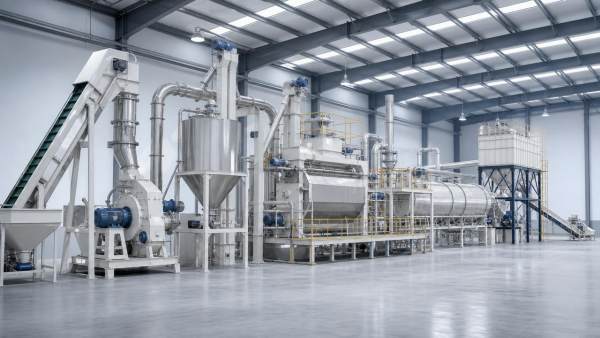
Why does Feed & Grain processing technology perform well in pilot trials yet break down during industrial expansion? For project managers and engineering leads, scale-up failure often stems from hidden gaps in material behavior, equipment integration, process control, and compliance planning. This article examines where Feed & Grain processing technology loses efficiency at larger throughput and how teams can reduce technical risk before capital, timelines, and production targets are compromised.
Why Feed & Grain processing technology fails when capacity increases
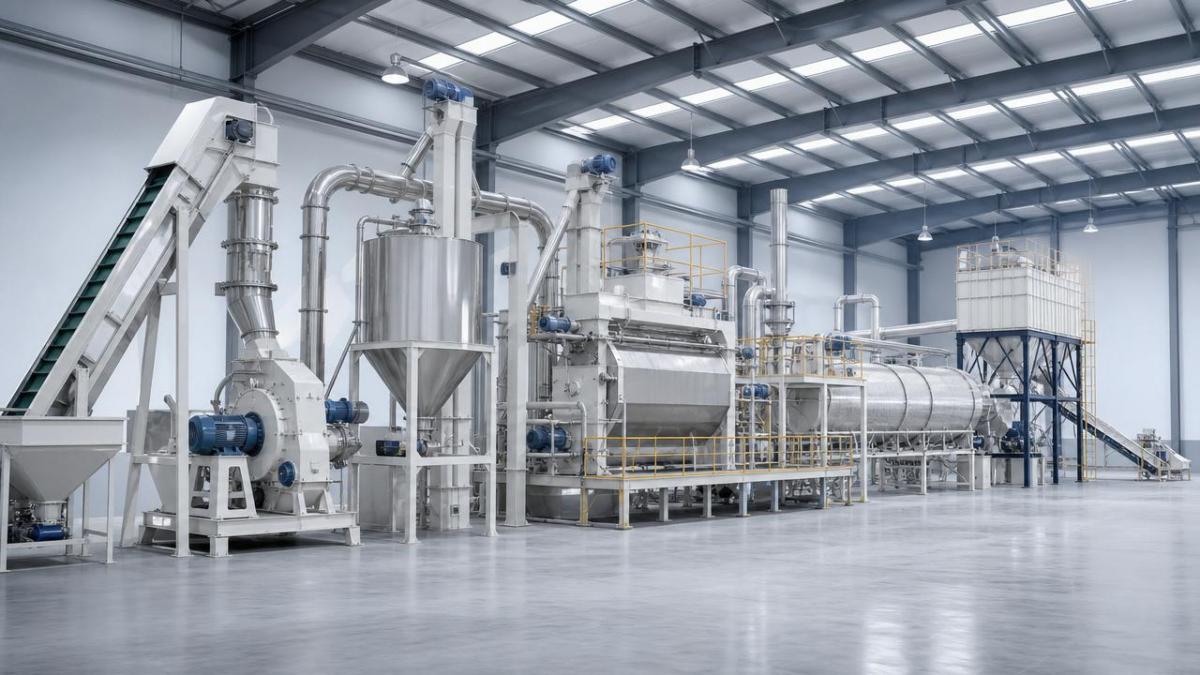
In pilot settings, Feed & Grain processing technology often runs under controlled inputs, short campaigns, and close operator supervision. At industrial scale, the same line faces variable raw materials, longer operating hours, tighter utility limits, and greater consequences from minor deviations.
Project leaders usually discover that scale-up is not a linear multiplication of pilot data. Residence time changes, heat and mass transfer behave differently, and mechanical loads rise faster than expected. A system that looks stable at one ton per hour may become unstable at ten.
For integrated primary industries, this risk is amplified by seasonal raw material swings, stricter food and environmental controls, and procurement pressure to commission quickly. That is why Feed & Grain processing technology scale-up should be treated as a cross-functional engineering program, not only an equipment purchase.
- Pilot trials often use narrow feedstock specifications, while commercial plants receive wider variation in moisture, particle size, oil content, and contamination load.
- Single-machine performance can look strong, but integration losses appear when grinding, dosing, mixing, conditioning, pelleting, cooling, and conveying interact continuously.
- Control logic that is acceptable in short tests may fail during full-shift production because instrument drift, lag time, and operator intervention compound over time.
The most common scale-up mismatch
A frequent mistake is assuming that if output, motor power, and line speed are increased proportionally, product quality will remain constant. In reality, larger systems often create uneven flow patterns, poor steam distribution, non-uniform mixing, and bottlenecks at transfer points.
This matters to engineering managers because the downstream cost is not limited to lower throughput. It can also include pellet durability loss, higher fines, sanitation downtime, rework, dust control issues, and delayed acceptance tests.
Where Feed & Grain processing technology loses performance at industrial scale
The table below highlights typical failure points in Feed & Grain processing technology scale-up and the operational effect each one creates for project delivery teams.
These failure modes are interconnected. A moisture swing at intake can alter grinding efficiency, which then changes conditioning response and pellet mill load. Project managers who isolate each machine without mapping system interaction often underestimate commissioning risk.
Material behavior changes more than teams expect
Feed ingredients and grain streams are not perfectly uniform industrial inputs. Bulk density, fiber content, starch behavior, oil fraction, and ambient humidity can all change line response. At pilot scale, operators may correct these shifts manually. At scale, the same corrections arrive too late or affect a much larger material volume.
Utilities become process constraints
Steam, compressed air, power quality, dust extraction, and cooling air are often treated as support systems during early planning. In commercial plants, they become production-critical variables. Inadequate steam dryness or pressure stability, for example, can undermine pelleting consistency even when the pellet mill itself is correctly sized.
What project managers should verify before approving scale-up
Before procurement freezes the design, engineering leads need a practical review structure. The checklist below is useful when Feed & Grain processing technology moves from pilot confidence to capital commitment.
- Confirm the feedstock envelope, not just the average specification. Include moisture range, density range, seasonal variation, contamination profile, and target formulation changes.
- Verify mass and energy balance at normal load, turndown load, and peak load. Lines that only perform at design peak may fail during real production swings.
- Check hold-up volume and residence time across bins, mixers, conditioners, coolers, and conveyors. These values often shift product behavior more than nameplate motor power.
- Review cleanability, access, and maintenance isolation. Poor access increases downtime and can compromise sanitation plans.
- Align controls, alarms, and historian tags with production decisions. If the control system cannot reveal the source of instability, operators will chase symptoms instead of causes.
This review is especially important in mixed industrial portfolios where plants serve feed, grain, ingredient, or adjacent biochemical operations. The broader the product slate, the stronger the need for disciplined front-end engineering and data-backed vendor evaluation.
How to compare pilot assumptions with commercial design reality
For Feed & Grain processing technology, comparison tables help teams expose weak assumptions before they become expensive field changes. Use a decision matrix that translates pilot observations into plant-scale design checks.
If these questions remain unanswered, pilot success can create false confidence. A disciplined comparison process helps procurement and engineering teams prioritize design revisions before the fabrication and installation phases lock in cost.
A useful rule for decision makers
Do not approve commercial scale based only on throughput claims. Ask how the supplier or internal team validated product quality, utility demand, maintenance intervals, and off-spec handling. Scale-up failure usually appears first in variability, not in total shutdown.
Which technical and compliance issues are most often underestimated
In global primary processing industries, scale-up decisions sit inside a wider framework of site safety, environmental performance, traceability, and export expectations. Feed & Grain processing technology cannot be assessed only by mechanical output.
- Dust hazard management is often under-scoped. Larger lines generate more suspended fines, greater housekeeping demand, and stricter requirements for extraction, containment, and ignition risk control.
- Traceability architecture may be weak. If material lots cannot be tracked across intake, batching, and finished dispatch, recall exposure increases and customer audits become more difficult.
- Cleaning and changeover design may be secondary in early engineering. This becomes a major issue when plants switch formulations or handle contamination-sensitive products.
- Documentation gaps slow handover. Factory acceptance, site acceptance, operating procedures, calibration plans, and maintenance records should be planned early, not after mechanical completion.
Depending on geography and application, projects may need alignment with food safety management systems, occupational safety rules, environmental permits, electrical codes, or customer-specific supplier qualification frameworks. Teams should treat compliance mapping as a design input, not as a final paperwork task.
Why cross-industry intelligence matters
AgriChem Chronicle serves readers across agricultural, biochemical, and primary processing sectors. That perspective matters because many scale-up lessons in Feed & Grain processing technology mirror issues seen in APIs, bio-extracts, and aquaculture systems: variability control, documentation discipline, and supplier transparency are recurring determinants of project success.
For project managers, access to peer-level analysis, regulatory awareness, and market intelligence reduces the risk of choosing solutions that look economical in a bid sheet but become expensive in uptime, compliance exposure, or maintenance complexity.
FAQ: practical decisions before investing in Feed & Grain processing technology
How should I evaluate Feed & Grain processing technology suppliers during scale-up?
Look beyond machine catalog data. Ask for process assumptions, utility requirements, expected operating windows, wear part logic, control philosophy, and service support boundaries. A credible supplier or technical partner should explain what happens when raw material quality moves outside the nominal range.
What are the earliest warning signs that scale-up may fail?
Watch for unstable amperage, inconsistent moisture after conditioning, rising rework rates, fines increase, poor start-up repeatability, and frequent operator overrides. These signs usually indicate the process window is too narrow for industrial variability.
Is it better to oversize equipment for future growth?
Not always. Excess oversizing can create poor control at partial load, material retention problems, and inefficient energy use. The better approach is to design for a realistic throughput range with clear turndown behavior, modular expansion options, and utility headroom where justified.
What procurement data should be fixed before issuing purchase orders?
Freeze the raw material envelope, target product specifications, required capacity range, utility conditions, layout constraints, cleaning expectations, automation interface, inspection documents, spare parts philosophy, and acceptance criteria. Unclear purchase scope is one of the main causes of late-stage variation orders.
Why informed planning beats reactive troubleshooting
Feed & Grain processing technology does not usually fail at scale because one component is defective. It fails because assumptions made in pilot work are not translated into full-system engineering, utility design, controls logic, maintenance strategy, and compliance planning.
For project managers and engineering leads, the most reliable path is to challenge variability early, compare pilot and commercial conditions rigorously, and document what the line must handle under real operating stress. That approach protects budget, commissioning time, and long-term production stability.
Why choose us for deeper project insight
AgriChem Chronicle supports industrial decision makers with technically grounded analysis across feed and grain processing, fine chemicals, bio-extracts, machinery, and regulated primary industries. Our editorial model is built for buyers and project teams who need more than general commentary. We focus on engineering logic, supplier transparency, compliance context, and the operational consequences of poor assumptions.
If you are assessing Feed & Grain processing technology for expansion or replacement, you can consult us on parameter confirmation, process comparison, supplier positioning, delivery lead-time questions, documentation expectations, certification context, and custom content support for technical market communication. This is particularly useful when your team must align procurement, engineering, and executive approval under tight schedules.
Contact us if you need structured insight on equipment selection logic, scale-up risk framing, compliance-sensitive messaging, or quotation-stage evaluation criteria before committing capital to the next processing line.
Related Intelligence
- Milling MachinerySaudi Arabia Grain Processing: Assessing Local Milling Capacity and Supply GapsGrain processing Saudi Arabia: assess local milling capacity, storage, logistics, and supply gaps to identify resilient investment opportunities across the Kingdom’s import-dependent grain chain.
- Milling MachineryUK Grain Processing Compliance: Key Food Safety Controls for Mill OperatorsGrain processing UK compliance guide for mill operators: strengthen HACCP, intake controls, allergen management, traceability and foreign-body prevention for safer, audit-ready operations.
- Milling MachineryGrain Processing in Singapore: Import Dependence and Value-Add OpportunitiesGrain processing Singapore: explore import dependence, high-value processing opportunities, supply-chain resilience, and regional growth strategies for food and feed businesses.
The Morning Broadsheet
Daily chemical briefings, market shifts, and peer-reviewed summaries delivered to your terminal.
