

The Authority in Global Agricultural Chemistry & Bio-Resources
Saudi Arabia Grain Processing: Assessing Local Milling Capacity and Supply Gaps
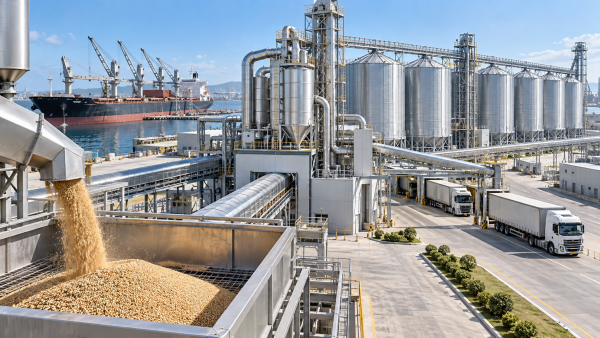
Saudi Arabia’s grain-processing market matters because the Kingdom can expand local milling, storage, and distribution capacity without eliminating its dependence on imported grain. For investors, equipment suppliers, flour producers, and logistics partners, the practical question is not whether demand for processed grain exists. It is where local capacity improves supply security and service levels, and where structural constraints still limit the economics of new assets.
The strongest opportunities sit around reliable conversion of imported wheat into flour, better segregation and storage of grain, more responsive distribution to industrial users, and targeted processing for feed and food manufacturers. Building another mill solely on the expectation that domestic demand will absorb any additional output is a weaker proposition. Capacity must be assessed against procurement access, port handling, product mix, customer contracts, and the ability to operate efficiently under changing import conditions.
Local Milling Can Reduce Exposure, but It Does Not Replace the Import System
Saudi Arabia’s grain balance is shaped by a basic reality: domestic production cannot be assumed to cover the full requirements of a large and growing food market. Wheat and other grains therefore remain closely tied to international procurement, maritime logistics, storage infrastructure, and the timing of public and private-sector buying.
Local milling changes the form of dependence rather than removing it. A flour mill located inside the Kingdom can shorten the route between imported wheat and bakeries, food manufacturers, distributors, and consumers. It can improve inventory visibility, support product specification control, and reduce the need to import certain finished or semi-finished grain products. Yet the plant still depends on grain arriving in the right quality, volume, and schedule.
That distinction is important when evaluating grain processing Saudi Arabia as an investment theme. Milling capacity is a food-security asset only when it is connected to resilient sourcing and stock-management systems. A technically capable facility with weak access to wheat supply, insufficient port throughput, or limited storage flexibility may have less strategic value than its nameplate capacity suggests.
For decision-makers, the relevant measure is therefore usable capacity: the volume a mill can process consistently while meeting flour specifications, controlling losses, managing maintenance, and receiving grain without costly interruptions. Nominal throughput alone does not answer that question.
Capacity Assessment Starts with the Market Served
Saudi milling demand should not be treated as one uniform pool. Household flour, commercial bakery flour, pasta and noodle inputs, biscuit and snack production, institutional catering, and feed applications each create different requirements for grain quality, extraction rate, protein performance, packaging, and delivery frequency.
A broad consumer market can support large-volume standard flour, but higher-margin segments often require more precise blending and stronger quality assurance. Industrial buyers may prioritize consistency from batch to batch over the lowest delivered price. They also tend to assess suppliers on practical service conditions: lead times, bag or bulk formats, silo discharge capability, documentation, complaint handling, and the ability to maintain agreed specifications during supply disruptions.
Before adding or financing capacity, operators should separate demand into at least three questions:
- Which end uses require standard commodity flour, and which require application-specific flour?
- Can the proposed plant reach its target customers economically from its location?
- Will the expected product mix support utilization throughout the year, rather than only during seasonal demand peaks?
This analysis often changes the case for a new facility. A mill positioned near a port may have an advantage in inbound wheat logistics but still face expensive outbound distribution to inland customers. A plant closer to demand centers may provide better service but require dependable rail or road links and adequate inland grain storage. Neither location is inherently superior; the answer depends on the physical flow of wheat, flour, and by-products.
By-products deserve the same level of attention. Bran, middlings, and other milling outputs can contribute materially to plant economics where nearby feed customers, traders, or livestock operations can absorb them. If those channels are distant, congested, or price-sensitive, the apparent margin from flour production can be overstated. A milling business is not simply a flour business. It is a coordinated system for monetizing multiple output streams.
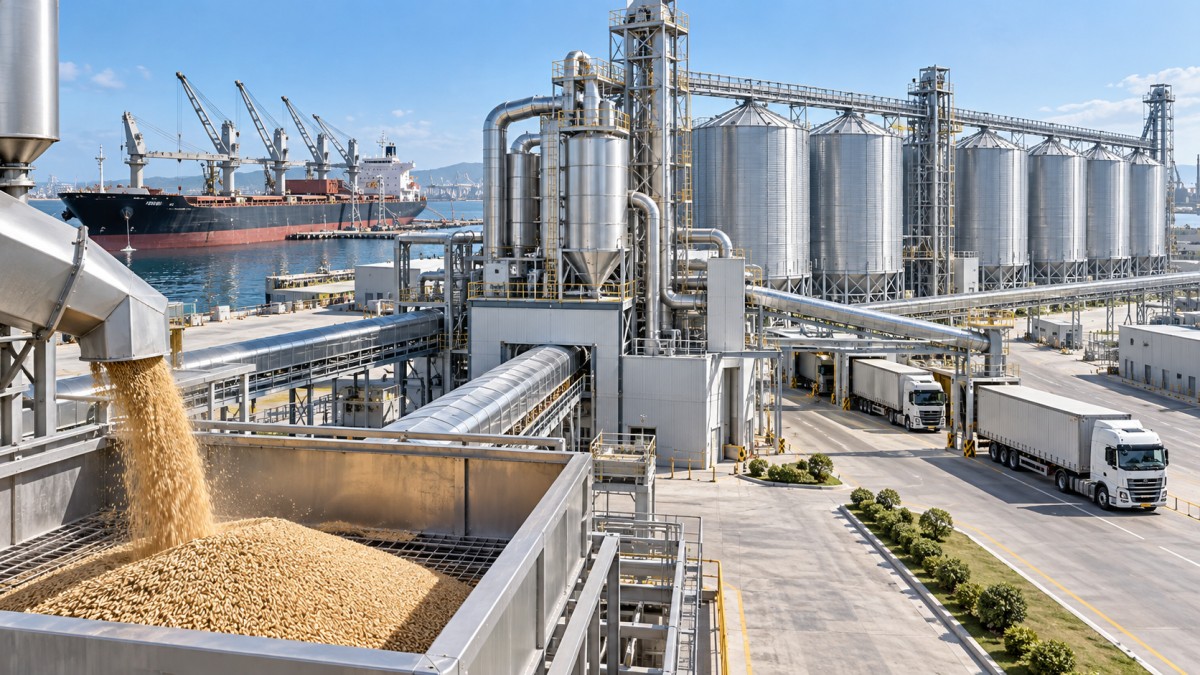
Supply Gaps Are More Often Operational than Absolute
Discussion of supply gaps can become misleading when it focuses only on whether the country has “enough” milling capacity. A market may have substantial installed capability and still experience gaps in particular locations, formats, grades, or delivery windows. Conversely, an apparent shortage may be a logistics bottleneck rather than a case for a new processing plant.
Several gaps are especially relevant in Saudi Arabia’s grain chain.
Storage flexibility at the right point in the chain
Grain storage has value beyond holding strategic inventory. It allows buyers and processors to manage vessel arrivals, separate different wheat grades, maintain buffer stocks during port congestion, and blend raw material more effectively. Storage that cannot segregate grades or connect efficiently to receiving and milling operations may protect volume but offer limited operational flexibility.
For investors in silos and handling systems, the commercial question is whether the asset solves a specific constraint: berth-to-silo transfer, quality segregation, inland stockholding, mill-side buffer capacity, or rapid truck loading. Generic storage proposals can struggle when they do not identify who will pay for that capability and under what utilization pattern.
Quality-controlled wheat handling
Imported wheat is not a uniform input. Quality can differ by origin, crop conditions, shipment history, moisture profile, protein characteristics, foreign material, and storage condition. Mills that depend on a narrow raw-material range may be vulnerable when procurement conditions change.
Investment in intake sampling, laboratory capability, cleaning, blending, and traceable stock records can be commercially important even when it appears less visible than adding milling lines. These systems determine whether a processor can use a wider procurement basket while maintaining flour performance. They also help avoid expensive disputes between purchasing, production, and industrial customers when output quality varies.
Specialized flour and customer-oriented service
Commodity capacity does not automatically serve industrial food production. Manufacturers may seek stable rheological performance, customized ash content, controlled granulation, fortified products, or packaging designed for automated handling. The opportunity is not necessarily a premium niche in every case; it may be a dependable, contract-based supply relationship that localizes a previously fragmented supply chain.
However, specialized production requires a clear customer base before capital is committed. Product development and technical sales capabilities are needed alongside plant equipment. A mill designed for standard high-volume output may not shift efficiently into smaller, specification-heavy orders without changes to storage, blending, packing, scheduling, and quality-control procedures.
Port and Inland Logistics Determine the Real Cost Curve
Saudi Arabia’s geography makes logistics a central part of milling economics. Imported grain enters through coastal gateways, while demand is distributed across major cities, industrial zones, retail networks, and agricultural areas. The location of a mill can therefore move cost from the inbound side of the supply chain to the outbound side, or the reverse.
Decision-makers should model physical flows in operational terms rather than relying on average freight assumptions. Vessel discharge rates, berth availability, demurrage exposure, storage dwell time, truck turnaround, bagging capacity, bulk dispatch, road restrictions, and seasonal demand patterns can all affect delivered flour cost. A few days of disruption at a receiving point may have a larger impact on working capital and customer service than a small difference in wheat purchase price.
The same applies to inland distribution. Bulk flour delivery may suit major industrial customers, while smaller bakeries and distributors may require bagged product, more frequent delivery, and a wider dealer network. The plant configuration, warehouse layout, and dispatch yard should match those customer realities. A high-throughput mill can lose its advantage if finished-product handling becomes the bottleneck.
There is also a resilience issue. Concentrating all grain intake or flour production in one location can simplify management but raises the consequences of a localized interruption. Distributed capacity may offer better continuity, though it can increase fixed costs and complicate inventory control. The appropriate balance depends on the buyer’s required service level and the degree to which alternate routes and alternate facilities can be activated.
What Equipment Investors Should Test Before Entering
For milling technology providers and industrial investors, the Saudi market should be approached as a system-integration opportunity. A proposal centered only on rollers, sifters, or headline tonnes per day will be incomplete. Buyers need to see how the design handles variable wheat, heat and dust management, maintenance access, spare-parts availability, automation, energy consumption, packaging, and product traceability.
Several diligence points deserve priority:
- Raw-material envelope: Define the range of wheat grades the plant is expected to process and the blending capability needed to protect finished-product performance.
- Utilization case: Test economics at realistic operating rates, including commissioning periods, planned maintenance, and demand variation across product segments.
- Port-to-plant interface: Confirm how grain will be received, stored, sampled, transferred, and protected from quality deterioration before milling.
- Output logistics: Match bagging, bulk loading, warehouse capacity, and dispatch infrastructure to the actual customer mix.
- By-product route: Establish credible offtake channels for bran and other outputs, including transport and storage requirements.
- Operating support: Evaluate local maintenance capability, critical-spares planning, operator training, and response time for control-system or mechanical failures.
These questions are particularly important where projects are structured around food-security objectives. Strategic relevance does not eliminate the need for operational discipline. In fact, facilities expected to support supply continuity must be designed with greater attention to redundancy, grain-quality management, and recovery from disruptions.
The Next Phase Will Favor Integrated Capacity
The most credible expansion path is likely to favor assets that connect procurement, storage, milling, quality assurance, and distribution rather than isolated processing capacity. That can take different forms: a modern mill linked to dedicated grain storage; an inland distribution platform supported by port-side intake; a processor with stronger industrial flour capability; or a handling and laboratory upgrade that allows an existing facility to operate more flexibly.
Private-sector participation can broaden the range of commercial models, but it also raises the standard for market discipline. Operators will need to distinguish between volume that is physically consumed and volume that is commercially contestable. Long-term demand may be clear at the national level while individual plants still compete for the same customers, labor, logistics capacity, and working capital.
For companies considering entry, the most useful starting point is a corridor-level assessment: identify the grain entry route, the storage points, the target processing or consumption cluster, the outbound product flow, and the fallback options when one link fails. That approach provides a more reliable view of local milling capacity and supply gaps than a simple comparison of national demand with aggregate plant throughput.
Saudi Arabia’s grain-processing opportunity is substantial where it improves control over an import-dependent food chain. The durable investments will be those that treat milling as one component of a tightly managed supply system, with enough flexibility to serve changing procurement conditions and enough commercial focus to avoid adding capacity that the market cannot efficiently use.
Related Intelligence
- Milling MachinerySaudi Arabia Grain Processing: Assessing Local Milling Capacity and Supply GapsGrain processing Saudi Arabia: assess local milling capacity, storage, logistics, and supply gaps to identify resilient investment opportunities across the Kingdom’s import-dependent grain chain.
- Milling MachineryUK Grain Processing Compliance: Key Food Safety Controls for Mill OperatorsGrain processing UK compliance guide for mill operators: strengthen HACCP, intake controls, allergen management, traceability and foreign-body prevention for safer, audit-ready operations.
- Milling MachineryGrain Processing in Singapore: Import Dependence and Value-Add OpportunitiesGrain processing Singapore: explore import dependence, high-value processing opportunities, supply-chain resilience, and regional growth strategies for food and feed businesses.
The Morning Broadsheet
Daily chemical briefings, market shifts, and peer-reviewed summaries delivered to your terminal.
