

The Authority in Global Agricultural Chemistry & Bio-Resources
UK Grain Processing Compliance: Key Food Safety Controls for Mill Operators
UK Grain Processing Compliance: Key Food Safety Controls for Mill Operators
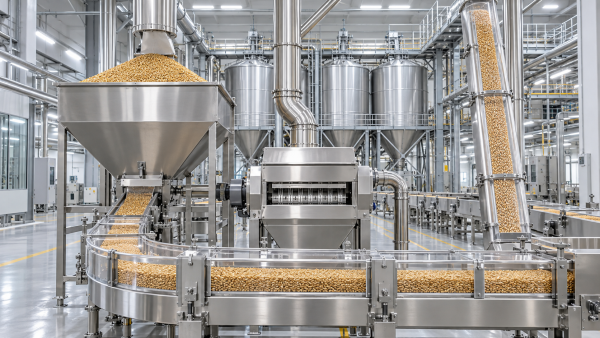
For UK mill operators, effective grain processing UK compliance depends on more than meeting basic hygiene requirements. Quality and safety managers must control hazards across intake, storage, milling, allergen handling, traceability, and finished-product release. This guide outlines the essential food safety controls that help protect consumers, satisfy regulatory expectations, and strengthen operational confidence in an increasingly scrutinised supply chain.
A flour mill may look like a straightforward physical process: grain arrives, is cleaned, conditioned, milled, blended and packed. In practice, every transfer point can create a food safety weakness. A delivery with unclear origin, a poorly controlled intake pit, an overlooked magnet check, or an incomplete rework record can turn an otherwise sound operation into a difficult audit finding or, worse, a withdrawal event.
The most resilient sites do not treat compliance as a stack of forms prepared for an annual visit. They build it into production decisions. This matters particularly in a market where millers must balance supplier variability, customer specifications, allergen segregation, tight dispatch schedules and changing expectations from retailers, food manufacturers and export buyers.
Start with the legal baseline, then build a workable control system
UK food businesses are generally expected to operate food safety management procedures based on HACCP principles. For a milling business, this sits alongside wider obligations concerning safe food, hygiene, traceability, labelling and the management of contaminants. The detailed legal position can vary across Great Britain and Northern Ireland, while specific contaminant limits and retained legislation should always be checked against current official sources and the requirements of the market being supplied.
HACCP is often misunderstood in grain processing. It is not a requirement to call every operational check a critical control point. In a well-developed plan, many important risks are managed through prerequisite programmes: approved supplier controls, cleaning, pest management, maintenance, personnel hygiene, calibration, zoning and training. Declaring too many CCPs can make a plan harder to operate and easier to fail. The better question is whether loss of control at a given stage can be prevented, eliminated or reduced to an acceptable level through a genuinely critical measure.
Third-party certification schemes such as BRCGS Food Safety may be commercially expected by major customers, but certification itself is not a substitute for legal compliance. A site can hold a recognised certificate and still struggle if its records do not reflect what happens on the shop floor. Auditors usually notice that gap quickly: a procedure says one thing, operators describe another, and production records show a third version.
Grain intake is where traceability and hazard control meet
The intake area deserves more attention than it sometimes receives. Once grain from different sources has entered a common storage or handling route, the ability to isolate a concern becomes much weaker. Intake controls should establish what has arrived, where it came from, whether it meets the agreed specification, and whether it can enter the site without compromising existing stock.
A practical intake programme normally links each load to supplier approval, crop and origin information, delivery documentation, vehicle cleanliness expectations, sampling arrangements, test results and a clear accept, hold or reject decision. The exact testing regime must reflect the grain type, origin, intended use, supplier assurance and risk assessment. It is not sensible to apply the same frequency to every supplier simply because it is administratively convenient.
Mycotoxins are a good example. Risk is influenced by crop conditions, storage history, grain type and season. A mill should have a documented approach for assessing and monitoring relevant mycotoxin risks, using appropriate sampling and laboratory methods where testing is required. Small, unrepresentative samples can produce misleading confidence. For bulk grain, the sampling plan often matters as much as the analytical result.
Vehicle inspection is another routine step with disproportionate value. Previous loads, damp residues, odours, pests, damaged covers and evidence of unauthorised materials should not be waved through because the lorry is expected or the intake queue is building. A short delay at intake is usually easier to manage than a major stock segregation exercise later in the day.
Storage controls are not just about keeping grain dry
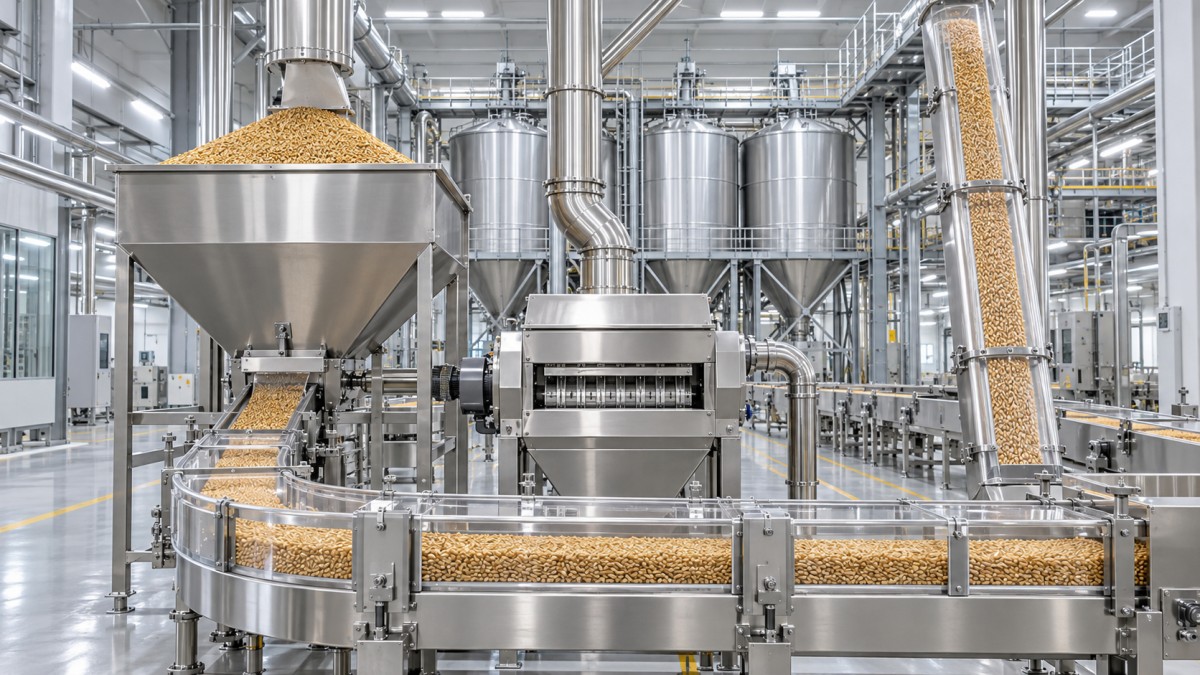
Silos and flat stores create a familiar problem: grain can appear stable until a localised condition develops. Moisture migration, condensation, insect activity, hot spots and old grain residues can all undermine quality and safety. Monitoring should be risk-based and tied to the real behaviour of each storage asset. A modern silo with effective temperature monitoring does not present the same risk profile as an older store with difficult access and a history of uneven stock turnover.
Housekeeping is particularly important around intake pits, elevators, conveyors and dust extraction systems. Accumulated product is not merely an aesthetic issue. It can harbour pests, obscure leaks, contribute to cross-contamination and increase the difficulty of cleaning. Flour dust also brings occupational and explosion risks, so food safety controls should be coordinated with site safety and engineering arrangements rather than managed in isolation.
Stock rotation needs to be demonstrable. “First in, first out” is a useful principle, but mills should be able to explain what happens when bin blending, quality correction, production demand or silo constraints prevent a simple FIFO sequence. The system should still allow the business to identify affected stock and assess its status without reconstructing events from memory.
Foreign-body prevention needs layered defences
No single sieve, magnet or metal detector can carry the full burden of foreign-body control. Milling lines work best when several controls support one another: supplier specifications, intake screening, aspiration, sieving, magnets, equipment condition checks, planned maintenance and final detection where appropriate for the product and pack format.
The important distinction is between installing a control and proving that it works. Magnet inspections should have a defined frequency, acceptance criteria and escalation process. Sieve integrity checks need to address damaged mesh, incorrect fitting and records that show the check was performed at the required point in the run. Metal detection verification should use documented test procedures and suitable test pieces, with a clear response when a challenge fails.
Engineering teams should be included early when food safety plans are reviewed. Worn conveyor components, temporary repairs, loose fasteners and inaccessible dead legs are often identified as maintenance issues first, but they may become product contamination issues if not risk-assessed properly. A maintenance work order is not, by itself, evidence that food safety risk has been closed out.
Allergen management depends on honest product mapping
Cereals containing gluten are central to many milling operations, but allergen management becomes more complex where sites also process other cereals, seeds, pulses, soya-based materials, milk powders, improvers or customer-owned blends. The risk is not limited to the main process line. It can sit in sampling rooms, bagging stations, rework containers, maintenance tools, shared vacuum systems and contract-packed products.
The starting point is a current allergen map that follows materials from receipt to dispatch. It should identify where segregation is physical, where it relies on scheduling, and where cleaning is the control. A label statement must be supported by that assessment; precautionary allergen wording should not become a shortcut for weak operational discipline.
Cleaning validation deserves a practical approach. Visual cleanliness alone may be enough for some dry-product changeovers, but not all. Where a site relies on cleaning to manage allergen carryover, it should define what constitutes an acceptable clean, how this is verified, and when further testing or investigation is necessary. The answer will differ by equipment design, product characteristics and the allergens involved.
Traceability must work at speed, not only on paper
For grain processing UK operations, traceability is most useful when it can move in both directions. A mill should be able to trace a finished batch back through production, packing, blend components, storage locations and incoming grain lots. It should also be able to identify every customer shipment potentially affected by a suspect raw material, process deviation or labelling error.
Mass balance exercises are valuable because they expose the difference between a technically complete system and a usable one. If records identify a lot but cannot explain what quantity was used, held, dispatched, reworked or lost as process waste, the business may struggle to define the scope of an incident. Mock recalls should test real people, real records and realistic timescales. A successful exercise should still generate improvement actions; if it never does, it may be too comfortable.
Finished-product release should also be explicit. Product should not become saleable merely because production has ended. The release process needs to account for applicable testing, packaging and label checks, production records, deviations, customer specifications and the status of any held materials. This is especially relevant for specialty flours, fortified blends and products intended for sensitive downstream applications.
The recurring weakness: records that do not drive action
Many compliance failures are not caused by missing procedures. They arise when teams record a deviation but do not investigate its cause, assess affected product or confirm that the corrective action worked. Repeated out-of-spec moisture readings, recurring pest activity, magnet findings or failed cleaning inspections should be treated as patterns, not isolated paperwork events.
A useful corrective-action record answers four plain questions: what happened, what product or process was affected, why did it happen, and what evidence shows recurrence is less likely? “Operator retrained” may be appropriate in some situations, but it is rarely a complete answer where equipment layout, workload, unclear instructions or poor supervision are contributing factors.
This is where wider supply-chain intelligence becomes relevant. Grain quality cannot be assessed entirely within the mill gate. Crop conditions, supplier assurance, transport practices, storage capability and downstream customer requirements all shape the hazards a site must control. For technical teams following feed, grain and primary processing developments, reliable sector reporting can help frame the questions that internal specifications and supplier reviews need to answer.
A practical compliance priority for mill operators
If a milling site is reviewing its food safety system, the most productive starting point is rarely a wholesale rewrite of the HACCP manual. Walk the process with the current documents in hand. Follow one load from intake to silo, one production batch through milling and packing, and one finished pallet through dispatch records. Speak to the people performing the checks. The mismatches usually become visible quickly.
Strong compliance is built from controls that are specific enough to be followed, practical enough to be maintained during busy production, and robust enough to stand up when grain quality or supply conditions change. In milling, the detail matters: a missed hold status, an unverified sieve, an unclear blend record or a weak intake sample can be the small failure that creates the largest problem later.
Related Intelligence
- Milling MachinerySaudi Arabia Grain Processing: Assessing Local Milling Capacity and Supply GapsGrain processing Saudi Arabia: assess local milling capacity, storage, logistics, and supply gaps to identify resilient investment opportunities across the Kingdom’s import-dependent grain chain.
- Milling MachineryUK Grain Processing Compliance: Key Food Safety Controls for Mill OperatorsGrain processing UK compliance guide for mill operators: strengthen HACCP, intake controls, allergen management, traceability and foreign-body prevention for safer, audit-ready operations.
- Milling MachineryGrain Processing in Singapore: Import Dependence and Value-Add OpportunitiesGrain processing Singapore: explore import dependence, high-value processing opportunities, supply-chain resilience, and regional growth strategies for food and feed businesses.
The Morning Broadsheet
Daily chemical briefings, market shifts, and peer-reviewed summaries delivered to your terminal.
