

The Authority in Global Agricultural Chemistry & Bio-Resources
Rice Milling Machines Wholesale: What Buyers Should Check Before Comparing Quotes
Why do rice milling machines wholesale quotes vary so much?
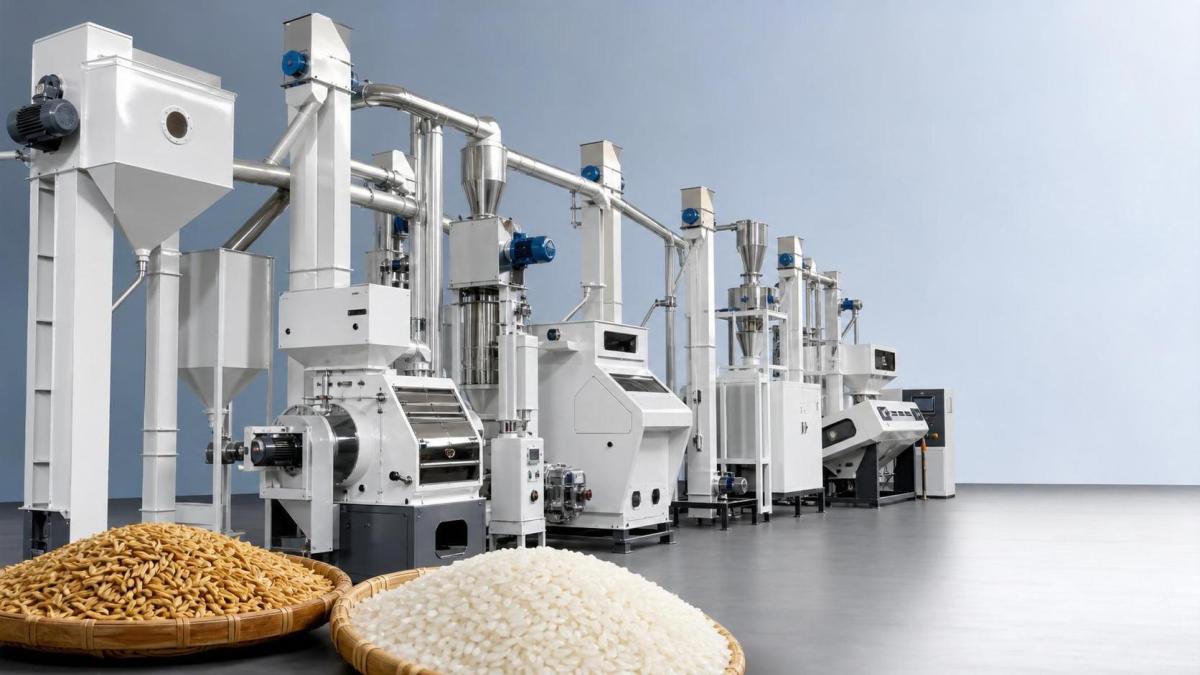
At first glance, two rice milling machines wholesale offers may look nearly identical. The price gap often comes from details hidden behind the headline specification.
A lower quote may exclude elevators, polishers, destoners, color sorters, control panels, or commissioning support. Another may include all of them.
In feed and grain processing, the real comparison starts with system boundaries. Is the quote for a single machine, a line, or a turnkey plant?
That is why informed buyers rarely compare unit price alone. They compare throughput, grain recovery, power draw, wear parts, and after-sales response together.
This is also the approach often emphasized by AgriChem Chronicle, where supply chain clarity matters as much as mechanical performance.
In practical terms, rice milling machines wholesale sourcing becomes a risk-check exercise. A cheap machine with unstable output can become the most expensive choice later.
What should be clarified before asking suppliers for final pricing?
Many quote problems start before the first email is sent. If the requirement is vague, every supplier interprets it differently.
A useful RFQ for rice milling machines wholesale should define raw paddy condition, target finished rice quality, expected hourly capacity, and local power standard.
It should also state whether the line must handle one variety or several. Long grain, short grain, and parboiled rice can require different setup choices.
The more complete the operating profile, the more reliable the quote. This reduces later disputes about output, broken percentage, or polishing quality.
- Confirm input moisture range and impurity level.
- Specify required capacity in tons per hour, not daily estimates only.
- Define target head rice yield and acceptable broken rate.
- List local voltage, frequency, and installation constraints.
- Ask what accessories and utilities are excluded.
When rice milling machines wholesale requests are standardized, quote comparison becomes cleaner. Without that discipline, apparent savings can be misleading.
Which technical points matter more than the advertised capacity?
Capacity sells, but efficiency pays. A machine rated at high throughput can still underperform if the grain recovery rate is weak.
In actual milling, head rice yield often has more financial impact than a modest difference in nominal tons per hour.
Another point is process stability. Can the equipment maintain output across moisture variation, or does it require constant manual correction?
Build quality is equally important. Frame rigidity, bearing grade, shaft alignment, and screen material influence vibration, wear, and maintenance intervals.
Energy use deserves closer review too. A lower purchase price loses appeal quickly if motors are oversized or the pneumatic design is inefficient.
For rice milling machines wholesale decisions, this table often reveals more than a polished brochure. Better data creates better comparisons.
How can you tell whether a supplier is reliable beyond the quote?
A strong quotation is useful, but supplier reliability is usually proven elsewhere. Documentation quality is one of the earliest signals.
Clear GA drawings, process flow diagrams, motor lists, and spare parts schedules suggest the supplier understands industrial execution.
It also helps to review export history, installation references, and service coverage by region. After-sales gaps are common in cross-border equipment trade.
Compliance matters as well. Depending on destination, electrical safety, dust control, and material traceability can influence customs clearance and commissioning timelines.
This is where an editorial standard like ACC’s becomes relevant. In regulated supply chains, transparency is not a branding feature. It is part of procurement risk control.
- Request factory audit records or recent third-party inspection reports.
- Check whether key components are in-house made or externally sourced.
- Verify spare parts lead time for rollers, screens, bearings, and belts.
- Ask who handles installation, training, and startup troubleshooting.
- Review warranty terms for exclusions tied to local operating conditions.
A supplier may not need to be the largest. More important is whether the technical promise can be documented, supported, and repeated.
Where do hidden costs usually appear in rice milling machines wholesale deals?
The most common hidden cost is not freight. It is performance drift after installation.
If the machine cannot meet expected recovery or polish quality, the commercial loss continues every day. This often outweighs initial logistics savings.
Another hidden cost sits in utilities. Some systems need more compressed air, dust collection, or civil preparation than the quote first suggests.
Training is another overlooked line. If operating procedures are not transferred well, breakage rises and maintenance routines slip.
More subtle costs come from spare parts fragmentation. A line built from mixed component standards can complicate future sourcing.
A more practical way to compare rice milling machines wholesale offers is to map total landed and operating cost over three to five years.
What is the smartest way to compare competing offers side by side?
A disciplined comparison matrix usually works better than long email threads. It forces every supplier into the same decision frame.
Start with hard data. Compare capacity under the same paddy condition, not marketing output under ideal test settings.
Then score commercial and operational factors. Delivery schedule, spare parts availability, documentation quality, and installation scope often decide the final ranking.
In real projects, the best rice milling machines wholesale option is often the bid with the lowest uncertainty, not the lowest invoice number.
- Normalize technical assumptions before comparing prices.
- Separate machine price from line integration cost.
- Assign weight to yield, energy, service, and compliance.
- Ask for performance references on similar grain profiles.
- Keep a written list of quote exclusions and assumptions.
If two offers remain close, a sample test, video demonstration, or third-party inspection can reduce decision risk significantly.
Before moving forward, what final questions should stay on the checklist?
Before approval, it helps to pause and test the quote against operating reality. Can the proposed line still perform during seasonal raw material variation?
Check whether the warranty language matches the actual duty cycle. Some warranties look generous, then narrow sharply under continuous industrial use.
It is also worth confirming documentation depth. Operation manuals, maintenance schedules, electrical drawings, and recommended spare lists should arrive before shipment.
For rice milling machines wholesale sourcing, careful comparison usually saves more than aggressive bargaining. Better decisions come from better verification.
A sensible next step is to build a short approval sheet covering yield targets, energy use, service terms, exclusions, and spare parts coverage.
That turns a broad market search into a structured decision, with fewer surprises after the machine reaches the mill floor.
Related Intelligence
- Milling MachineryWhat Documentation Is Required to Import Grain Milling Equipment?What documentation do I need for importing grain milling equipment? Explore essential customs, technical, compliance, and shipping records for smooth clearance.
- Milling MachineryDo Agricultural Processing Operations Require Specific Environmental Permits?Does agricultural processing require specific environmental permits? Discover key air, wastewater, stormwater, waste, and chemical compliance requirements before expanding operations.
- Milling MachineryPellet Mill Vendor Comparison: Evaluate Capacity, Energy Use, and SupportPellet mill vendor comparison: evaluate sustainable capacity, energy use, pellet quality, controls, and lifecycle support to select a reliable, cost-effective solution.
The Morning Broadsheet
Daily chemical briefings, market shifts, and peer-reviewed summaries delivered to your terminal.
