

The Authority in Global Agricultural Chemistry & Bio-Resources
Grain Processing Global Market: Demand Drivers, Capacity, and Trade Risks
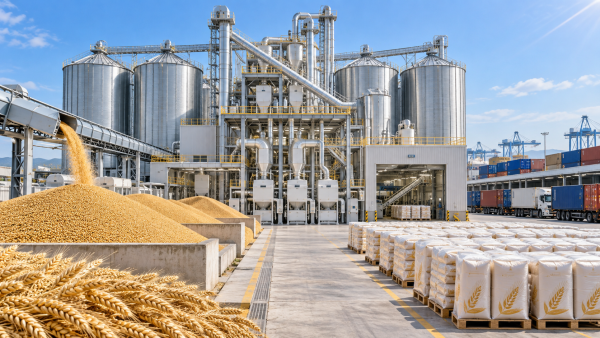
The global grain processing market is expanding in strategic importance, but not in a uniform direction. Demand for milled foods, compound feed, starches, sweeteners, ethanol, and grain-derived ingredients supports new investment, yet capacity growth alone is a poor indicator of commercial opportunity. The more decisive questions are whether a plant can secure competitively priced grain, convert it into the right product mix, manage energy and water exposure, and keep operating when trade rules or logistics conditions shift.
Processing assets sit between agricultural production and downstream food, feed, industrial, and energy markets. That position creates a structural advantage when supply is stable and regional demand is deep. It also creates vulnerability: a change in crop availability, export restrictions, sanitary requirements, freight access, or energy pricing can quickly alter a facility’s margin position. The grain processing global market should therefore be assessed as a network of regional conversion economics rather than as a single global capacity pool.
Demand is becoming more segmented than simple consumption growth suggests
Human food remains the most visible outlet for grain processing, particularly flour, rice milling products, breakfast cereals, pasta inputs, bakery ingredients, and traditional staple foods. However, the commercial value of processing is increasingly determined by how effectively operators serve more specialized demand rather than by grain throughput alone.
In wheat, maize, rice, barley, sorghum, and oilseed-adjacent processing chains, buyers increasingly differentiate among end-use specifications: protein level, starch functionality, particle size, ash content, moisture tolerance, mycotoxin control, traceability, fortification capability, and consistency across shipments. A mill producing standard flour for local distribution faces a different market from an operator serving industrial bakeries, aquafeed producers, pet-food formulators, or starch users. The latter often require tighter specification control, more reliable documentation, and greater continuity of supply.
Feed demand is especially influential because it links grain processing to livestock, poultry, dairy, and aquaculture economics. When animal protein production expands or feed formulation changes, demand may shift between maize, wheat, barley, soybean meal, rice bran, distillers grains, and other co-products. This matters because many processing investments rely on the value of by-products as much as on the main processed output. A dry-milling operation, for example, cannot be evaluated solely on flour or grits revenue if bran, germ, screenings, or feed fractions represent a material part of its margin structure.
Industrial demand adds a further layer. Starch, glucose syrups, modified grain ingredients, fermentation substrates, and biofuel feedstocks can support large-scale processing capacity, but these outlets are more exposed to policy changes, energy economics, and competing industrial inputs. A facility designed around one industrial outlet may have limited flexibility when demand patterns change. Plants with multiple product pathways, by contrast, can sometimes redirect grain streams among food, feed, and industrial markets, provided their equipment, permits, and customer qualifications allow it.
The relevant demand question is not simply whether grain consumption is rising. It is whether the target market rewards the particular outputs that a proposed facility can produce, at specifications that local raw materials can consistently meet.
Capacity additions are moving closer to demand, but raw-material advantage still governs
New grain processing capacity is often justified by proximity to consuming populations, reduced reliance on imported finished products, and policy interest in domestic value addition. These factors can be commercially sound. Local milling can reduce freight costs on bulky finished goods, shorten replenishment cycles, support country-specific product formats, and improve access to public or private food-security programs.
Yet proximity to demand does not automatically outweigh grain procurement costs. A processor located in a grain-deficit market may be close to consumers but dependent on imported wheat, maize, or rice. In that case, its true competitiveness depends on port reliability, inland transport, foreign-exchange availability, import licensing, tariff treatment, and the ability to finance inventories during volatile freight periods. A nominally local processor can remain highly exposed to international supply shocks.
Conversely, regions with strong crop production may offer lower raw-material costs but lack enough domestic demand for higher-value processed outputs. They may depend on export markets for flour, meal, starch, feed ingredients, or bio-based products. Such plants need to evaluate whether their logistics systems support outbound shipments with the same reliability as inbound grain movement. Rail access, barge terminals, bulk storage, container availability, border procedures, and destination-country import standards can matter as much as the farmgate grain price.
Capacity should also be considered at the level of usable capacity, not nameplate capacity. A plant may have substantial installed throughput but operate below design levels because grain quality is inconsistent, working capital is constrained, spare parts are delayed, electricity is unreliable, or market demand does not support continuous production. Business cases that assume stable utilization without examining these constraints often overstate expected returns.
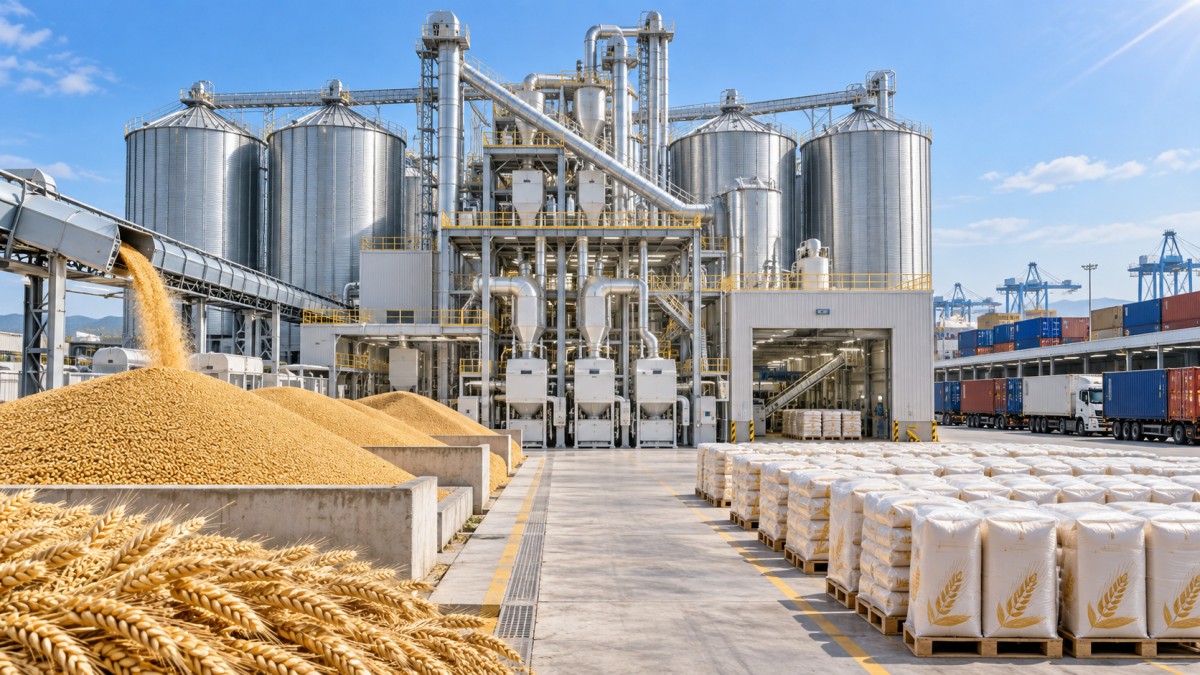
The economics of processing depend on the spread, not the commodity price
High grain prices do not necessarily benefit processors, and low grain prices do not automatically improve margins. What matters is the processing spread: the combined value of finished products and co-products, less the cost of grain, energy, labor, packaging, maintenance, financing, freight, quality losses, and compliance.
This distinction is particularly important during periods of crop volatility. If grain prices rise but finished-product prices can be adjusted quickly, a processor may preserve margins. If retail controls, fixed supply contracts, or weak consumer purchasing power prevent price pass-through, higher grain costs can compress margins sharply. The same applies to feed mills when livestock producers resist higher feed prices or when substitute ingredients become commercially attractive.
Energy is a major differentiator in drying, milling, grinding, pelleting, extrusion, starch conversion, and ethanol-related operations. Electricity interruptions can reduce yield, damage product consistency, and force costly standby generation. Natural gas, steam, and fuel costs influence operations differently depending on process configuration. A wet-milling or fermentation-based facility generally carries a different utility risk profile from a conventional flour mill. Capacity comparisons that ignore energy intensity can make high-throughput assets appear more competitive than they are.
Water availability and wastewater treatment require equal attention in processes involving washing, steeping, starch separation, fermentation, or cleaning systems. In water-stressed regions, supply restrictions or treatment obligations can affect both operating costs and permitting certainty. These are not peripheral environmental considerations; they can determine whether an industrial grain-processing project has a durable operating license.
Trade policy can alter plant competitiveness faster than demand changes
Grain and processed-grain trade is shaped by a broad set of public measures: import tariffs, tariff-rate quotas, export taxes, export licensing, temporary export controls, sanitary and phytosanitary requirements, fortification rules, pesticide-residue limits, biotechnology approvals, origin requirements, and customs documentation. Their combined effect can reshape regional arbitrage within a single marketing season.
Export restrictions are particularly disruptive for processors in import-dependent markets. They may be introduced to protect domestic food availability or contain local inflation, but they can reduce access to grain precisely when processors need it most. A facility that sources from a small number of origins may face abrupt replacement costs, different quality characteristics, or delays in securing compliant alternatives.
Import policy can have the opposite effect. Lower duties on raw grain but higher duties on flour or other processed products may encourage domestic milling. However, this protection can become fragile if local processors cannot access grain at predictable prices or if imported equipment, spare parts, enzymes, packaging, and fuel face separate tariff or currency barriers. Protective processing policy does not remove exposure; it changes where exposure sits in the value chain.
Quality and health regulations also create trade risk. Mycotoxin thresholds, pesticide-residue rules, phytosanitary certificates, fumigation conditions, and contaminant testing requirements can prevent a shipment from entering a market even when its commercial specifications are otherwise acceptable. For premium food, infant nutrition, pet food, and export-oriented ingredient markets, documentation and segregation practices are often as important as physical grain availability.
Traceability requirements are becoming commercially relevant beyond formal regulation. Large food manufacturers and institutional buyers may seek evidence of origin, storage conditions, identity preservation, and supplier controls. A processor that buys opportunistically from fragmented channels may achieve a short-term price advantage but struggle to serve customers requiring auditable supply chains.
Regional advantage is built from infrastructure, not geography alone
North and South American grain-producing regions benefit from large-scale production systems and established export corridors, but their processing economics remain sensitive to weather, river and rail conditions, labor availability, and the competing demand of domestic feed and biofuel sectors. Grain abundance can tighten quickly when several demand channels compete for the same crop.
European processing markets are shaped by dense consumer demand, stringent food and environmental requirements, relatively mature milling infrastructure, and cross-border trade within an integrated regional framework. The challenge is often not access to customers but managing energy, sustainability, and compliance costs while competing with imports or lower-cost processing regions.
In parts of Asia, processing investment is supported by large food and feed markets, diverse grain consumption patterns, and efforts to improve domestic food manufacturing capability. Yet regional supply balances vary widely. Some markets are major importers of feed grains or wheat, while others combine strong rice production with a need for specialized milling, storage, and quality-upgrading capacity. Infrastructure and procurement design can therefore be more decisive than aggregate demand.
Many African and Middle Eastern markets illustrate the importance of import logistics and food-security policy. Milling capacity can be located near ports and urban demand centers, but performance depends heavily on access to foreign currency, grain-import administration, storage discipline, and inland distribution. In such markets, building more milling capacity without securing grain procurement and working-capital resilience can create operational vulnerability rather than strategic independence.
Co-products increasingly determine whether expansion is defensible
Grain processing is rarely a single-output business. Bran, germ, hulls, screenings, broken grain, gluten fractions, distillers grains, and other secondary streams can enter feed, food ingredients, extraction, or energy applications. Their value varies with local livestock density, feed formulation practices, transport economics, storage life, and customer acceptance.
A proposed plant may appear attractive if its main product has strong demand, but weak co-product outlets can undermine the economics. Bran is valuable where feed buyers are nearby and logistics are efficient; its value falls if transport distances are long or moisture management is poor. Wet co-products can be especially constrained because their economic radius is limited unless drying capacity is available, which in turn increases energy exposure.
The strategic implication is that product diversification should be assessed through market access, not through a list of technically possible outputs. A processor may be able to produce premium fractions, fortified flour, specialty grits, or feed ingredients, but commercial value depends on customer qualification cycles, packaging requirements, product registration where applicable, and the ability to maintain consistent specifications at scale.
Investment assessment should test resilience before growth potential
Capacity projects are frequently presented through demand forecasts and projected utilization rates. Those measures are useful, but they are insufficient for judging durability. A more credible assessment starts with the operating conditions under which the asset remains viable.
- Raw-material security: Evaluate supplier concentration, crop-origin alternatives, seasonal procurement windows, storage capacity, and quality variability. A supply contract is not equivalent to physical availability under export restrictions or transport disruption.
- Margin pass-through: Identify which customers accept price adjustments, how quickly contracts reset, and whether regulated or highly competitive channels limit recovery of grain and energy cost increases.
- Utilization realism: Test expected throughput against maintenance shutdowns, utility reliability, harvest-season congestion, labor availability, and inventory-financing limits.
- Co-product monetization: Confirm local or export outlets for secondary streams, including transport cost, shelf life, feed approval requirements, and competing supply.
- Trade and compliance exposure: Map the tariff, licensing, sanitary, labeling, fortification, and customs requirements affecting both inputs and outputs, rather than reviewing grain imports alone.
- Adaptability of the asset: Consider whether the plant can change grist blends, alter product specifications, introduce value-added fractions, or shift among customer segments without disproportionate capital expenditure.
The most resilient projects are not necessarily those with the largest capacity or lowest initial grain cost. They are the ones designed around a clear regional conversion advantage: reliable access to suitable grain, an achievable product mix, credible outlets for co-products, manageable utility exposure, and supply-chain arrangements that can withstand policy or logistics disruption.
The current market direction favors disciplined processing investment rather than capacity expansion for its own sake. Food demand, feed modernization, and ingredient diversification will continue to create reasons for new and upgraded assets. But trade rules, environmental constraints, quality requirements, and energy costs are making location and operating design more consequential. In the grain processing global market, competitive position increasingly depends on the ability to manage volatility across the entire conversion chain—from crop origin and storage through processing, compliance, and final-market delivery.
Related Intelligence
- Milling MachineryGrain Processing in Singapore: Import Dependence and Value-Add OpportunitiesGrain processing Singapore: explore import dependence, high-value processing opportunities, supply-chain resilience, and regional growth strategies for food and feed businesses.
- Milling MachineryGrain Processing Global Market: Demand Drivers, Capacity, and Trade RisksGrain processing global market insights on demand drivers, capacity economics, co-products, and trade risks—discover resilient investment opportunities.
- Milling MachineryAre Third-Party Auditors Necessary When Buying Grain Machinery?Is it necessary to hire third party auditors for grain machinery? Discover when independent inspections reduce risk, verify compliance, and protect your investment.
The Morning Broadsheet
Daily chemical briefings, market shifts, and peer-reviewed summaries delivered to your terminal.
