

The Authority in Global Agricultural Chemistry & Bio-Resources
RAS System Cost Model: What Investors Should Budget Beyond Initial Equipment
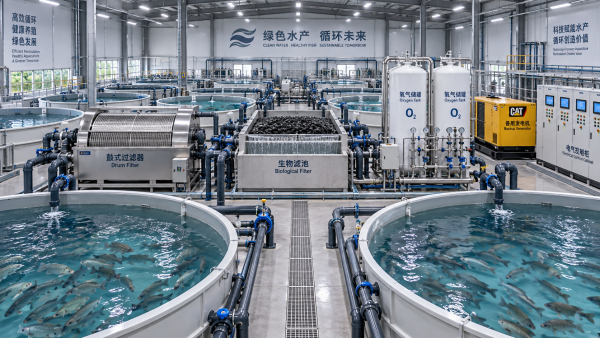
RAS System Cost Model: What Investors Should Budget Beyond Initial Equipment
A reliable RAS system cost model must account for far more than tanks, pumps, and filtration equipment. For financial approvers, the real investment case extends across design, operations, compliance, resilience, and working capital.
The central question is not simply whether a recirculating aquaculture system can produce fish. It is whether the project can sustain biological performance, cash flow, and lender confidence under realistic operating conditions.
Initial equipment quotations often create false precision. They may cover visible hardware while excluding site adaptation, electrical upgrades, intake-water treatment, staff training, backup capacity, and early-cycle biological losses.
Financial approval should therefore treat a commercial RAS system as an integrated operating asset, not a collection of aquaculture equipment. The budget must follow the complete production pathway from water source to harvested biomass.
For investors, the most defensible model separates capital expenditure, pre-operating expenditure, recurring operating costs, contingency, and working-capital requirements. This structure reveals where returns depend on assumptions rather than proven capability.
A lower purchase price can produce a more expensive facility if it increases energy intensity, labor dependency, mortality risk, maintenance downtime, or water-quality variability. Total cost of ownership matters more than headline equipment cost.
This guide explains the major cost categories that should sit beneath an RAS system investment decision. It also provides practical questions for reviewing supplier proposals, operating forecasts, and downside scenarios.
Start With the Full Installed Cost, Not the Equipment Quote
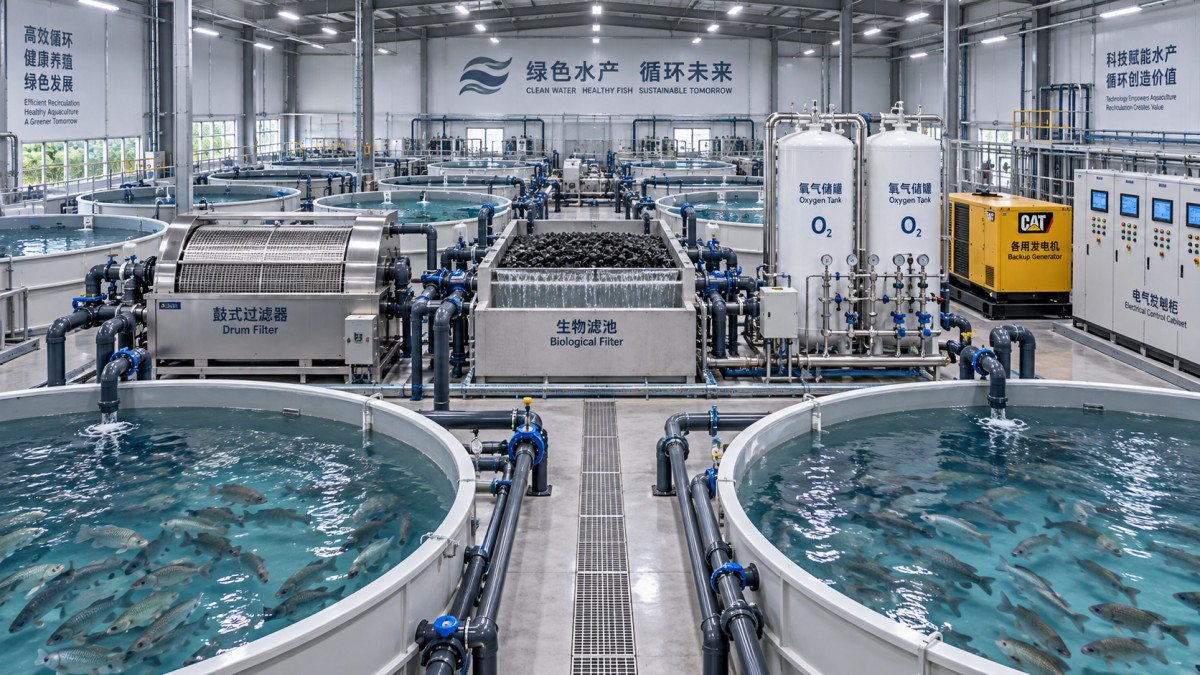
The first investment mistake is using the supplier’s equipment quotation as the project budget. A complete RAS system cost model should distinguish between supplied equipment and fully installed, production-ready infrastructure.
Core equipment commonly includes culture tanks, drum filters, biofilters, oxygenation, degassing, pumps, ultraviolet treatment, ozone systems, feed delivery, sensors, control panels, and sludge-handling equipment.
Those items are essential, but installation commonly requires civil works, process piping, drainage, insulation, ventilation, electrical distribution, foundations, access platforms, and plant-room construction. These costs vary sharply by location and building condition.
For a greenfield project, site preparation may include grading, stormwater management, roads, utility connections, water wells, intake systems, discharge infrastructure, and environmental studies. Existing buildings reduce some costs but may introduce retrofit constraints.
Financial approvers should request a work-breakdown structure that identifies every interface between supplier scope and site scope. Undefined interfaces are frequently where unplanned capital expenditure appears after contracts are signed.
Ask whether the quotation includes cable trays, switchgear, transformers, pipe supports, installation labor, commissioning consumables, cranes, shipping, customs duties, and local permitting. Small omissions can become material at commercial scale.
Installed cost should also reflect engineering responsibility. A vendor may design process equipment while another party designs the building, electrical system, plumbing, and effluent treatment. Coordination gaps can delay commissioning or reduce system performance.
A prudent model allocates a specific owner’s-cost category for legal review, technical advisory, lender due diligence, insurance, project management, travel, laboratory validation, and independent commissioning oversight.
Energy Is Usually the Most Persistent Margin Pressure
Electricity is often the most consequential operating-cost variable in an intensive RAS system. Pumps, oxygen systems, filtration, heating, cooling, lighting, ventilation, and controls consume power every hour of the production cycle.
Investors should not rely on a single annual electricity estimate. They should model consumption by equipment group, season, biomass level, water temperature, production phase, and anticipated operating mode.
Heating or chilling load deserves separate scrutiny. A facility producing warm-water species in a cold climate, or cold-water species in a warm climate, may have an energy profile that overwhelms initial efficiency assumptions.
Request the assumed kilowatt-hours per kilogram of harvested fish, then test it against local tariff structures. Demand charges, peak pricing, power-factor penalties, and emergency-generator testing can materially change annual operating cost.
A useful sensitivity analysis tests electricity prices above the base case, not only below it. Financial approval should show the effect of tariff increases on EBITDA, debt-service coverage, and minimum acceptable selling price.
Energy resilience also has a capital cost. Backup generators, fuel storage, automatic transfer switches, uninterruptible power supplies, alarm escalation, and redundant pumps protect biomass but require purchase, testing, and maintenance budgets.
Redundancy should not be dismissed as excess engineering. A short power interruption can damage water quality, oxygen availability, and fish health. The value of backup capacity should be assessed against the biomass at risk.
Where renewable generation is proposed, model it as a supplement rather than an automatic solution. Solar, storage, and demand management can reduce exposure, but they must be evaluated against operational load timing and financing costs.
Water, Oxygen, and Waste Treatment Need Their Own Budget Lines
RAS systems reduce water use compared with flow-through operations, but they do not eliminate water dependency. Water availability, chemistry, treatment, discharge requirements, and emergency supply arrangements must be budgeted explicitly.
Source water may require filtration, degassing, hardness adjustment, salinity management, disinfection, or temperature conditioning before it enters the production loop. Each treatment step adds equipment, chemicals, monitoring, and maintenance.
Oxygen is similarly easy to underestimate. Bulk liquid oxygen, on-site generation, storage vessels, piping, vaporization, backup cylinders, and safety controls should be evaluated together rather than treated as a minor consumable expense.
The correct oxygen strategy depends on local supply reliability, delivery distance, production density, emergency requirements, and cost volatility. A lower routine cost may not justify a supply arrangement with weak contingency coverage.
Waste streams require both technical and regulatory attention. Solids removal, sludge thickening, storage, transport, disposal, nutrient recovery, and wastewater treatment can become major costs where discharge limits are strict.
Financial models should identify who owns residuals after collection. Disposal fees, hauling contracts, land-application restrictions, testing requirements, and seasonal storage capacity can create recurring liabilities that supplier budgets omit.
Water-quality testing also belongs in operating expenditure. Routine measurement of ammonia, nitrite, nitrate, alkalinity, dissolved oxygen, carbon dioxide, pH, temperature, and microbial indicators supports production decisions and audit readiness.
In regions with limited water rights or sensitive receiving waters, permitting risk should be valued before construction approval. A technically functional facility is not investable if discharge permissions remain uncertain or conditional.
Biological Performance Drives the Revenue Case
An RAS system cost model is incomplete unless it links equipment capacity to realistic biological performance. Revenue depends on survival, growth rate, feed conversion, harvest weight, stocking density, grading frequency, and production consistency.
Supplier projections may present ideal feed-conversion ratios and survival rates. Investors should ask whether those figures come from comparable species, similar water temperatures, equivalent densities, and facilities operated by experienced teams.
The first production cycles are especially risky. Biofilters require maturation, staff require operating experience, and fish behavior may differ from assumptions. Early underperformance should be included in both schedule and working-capital forecasts.
Model biomass growth by batch and month, not simply by annual tonnage. Monthly modeling reveals periods when feed cost, oxygen demand, inventory value, and biological exposure rise before harvest revenue is received.
Mortality assumptions require attention beyond the annual percentage. A low routine mortality rate can coexist with a severe event risk. Financial approvers should understand both expected losses and catastrophic-loss protection measures.
Fish health planning should include quarantine capacity, diagnostic testing, vaccination where relevant, veterinary support, treatment protocols, sanitation procedures, and separate equipment for different biosecurity zones.
Juvenile supply is another critical dependency. The business case should identify hatchery sources, genetic quality, transport arrangements, stocking schedules, disease-screening requirements, and contractual remedies if fingerlings arrive late or below specification.
Feed procurement should be assessed as a strategic input, not a generic commodity line. Nutrition affects growth, water quality, waste load, harvest yield, and customer acceptance, while pricing can materially affect gross margin.
Automation Reduces Some Costs but Adds Technology Risk
Automation can improve consistency, reduce manual sampling, support remote oversight, and create better production records. However, it should be budgeted as a lifecycle capability rather than a one-time technology purchase.
Typical automation costs include sensors, programmable controls, dashboards, cameras, feeding systems, data storage, software licenses, network infrastructure, calibration tools, and cybersecurity controls.
Sensor reliability deserves close review. A low-cost monitoring package offers little protection if probes drift, alarms are poorly configured, data are not reviewed, or replacement components have long lead times.
Investors should request an alarm philosophy showing which failures trigger alerts, who receives them, escalation timing, backup communications, manual-response procedures, and evidence that operators can act quickly after hours.
Automation does not eliminate labor. It changes the labor profile toward technicians able to interpret process data, maintain controls, calibrate instruments, inspect fish health, and respond effectively during abnormal events.
Budget for software subscriptions, firmware updates, training, spare sensors, support contracts, and replacement cycles. These expenditures are often modest individually but can be significant over a facility’s planned operating life.
Data ownership should be contractually clear. Production, water-quality, maintenance, and mortality data are valuable operational assets. The owner should retain access if a vendor relationship ends or a software platform changes.
For investment review, automation should be justified through measurable outcomes: lower feed waste, reduced labor hours, earlier fault detection, improved traceability, or greater harvest consistency. Vague digital benefits are insufficient.
Compliance, Insurance, and Market Access Cannot Be Added Later
Commercial aquaculture operates within overlapping environmental, food-safety, labor, animal-health, construction, and water-use requirements. Compliance costs should be included from feasibility stage through normal production, not added after operations begin.
Requirements may include environmental impact studies, water abstraction permits, discharge monitoring, building approvals, electrical certification, worker safety programs, food-processing authorization, transport documentation, and traceability systems.
Markets may impose additional conditions. Retailers, processors, export buyers, and certification schemes can require documented biosecurity, feed traceability, residue controls, welfare practices, audit records, and chain-of-custody procedures.
Insurance should be modeled across property, equipment breakdown, business interruption, product liability, environmental liability, livestock mortality, transit, cyber exposure, and employer obligations. Coverage exclusions deserve careful review.
Premiums are only part of the decision. Deductibles, waiting periods, insured values, exclusions for disease or utility failure, and claims procedures determine whether insurance protects the cash flow assumed in the model.
Legal and permitting timelines can affect capitalized interest and revenue start dates. A delayed permit may leave completed equipment idle while payroll, lease, security, and financing expenses continue.
Financial approvers should require a compliance matrix with each obligation, owner, timing, budget, dependency, and renewal date. This transforms regulation from an abstract risk into a managed project requirement.
Projects serving premium markets should also budget for third-party audits and corrective actions. Market access is often earned through repeatable documentation, not merely through the quality of the final harvested product.
Commissioning and Working Capital Often Decide Whether a Project Survives
Commissioning is not a brief handover event. It includes installation verification, pressure testing, water-quality stabilization, biofilter maturation, control-system validation, emergency drills, staff training, stocking, and progressive performance testing.
The commissioning budget should include consumables, trial feed, laboratory tests, external specialists, travel, spare parts, utilities, and labor before the facility generates meaningful harvest revenue.
Acceptance criteria should be contractual and measurable. They may cover water flow, oxygen transfer, alarm response, filtration performance, energy consumption, leak rates, sensor accuracy, and successful operation at defined biomass levels.
Working capital should cover the gap between first stocking and stable harvest receipts. During this period, the facility may carry fish inventory while paying staff, feed suppliers, utilities, maintenance providers, and debt obligations.
A monthly cash-flow model should include payment terms, inventory growth, delayed harvest, customer credit periods, mortality events, feed-price movement, and seasonal pricing. Annual summaries can conceal liquidity failure.
Contingency should be separated from working capital. Contingency addresses uncertain project costs, while working capital funds expected operating needs. Combining them creates a misleading impression of financial resilience.
Many investors use a contingency range based on project maturity and scope certainty. Early-stage concepts need more allowance than detailed designs with fixed contracts, tested suppliers, and clear site conditions.
Do not assume contingency can solve every risk. It cannot compensate for an unrealistic price forecast, unproven biology, insufficient technical staffing, or lack of an emergency response plan.
How Financial Approvers Should Stress-Test the Investment Case
The strongest RAS system cost model is transparent about uncertainty. It presents a base case, downside case, and severe-but-plausible operating case instead of relying on one optimized projection.
At minimum, stress-test selling price, survival, feed conversion, growth rate, energy price, construction delay, capital overrun, harvest delay, oxygen cost, and customer payment timing.
Management should identify the variables with the greatest effect on cash flow. This allows investment committees to focus due diligence on the assumptions that truly determine viability rather than reviewing every input equally.
Scenario analysis should measure effects on gross margin, EBITDA, cash balance, debt-service coverage, covenant compliance, and required equity. A project can remain profitable on paper while becoming unable to meet obligations.
Independent technical review is valuable when the project is large, novel, or dependent on aggressive production assumptions. The reviewer should assess design suitability, vendor capability, operating plans, and biological evidence.
Supplier references should be investigated beyond site visits. Ask comparable operators about uptime, spare-parts availability, actual energy demand, remote support, warranty disputes, system bottlenecks, and performance after the first year.
Contract structure can reduce exposure. Milestone payments, performance guarantees, retention amounts, defined acceptance tests, spare-parts commitments, training obligations, and clear delay remedies provide more protection than informal assurances.
The investment decision should state the conditions required before funds are released. Examples include secured permits, verified utility capacity, binding offtake agreements, technical-review signoff, and an adequately funded operating reserve.
Conclusion: Fund the Operating System, Not Just the Hardware
For financial approvers, the right question is not whether the initial equipment price appears competitive. The relevant question is whether the complete RAS system can reach stable production without exhausting available capital.
A credible budget includes installed infrastructure, energy, water and oxygen, waste management, biological inputs, labor, automation, compliance, insurance, commissioning, contingency, and working capital.
Projects that model these categories openly are easier to compare, finance, and govern. They also create a clearer basis for negotiating supplier scope, setting performance milestones, and planning operational accountability.
The most investable RAS system is not necessarily the cheapest design. It is the system whose assumptions are verifiable, whose risks are funded, and whose operating economics remain credible under disciplined stress testing.
Related Intelligence
- RAS SystemsHow to Vet Middle East Oxygenation System Suppliers for RAS ProjectsOxygenation system suppliers Middle East: learn how to vet RAS partners for proven performance, resilience, local service, and lifecycle value.
- RAS SystemsRAS System Cost Model: What Investors Should Budget Beyond Initial EquipmentRAS system cost model guide for investors: budget beyond equipment for energy, compliance, working capital, resilience, and sustainable returns.
- RAS SystemsRAS Technology Explained: How Biofiltration and Oxygen Control Work TogetherRAS technology explained: discover how biofiltration and oxygen control work together to maintain stable water quality, protect fish health, and improve aquaculture performance.
The Morning Broadsheet
Daily chemical briefings, market shifts, and peer-reviewed summaries delivered to your terminal.
