

The Authority in Global Agricultural Chemistry & Bio-Resources
Grain Milling Equipment Selection: Key Factors to Compare
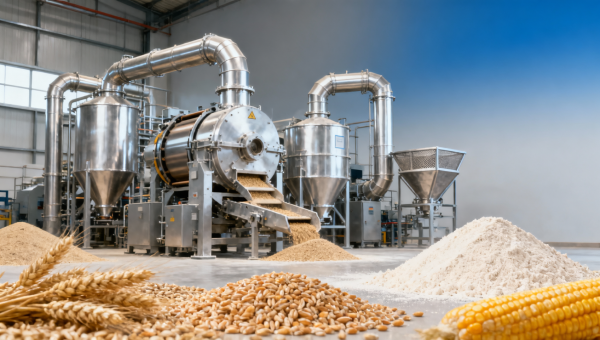
Selecting the right Grain Milling equipment affects throughput, particle size consistency, energy efficiency, product quality, and long-term operating costs.
The real challenge is not comparing nameplate specifications alone, but understanding performance under actual production, sanitation, maintenance, and compliance conditions.
This guide outlines practical factors for evaluating commercial Grain Milling systems with clearer technical judgment and stronger operational confidence.
Grain Milling Equipment Selection in Context
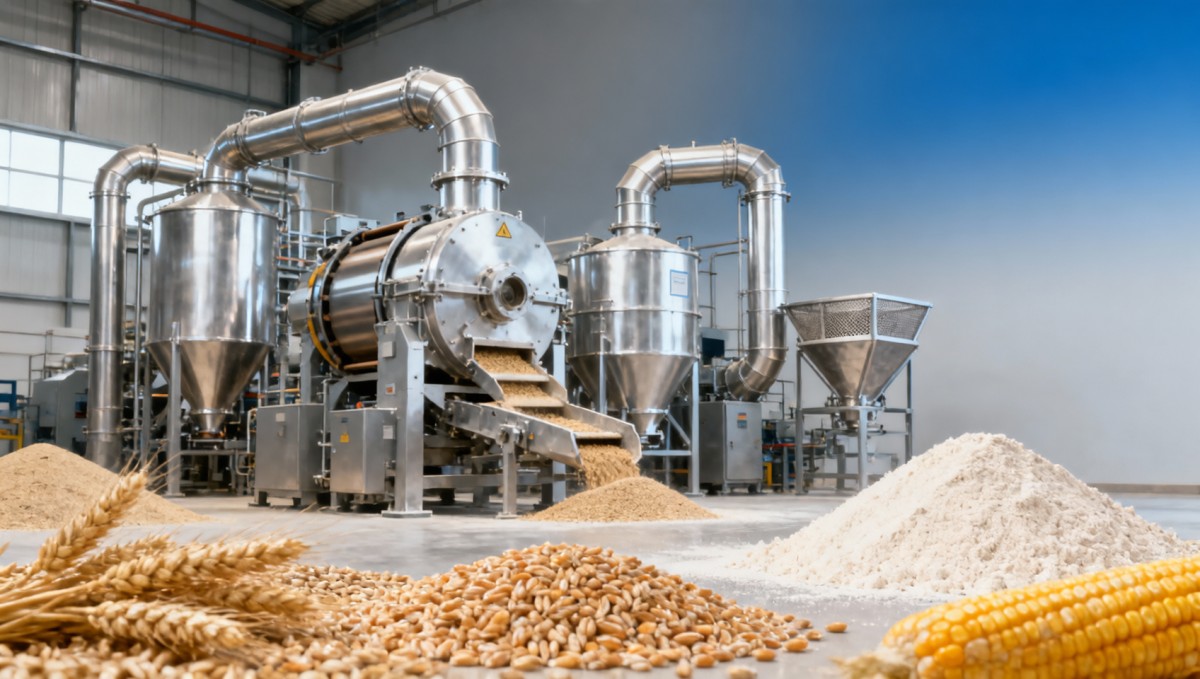
Grain Milling converts raw grain into controlled particle sizes for food, feed, brewing, bio-based ingredients, and industrial processing.
The process may involve cleaning, dehulling, cracking, grinding, sifting, separation, conditioning, and conveying.
Equipment choice depends on grain type, moisture, hardness, oil content, desired fineness, hygiene requirements, and downstream use.
A reliable Grain Milling line balances capacity, stability, particle control, energy use, dust control, and ease of maintenance.
Common systems include roller mills, hammer mills, pin mills, impact mills, stone mills, and integrated milling plants.
Each design creates different particle shapes, heat profiles, noise levels, wear patterns, and sanitation needs.
For commercial Grain Milling, equipment must also support predictable yields, clean material flow, and consistent output during long operating shifts.
Current Industry Signals Affecting Equipment Decisions
Modern Grain Milling decisions are shaped by higher quality expectations, tighter food safety controls, and pressure to reduce energy intensity.
Volatile grain supply has also increased attention to equipment flexibility across variable raw material conditions.
These signals make Grain Milling equipment evaluation more strategic than a simple purchase comparison.
The best system is one that performs consistently across changing material, regulatory, and cost environments.
Core Performance Factors to Compare
Throughput is often the first metric reviewed, but it should never be assessed in isolation.
Rated capacity must be verified against target particle size, grain moisture, screen size, roller gap, and motor loading.
A Grain Milling system that reaches high output only under ideal conditions may create bottlenecks in real production.
Particle size distribution
Particle size distribution influences texture, digestibility, extraction rate, blending behavior, and downstream processing performance.
Fine grinding may improve uniformity, but it can increase heat, dust, wear, and energy consumption.
Coarser Grain Milling may reduce power demand, yet it can affect yield, pellet quality, or ingredient release.
Energy efficiency
Energy should be measured as power consumption per ton of processed material.
Comparable tests should use the same grain type, moisture level, feed rate, and required fineness.
Efficient Grain Milling equipment reduces operating cost and lowers heat stress on sensitive ingredients.
Heat generation and product quality
Excessive heat may damage enzymes, vitamins, oils, starch functionality, or flavor quality.
Temperature rise should be checked at the inlet, milling chamber, discharge, and final storage point.
Low-heat Grain Milling is especially important for specialty flours, feed premixes, bio-extract substrates, and sensitive grain ingredients.
Equipment Types and Typical Use Cases
Different Grain Milling technologies serve different production goals.
The correct selection starts with matching the milling principle to the product requirement.
Roller mills often provide strong control over particle structure and extraction efficiency.
Hammer mills are valued for robustness, but screen maintenance and airflow design strongly affect performance.
Fine Grain Milling systems require closer attention to thermal control, explosion protection, and cleaning validation.
Material Characteristics That Change Milling Results
The same equipment can behave differently when processing different grains.
Hard wheat, soft wheat, maize, rice, barley, oats, and legumes fracture in distinct ways.
Moisture is one of the most important variables in Grain Milling performance.
Too much moisture can cause smearing, clogging, reduced throughput, and microbial risk.
Too little moisture may increase fines, dust, static, and brittle fracture.
- Kernel hardness affects power demand and fracture pattern.
- Oil content influences heat, residue buildup, and cleaning intervals.
- Husk and bran levels affect separation and yield behavior.
- Foreign material increases wear and contamination risk.
Before confirming a Grain Milling solution, representative grain samples should be tested under realistic conditions.
Short trials using ideal material rarely reveal long-term operational constraints.
Hygiene, Safety, and Compliance Considerations
Food, feed, and ingredient applications require equipment that supports safe, documented, and repeatable processing.
Grain Milling lines should minimize dead zones, dust leakage, cross-contamination, and difficult cleaning areas.
Contact surfaces should be compatible with the product, cleaning method, and applicable safety expectations.
Metal detection, magnets, aspiration, and enclosed conveying can reduce contamination risks.
Dust management is critical because fine grain particles may create respiratory, housekeeping, and explosion hazards.
- Review access points for inspection and sanitation.
- Confirm compatibility with HACCP-based procedures.
- Check dust extraction and filtration capacity.
- Assess guarding, interlocks, emergency stops, and noise exposure.
A strong Grain Milling specification includes safety performance, not only mechanical output.
Maintenance, Wear, and Lifecycle Economics
Initial equipment price is only one part of the Grain Milling cost profile.
Wear parts, downtime, labor, cleaning time, energy, and yield loss often determine lifecycle economics.
Rolls, hammers, screens, pins, bearings, belts, seals, and liners require scheduled inspection.
Wear changes particle size distribution before visible failure occurs.
Monitoring vibration, motor load, temperature, throughput, and product granulation helps identify deterioration early.
Lifecycle comparison should include documented service intervals and spare part availability.
A cheaper Grain Milling machine may become costly if downtime is frequent or adjustment is unstable.
Automation and Process Control Value
Automation improves repeatability when Grain Milling conditions shift during production.
Useful controls include feed rate regulation, motor load monitoring, roller gap adjustment, alarm history, and recipe storage.
Data logging supports quality review, maintenance planning, and root cause analysis.
However, automation should simplify operation rather than hide poor mechanical design.
Sensors must be positioned where they reflect actual milling conditions, not only general equipment status.
For integrated Grain Milling plants, control architecture should coordinate cleaning, conveying, grinding, sifting, and storage steps.
Practical Evaluation Checklist
A structured checklist reduces risk and keeps evaluation focused on measurable performance.
The following points help compare Grain Milling systems beyond brochure claims.
- Define the required particle size range and acceptable variation.
- Test representative grains at expected moisture and impurity levels.
- Measure energy consumption per ton under equivalent conditions.
- Check temperature rise from inlet to discharge.
- Review sanitation access and cleaning validation requirements.
- Calculate downtime for screen, roll, hammer, or pin replacement.
- Confirm dust extraction, guarding, and explosion risk controls.
- Compare service support, documentation, and spare part lead times.
The most useful Grain Milling trials produce data for capacity, fineness, yield, energy, noise, dust, and maintenance access.
Trial reports should include test settings, raw material details, and measured outputs.
Common Selection Mistakes to Avoid
One common mistake is selecting equipment based only on maximum capacity.
Maximum capacity may not represent stable Grain Milling performance at the required particle size.
Another mistake is ignoring product heat sensitivity during fine grinding.
Excess heat can reduce ingredient functionality before visual quality issues appear.
Maintenance access is also frequently underestimated.
If wear parts are difficult to inspect, quality drift may continue unnoticed.
Finally, selecting a Grain Milling system without dust control review can create serious operational and safety exposure.
Next Steps for a Data-Driven Decision
A sound Grain Milling decision begins with a clear process brief.
The brief should state grain types, target output, particle range, sanitation needs, available utilities, and operating schedule.
After that, request comparable performance data under defined test conditions.
Where possible, run pilot trials using real production material rather than generic samples.
Document findings in a matrix covering quality, throughput, energy, safety, cleaning, automation, and lifecycle cost.
This approach turns Grain Milling selection from a specification review into a practical engineering comparison.
For technical research and market intelligence, AgriChem Chronicle continues tracking equipment trends across feed, grain, biochemical, and primary processing sectors.
Related Intelligence
- Milling MachineryCan Agricultural Scientists Validate Grain Processing Machinery?Can agricultural scientists validate process machinery performance? Discover how grain equipment testing verifies throughput, quality, and efficiency before you invest.
- Milling MachineryGrain Processing Explained: From Cleaning and Milling to Finished Product QualityGrain Processing explained: discover how cleaning, conditioning, milling, and quality control turn raw grain into safe, consistent flour, feed, and food ingredients.
- Milling MachineryGerman Grain Processing Plants: Evaluating Automation and Energy-Efficiency UpgradesGrain processing Germany: evaluate automation and energy-efficiency upgrades to improve throughput, quality, safety, and lifecycle value.
The Morning Broadsheet
Daily chemical briefings, market shifts, and peer-reviewed summaries delivered to your terminal.
