

The Authority in Global Agricultural Chemistry & Bio-Resources
How to Choose Food Grade Bentonite Clay: Purity, Particle Size, and Compliance
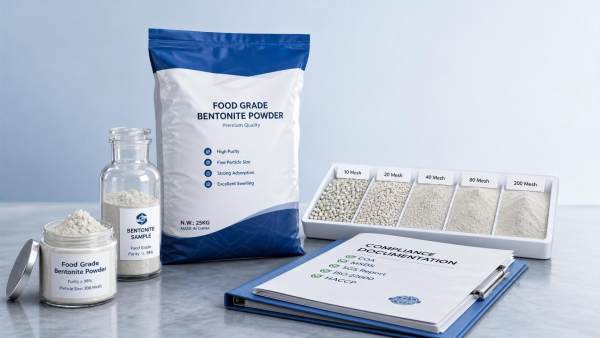
Why does food grade bentonite clay require closer scrutiny than a standard mineral ingredient?
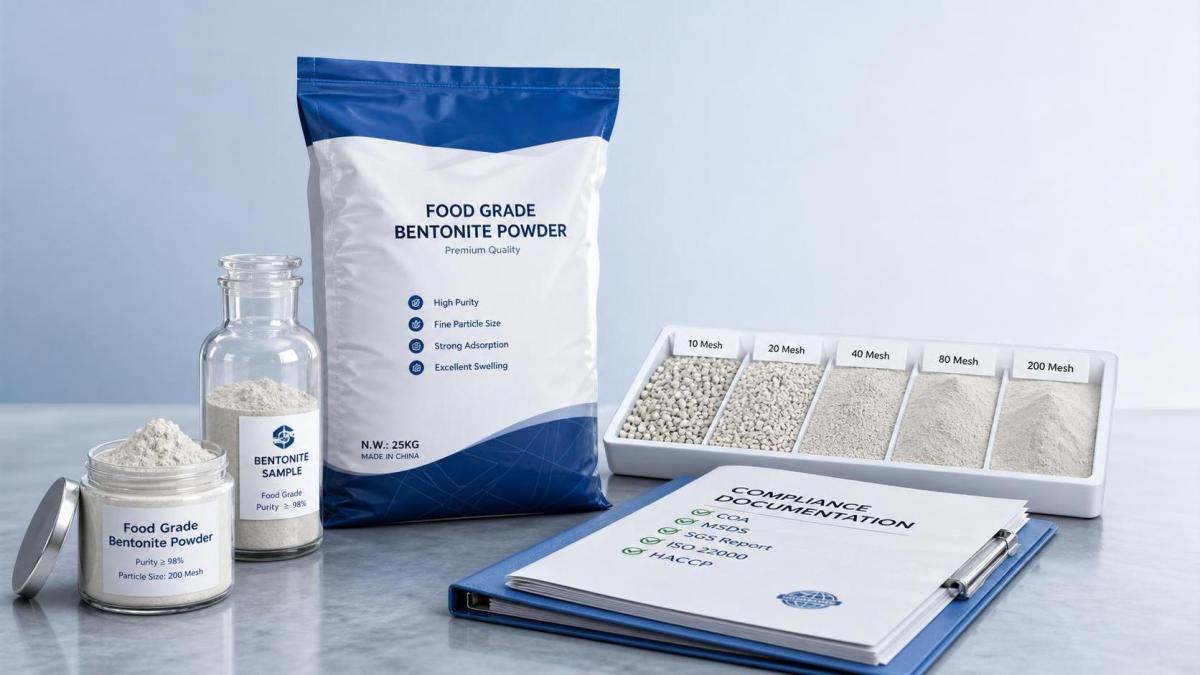
Choosing bentonite clay food grade material is rarely a routine sourcing task. It sits at the intersection of mineral chemistry, contamination control, and food compliance.
That matters even more in supply chains shaped by stricter documentation and cross-border audits. A clean invoice or confident claim does not confirm technical suitability.
In practical terms, bentonite clay food grade selection usually comes down to three filters: purity, particle size, and compliance evidence.
If one of those is weak, downstream risk rises quickly. Adsorption behavior may shift, heavy metal exposure may increase, or product release may stall during review.
Across feed, grain processing, bio-extract handling, and fine chemical interfaces, the same lesson appears repeatedly: mineral inputs need the same document discipline as higher-profile ingredients.
That is also why technical journals such as AgriChem Chronicle keep returning to supply transparency and validated specifications. The issue is not branding. It is process reliability.
What actually qualifies bentonite clay as food grade?
The phrase sounds simple, but it is often misunderstood. Food grade does not mean a clay is universally safe in any form, dose, or process.
More commonly, it means the material has been produced, tested, and documented for food-contact or food-processing use under defined limits and intended conditions.
A credible bentonite clay food grade specification should describe the mineral identity, source consistency, treatment steps, and impurity profile.
The source matters because bentonite deposits vary widely. Two clays may both be called bentonite, yet show very different metal content, microbial load, and swelling behavior.
A useful first check is whether the supplier can show batch-linked analytical data rather than only a generic brochure.
Look for documentation tied to recognized food safety expectations, including contaminant limits, manufacturing hygiene controls, and traceability through lot coding.
When those basics are missing, the phrase bentonite clay food grade becomes a marketing shortcut, not a dependable technical classification.
How should purity be assessed beyond the supplier’s certificate?
Purity is where many evaluations either become rigorous or stay superficial. A certificate of analysis is necessary, but it should be treated as a starting point.
The most common concern is heavy metals. Lead, arsenic, cadmium, and mercury usually deserve immediate review, even when the clay is used as a processing aid.
Silica balance, aluminum content, insoluble matter, and moisture also matter because they influence performance stability and handling behavior.
In actual approval workflows, purity should be judged through both composition and consistency. One compliant batch does not guarantee long-term control.
The table below helps separate quick claims from stronger verification signals.
A strong review also asks whether testing frequency matches risk. Annual testing may be too loose if the mine source or processing site changes.
For bentonite clay food grade purchases, purity should be documented as a controlled parameter, not a one-time promise.
Is particle size only about processing, or does it affect safety too?
Particle size is often discussed as a performance variable, yet it also affects dust control, dispersion, filtration behavior, and even contamination management.
A finer bentonite clay food grade powder may hydrate faster and disperse more evenly. At the same time, it can create higher airborne dust during handling.
A coarser grade may reduce dusting, but it can slow contact efficiency or leave more residue in processing systems.
That is why particle size should always be matched to the actual use case, not treated as a generic quality upgrade.
- For liquid clarification, narrow particle distribution often supports predictable settling and adsorption.
- For dry blending, flowability and segregation risk may be as important as median particle size.
- For enclosed systems, dust generation limits should be reviewed alongside sieve data or laser diffraction results.
In many audits, the missing detail is not the average value. It is the distribution curve and how the supplier keeps it stable from batch to batch.
If the intended process is sensitive, asking for retention data on multiple mesh sizes is usually more useful than accepting a single number.
Which compliance documents matter most when evaluating bentonite clay food grade?
Compliance review becomes easier when it is split into regulatory fit, quality system evidence, and traceability support.
Regulatory fit means the supplier can explain which rules or guidance documents the material is intended to meet in the target market.
That may include FDA-related expectations, food chemical codex references where relevant, local contaminant thresholds, and statements on allergen or GMO exposure if applicable.
Quality system evidence should show more than a logo on a website. Request audit status, change-control practice, deviation handling, and complaint procedures.
Traceability support is equally important. If a nonconformity appears, the material must be traceable to source, process date, and shipment records.
The stronger suppliers usually provide a documentation pack that includes:
- Current certificate of analysis with test methods.
- Specification sheet with revision control.
- Statement of regulatory status for intended markets.
- Manufacturing or quality certification details.
- Lot traceability and retention sample policy.
In sectors followed closely by AgriChem Chronicle, from feed and grain processing to bio-extract supply, documentation discipline often predicts long-term supplier reliability better than quoted price.
Where do evaluations usually go wrong?
The first mistake is treating all bentonite as interchangeable. Deposit variability alone makes that assumption weak.
Another common error is overrelying on a polished COA without checking method suitability, sampling frequency, or independent confirmation.
Some teams focus heavily on contaminant limits, then overlook packaging integrity. That can create moisture pickup, foreign matter ingress, or labeling failures.
There is also a timing issue. Qualification often starts after a production need appears, leaving too little room for comparative testing.
A short prequalification checklist usually prevents these gaps:
- Confirm intended use and exposure pathway before reviewing data.
- Compare at least two batches, not one.
- Review particle size distribution against real process conditions.
- Check whether the source mine or processor has changed recently.
- Align supplier claims with the target market’s compliance language.
These checks are not excessive. They are usually the difference between a clean approval and a corrective action later.
How can you build a practical approval standard for bentonite clay food grade materials?
A workable standard should be simple enough to apply repeatedly, but strict enough to block weak submissions.
Start with intended function. Is the bentonite clay food grade material being used for clarification, adsorption, stabilization, or another controlled process role?
Then define acceptance criteria in three groups: composition, physical performance, and compliance evidence.
For composition, set impurity limits and required test methods. For physical performance, define particle size parameters and handling expectations.
For compliance, list mandatory documents, review frequency, and requalification triggers.
A useful trigger list often includes source change, specification revision, failed trend data, new market entry, or packaging modification.
This kind of framework supports better decisions across regulated industrial sectors, especially where raw materials move through complex international channels.
In the end, selecting bentonite clay food grade material is less about finding a low-cost mineral and more about proving repeatable suitability.
The next step is usually straightforward: map the intended use, define must-have specifications, compare documented batches, and verify compliance before release.
That approach reduces guesswork, strengthens audit readiness, and keeps mineral-based inputs aligned with the same technical discipline expected elsewhere in modern food-related supply chains.
Related Intelligence
- Natural IngredientsMayonnaise vs. Salad Dressing: Ingredient and Texture DifferencesMayonnaise vs. salad dressing: discover key ingredient, texture, stability, and application differences to choose the right product for every recipe.
- Natural IngredientsIndustrial-Scale Agricultural Sourcing: Key Criteria for Reliable SupplyIndustrial scale agri sourcing made reliable: assess supplier capacity, traceability, landed cost, logistics, and resilience to protect production continuity.
- Natural IngredientsHow Microencapsulated Botanical Ingredients Improve Stability and Controlled ReleaseMicroencapsulated botanical ingredients enhance stability, protect sensitive actives, and enable controlled release for reliable performance across demanding applications.
The Morning Broadsheet
Daily chemical briefings, market shifts, and peer-reviewed summaries delivered to your terminal.
