

The Authority in Global Agricultural Chemistry & Bio-Resources
Which Biochemical Analysis Methods Are Standard for Botanical Extracts?
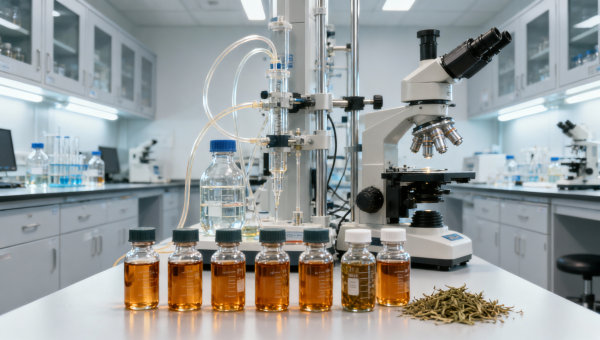
A botanical extract can arrive with a reassuring certificate of analysis and still leave important questions unanswered. Does it contain the correct plant material? Is the declared potency supported by a selective assay? Could the same result be produced by an adulterant, an interfering compound, or a different extraction process?
For buyers asking what biochemical analysis methods are industry standard, the practical answer is a combination: chromatography for identity and composition, selective assays for potency, and separate testing for relevant contaminants. HPLC, LC-MS, GC-MS, and spectrophotometric methods each have established roles, but none establishes overall quality alone. The right testing package depends on the botanical, plant part, extraction process, intended use, and applicable specifications.
Start with the specification, not the instrument
“Industry standard” does not mean every botanical extract must undergo the same tests. It usually means using recognized compendial methods where applicable, or scientifically justified methods validated for the material and purpose. A method suitable for raw leaf powder may not work for a concentrated extract containing carriers or other excipients.
Before choosing analytical techniques, define the material clearly:
- Botanical identity: accepted scientific name and plant part.
- Manufacturing details: extraction solvent, processing conditions where relevant, and extraction ratio with its basis explained.
- Composition: native extract content, added carriers, and declared marker or active compounds.
- Commercial application: food ingredient, dietary supplement, cosmetic ingredient, feed additive, or pharmaceutical material.
- Release requirements: identity, assay, contaminants, physical properties, and any application-specific criteria.
Applicable USP–NF, European Pharmacopoeia, or other recognized monographs can provide a starting point. However, a monograph for a plant drug does not automatically cover every extract derived from it. Regulatory obligations also vary by product category and destination market.
Which methods answer which quality questions?
The strongest programs use complementary evidence. A chromatographic identity test and a quantitative marker assay answer different questions, even when both run on the same instrument.
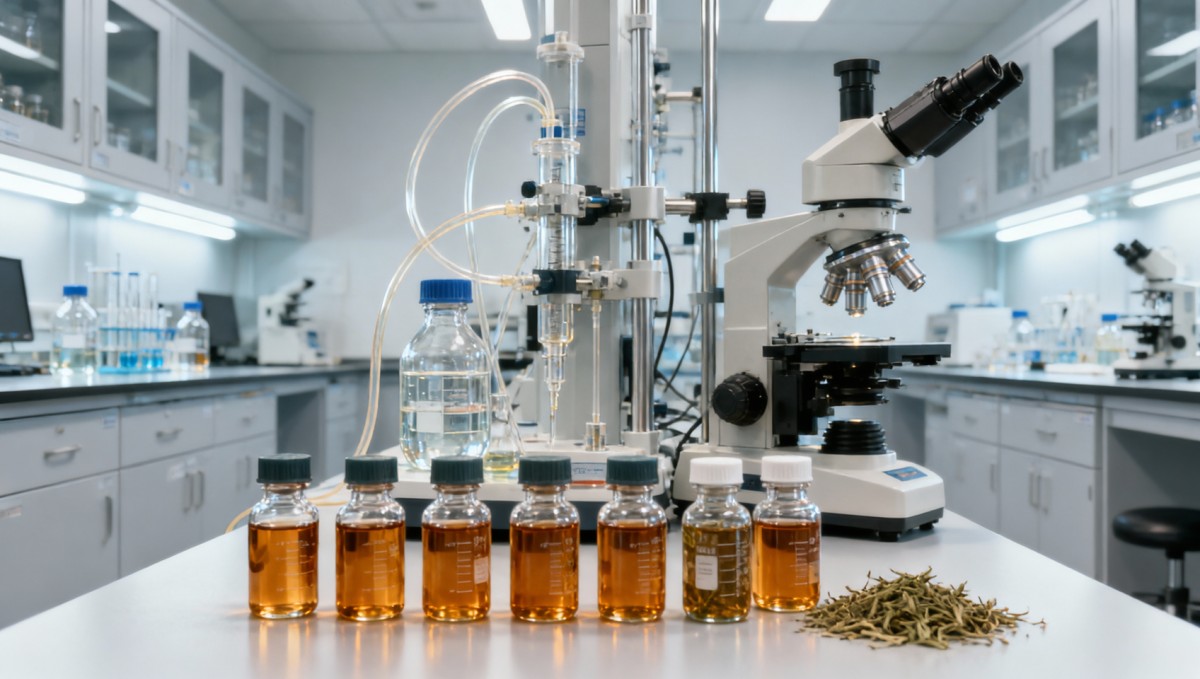
The core methods—and how to interpret their results
HPLC and UPLC: the routine foundation for many extracts
High-performance liquid chromatography separates compounds before detection. Ultra-high-performance liquid chromatography uses the same broad principle with equipment and columns designed for higher-pressure operation. Both are widely used for botanical constituents such as polyphenols, alkaloids, glycosides, and other nonvolatile compounds.
For routine quality control, HPLC with ultraviolet or diode-array detection is often a practical choice when target compounds absorb UV light adequately. Other compounds may require alternative detectors, such as evaporative light-scattering or charged aerosol detection, with appropriate validation.
Buyers should distinguish fingerprinting from quantitative assay. A fingerprint evaluates the pattern of multiple peaks. An assay determines the amount of specified compounds using calibration standards. A batch can meet a single-marker assay while showing an abnormal overall profile, including when a marker has been added to an otherwise unsuitable material.
Request the method reference, representative chromatograms, peak identification criteria, and reporting basis. “Total glycosides by HPLC” is not sufficiently clear unless the method explains which compounds are included and how their concentrations are calculated.
HPTLC: a valuable identity and screening tool
High-performance thin-layer chromatography separates sample components across a plate, allowing comparison with authenticated botanical references and chemical standards. It is widely used for botanical identification and can reveal unexpected bands, substitutions, or missing characteristic components.
Its visual format makes differences between samples easier to inspect. Nevertheless, interpretation depends on extraction conditions, application, development, derivatization, and detection. A matching band alone is weaker evidence than agreement across a characteristic profile.
HPTLC is often complementary to HPLC rather than a substitute. Quantitative applications are possible, but they require their own validated procedures.
LC-MS and LC-MS/MS: greater selectivity for difficult questions
Liquid chromatography–mass spectrometry combines separation with mass-based detection. It is especially useful for low-level constituents, complex matrices, suspected adulterants, and compounds that are difficult to distinguish using UV detection alone. Tandem mass spectrometry adds selectivity through characteristic precursor-to-product ion transitions.
More sophisticated instrumentation does not automatically produce more reliable results. Botanical matrices can suppress or enhance ionization, changing the apparent concentration. Appropriate internal standards, matrix-matched calibration, cleanup, or other validated controls may be necessary.
Accurate mass and fragmentation data support identification, but do not always establish a unique structure. Authentic reference standards or additional structural evidence may still be needed. LC-MS is therefore a targeted tool, not a universal requirement for every release assay.
GC-MS and GC-FID: the principal options for volatile fractions
Gas chromatography is particularly relevant to essential oils and extracts rich in volatile or sufficiently thermally stable compounds. GC-MS supports constituent identification through mass spectra and retention information; GC with flame ionization detection is widely used for routine quantification.
A library match alone should not be treated as definitive identification. Retention indices, reference materials, and chromatographic resolution strengthen the conclusion. Likewise, peak area percentage is not automatically equivalent to mass percentage: detector response and calibration must be considered.
Headspace GC is also commonly used for residual-solvent testing. That is a separate safety application, with its own sample preparation, analyte list, and acceptance limits.
Spectrophotometric assays: useful totals, limited specificity
UV-visible and colorimetric assays offer relatively accessible ways to estimate broad constituent classes. Examples include Folin–Ciocalteu testing for total phenolic content and aluminum chloride-based assays for certain flavonoids.
Their convenience can obscure their limitations. Folin–Ciocalteu measures reducing capacity and can respond to nonphenolic substances. Different flavonoids also respond differently in colorimetric assays. Results expressed as gallic acid equivalents or quercetin equivalents are method-defined values, not direct measurements of every molecule in that class.
These assays can support process monitoring and specifications when justified. They should not replace selective chromatography when a commercial claim concerns a specific compound.
Build a testing workflow around the extract’s risks
Method selection becomes more defensible when each test addresses a documented failure mode. For a nonvolatile extract standardized to selected markers, a practical workflow might combine:
- Identity confirmation: an appropriate HPTLC or chromatographic fingerprint against qualified references.
- Potency measurement: a validated HPLC or other selective assay for the declared constituents.
- Composition review: fingerprint assessment and, where needed, checks for carriers or suspected adulterants.
- Safety testing: contaminants selected from agricultural, processing, storage, and market-specific risks.
- Stability assessment: evidence that relevant attributes remain within specification during the proposed storage period.
An essential oil would usually place greater emphasis on GC profiling. A highly purified botanical constituent may need more extensive structural characterization, potentially including NMR. DNA testing can support authentication of suitable raw botanical materials, but processing may degrade or remove DNA, and DNA results do not establish chemical potency.
Where biological activity is a meaningful quality attribute, a validated enzyme or cell-based assay may complement chemical measurements. Antioxidant assays such as DPPH, ABTS, and ORAC describe behavior under particular test conditions; they do not demonstrate human health benefits or substitute for compositional analysis.
Contaminant testing belongs beside the biochemical panel
A chemically consistent extract is not necessarily safe. Extraction can change contaminant concentrations, and processing can introduce additional risks. Safety testing should therefore be designed independently rather than assumed to be covered by an HPLC assay.
- Elemental contaminants: ICP-MS or ICP-OES for relevant elements; speciation may be needed where the chemical form affects the applicable risk assessment.
- Pesticide residues: complementary LC-MS/MS and GC-MS/MS panels suited to the crop, sourcing region, and destination requirements.
- Residual solvents: commonly headspace GC methods covering solvents used or reasonably expected in manufacturing.
- Microbiological quality: validated enumeration and specified-organism methods appropriate to the product category and matrix.
- Mycotoxins: targeted methods where the botanical and storage history create a credible risk.
“Pesticide tested” is not a complete specification. Procurement teams need the analyte list, reporting limits, acceptance criteria, and evidence that the method works in the extract. A nondetect result means below the method’s reporting threshold—not necessarily absent.
What makes an analytical result defensible?
The instrument name is only the beginning. Sampling, extraction efficiency, reference standards, and data handling can determine whether a result is trustworthy.
For quantitative methods, review relevant evidence for selectivity, accuracy or recovery, precision, calibration performance, reportable range, and robustness. Detection and quantification limits matter when low-level measurement is required. Sample and standard solution stability, carryover, and system suitability also deserve attention.
Compendial procedures generally require verification of suitability under actual laboratory conditions; modified or noncompendial procedures may require broader validation. ICH Q2(R2) and Q14 provide relevant frameworks in pharmaceutical contexts, but their legal applicability should not be assumed for every botanical ingredient category.
Results must also use a consistent basis. A potency reported on a dried basis cannot be compared directly with an as-is result without accounting for moisture. Similarly, a native extract value may differ from a value measured in the finished extract containing carriers. Clarifying these distinctions can prevent unnecessary supplier disputes.
Before approving a supplier, read beyond “passes”
A useful certificate of analysis identifies the batch, specifications, methods, actual results where appropriate, and units. It should distinguish numerical measurements from qualitative identity conclusions. Independent laboratory testing is valuable, but laboratory accreditation alone does not prove that every botanical method is covered or suitable.
For technically significant purchases, request supporting information proportionate to the risk:
- Method references and relevant validation or verification summaries.
- Reference-standard identity, assigned purity, and traceability.
- Representative fingerprints and quantitative chromatograms.
- Sampling procedures and evidence of batch consistency.
- Stability support, storage conditions, and change-notification arrangements.
The best answer to which biochemical analysis methods are standard for botanical extracts is not a longer instrument list. It is a coherent package of identity, potency, consistency, and safety evidence. Each result should answer a specific purchasing question—and each method should be demonstrably fit for the extract being supplied.
Related Intelligence
- Botanical ExtractsWhich Biochemical Analysis Methods Are Standard for Botanical Extracts?What biochemical analysis methods are industry standard for botanical extracts? Explore HPLC, LC-MS, and essential quality tests to verify identity, potency, and safety before you buy.
- Botanical ExtractsBotanical Extracts Market: Demand Shifts Across Food, Cosmetics, and PharmaExplore the botanical extracts market across food, cosmetics, and pharma. Discover demand drivers, buyer priorities, and quality requirements to guide smarter sourcing and investment.
- Botanical ExtractsEurope's Botanical Extracts Market: How EU Rules Shape Market AccessExplore the europe botanical extracts market: learn how EU novel food rules, health claims, and national requirements shape market access, supplier selection, and smarter launch decisions.
The Morning Broadsheet
Daily chemical briefings, market shifts, and peer-reviewed summaries delivered to your terminal.
