

The Authority in Global Agricultural Chemistry & Bio-Resources
Europe's Botanical Extracts Market: How EU Rules Shape Market Access
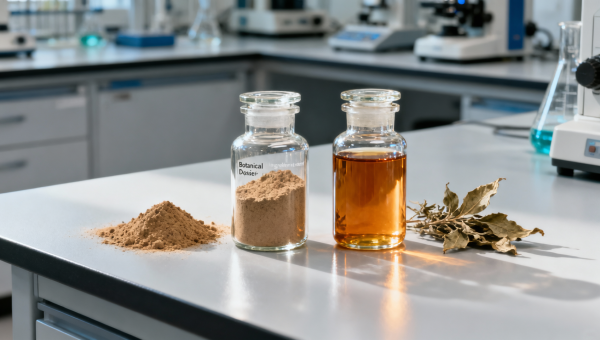
A botanical extract can meet a buyer’s assay specification and still be unsuitable for an EU launch. The obstacle may be its food-use history, extraction process, proposed health claim, or classification as a medicine rather than a food supplement. For businesses assessing the Europe botanical extracts market, regulatory readiness therefore affects the addressable market, launch schedule, and value of a supply agreement—not just compliance costs.
The first commercial decision is to define the exact extract, intended application, and destination countries before comparing suppliers. EU rules provide a shared framework, but botanical supplements still encounter national differences. An ingredient accepted for one application or market cannot automatically be treated as suitable for every European product category.
Market opportunity depends on the application, not simply the plant
Demand narratives around natural ingredients can obscure an important distinction: a botanical species is not a single regulatory or commercial asset. A traditional infusion, a concentrated solvent extract, and an isolated constituent from the same plant can have different safety profiles, permitted uses, and documentation requirements.
This fragments the market into application-specific opportunities. Food and beverage manufacturers need ingredients compatible with food law and practical formulation conditions. Supplement businesses must also navigate national botanical restrictions and claims rules. Pharmaceutical buyers operate within medicinal-product requirements, where evidence and manufacturing expectations differ substantially.
Europe also extends beyond the EU. Great Britain, Switzerland, and other non-EU destinations require separate assessment; Northern Ireland has distinct arrangements. A forecast that combines these territories without distinguishing access conditions can overstate the revenue realistically available from one ingredient dossier.
The novel food gate can change the investment case
Under the EU Novel Food Regulation, a central question is whether the food was consumed to a significant degree within the EU before 15 May 1997. That assessment concerns the relevant food or preparation—not merely evidence that the source plant has been known for centuries.
A different plant part, selective extraction, substantial concentration, or production process may change the assessment. A history of use outside the EU does not by itself establish non-novel status. There is a separate notification route for qualifying traditional foods from third countries, but it has specific evidence requirements and is not a general exemption for botanical ingredients.
For an authorised novel food, access depends on the conditions in the Union list. These can include identity, specifications, permitted food categories, maximum levels, and labelling requirements. Some authorisations also involve protected proprietary data, which can restrict reliance on the authorisation during the protection period.
A supplier’s statement that an extract is “EU compliant” is not enough. The buyer needs evidence connecting the supplied material to an established lawful use or an applicable authorisation. A species-level declaration leaves too much unresolved when extraction solvents, constituent concentrations, or intended uses differ.
The European Commission’s Novel Food Status Catalogue is useful for initial screening, but it is non-binding and not exhaustive. Uncertain status may require consultation with the relevant competent authority. Commercially, that uncertainty should be resolved before paying for application-specific development or committing to launch volumes.
A lawful ingredient does not guarantee a usable health claim
An extract may be legally saleable while the proposed marketing message is not. This distinction matters when a business case depends on positioning around sleep, digestion, stress, or another physiological function. Ingredient access and claims permission are separate workstreams.
EU nutrition and health claims rules apply to commercial communications for foods, including supplements. Health claims generally require authorisation or a valid applicable transitional basis. Botanical claims whose assessment has been put on hold are a particularly sensitive area: their pending status is not blanket permission to use them. Relevant transitional provisions, substantiation duties, national enforcement, and applicable court judgments need examination.
Food communications must also avoid attributing properties of preventing, treating, or curing human disease. Changing the wording slightly does not necessarily remove the problem if the overall presentation still conveys a medicinal claim.
Before valuing a branded ingredient or exclusive supply arrangement, test the proposition against the claim language actually available in each target market. If the intended benefit cannot be communicated lawfully, projected differentiation may disappear even though the ingredient remains saleable. Supplier presentations and published studies do not substitute for this assessment.
National differences make launch sequencing important
The EU Food Supplements Directive harmonises important aspects of supplement regulation, but it does not create a fully harmonised positive list for all botanicals and their preparations. Member States can differ in botanical restrictions, safety expectations, notification procedures, and classification practice.
Consequently, “launch across the EU” is not a sufficiently precise operating plan. A preparation may encounter different conditions concerning the plant part, daily intake, warnings, or presence of particular constituents. Borderline classification can also depend on composition, dose, presentation, and claimed effects.
Mutual recognition may be relevant to goods lawfully marketed in another Member State, but it is not an unconditional passport. Authorities can assess restrictions against applicable legal requirements, including public-health grounds. A distributor’s assertion that a product is already sold elsewhere should prompt a request for evidence, not end the review.
A more defensible market-entry model starts with named countries and a specified finished product. Compare the regulatory work, label changes, and available positioning country by country. This reveals whether one common formulation is realistic or whether an apparently larger market requires several commercially distinct products.
Quality documentation is becoming part of the commercial offer
EU food law places responsibilities on food business operators for safety, traceability, and compliance. Those responsibilities cannot simply be transferred to an overseas extract manufacturer through a warranty. Importers and downstream businesses need documentation that allows them to evaluate the material and respond when a batch fails or a safety concern emerges.
Botanical variability makes this demanding. Origin, harvest conditions, plant identity, processing, and storage can affect both desirable constituents and contaminants. A certificate of analysis showing only one marker compound gives a narrow view of suitability.
- Identity: Confirm the Latin binomial, plant part, source material, and analytical approach to distinguishing the intended botanical from substitutes or adulterants.
- Preparation: Record extraction solvents, extract ratio, carriers, standardisation method, and relevant process steps. These details help establish whether regulatory evidence covers the supplied product.
- Safety specification: Address relevant pesticides, heavy metals, microbial hazards, residual solvents, and plant-associated toxins according to the ingredient and application.
- Traceability: Connect finished extract batches to source materials and processing records, with procedures for complaints, withdrawals, and recalls.
- Change control: Require notification of changes that could affect safety, identity, regulatory status, or finished-product performance.
Testing must be matched to the applicable rules. EU pesticide maximum residue requirements and contaminant limits do not reduce to one universal “botanical extract limit.” The commodity, processing effects, concentration factors, and relevant product category can affect interpretation. Certain botanicals also require particular attention to naturally occurring or co-harvested toxic substances.
These requirements create a practical basis for supplier differentiation. An apparently cheaper extract may carry additional analytical work, unresolved identity questions, or documentation gaps. Conversely, a well-organised dossier can reduce duplicated qualification work, although it does not guarantee acceptance or eliminate buyer verification.
Pharmaceutical opportunities require a separate valuation
Botanical demand in pharmaceutical applications should not be treated as an automatic extension of supplement demand. Herbal medicinal products require an appropriate authorisation or registration route, with quality documentation and manufacturing controls suited to medicinal use.
The simplified registration route for traditional herbal medicinal products has defined conditions, including evidence of medicinal use for at least 30 years, normally including at least 15 years within the EU. It is not available merely because an ingredient is described as traditional. Eligibility also depends on matters such as indication and suitability for use without medical supervision.
European Medicines Agency herbal monographs can inform an assessment, but they are not product approvals. Nor does a supplier’s general good manufacturing practice statement prove that every relevant manufacturing activity meets the applicable pharmaceutical requirements.
For commercial modelling, keep pharmaceutical and food opportunities separate until the evidence supports both. Pharmaceutical qualification may justify a different price structure or longer relationship, but its dossier, audit, and change-control obligations must be included in the cost and timeline assumptions.
Turn regulatory uncertainty into explicit deal conditions
The most useful market assessment is not a list of attractive botanicals. It is a comparison of opportunities whose access conditions are sufficiently clear to support investment. Regulatory uncertainty should appear in the transaction structure rather than remain hidden in a general risk paragraph.
- Freeze the intended use. Specify countries, product category, daily intake, target users, and proposed claims. Assessing an ingredient without these details produces an incomplete answer.
- Match the evidence to the material. Review whether food-use history, authorisations, safety studies, and specifications cover the actual extract and manufacturing process.
- Identify unresolved access questions. Separate missing paperwork from issues requiring new evidence, authority consultation, reformulation, or a different regulatory route.
- Stage commercial commitments. Link exclusivity payments, minimum purchases, and launch milestones to defined dossier reviews or regulatory outcomes where appropriate.
- Allocate ongoing responsibilities. Establish who monitors legal changes, approves manufacturing changes, maintains records, and handles non-compliant batches or withdrawals.
This approach also improves market comparisons. A broader botanical category may look attractive while the specific extract under review has limited permitted applications. Another ingredient may offer fewer headline claims but clearer access, more consistent specifications, and less dependence on unresolved regulatory interpretation.
For the Europe botanical extracts market, the commercially relevant unit is therefore the documented extract–application–country combination. Revenue assumptions should attach to that combination, with separate allowances for qualification, testing, claims review, and national requirements. Until those elements are established, apparent market size represents potential demand—not an executable sales opportunity.
Related Intelligence
- Botanical ExtractsEurope's Botanical Extracts Market: How EU Rules Shape Market AccessExplore the europe botanical extracts market: learn how EU novel food rules, health claims, and national requirements shape market access, supplier selection, and smarter launch decisions.
- Botanical ExtractsAre Botanical Extracts Classified as Agrochemicals Under New Rules?Are bio extracts considered agricultural chemicals under new rules? Learn how claims, composition, and market rules affect classification—and what to verify before launch.
- Botanical ExtractsChoosing Botanical Extracts for Pharmaceuticals: Potency, Purity, and ComplianceBotanical extracts for pharmaceuticals: learn how to assess potency, purity, traceability, and GMP compliance for confident, regulatory-ready supplier selection.
The Morning Broadsheet
Daily chemical briefings, market shifts, and peer-reviewed summaries delivered to your terminal.