

The Authority in Global Agricultural Chemistry & Bio-Resources
Botanical Extracts Market: Demand Shifts Across Food, Cosmetics, and Pharma
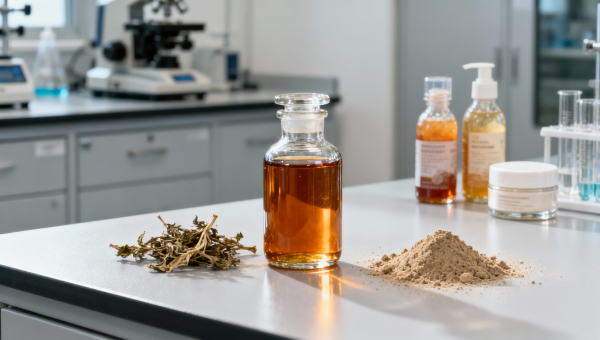
The botanical extracts market offers different opportunities across food, cosmetics, and pharmaceuticals because each sector assigns value to a different outcome. Food manufacturers need ingredients that support appealing products at an acceptable cost per serving. Cosmetics companies need performance that survives formulation and supports defensible claims. Pharmaceutical buyers need controlled materials that fit a defined development and regulatory pathway. A botanical name alone says little about whether an extract can meet any of those requirements.
For business leaders, the useful demand signal is the point at which interest becomes a repeatable specification and a funded purchase. Clean-label positioning can open a conversation, but taste, stability, evidence, and manufacturing consistency determine whether it becomes recurring revenue. Suppliers assessing capacity expansion—and buyers assessing supply security—should distinguish these routes before treating botanical demand as a single growth opportunity.
Food demand depends on whether the extract works in the finished product
In food and beverages, botanical extracts can serve several purposes: flavor, color, antioxidant functionality, or a wellness proposition. These uses have different economics. An ingredient purchased primarily for flavor competes on sensory quality and consistency; one selected to support a health-related positioning must also fit applicable ingredient and claims requirements. Combining these purposes in a market forecast can obscure how purchasing decisions are actually made.
Clean-label formulation creates a commercial opening when a botanical ingredient helps deliver a label consumers understand. However, “clean label” is a commercial description rather than a uniform regulatory category. An extract still has to perform through processing, storage, and consumption. A recognizable plant source cannot compensate for sediment in a beverage, an unwanted color change, or bitterness that requires an expensive reformulation.
Consider a plant extract intended for a functional drink. Its suitability depends on the intended dose, solubility, acidity, heat exposure, packaging, and shelf life. Raising the concentration to support a product proposition may also intensify astringency or create haze. Encapsulation or another delivery system may improve usability, while adding cost and potentially changing the ingredient declaration. Demand for the botanical therefore does not translate automatically into demand for every available extract grade.
This makes application support commercially significant. A supplier able to explain how an ingredient behaves in the intended formulation gives a buyer more useful information than a high assay result alone. Yet application data must remain specific: performance in a neutral powder blend does not establish suitability for an acidic, heat-treated beverage.
For food manufacturers, the practical comparison is cost per acceptable serving after formulation and processing losses. A cheaper extract can become expensive if it requires flavor masking, extra stabilizers, or a lower inclusion rate that weakens the product proposition. A premium grade earns its price only when its performance supports the finished product’s economics.
Cosmetics puts more weight on evidence and formulation compatibility
Cosmetics creates a different route to value. A botanical ingredient can contribute to a product’s identity, but a premium positioning is easier to defend when its composition, performance evidence, and formulation behavior align. Commercial differentiation becomes fragile when several suppliers offer the same plant name with little explanation of what distinguishes their materials.
The distinction begins with the extract itself. Plant species, plant part, extraction solvent, processing conditions, and carrier system can produce materially different ingredients. Evidence generated for one preparation cannot automatically support another. Even extracts standardized to the same marker may differ in other constituents that affect color, odor, stability, or biological activity.
Buyers therefore need to examine the relationship between evidence and the marketed ingredient. Laboratory activity can support further investigation, but it does not by itself establish a visible benefit in a finished cosmetic. Relevant questions include whether the tested material matches the commercial grade, whether the concentration is practical, and whether the study design supports the intended claim. Claims boundaries also depend on the destination market and product presentation.
Formulation compatibility creates another filter. An ingredient with attractive supporting data may be difficult to use if it destabilizes an emulsion, introduces a persistent odor, or discolors during storage. Preservative compatibility and microbiological quality also matter. These characteristics affect development time and the likelihood that an ingredient remains in the formulation through launch.
For suppliers, the opportunity lies in selling a clearly characterized ingredient with a credible use case. For cosmetics manufacturers, the risk is paying for a scientific narrative that cannot be transferred to their formulation or claim. Procurement and research teams should assess the evidence together before commercial terms are finalized; otherwise, a compelling ingredient presentation can leave the formulation team with unresolved technical work.
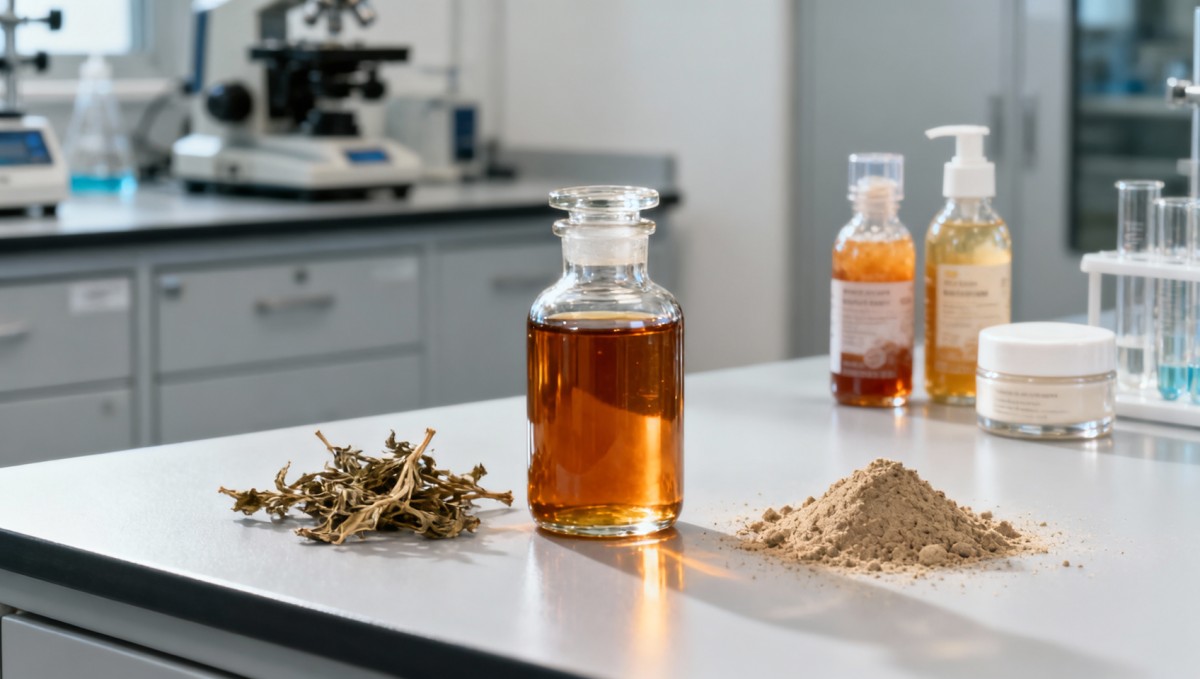
Pharmaceutical demand has a higher barrier to commercial conversion
Pharmaceutical opportunities require careful interpretation because “botanical” can describe very different materials. A plant-derived purified active substance, a complex botanical drug preparation, and an extract sold for a supplement are not interchangeable categories. Their development requirements, quality controls, and permitted claims depend on the product and jurisdiction. Including them in one market total can overstate the opportunity accessible to a particular producer.
A supplier considering pharmaceutical expansion should first identify the material’s intended role. Is it a starting material for further purification, an active substance, or a complex preparation whose composition must be controlled across multiple constituents? That answer shapes the manufacturing process, analytical program, documentation burden, and customer qualification process.
Standardization is necessary in many applications, but its scope matters. Controlling one marker compound can support consistency without fully characterizing the extract. The marker may be useful for identity or process control while providing an incomplete picture of pharmacologically relevant constituents. Depending on the product, buyers may need broader chemical profiling, impurity controls, and evidence that the process delivers comparable material across batches.
Changes upstream can consequently have effects beyond raw material pricing. A different growing region, harvest condition, storage practice, or extraction step can alter the chemical profile. Whether that change is acceptable depends on the established control strategy and regulatory commitments. A replacement supplier offering the same botanical name and nominal assay may still require substantial evaluation.
These conditions can support durable supplier relationships once a material is qualified. They can also make entry slower and more expensive than an ingredient producer expects. Laboratory capability, quality systems, process validation where required, and change control must match the intended business. Adding “pharmaceutical grade” to a commercial description does not establish suitability for a drug program.
The investment implication is significant: interest from pharmaceutical developers should be assessed by development stage, qualification requirements, and a realistic route to commercial volume. A technically promising inquiry is not equivalent to a supply agreement for a marketed product. Capacity decisions need to reflect that difference.
Value shifts toward controlled performance, but supply economics remain decisive
Across all three sectors, a useful direction for assessing the market is the demand for more clearly specified ingredients. Food buyers may specify dispersibility and sensory limits; cosmetics buyers may require a defined composition linked to supporting evidence; pharmaceutical buyers may impose a substantially broader control strategy. Each requirement creates an opportunity for differentiation, while increasing the cost of delivering an acceptable batch.
Extraction technology should be judged against that specification. Water, ethanol, and supercritical carbon dioxide extract different fractions and suit different applications. No process is universally superior. Selection depends on the target constituents, acceptable residues, thermal sensitivity, downstream processing, and production economics. A process promoted for selectivity can still be commercially unsuitable if it produces an ingredient that is difficult to formulate or expensive to recover.
Yield figures also need context. A high total extraction yield does not necessarily produce more saleable active material. Buyers and investors should distinguish crude extract yield, target constituent recovery, and the quantity of finished material that meets specification. Purification losses, drying, carrier addition, testing, and rejected batches can materially change the economics between raw biomass and released ingredient.
Traceability supports both quality control and supply planning. Botanical identity, plant part, origin, harvest conditions, and post-harvest handling can affect the consistency of incoming material. Agricultural variability makes it important to understand how suppliers manage blending, storage, testing, and sourcing changes. A certificate of analysis describes a batch; it does not explain the resilience of the production system behind it.
Dual sourcing therefore requires more than finding another producer of the same species. A workable alternative must be sufficiently comparable for the intended application. Food buyers may need sensory and stability trials, cosmetics manufacturers may need to reassess formulation behavior and supporting claims, and pharmaceutical customers may face more extensive qualification obligations. The cost and time involved should be understood before a disruption occurs.
For market monitoring, three signals are more useful than broad enthusiasm for natural ingredients:
- Conversion into qualified use: whether evaluations progress to approved formulations, repeat orders, or defined pharmaceutical development milestones.
- Demand for tighter specifications: whether customers will pay for better consistency, application performance, and documentation.
- Returns after quality costs: whether premium pricing covers testing, processing losses, inventory requirements, and technical support.
These signals help distinguish demand that can sustain investment from interest that remains exploratory. A producer serving food and cosmetics may benefit from shared sourcing or extraction infrastructure, but each commercial grade still needs its own technical and economic justification. Moving into pharmaceutical supply can require a different operating model, even when the starting plant material is familiar.
The most defensible expansion decision begins with a specific customer requirement and works backward through evidence, formulation, processing, and agricultural supply. In the botanical extracts market, the value of additional capacity depends on how reliably it can turn variable biomass into an ingredient a customer is prepared to qualify, use, and purchase again.
Related Intelligence
- Botanical ExtractsWhich Biochemical Analysis Methods Are Standard for Botanical Extracts?What biochemical analysis methods are industry standard for botanical extracts? Explore HPLC, LC-MS, and essential quality tests to verify identity, potency, and safety before you buy.
- Botanical ExtractsBotanical Extracts Market: Demand Shifts Across Food, Cosmetics, and PharmaExplore the botanical extracts market across food, cosmetics, and pharma. Discover demand drivers, buyer priorities, and quality requirements to guide smarter sourcing and investment.
- Botanical ExtractsEurope's Botanical Extracts Market: How EU Rules Shape Market AccessExplore the europe botanical extracts market: learn how EU novel food rules, health claims, and national requirements shape market access, supplier selection, and smarter launch decisions.
The Morning Broadsheet
Daily chemical briefings, market shifts, and peer-reviewed summaries delivered to your terminal.