

The Authority in Global Agricultural Chemistry & Bio-Resources
Acid Soil Treatment Scales Up as Export Potential Emerges
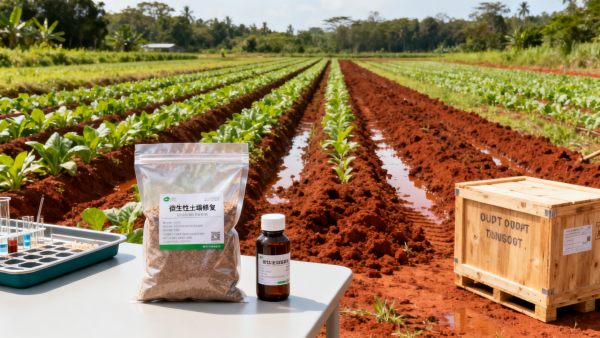
On June 5, 2026, a southern China acid-soil remediation technology led by the Institute of Soil Science, Chinese Academy of Sciences, was announced as one of the Top 10 Scientific and Technological Advances in China’s eco-environment field for 2025. For the agricultural inputs market, soil amendment suppliers, cross-border trade participants, and downstream crop-service businesses, the news matters not only because the technology has already been applied at scale, but also because its core multifunctional recombinant microbial consortium product is moving closer to export-oriented validation for Southeast Asia.
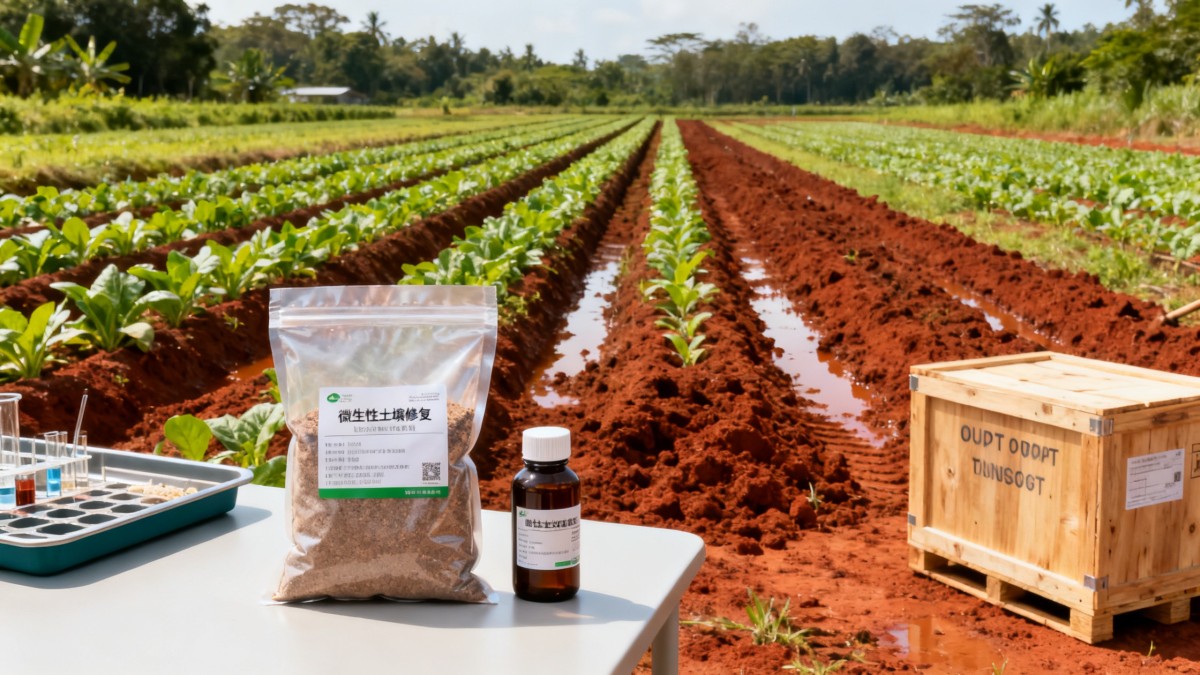
What has been confirmed so far
The recognized technology focuses on reducing constraints associated with acidic soils in southern China. Its core product, described as a multifunctional recombinant microbial consortium, has already seen large-scale application in provinces including Jiangxi and Fujian.
According to the provided information, the product has significantly improved crop aluminum tolerance and phosphorus use efficiency in those applications. The project team has also started ISO 14067 carbon footprint accounting.
In parallel, the team has signed pilot-scale cooperation agreements with Kasetsart University in Thailand and the Vietnam Academy of Agricultural Sciences. The stated purpose is to generate localized adaptation data and support joint registration for the export of microbial soil amendment products to Southeast Asia.
Why different parts of the value chain may pay attention
Input suppliers are watching product validation move beyond domestic use
From an industry perspective, producers and distributors of microbial soil amendments may see this development as relevant because the technology is no longer framed only as a research outcome. The combination of large-scale use in domestic provinces, carbon-footprint accounting, and pilot cooperation abroad points to a more structured path toward product commercialization and market access discussions.
The business impact may center on product positioning, technical documentation, and how suppliers explain agronomic performance in acidic soil conditions. What deserves closer attention is whether future market communication increasingly shifts from general soil-improvement claims toward crop tolerance and nutrient-efficiency outcomes that are easier for buyers to assess.
Cross-border operators may focus on registration and local adaptation
For traders, export-oriented service providers, and companies handling overseas market entry, the cooperation with institutions in Thailand and Vietnam is notable because it explicitly addresses localized adaptation data and joint registration support. Analysis shows that, in practical terms, overseas expansion for microbial products is not only a production issue but also a documentation, testing, and compliance issue.
The immediate effect is not a confirmed export result. Rather, the attention point lies in whether pilot work can help reduce uncertainty around local suitability, registration pathways, and technical acceptance in Southeast Asian markets.
Downstream farm-service and application channels may reassess demand signals
Service providers connected to crop management, soil improvement programs, and regional application networks may also follow this update closely. Observably, the reported gains in aluminum tolerance and phosphorus use efficiency give downstream channels more specific performance language to monitor, especially where acidic soil constraints shape input decisions.
The relevant business link here is not only product sales, but also field demonstration, grower communication, and matching solutions to local soil conditions. Companies in these channels may need to distinguish between proven domestic application experience and still-developing evidence for overseas deployment.
Operational issues companies should track now
Separate recognition from immediate market access
What deserves closer attention is the difference between scientific recognition and direct commercial clearance. The inclusion in a major eco-environment technology list strengthens visibility, but it does not by itself confirm broader regulatory approval or finished export rollout. Companies should avoid treating recognition as a substitute for market-entry readiness.
Prepare for documentation demands around carbon and product claims
The start of ISO 14067 carbon footprint accounting is a concrete signal for companies involved in procurement, overseas sales, and customer communication. Firms that may engage with similar products should monitor how carbon-related documentation is presented and whether customers or partners begin to request more standardized environmental disclosures alongside agronomic performance materials.
Track how Southeast Asia pilot cooperation translates into usable market materials
For teams evaluating Thailand or Vietnam as potential markets, the practical issue is not the signing itself, but what outputs follow. Analysis shows that localized adaptation data and joint registration support could become valuable only if they translate into usable dossiers, clearer compliance pathways, and more reliable timelines for commercial discussions.
Review supplier readiness and delivery assumptions carefully
Buyers, channel partners, and service providers should pay attention to supplier qualifications, technical files, and communication around application scope. In business terms, companies may need to verify what is already proven in large-scale domestic use, what is still under pilot validation, and how that distinction affects contracting, customer commitments, and delivery planning.
How this development is best interpreted at this stage
Analysis shows that this update is more appropriately understood as a strong industry signal rather than a fully completed export outcome. The domestic scale of application suggests that the technology has moved well beyond laboratory visibility, while the carbon-footprint work and Southeast Asia cooperation indicate an effort to align technical performance with broader market-entry requirements.
At the same time, it remains a development that still requires continued observation. The provided information confirms pilot cooperation and preparation work, but it does not confirm final registration results, commercial shipment scale, or established overseas market penetration.
What the news means in practical terms
For the industry, the main significance of this development lies in the linkage between three elements: recognized technical progress, demonstrated domestic application, and early-stage preparation for overseas adaptation and registration. That combination makes the story relevant to both agricultural input competition inside China and the external expansion prospects of microbial soil amendment products.
It is more appropriate to understand this as a medium- to long-term signal with immediate monitoring value. The recognition and pilot agreements indicate direction, while the eventual commercial impact will depend on how technical validation, documentation, and registration support continue to develop.
Basis of this article and what still needs verification
This article is based on the user-provided news title, event date, and event summary. The information reflects the stated recognition of the technology, its large-scale application in Jiangxi and Fujian, the reported agronomic effects, the launch of ISO 14067 carbon footprint accounting, and the pilot-scale cooperation agreements with agricultural institutions in Thailand and Vietnam.
For this type of industry update, commonly relevant source categories may include official announcements, research institution releases, company disclosures, industry association information, authoritative media coverage, and standard-related documents. A specific official source link was not provided in the input, so further verification is still needed. Continued attention should focus on any later official disclosures concerning carbon-footprint results, pilot progress, localized adaptation findings, and joint registration milestones.
Related Intelligence
- Botanical ExtractsAre Botanical Extracts Classified as Agrochemicals Under New Rules?Are bio extracts considered agricultural chemicals under new rules? Learn how claims, composition, and market rules affect classification—and what to verify before launch.
- Botanical ExtractsChoosing Botanical Extracts for Pharmaceuticals: Potency, Purity, and ComplianceBotanical extracts for pharmaceuticals: learn how to assess potency, purity, traceability, and GMP compliance for confident, regulatory-ready supplier selection.
- Botanical ExtractsBotanical Extracts Market Outlook: Supply, Pricing, and Buyer RisksBotanical extracts market insights on supply, pricing, quality control, and buyer risks—compare suppliers confidently and protect your sourcing strategy.
The Morning Broadsheet
Daily chemical briefings, market shifts, and peer-reviewed summaries delivered to your terminal.
