

The Authority in Global Agricultural Chemistry & Bio-Resources
Southeast Asia RAS Orders Jump 300% as Lead Times Stretch
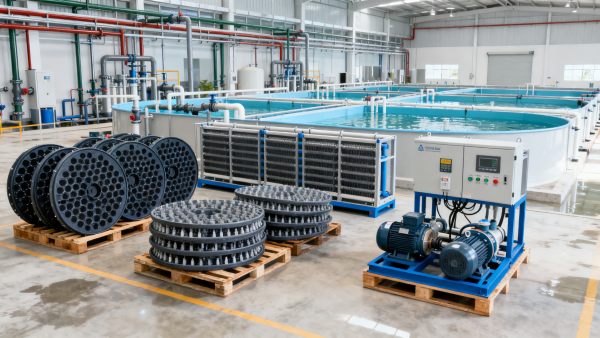
The timing of the underlying event is not clearly specified in the source input, but a June 18 notice cited from the Singapore Aquaculture Technology Association (SATA) points to a sharp shift in the Southeast Asian RAS equipment market. Driven by the concentrated launch of large land-based recirculating aquaculture projects in Indonesia, Vietnam, and the Philippines, regional RAS system orders in Q2 2026 were reported to have surged 300% year on year. For suppliers, buyers, and project operators, the immediate point of attention is not only demand growth itself, but also the extension of lead times for key Aeration & Water Tech components that can affect procurement schedules and delivery planning.
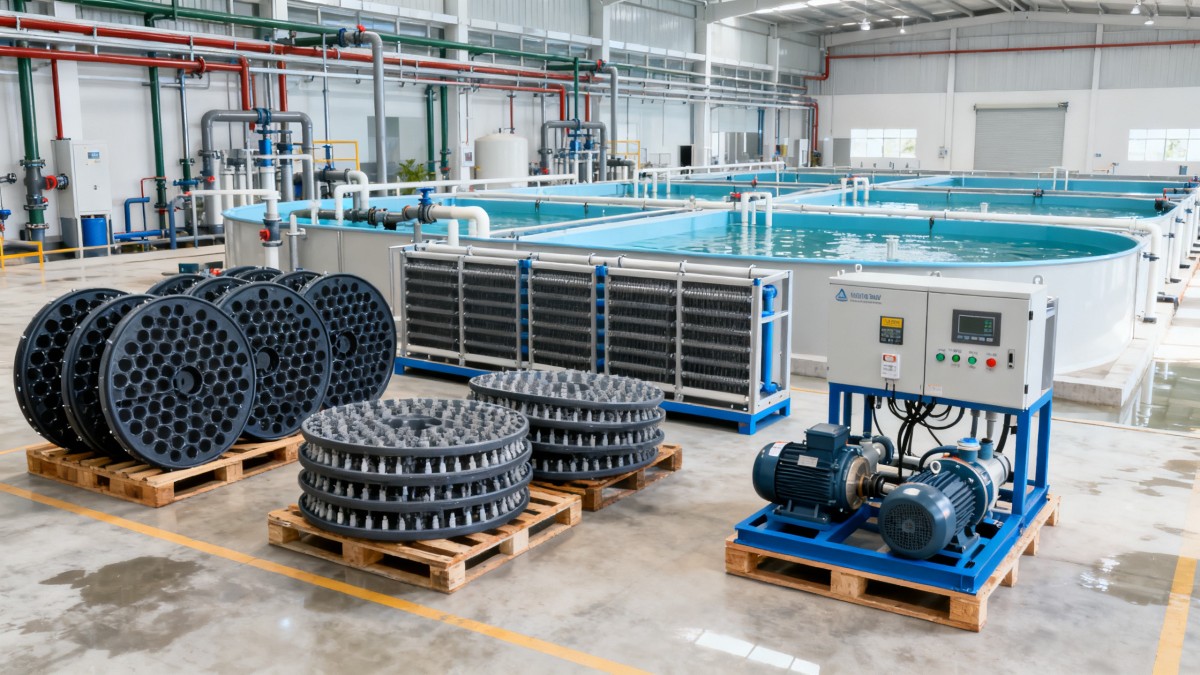
What the reported order surge confirms
According to the provided information, SATA reported on June 18 that large land-based recirculating aquaculture projects starting in Indonesia, Vietnam, and the Philippines pushed Southeast Asia RAS system orders in Q2 2026 up by 300% compared with the same period a year earlier.
The confirmed supply-side effect is a longer delivery cycle for core Aeration & Water Tech products. The products specifically referenced are high-density microporous aeration discs, intelligent dissolved oxygen controllers, and corrosion-resistant water treatment pumps.
The same input states that average lead times at leading domestic manufacturers have extended to 16 to 18 weeks, and that some models have temporarily stopped accepting new orders.
Where pressure may appear across the supply chain
Project developers face scheduling sensitivity
From an industry perspective, developers and buyers of land-based RAS projects may be the first to feel the effect because these components sit close to core system performance and commissioning timelines. If key aeration, oxygen control, or water treatment equipment is delayed, the pressure is likely to show up in procurement sequencing, installation coordination, and delivery commitments.
Equipment manufacturers and integrators need tighter parts planning
Analysis shows that manufacturers and system integrators connected to RAS delivery may need to pay closer attention to component availability rather than only headline demand. Longer lead times and paused order intake for some models can create bottlenecks in equipment matching, production planning, and contract execution.
Supply chain service providers may see higher coordination demands
Observably, firms involved in sourcing, scheduling, and shipment coordination may face a more complex operating environment when upstream delivery windows lengthen. The key issue is less about a confirmed shortage across all categories and more about whether timing mismatches begin to affect project milestones and customer communication.
What companies should watch now
Track whether lead-time pressure spreads beyond current categories
What deserves closer attention is whether the currently mentioned products remain the main pressure points or whether adjacent RAS categories begin to show similar delivery extension. For companies already quoting projects, this matters for procurement timing and specification confirmation.
Separate confirmed supply facts from broader market assumptions
Analysis shows that the confirmed facts are limited to the reported order jump, the named project markets, the listed component categories, the 16 to 18 week average lead time, and the temporary suspension of orders for some models. Businesses should avoid treating this as proof of a broader, fully established regional supply shortage without further verification.
Prepare for contract and customer communication risks
For suppliers and service providers, the practical issue is how delivery-cycle changes are reflected in quotations, order confirmation, and client expectation management. Where project timelines are tight, even moderate lead-time shifts can affect handover discussions and fulfillment planning.
Continue checking official and industry updates
Because the event timing is not clearly specified in the input beyond the June 18 SATA notice, companies should keep monitoring subsequent statements from industry bodies, manufacturers, and project-side announcements to confirm whether the current situation persists, eases, or broadens.
How this signal is best understood at this stage
Observably, this development says two things at once: demand tied to large land-based RAS construction in parts of Southeast Asia has accelerated sharply, and certain Aeration & Water Tech components are already showing delivery strain. At the same time, the available information is still narrow in scope.
It is more appropriate to understand this as a strong short-term market signal with possible broader implications, rather than as a final conclusion about the entire regional supply chain. The reason the industry should keep watching is that equipment lead times often become visible before larger procurement or execution issues are fully reflected elsewhere.
Why the industry should keep this on its radar
This update is significant because it links project concentration in three Southeast Asian markets directly with measurable order growth and longer equipment lead times. For market participants, the value of the information lies less in the headline percentage alone and more in what it suggests about procurement pressure around essential RAS components.
At present, it is more appropriate to read this as a developing industry dynamic that warrants continued verification. The signal is clear enough to matter for planning, but not broad enough to support sweeping conclusions beyond the component categories and delivery conditions already reported.
Basis of this article
This article is generated from the user-provided news title, event timing note, and event summary. The specific official source link was not provided in the input, so further verification remains necessary.
For this type of industry update, commonly relevant source categories may include official notices, company statements, industry association releases, authoritative media reporting, and standard-setting or technical organization documents. Further follow-up should focus on whether new official disclosures clarify timing, whether lead times change from the reported 16 to 18 weeks, and whether order suspensions remain limited to some models or extend further.
Related Intelligence
- Aeration & Water TechWhat RO water treatment systems deliver consistent 98% salt rejection at 25°C with feed TDS over 3,000 ppm?RO water treatment systems that deliver proven 98% salt rejection at 25°C with >3,000 ppm TDS—engineered for API synthesis, aquaculture & grain processing.
- Aeration & Water TechCan pond aeration systems maintain dissolved oxygen above 5 mg/L during summer stratification in catfish ponds?Pond aeration systems can sustain >5 mg/L DO during summer stratification—when engineered for mixing *and* oxygen transfer. See field-proven data & design essentials.
- Aeration & Water TechHow to Choose Alarm Water Monitoring Systems for Critical Water FacilitiesAlarm water monitoring systems: learn how to select reliable sensors, alarms, communications, and workflows to protect critical water facilities and prevent costly failures.
The Morning Broadsheet
Daily chemical briefings, market shifts, and peer-reviewed summaries delivered to your terminal.
