

The Authority in Global Agricultural Chemistry & Bio-Resources
China Issues 2026 Smart Greenhouse Export Guide
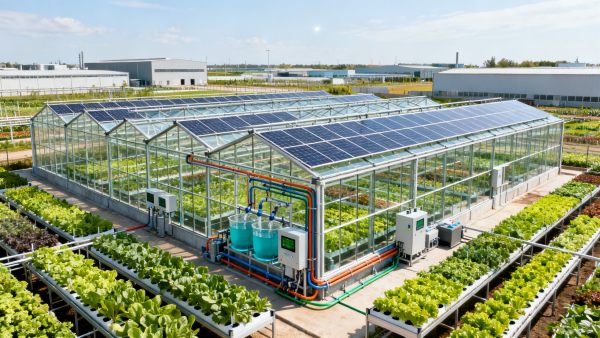
The timing of the event is not specified in the provided information, but the policy signal is clear: China has released a 2026 technical guide for exporting green and smart greenhouse equipment, giving the sector a more defined certification reference for overseas business. For exporters, equipment manufacturers, certification service providers, procurement teams, and delivery planners, the update is worth attention because it links newly recommended product categories with localized pathways aligned to international standards, which can affect compliance preparation, technical documentation, and export execution.
What the new guide explicitly covers
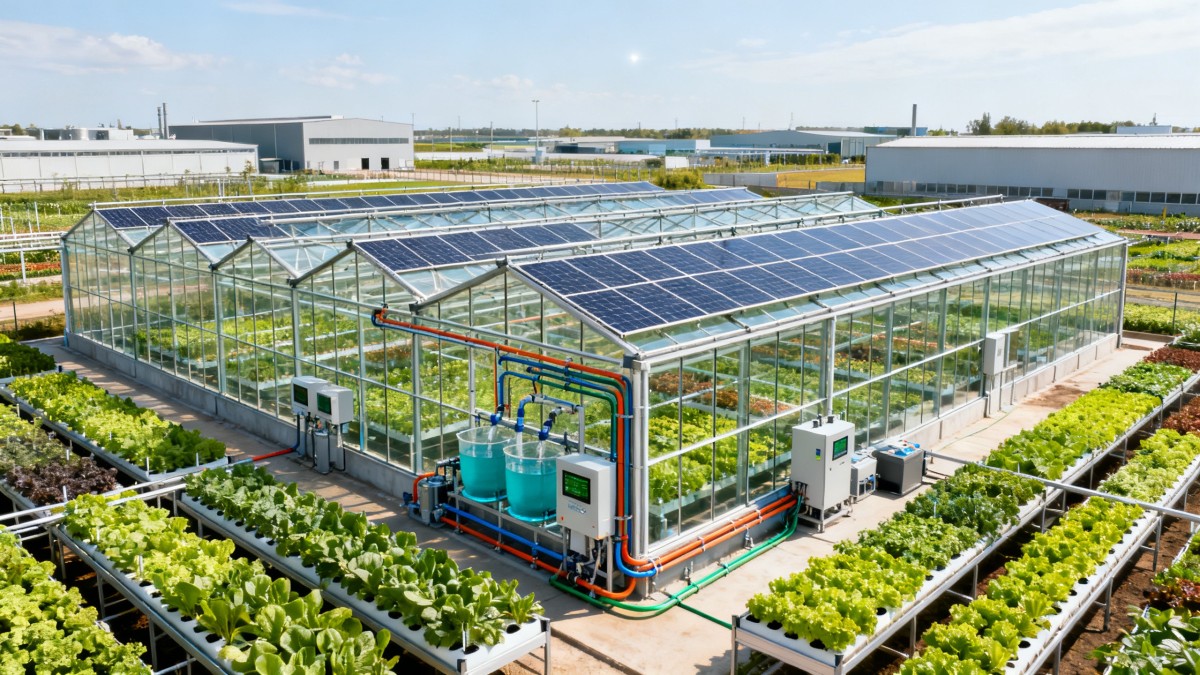
The Ministry of Commerce and the Ministry of Agriculture and Rural Affairs jointly issued the Green and Smart Greenhouse Equipment Export Technical Guide (2026 Edition). According to the provided summary, the guide includes photovoltaic-integrated covering film, AI-based environmental control algorithms, and soilless cultivation water-fertilizer coupling systems in the recommended list for export for the first time.
The same summary states that the guide sets out localized certification pathways aligned with UL 60335-2-87, EN 13849-1, and ISO 22000. The products within the stated scope include multi-span glass greenhouses, plant factory modules, and climate control systems.
Where the practical effects may appear first
Export-facing equipment suppliers may need earlier compliance planning
Analysis shows that companies selling complete greenhouse structures, plant factory modules, or climate control systems are among the most directly affected participants. The reason is not only product coverage, but also the clearer linkage between export-oriented equipment and specific international standards through a localized certification route. In practice, this may shift more work to the front end of export preparation, including specification review, technical file alignment, and product-by-product compliance screening before quotation or shipment.
Component and subsystem manufacturers may face tighter documentation demands
From an industry perspective, suppliers of subsystems tied to photovoltaic-integrated films, AI environmental controls, and water-fertilizer coupling solutions may see increased requests for supporting documents. The practical impact is likely to appear in technical declarations, test-related materials, integration descriptions, and consistency between product functions and certification claims. What deserves closer attention is whether procurement or export teams begin asking upstream suppliers for more complete records earlier in the delivery cycle.
Certification and testing service providers may be pulled further into project execution
Observably, certification-related firms and testing service institutions may become more involved at the bid, contracting, and pre-delivery stages rather than only near shipment. The guide does not, based on the provided information, define detailed enforcement outcomes, but a clearer pathway tied to UL 60335-2-87, EN 13849-1, and ISO 22000 can increase the importance of interpretation, document readiness, and scope confirmation for export projects that include integrated systems rather than single components.
Procurement and delivery teams may need to review supplier qualification logic
For buyers, channel operators, and supply chain service providers, the effect may not be limited to product selection. Analysis shows that supplier qualification, document completeness, and delivery sequencing may become more sensitive issues when systems combine structural equipment, control software, and cultivation-related modules. This matters especially where project delivery depends on whether certification-related materials, technical descriptions, and after-sales traceability records can be organized coherently.
What companies should watch now
Recheck whether product scope matches the guide
Companies should first verify whether their offerings fall within the product categories explicitly mentioned in the provided summary, especially multi-span glass greenhouses, plant factory modules, and climate control systems. Where products combine hardware, software, and cultivation functions, the key practical question is whether internal classification, export descriptions, and external sales materials are consistent.
Prepare standard-linked technical files in advance
Analysis shows that a defined localized path linked to UL 60335-2-87, EN 13849-1, and ISO 22000 can make technical documentation more important before contracts are finalized. Firms may need to pay closer attention to test-related records, product specifications, system architecture descriptions, functional safety explanations, and food-safety-related materials where applicable. The provided information does not specify exact documentary requirements, so this should be treated as a compliance preparation point rather than a confirmed filing rule.
Track official wording and execution interpretation
What deserves closer attention is not only the guide itself, but also how its wording is later reflected in official interpretations, certification practice, procurement documents, or project acceptance requirements. Since the provided information does not include detailed implementation rules, companies should avoid assuming that every practical checkpoint has already been standardized.
Assess delivery, after-sales, and traceability exposure
For exporters and service teams, it is also worth reviewing whether delivery commitments, installation support, software-related service boundaries, and quality traceability materials remain aligned with the guide's product focus. Observably, integrated greenhouse exports often involve multiple layers of documentation and responsibilities, so any clearer certification route may eventually influence how obligations are described and verified across the delivery chain.
Why this looks more like an execution signal than a final rule set
Analysis shows that this development is more appropriately understood as a stronger execution and alignment signal for smart greenhouse exports rather than as a fully detailed end-state rulebook. The inclusion of new recommended categories and the explicit connection to international standards suggest a move toward more structured export compliance expectations. At the same time, the provided information does not confirm detailed enforcement measures, transition arrangements, or project-level application methods, so further observation remains necessary.
From an industry perspective, the real significance lies in the combination of product scope and certification direction. That combination can influence how exporters structure offers, how manufacturers prepare evidence, and how service providers organize compliance support. Still, the market will likely need to watch how these references are used in actual transactions and implementation contexts.
How this update is best understood for now
At this stage, the update is best read as a practical compliance reference becoming clearer for a defined set of smart greenhouse export products. It does not, based on the provided facts, prove that execution details are fully settled, but it does indicate that certification alignment, technical documentation, and product categorization are becoming more central to export readiness. A neutral reading is that companies in this chain should treat the guide as an actionable signal to review preparation work, while continuing to monitor how the rule is interpreted and applied in practice.
Basis of this article and what still needs verification
This article is generated based on the user-provided news title, event timing, and event summary. The specific official source link was not provided in the input, so it still requires follow-up verification. For developments of this kind, relevant source types usually include official announcements, releases by regulatory or trade authorities, industry association updates, standards organization documents, customs or trade administration information, and reporting by authoritative media.
Further monitoring is still needed for any detailed policy explanations, certification execution interpretations, changes in procurement or tender documents, industry feedback, and how companies implement the guide in export operations.
Related Intelligence
- Smart GreenhouseSelecting Greenhouse Propagation Equipment for Hot, Humid Southeast Asian NurseriesGreenhouse propagation equipment Southeast Asia: discover how to select resilient irrigation, ventilation, benches, and automation for hot, humid nurseries.
- Smart GreenhouseWhat Are the Biggest Challenges in Agri-Tech Adoption in 2026?What are the biggest challenges in agri tech adoption for 2026? Explore cost, data, connectivity, skills, compliance, and ROI barriers.
- Smart GreenhouseHow Does Compact Greenhouse Technology Improve Yield in Space-Limited Growing Environments?Compact greenhouse technology improves yield in space-limited environments through better climate uniformity, vertical efficiency, precise irrigation, and repeatable crop performance.
The Morning Broadsheet
Daily chemical briefings, market shifts, and peer-reviewed summaries delivered to your terminal.
