

The Authority in Global Agricultural Chemistry & Bio-Resources
How fishery technology improves water quality monitoring
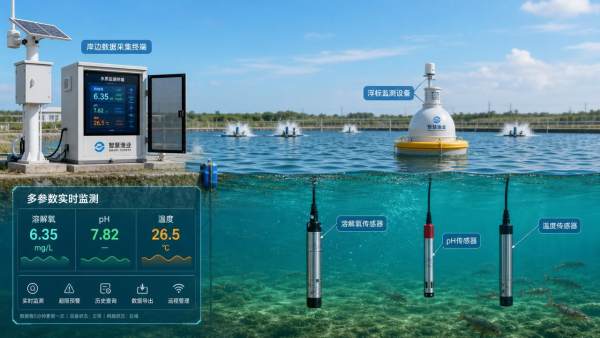
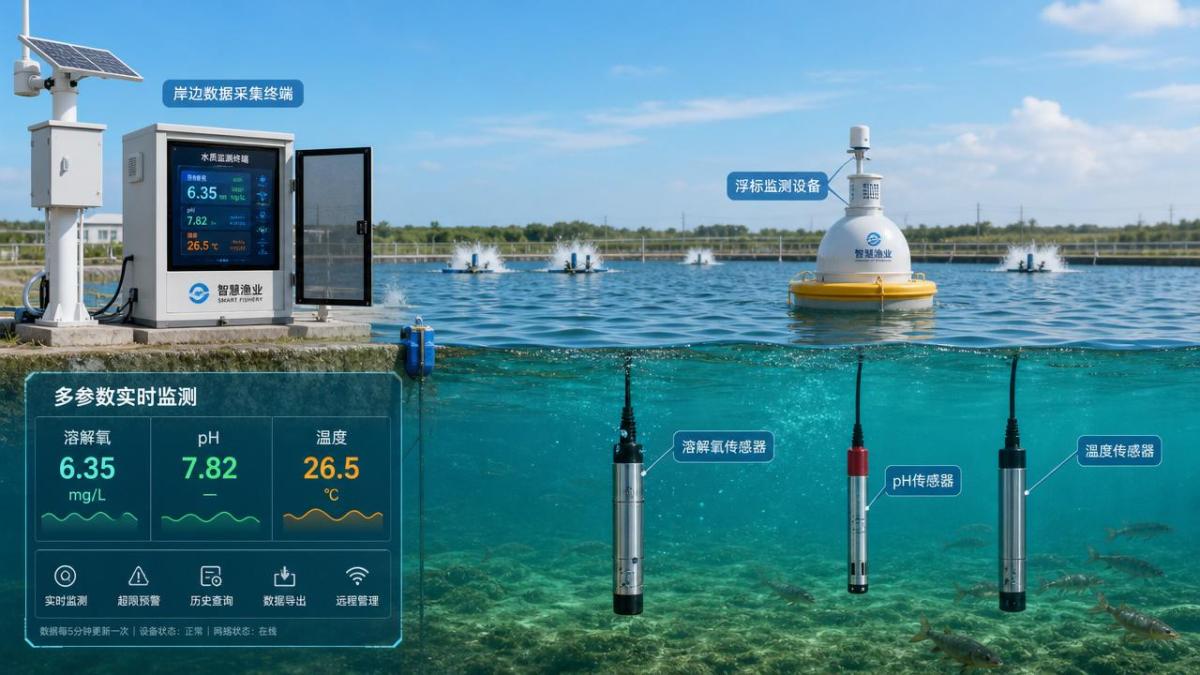
In modern aquaculture, fishery technology water quality monitoring has become essential for technical evaluators seeking reliable performance data, compliance assurance, and operational efficiency. From sensor networks and automated sampling to AI-driven analytics, advanced monitoring systems help detect risks earlier, optimize resource use, and support more stable aquatic environments. This article examines how these technologies improve monitoring accuracy and decision-making across commercial fishery operations.
For technical evaluators, the key question is not whether monitoring matters, but which technologies deliver dependable, auditable, and actionable water quality data under real farm conditions.
In practice, the value of modern systems lies in earlier anomaly detection, reduced manual error, better response timing, and clearer evidence for compliance, stocking decisions, and equipment investment.
That makes fishery technology water quality monitoring a strategic capability rather than a simple instrumentation upgrade, especially in intensive aquaculture where water shifts can affect survival, growth, and feed conversion within hours.
What technical evaluators are really trying to verify
When users search for how fishery technology improves water quality monitoring, they are usually comparing system performance, not looking for basic definitions of pH, dissolved oxygen, or turbidity.
Technical evaluators want to know whether a monitoring platform produces trustworthy data, integrates with farm operations, and helps staff respond before water quality problems become biological or financial losses.
They also care about practical issues: sensor accuracy drift, maintenance cycles, communication stability, calibration burden, false alarms, data retention, interoperability, and environmental durability in ponds, tanks, cages, or recirculating systems.
A useful evaluation therefore starts with operational questions. Which parameters need continuous measurement, how often does the environment change, and what decision will be made from each data stream?
If the system cannot support an actual intervention, such as aeration control, feeding adjustment, or water exchange timing, then high-frequency monitoring may add cost without improving outcomes.
Why traditional monitoring often falls short in commercial fishery operations
Manual sampling remains common in many fisheries and aquaculture facilities, but it has structural limitations that make it insufficient for high-density or tightly regulated production environments.
Spot checks provide only snapshots. They often miss nighttime oxygen crashes, short-term ammonia spikes, sudden salinity changes, or stratification events that develop between routine inspections.
Human sampling also introduces inconsistencies in timing, technique, and documentation. Even well-trained teams may produce variable records across ponds, shifts, or seasonal workloads.
For technical evaluators, this matters because operational risk often comes from invisible intervals. A pond that looks stable during morning inspection may have experienced multiple stress cycles overnight.
Traditional methods also make root-cause analysis harder. When fish stress or mortality appears, sparse historical records rarely provide enough granularity to reconstruct what changed and when.
As farms scale up, the weakness becomes more obvious. Labor-intensive monitoring does not expand efficiently across more sites, more species, or more environmental control points.
How fishery technology improves monitoring accuracy and consistency
The main improvement comes from continuous or high-frequency measurement using networked sensors designed for aquatic environments. These systems reduce data gaps and make changing conditions visible in near real time.
Common monitored parameters include dissolved oxygen, temperature, pH, oxidation-reduction potential, salinity, conductivity, turbidity, ammonia, nitrate, and sometimes chlorophyll or algal indicators.
Compared with manual routines, digital sensing improves consistency because every reading follows the same acquisition logic, timestamp structure, and transmission pathway.
That does not eliminate error, but it does make error easier to identify. Drift patterns, communication failures, and outlier behavior can be detected systematically rather than guessed from handwritten logs.
Advanced sondes and multi-parameter probes also reduce the mismatch that occurs when separate handheld readings are taken at slightly different times or locations under changing conditions.
For evaluators, consistency is often more valuable than isolated precision claims. A technology that maintains stable, interpretable performance over time is usually more useful than one with strong laboratory specifications but weak field reliability.
Real-time alerts change the speed and quality of operational response
One of the strongest business cases for fishery technology water quality monitoring is response time. In many production systems, minutes matter more than daily averages.
Automated thresholds and alert logic can notify operators when dissolved oxygen drops, pH moves out of range, or temperature rises beyond species-specific tolerance limits.
That enables interventions such as activating aerators, slowing feed delivery, adjusting recirculation rates, or initiating backup systems before stress escalates into mortality or long recovery periods.
For technical evaluators, the key issue is not simply whether alarms exist, but whether the alert architecture is usable. Excessive false alarms create operator fatigue and reduce trust in the system.
Effective platforms support tiered thresholds, trend-based warnings, and context-sensitive notifications. For example, a rapid oxygen decline may warrant a different response than a brief, noncritical fluctuation.
Systems that link alerts to standard operating procedures are especially valuable because they convert data into repeatable action instead of leaving interpretation entirely to individual staff judgment.
Data integration makes monitoring more useful than isolated measurement
Water quality data becomes significantly more valuable when connected to other farm systems such as feeders, aeration equipment, recirculation controls, weather feeds, biomass estimation, and production records.
Without integration, monitoring often remains descriptive. It tells operators what happened, but not how environmental shifts affected feeding behavior, energy consumption, disease risk, or harvest performance.
Integrated platforms allow technical teams to compare water quality events against feed schedules, stocking densities, mortality reports, and equipment cycles. This improves both diagnosis and planning.
For example, repeated oxygen drops after feeding may suggest overfeeding, insufficient circulation, or poor pond geometry rather than a simple need for more aeration capacity.
Likewise, linking turbidity or ammonia trends with cleaning intervals and flow patterns can reveal process bottlenecks in recirculating aquaculture systems that would not be visible from isolated measurements.
This is where fishery technology moves from monitoring toward operational intelligence. Technical evaluators should therefore look beyond sensor lists and assess data architecture, export options, and control compatibility.
AI and analytics improve interpretation, but only when the data foundation is strong
Many vendors now promote AI-driven water quality monitoring, predictive alerts, and automated optimization. These tools can provide real value, but only under the right conditions.
Analytics are most useful when they identify patterns humans may miss, such as recurring parameter interactions, seasonal deterioration trends, equipment underperformance, or leading indicators of stress events.
Predictive models can help forecast oxygen demand, estimate risk windows, and recommend preventive actions based on historical and live conditions. This can improve staffing efficiency and reduce emergency interventions.
However, technical evaluators should be cautious about inflated claims. Poor calibration, incomplete records, or inconsistent sensor placement will weaken any algorithm, regardless of interface sophistication.
The strongest systems explain how insights are generated, what variables are used, and how recommendations should be validated in site-specific conditions.
In procurement reviews, explainability matters. A platform that offers transparent trend analysis and decision support may be more credible than a black-box system promising autonomous optimization without clear performance evidence.
Compliance, traceability, and audit readiness are major decision drivers
For commercial fishery operators, water quality monitoring is not only a production tool. It also supports environmental reporting, certification programs, customer assurance, and regulatory compliance.
Digital systems improve traceability by creating timestamped records, centralized logs, calibration histories, and alarm response documentation. These are difficult to maintain reliably through paper-based workflows.
Technical evaluators often need to assess whether a platform can support internal audits, third-party reviews, or environmental disclosures with minimal data reconstruction.
That includes access control, record integrity, retention policies, export formats, and the ability to demonstrate who received alerts and what corrective action was taken.
In regulated or export-oriented operations, monitoring technology that strengthens documentation can carry value beyond direct biological performance. It reduces compliance friction and improves confidence among buyers and inspectors.
This is particularly important where environmental permits, food safety programs, or sustainability certifications require documented evidence of water management practices over time.
How to evaluate fishery monitoring technology in a structured way
A practical assessment should begin with site conditions. Pond systems, offshore cages, hatcheries, and recirculating farms have different monitoring demands, power constraints, fouling risks, and communication challenges.
Next, define critical parameters by species and production phase. Larval systems may require tighter control and faster detection thresholds than grow-out environments with broader tolerance margins.
Then examine sensor performance in context: accuracy range, drift behavior, anti-fouling design, calibration frequency, expected lifespan, and replacement logistics. Vendor brochures alone are not enough.
Connectivity should also be tested under real conditions. Remote fishery locations often face unstable cellular coverage, moisture exposure, and power interruptions that affect data continuity.
Software evaluation should focus on dashboards, alarm design, user permissions, export functions, and integration with existing supervisory or farm management systems.
Finally, review total cost of ownership rather than hardware price alone. Maintenance labor, consumables, service response, training needs, and downtime risk often determine long-term value more than initial procurement cost.
Where the strongest return on investment usually comes from
Return on investment in fishery technology water quality monitoring is rarely driven by a single factor. It usually comes from a combination of loss prevention, labor efficiency, and better operational control.
Early detection of oxygen crashes or toxic parameter shifts can prevent mortality events that would outweigh the annual cost of monitoring infrastructure in a single incident.
Continuous data also helps optimize energy-intensive systems such as aeration and pumping. Instead of running equipment by habit, operators can align usage more closely with actual environmental demand.
Labor savings matter too, especially across multi-site operations. Automated collection reduces repetitive manual rounds and allows technical staff to focus on interpretation, maintenance, and corrective action.
Another source of value is better biological consistency. Stable water conditions support feed intake, growth performance, and lower stress, which can improve conversion efficiency and reduce health volatility.
For evaluators preparing investment recommendations, the strongest business case often combines risk reduction with measurable process improvement rather than relying on broad claims of digital modernization.
Common implementation risks and how to avoid them
Even strong technology can underperform if implementation is weak. One common problem is poor sensor placement, which produces readings that do not represent the most critical water zone.
Another issue is underestimating biofouling and maintenance. Sensors in aquatic environments degrade quickly without cleaning discipline, protective design, and realistic servicing plans.
Some projects also fail because too much data is collected without a clear decision model. If teams do not know what action to take when readings change, dashboards become passive displays.
Training is equally important. Operators need to understand threshold logic, calibration routines, and alarm escalation procedures, not just how to open the software interface.
Technical evaluators should also verify vendor support quality. Fast replacement parts, local service capability, and clear commissioning protocols can matter more than advanced features during critical production periods.
Successful deployment usually depends on matching system complexity to operational maturity. A simpler, robust platform may outperform a feature-rich system that the farm cannot maintain consistently.
Conclusion: the real value is decision quality, not just more data
Fishery technology improves water quality monitoring by making environmental change visible earlier, measurements more consistent, and operational responses more timely and evidence-based.
For technical evaluators, the most important judgment is whether a system can deliver reliable field performance, actionable alerts, strong data traceability, and integration with real production decisions.
The best solutions do more than measure water. They support compliance, reduce uncertainty, and help teams act before environmental instability affects stock health, feed efficiency, or profitability.
In that sense, fishery technology water quality monitoring should be evaluated as a core operational control layer. When chosen carefully, it strengthens both biological outcomes and the credibility of management decisions.
Related Intelligence
- Aeration & Water TechHow Water Treatment Research Guides Technology Selection for Industrial Wastewater ProjectsWater treatment research guides smarter industrial wastewater technology selection. Learn how to assess variable streams, pilot risks, compare process trains, and reduce compliance costs.
- Aeration & Water TechSelecting Solids Filtration for Aquaculture: Flow Rates, Loading, and Fish WelfareSolids filtration aquaculture guide: compare flow rates, peak loading, capture performance, maintenance, and fish welfare to choose a reliable system.
- Aeration & Water TechWhat RO water treatment systems deliver consistent 98% salt rejection at 25°C with feed TDS over 3,000 ppm?RO water treatment systems that deliver proven 98% salt rejection at 25°C with >3,000 ppm TDS—engineered for API synthesis, aquaculture & grain processing.
The Morning Broadsheet
Daily chemical briefings, market shifts, and peer-reviewed summaries delivered to your terminal.
