

The Authority in Global Agricultural Chemistry & Bio-Resources
When should aquaculture drug testing be done before fish harvest?
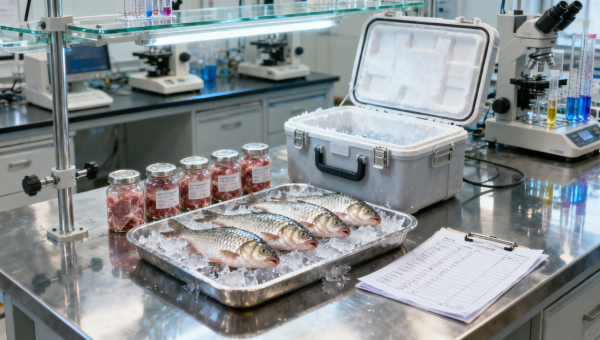
A harvest crew is booked, transport is confirmed, and a buyer is waiting. Then quality control discovers that the latest treatment record does not align with the planned harvest date. At that point, even a fast laboratory may not solve the real problem: there may be insufficient time to complete withdrawal, obtain defensible results, and investigate anything unexpected.
Aquaculture drug testing should be scheduled around the applicable withdrawal requirement, the risk profile of the harvest lot, and the time needed to obtain and act on laboratory results—not a universal number of days before harvest. Where pre-harvest testing forms part of the release program, the most useful sampling point is generally after the required withdrawal period has been completed and sufficiently before harvest to allow a documented decision. Some regulatory or buyer programs specify a different sampling window, which must take precedence.
For quality control and safety managers, the objective is straightforward: test fish that represent what will be sold, without allowing production pressure to turn an incomplete assessment into a release decision.
Separate the withdrawal clock from the testing clock
Two timelines govern a sound pre-harvest plan. They interact, but they are not interchangeable.
The withdrawal clock concerns the interval required between the final administration of a medicine and harvesting fish for food. The applicable requirement depends on the authorized product, species, use conditions, jurisdiction, and, where relevant, veterinary instructions. It may be expressed in calendar days or in a temperature-dependent form such as degree-days.
The testing clock covers sample collection, transport, laboratory receipt, analysis, technical review, and any follow-up work. A laboratory’s quoted analytical turnaround does not necessarily include weekends, courier delays, sample preparation, or confirmation of a screening result.
A negative residue test does not cancel a withdrawal requirement. Conversely, completing withdrawal does not guarantee compliance if the product was misused, treatment records are unreliable, or exposure continued through another route. Whether laboratory testing is legally required before every harvest depends on the applicable program; farms should not assume that one rule applies everywhere.
Build the sampling date backward from the release decision
Begin with the date by which the lot must be approved for harvest or shipment. Then reserve enough time for the entire testing process, including a realistic investigation buffer. Check that the proposed sampling date also satisfies the applicable withdrawal requirement and any prescribed sampling window.
Consider an illustrative schedule: a laboratory quotes three working days after sample receipt, while transport requires another working day. Sampling four calendar days before harvest may already be too late, particularly across a weekend. Additional time is needed if an inconclusive screen must be confirmed. These are planning assumptions, not a recommended testing interval.
If backward scheduling places the sampling date before withdrawal is complete, do not shorten withdrawal to preserve the booking. Move harvest, arrange a validated faster laboratory service where available, or redesign the schedule. Earlier testing may provide useful investigative information, but it should not be treated as the sole release evidence unless the applicable program permits that approach.
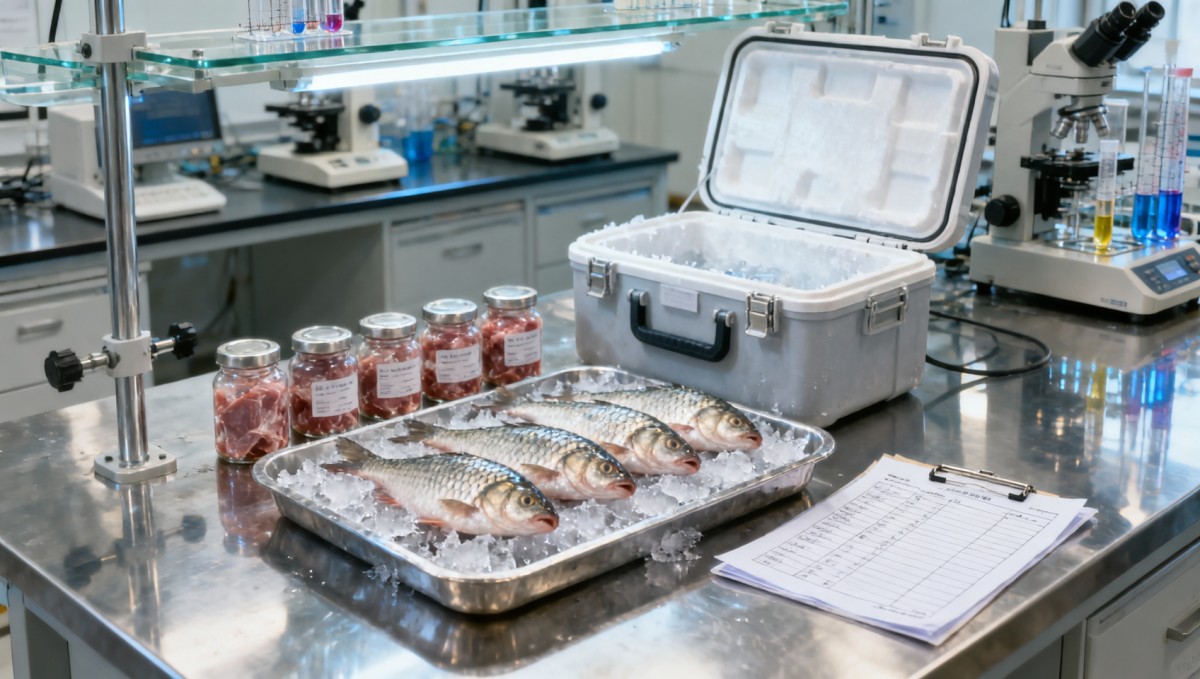
What can change the timing of aquaculture drug testing?
The actual treatment history—not just the prescription
Review the product name, active substance, formulation, dose, administration route, treatment dates, and fish group treated. For medicated feed, reconcile feeding records with delivery and inventory records. The date treatment was intended to end may differ from the last date medicated feed was actually offered.
Incomplete consumption can complicate dose assessment. Leftover medicated feed, incorrectly identified feed bins, or accidental reuse can also create uncertainty about exposure. If a discrepancy emerges, the withdrawal calculation and testing plan need reassessment before release.
Water temperature and conditions affecting depletion
Where an authorized withdrawal requirement uses degree-days, retain reliable temperature records and apply the specified calculation method. Do not convert a calendar-day requirement into degree-days, or transfer a degree-day value between products or species without an accepted basis.
Temperature, health status, feeding behavior, and other biological conditions can influence drug depletion. When actual treatment conditions fall outside the authorized use conditions, seek advice from the responsible veterinarian and relevant authority rather than adding an arbitrary safety margin and assuming the issue is resolved.
Destination-market requirements
A substance permitted for a particular aquaculture use in one country may not be permitted for the same use elsewhere. Residue limits, marker residues, target tissues, and enforcement rules can also differ. A domestic-market test panel may therefore be insufficient for an export consignment.
Confirm the destination before commissioning analysis. Codex maximum residue limits can provide useful reference information, but they do not automatically replace importing-country requirements. Buyer specifications may add conditions, although they cannot override the law.
Match the sample to the fish that will actually leave the farm
Timing loses value if the sample does not represent the harvest lot. Define the lot before collection using traceable production units: ponds, cages, tanks, treatment groups, or another documented grouping appropriate to the operation.
Fish with different treatment histories should not be casually combined into a single release lot. Moving, grading, or mixing fish after sampling can weaken the connection between the laboratory report and the shipment.
- Use an applicable sampling plan. Follow official or contractual instructions where specified. Otherwise, establish a documented, risk-based plan with competent technical input.
- Collect the correct matrix. Required tissues may differ by market and analyte. Confirm whether the method requires muscle, muscle with skin in natural proportions, or another specified matrix.
- Avoid convenience sampling. Easily captured fish from one location may not represent a large pond or multiple cages.
- Control compositing. Combining tissues can dilute an individual elevated result. Use composites only where the sampling program and analytical method support them.
- Maintain sample integrity. Follow laboratory instructions for containers, temperature, preservation, shipping, and chain of custody.
There is no defensible universal sample count for every farm. Lot size, treatment variability, sampling objectives, and mandatory program requirements all matter. One negative fish cannot establish that an entire production unit is residue-free.
Choose the laboratory panel before sending samples
“Test for antibiotics” is not a sufficiently precise instruction. Different methods detect different compounds, metabolites, or marker residues. A broad panel may still omit the substance relevant to a recent treatment.
Provide the laboratory with the treatment history, species, required tissue, destination market, and purpose of testing. Discuss known risks involving unauthorized substances, feed carryover, or uncertain supplier records. Confirm that the laboratory can measure the relevant residues at concentrations suitable for the applicable decision criteria.
Laboratory accreditation to ISO/IEC 17025 is valuable, but the scope matters: check whether the relevant method, analytes, and matrix are covered. For regulatory work, additional recognition or specified methods may be required.
Rapid screening can support operational decisions when validated for the intended use. However, screening and confirmatory analysis are not interchangeable. Establish in advance how presumptive positive, inconclusive, or invalid results will be handled. This prevents an uncomfortable discussion about analytical limitations after the harvest crew has arrived.
Read the result as a release assessment, not a green light
A result reported as “not detected” means the analyte was not detected under the method’s stated conditions and detection capability. It does not mean that every possible drug is absent, nor does it establish that treatment was legally authorized.
Before approving harvest, the responsible reviewer should assess three linked questions:
- Was the use compliant? Check product authorization, treatment conditions, veterinary oversight where required, and completion of withdrawal.
- Was the test fit for purpose? Confirm lot identity, sampling validity, analyte coverage, matrix, and analytical sensitivity.
- Does the result meet the applicable decision rules? Apply destination-market requirements and the relevant approach to measurement uncertainty and confirmation.
A detected residue is not automatically a violation where an applicable maximum residue limit exists. Equally, “below the MRL” is not a universal defense for an unauthorized use. For prohibited or unauthorized substances, use the relevant jurisdiction’s rules and enforcement criteria rather than inventing a farm-level tolerance.
If a result is unexpected, place the affected lot on hold. Review sample identity, laboratory quality information, treatment records, feed exposure, and possible cross-contamination. Obtain confirmatory analysis or further sampling where justified by the investigation and applicable program. Repeatedly resampling until a favorable result appears is not a defensible release strategy.
When should fish be sampled again?
The useful life of a pre-harvest result depends on what happens after collection. A delayed harvest does not automatically invalidate a result, but the delay should trigger a review of whether the original sample still represents the lot and meets any required validity window.
Reassessment—and potentially new aquaculture drug testing—is warranted when fish receive another treatment, groups are mixed, an exposure incident occurs, treatment records are corrected, or the destination market changes. New treatment requires a fresh review of the applicable withdrawal requirement, regardless of an earlier negative report.
For partial harvests, document which fish were removed and which remain. Do not assume that a report for the first shipment automatically covers later shipments, particularly if production conditions or lot composition change.
Make the harvest decision easy to audit
A practical release file should connect the treatment record, withdrawal calculation, temperature data where relevant, sampling plan, chain-of-custody record, laboratory report, and signed approval. Record any deviations and how they were resolved. The value lies in traceability, not paperwork volume.
The best time to arrange testing is before the farm reaches the final harvest window. Agree on the laboratory panel and turnaround while reviewing treatment records, then schedule representative sampling with room to respond. That preparation gives quality managers something more useful than a last-minute negative result: a documented basis for deciding whether the fish are ready to enter the food supply.
Related Intelligence
- RAS SystemsRAS vs. Flow-Through Aquaculture: What Are the Key Differences?What are the key differences between RAS and flow through aquaculture? Compare water use, costs, biosecurity, and operational risks to find the right system for your farm.
- RAS SystemsWhen should aquaculture drug testing be done before fish harvest?Plan aquaculture drug testing around withdrawal periods, lab turnaround, and buyer requirements. Learn when to sample fish to avoid harvest delays and support confident release decisions.
- RAS SystemsHow peak feeding load determines RAS equipment sizingSize RAS equipment around peak feeding loads, not tank volume alone. Learn how to match biofilters, oxygen delivery, and solids removal to real demand and avoid costly capacity gaps.
The Morning Broadsheet
Daily chemical briefings, market shifts, and peer-reviewed summaries delivered to your terminal.
