

The Authority in Global Agricultural Chemistry & Bio-Resources
Fish filleting machine commercial options for mixed species
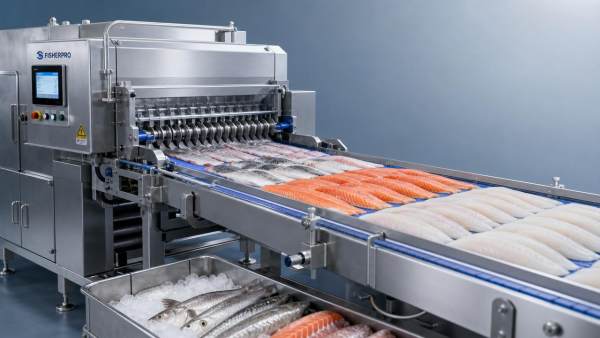
Selecting a fish filleting machine commercial system for mixed species is a technical decision, not a simple capacity comparison. Plants handling whitefish, salmonids, pelagic fish, or freshwater varieties need equipment that maintains stable cut quality across changing body shapes.
In real production, species variation affects backbone tracking, belly trim accuracy, pin bone management, and final yield. A fish filleting machine commercial setup must therefore support flexibility, hygiene, and predictable maintenance without sacrificing throughput.
This overview examines how mixed-species processors can evaluate machine design, automation level, sanitation compliance, and operating economics. The goal is to identify practical benchmarks for equipment selection in commercial fish processing environments.
Core definition of a fish filleting machine commercial system
A fish filleting machine commercial unit is industrial equipment designed to separate edible fillets from whole fish at scale. Unlike small workshop machines, commercial systems prioritize repeatability, food safety integration, and sustained operation under continuous loading.
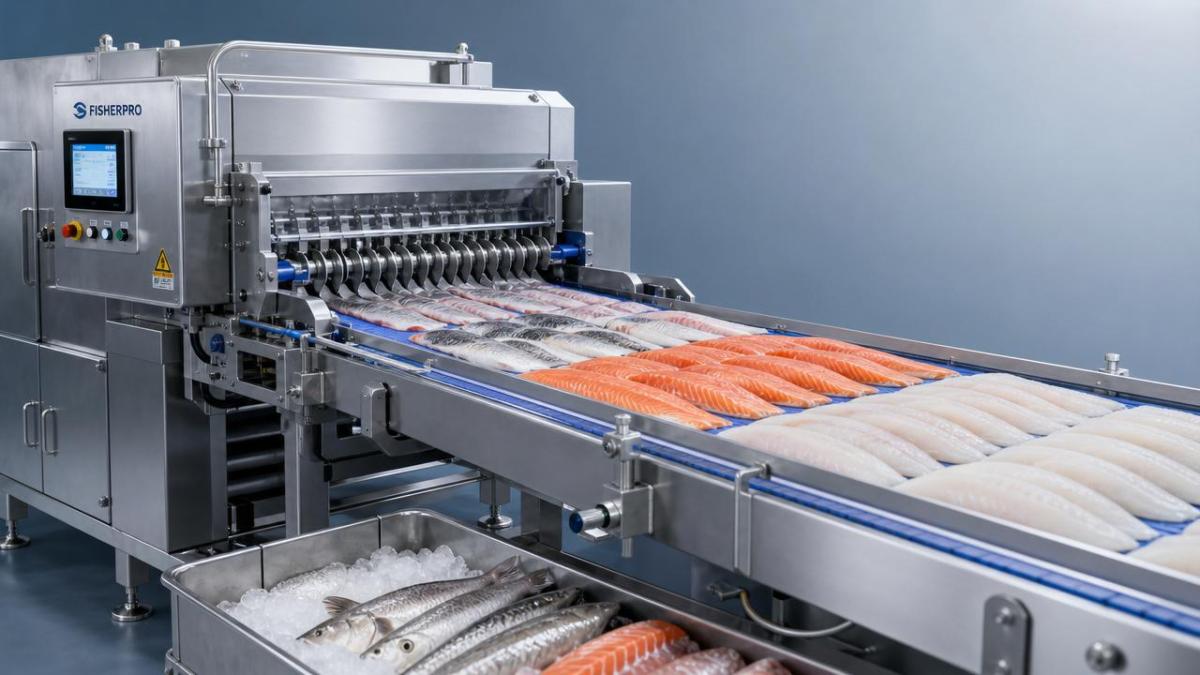
For mixed species, the definition expands further. The machine must handle different fish lengths, body depths, fat distribution, skin resistance, and skeletal structures while keeping trim loss low and fillet presentation consistent.
A complete fish filleting machine commercial line may include feeding conveyors, heading modules, filleting blades, trimming stations, inspection zones, washdown components, and grading sections. Performance depends on line integration, not only the main cutting head.
Main technical functions
- Guiding fish according to size and orientation
- Tracking the backbone during filleting
- Adjusting blade position for species variation
- Reducing residual meat on frames
- Supporting hygienic cleaning and inspection
Industry conditions shaping current equipment selection
The market for fishery technology now values adaptability as much as nominal speed. Raw material supply is less uniform than before, and processors often switch species based on seasonality, quota changes, or import availability.
That shift increases interest in fish filleting machine commercial platforms with recipe memory, servo adjustment, and modular tooling. Systems built only for a narrow size range may underperform when incoming fish profiles change.
In this environment, a fish filleting machine commercial investment is often judged on total process resilience. Stable output across variable fish lots can be more valuable than peak speed achieved under ideal test conditions.
Performance factors that matter in mixed-species processing
The most important benchmark is species adaptability. A machine that works well on one body form may create uneven belly cuts or excessive frame meat on another. Trials should include several representative species and size bands.
1. Cut accuracy and yield
Yield losses accumulate quickly in commercial fish processing. Even a small increase in trim waste becomes significant at high daily volumes. A fish filleting machine commercial line should be evaluated by net usable fillet recovery, not only machine speed.
Backbone following precision is central. If blade paths fail to match species anatomy, the result is either flesh left on the frame or bone contamination in the fillet.
2. Size range flexibility
Mixed species usually arrive with broader size variation than single-species batches. Machines with digital settings, guided adjustment scales, or automatic sensing reduce reset time between lots.
3. Hygiene and compliance design
Food-contact surfaces must support fast and complete cleaning. Smooth welds, open access points, corrosion-resistant materials, and low water-trap risk are essential for facilities operating under HACCP, FDA, or equivalent export standards.
4. Maintenance profile
Blade wear, bearing protection, lubrication design, and spare part accessibility shape uptime. A fish filleting machine commercial system with strong output but frequent unplanned stoppages can weaken overall line economics.
Operational value beyond filleting speed
Commercial evaluation should include the broader business effect of the equipment. Mixed-species capability can support sourcing flexibility, product diversification, and steadier line utilization across seasonal raw material changes.
A well-matched fish filleting machine commercial configuration also improves downstream consistency. Uniform fillets simplify portioning, packaging, freezing, and retail specification control.
- Lower trim variation improves cost forecasting
- Cleaner cuts support better product appearance
- Faster washdown shortens nonproductive time
- Recipe-based setup reduces adjustment errors
- Integrated data supports quality documentation
For facilities supplying both foodservice and retail channels, this consistency matters. Different market formats may require skin-on, skin-off, centered fillets, or trim-specific outputs from the same incoming raw material stream.
Typical mixed-species equipment scenarios
Not every operation needs the same fish filleting machine commercial layout. Equipment scope should match species diversity, shift duration, labor availability, and final product specification.
Practical evaluation and implementation guidance
Before selecting a fish filleting machine commercial model, trial design should reflect actual production. Testing only one species or one ideal size class can distort the investment case.
Recommended evaluation steps
- Map annual species mix, size distribution, and target products.
- Define acceptable yield loss, bone tolerance, and trim standards.
- Run side-by-side trials using real production lots.
- Measure setup time between species changes.
- Inspect sanitation access after a normal shift.
- Review spare parts lead times and local service support.
Attention should also be given to line balance. A high-speed fish filleting machine commercial module can underdeliver if heading, trimming, or packing stations become bottlenecks.
Documentation matters as well. Equipment manuals, sanitation procedures, and adjustment records should be clear enough to support operator training, internal audits, and export compliance requirements.
Next-step framework for selecting the right system
A strong fish filleting machine commercial decision starts with operational evidence. Focus on mixed-species yield, cut stability, hygiene efficiency, and maintenance realism rather than brochure claims alone.
Build a short comparison matrix using throughput, usable yield, cleaning time, changeover time, and service support. This creates a clearer basis for selecting equipment that fits both present volume and future product flexibility.
For industrial processing environments, the best fish filleting machine commercial solution is usually the one that performs reliably across variation. Consistent output, compliance readiness, and manageable operating costs remain the most durable selection criteria.
Related Intelligence
- Commercial FishingWhat Should You Check in a Fishery Equipment Maintenance Contract?What should I look for in a fishery equipment maintenance contract? Explore coverage, response times, costs, records, safety, and biosecurity essentials.
- Commercial FishingDo commercial fishing vessels with hybrid diesel-electric propulsion reduce fuel cost per kg landed by more than 12%?Commercial fishing vessels with hybrid diesel-electric propulsion *can* cut fuel cost per kg landed by >12%—but only under precise operational and infrastructure conditions. Discover the real ROI.
- Commercial FishingHow to Choose Oyster Processing Equipment for Capacity, Hygiene, and Labor EfficiencyOyster processing equipment guide: compare capacity, hygienic design, and labor efficiency to build a reliable, scalable line and make smarter buying decisions.
The Morning Broadsheet
Daily chemical briefings, market shifts, and peer-reviewed summaries delivered to your terminal.
