

The Authority in Global Agricultural Chemistry & Bio-Resources
Feed & Grain processing equipment: where downtime starts
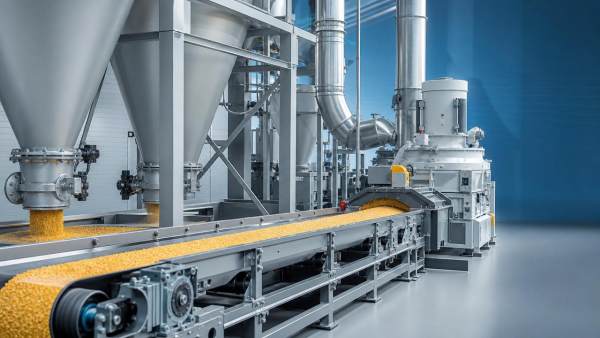
In feed mills and grain handling plants, downtime rarely begins with a major failure—it starts with overlooked stress points inside Feed & Grain processing equipment. For project managers and engineering leads, understanding where these hidden vulnerabilities emerge is essential to protecting throughput, compliance, and capital efficiency. This article examines the operational weak links that trigger unplanned stoppages and explains how smarter equipment planning can reduce risk before production is affected.
Where does downtime really begin in Feed & Grain processing equipment?
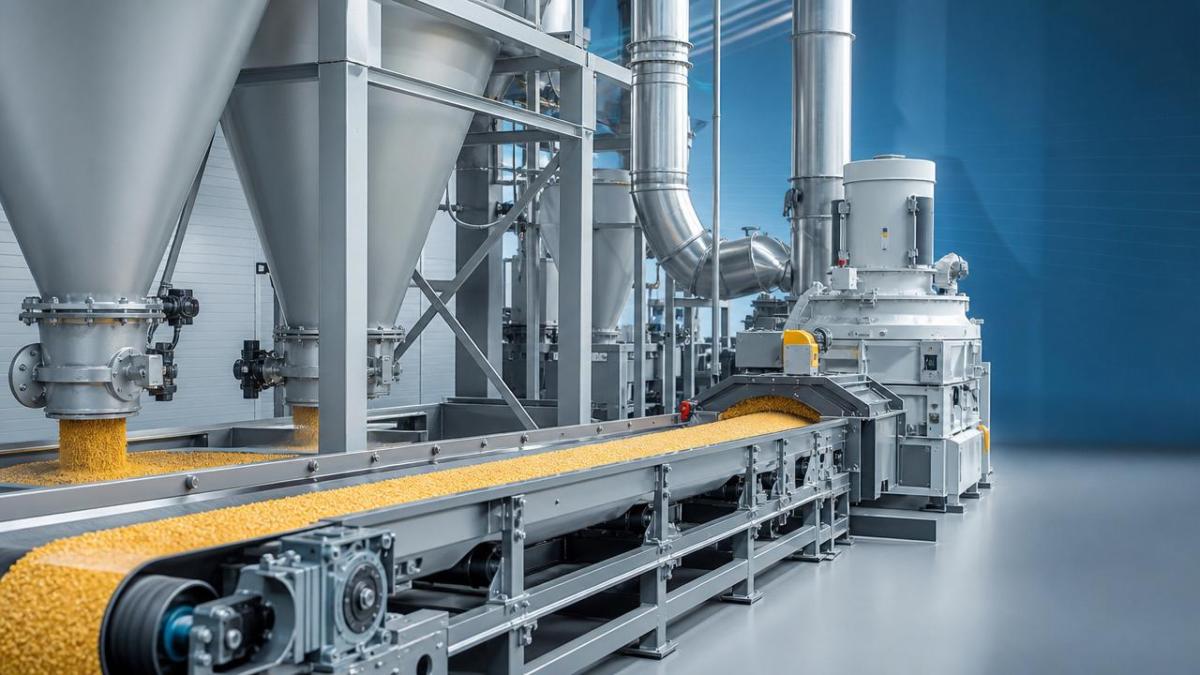
Most shutdowns in Feed & Grain processing equipment do not start at the motor burnout stage or with a collapsed conveyor. They begin much earlier, in points where abrasive material flow, vibration, contamination, poor access, and inconsistent loading quietly erode system stability.
For project managers, this matters because the visible failure is often only the final symptom. The real cost comes from weak specification during procurement, poor integration between upstream and downstream units, and maintenance assumptions that do not match actual operating conditions.
In practical terms, the highest-risk areas are usually not the largest machines. Downtime often begins in transfer points, aspiration lines, feeders, discharge gates, bearings, screen sections, and control interfaces where process variability accumulates.
- Material bridging in bins and hoppers causes erratic feed rates that overload grinders, pellet mills, or cleaners.
- Dust handling deficiencies increase fire and explosion risk while also reducing sensor reliability and housekeeping performance.
- Misalignment across conveying and processing stages creates repetitive micro-stoppages that never appear dramatic but steadily cut plant availability.
- Inadequate access for inspection turns simple wear replacement into a long shutdown event.
ACC’s cross-sector editorial perspective is especially useful here. Feed and grain plants increasingly operate under the same pressure seen in fine chemicals and primary processing: traceability, predictable output, safety documentation, and tighter project schedules. That makes failure prevention a design question, not only a maintenance question.
The hidden stress points project teams often underestimate
Engineering teams tend to allocate attention to capacity ratings and headline power figures. Those matter, but they rarely tell the full story of equipment resilience. A line can meet nameplate throughput and still remain fragile if wear surfaces, sealing arrangements, dust extraction balance, and control logic are not specified correctly.
This is particularly relevant when facilities handle variable raw materials such as maize, soy meal, wheat, DDGS, oilseed by-products, or mixed formulations. Material inconsistency amplifies every weakness in Feed & Grain processing equipment.
Which components are most likely to trigger unplanned stoppages?
The table below helps project managers prioritize inspection and specification points in Feed & Grain processing equipment before failures become expensive shutdowns.
A useful pattern emerges from this comparison: the most disruptive failures often come from interfaces between mechanical handling, material behavior, and process control. That is why equipment assessment should never be limited to machine brochures or isolated vendor claims.
Why transfer points deserve more attention than they get
Transfer points are where many plants lose stability. Impact wear, poor chute geometry, dust escape, and dead zones cause buildup that narrows flow paths. Once this begins, upstream loads become irregular and downstream machines operate outside ideal conditions.
If your project includes expansion or retrofit work, transfer design should be reviewed as seriously as core processing units. Small geometric changes can have a larger uptime effect than increasing installed motor power.
How should project managers evaluate Feed & Grain processing equipment before purchase?
Selection decisions often fail because teams buy for rated output instead of operating reality. Project managers need a procurement framework that connects equipment specification to maintenance exposure, line integration, compliance demands, and total lifecycle cost.
A practical selection checklist
- Define the real material range, not only the ideal design material. Moisture, bulk density, fat content, particle distribution, and contamination risk all affect equipment stress.
- Check upstream and downstream compatibility. A reliable grinder linked to an unstable feeder still creates downtime.
- Assess wear part replacement time. The best machine on paper may still be a poor project choice if routine changeout requires excessive shutdown hours.
- Review controls, alarms, and sensor placement. Detection without actionable operator logic has limited value.
- Request documentation on sanitation, dust handling, guarding, and service accessibility early in the tender stage.
ACC regularly highlights a procurement reality that spans agricultural machinery and regulated chemical sectors alike: equipment value is proven through documentation quality, traceable engineering assumptions, and service readiness, not simply by acquisition price.
The following table can be used as a structured procurement scorecard for Feed & Grain processing equipment in new-build or retrofit projects.
This scorecard is especially useful when comparing multiple suppliers whose headline capacities appear similar. It forces the conversation toward uptime drivers that affect project performance long after installation.
What design and compliance factors reduce risk in complex facilities?
Feed and grain sites now face a combination of production, safety, and documentation requirements. Even when regulations differ by market, project leaders usually need to account for dust risk management, food or feed hygiene, environmental controls, electrical safety, and auditable maintenance practices.
Key compliance-oriented design considerations
- Dust collection should be treated as a process integrity issue, not only a housekeeping issue, because poor extraction influences safety, visibility, product loss, and sensor performance.
- Cleanability and access design matter where cross-contamination or formulation changeovers occur.
- Electrical and control systems should support fault tracing, safe isolation, and restart discipline after stoppage events.
- Documentation should cover material assumptions, service intervals, guarding, spare parts, and operating limits in clear language for plant teams.
Because ACC serves professionals across agricultural, biochemical, and primary processing sectors, its reporting approach emphasizes something procurement teams increasingly demand: equipment decisions must stand up not only to output targets, but also to audit scrutiny, utility constraints, and supply chain transparency.
Retrofit versus replacement: a common decision point
Many plants do not need full line replacement to solve downtime. In some cases, targeted retrofit work—new liners, redesigned chutes, upgraded feeders, revised aspiration balance, or improved instrumentation—delivers a better return with less disruption.
Replacement becomes more logical when wear is systemic, spare parts are hard to source, or equipment limitations prevent compliance upgrades. The right decision depends on shutdown cost, remaining asset life, and the impact of process instability on finished product consistency.
Common mistakes that make Feed & Grain processing equipment fail earlier
Repeated problems across plants usually come from predictable planning errors rather than bad luck. Recognizing these early can save months of avoidable performance loss.
Mistakes to avoid
- Oversizing equipment without considering low-load behavior, which can reduce process stability and energy efficiency.
- Ignoring raw material variation during design review, especially in multi-origin grain procurement environments.
- Accepting layouts that restrict maintenance access in order to save footprint during the design stage.
- Treating automation as a substitute for mechanical robustness instead of a support layer for it.
- Underestimating startup and commissioning tuning, particularly for feeders, air balance, and transfer consistency.
For engineering leads, the lesson is clear: reliability should be written into bid evaluation, design review, FAT and SAT expectations, and spare strategy from the start. Downtime prevention begins before the equipment arrives on site.
FAQ: what project teams ask before specifying Feed & Grain processing equipment
How do we know whether downtime is caused by one machine or by system interaction?
Look for patterns across feed rate fluctuation, motor loading, transfer blockages, dust escape, and product quality drift. If faults shift between machines, the root cause is often system interaction rather than a single unit. Trend data and operator logs are both useful here.
What should we request from suppliers besides a quotation?
Request material assumptions, utility requirements, wear part lists, recommended stock items, maintenance task intervals, access drawings, instrumentation scope, and expected replacement times for critical consumables. These details reveal how well the Feed & Grain processing equipment will perform in real operation.
Is higher capacity always safer for future expansion?
Not necessarily. Excessive oversizing can reduce efficiency at normal loads and create poor control behavior. A better approach is to review turndown range, modular expansion options, and bottleneck risk at transfer and conditioning stages.
When should a plant choose retrofit over new equipment?
Choose retrofit when the structural asset remains sound and the problem is concentrated in wear zones, flow geometry, feeding inconsistency, aspiration, or controls. Choose replacement when multiple failure modes overlap and the existing unit limits compliance, throughput, or spare availability.
Why choose us for decision support and industry intelligence?
AgriChem Chronicle supports project managers and engineering leads with analysis that goes beyond product promotion. Our strength lies in connecting equipment behavior, industrial procurement logic, compliance expectations, and cross-sector processing knowledge into decision-ready insight.
If you are reviewing Feed & Grain processing equipment for a new build, debottlenecking program, or modernization plan, you can consult ACC for practical guidance on:
- parameter confirmation for material handling, grinding, pelleting, cleaning, and transfer stages;
- equipment selection criteria aligned with throughput, maintenance access, and lifecycle risk;
- delivery schedule considerations for critical components and spare parts strategy;
- customized solution review for retrofit versus replacement decisions;
- compliance-oriented documentation priorities related to safety, hygiene, and traceability;
- quotation-stage comparison points that help separate workable proposals from risky ones.
For teams under pressure to protect uptime and justify capital allocation, informed planning is the first defense. ACC provides the technical and market context needed to evaluate Feed & Grain processing equipment with greater confidence and fewer costly assumptions.
Related Intelligence
- Milling MachineryGrain Processing Explained: From Cleaning and Milling to Finished Product QualityGrain Processing explained: discover how cleaning, conditioning, milling, and quality control turn raw grain into safe, consistent flour, feed, and food ingredients.
- Milling MachineryGerman Grain Processing Plants: Evaluating Automation and Energy-Efficiency UpgradesGrain processing Germany: evaluate automation and energy-efficiency upgrades to improve throughput, quality, safety, and lifecycle value.
- Milling MachineryGrain Processing in the UAE: Designing Facilities for Heat, Ports, and StorageGrain processing UAE insights for designing resilient facilities that manage heat, port logistics, storage quality, dust control, and reliable grain flow.
The Morning Broadsheet
Daily chemical briefings, market shifts, and peer-reviewed summaries delivered to your terminal.
