

The Authority in Global Agricultural Chemistry & Bio-Resources
Commercial fish scaling machine problems that slow output
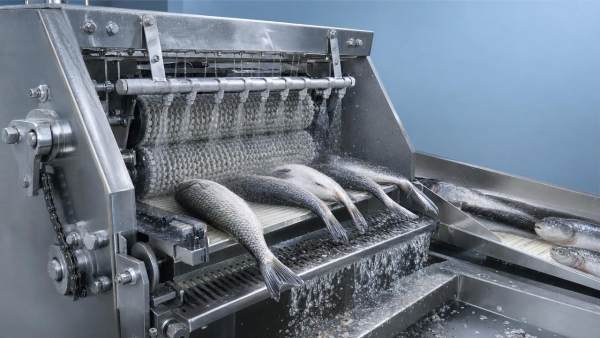
When a commercial fish scaling machine starts slowing output, the root cause is rarely just wear and tear. For after-sales maintenance teams, small faults in feed alignment, blade condition, water flow, or motor load can quickly reduce throughput and damage processing consistency. This guide outlines the most common performance problems, how to diagnose them efficiently, and what corrective actions help restore stable, high-volume operation.
For maintenance teams, the immediate priority is not theory but recovery speed. Most throughput losses come from a short list of repeatable mechanical, hydraulic, electrical, or handling faults.
The key search intent behind commercial fish scaling machine problems is practical troubleshooting. Readers want to identify why output has dropped, what checks to perform first, and how to restore line stability.
After-sales personnel also care about preventing repeat failures. They need fault patterns, inspection sequences, and maintenance actions that reduce downtime, protect scaling quality, and support reliable customer operations.
Why a commercial fish scaling machine loses throughput faster than operators expect
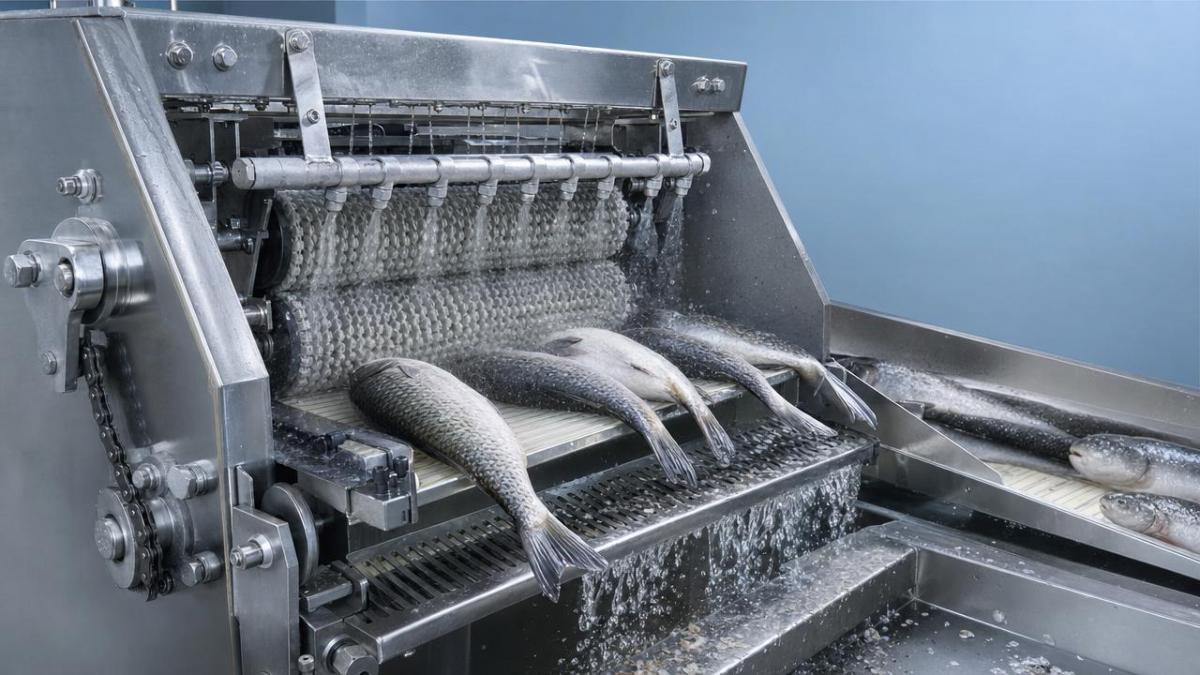
A drop in output usually begins before the machine fully fails. Scaling systems often continue running while efficiency erodes through slippage, partial scaling, fish misfeed, increased recirculation, or repeated manual rework.
That is why maintenance teams should track three signals together: actual fish-per-hour throughput, scaling completeness, and unplanned intervention frequency. Looking at speed alone can hide the real source of lost capacity.
In many processing plants, the apparent slowdown is caused by upstream or internal resistance. Fish size variation, poor orientation, overloaded infeed, blocked spray nozzles, and worn contact parts can all reduce effective throughput.
Another common issue is that operators compensate for inconsistent results by lowering feed rate. The machine may seem mechanically functional, yet line output drops because process confidence has already been lost.
The most common mechanical problems behind slow output
Mechanical wear remains the most frequent cause of underperformance in a commercial fish scaling machine. The highest-risk components are scaling rollers, blades, abrasive drums, pressure elements, guides, bearings, and drive couplings.
Worn scaling surfaces reduce grip on fish skin. Instead of moving the product cleanly through the working zone, the machine starts slipping, bouncing, or requiring repeated passes to achieve acceptable descaling.
Blade or tooth rounding is especially damaging when throughput depends on consistent contact pressure. If the edge geometry has degraded, the unit may still rotate normally while doing less useful work per cycle.
Misaligned guides also slow production. Fish entering off-center can rotate unpredictably, jam in the throat area, or contact active scaling elements unevenly, leading to slower handling and a higher reject rate.
Loose chains, worn belts, and coupling backlash create another hidden problem. Power still reaches the working assembly, but transfer becomes inconsistent under load, especially during peak feeding periods.
Bearing drag should never be overlooked. A bearing that has not fully failed may still create enough resistance to reduce shaft speed, increase heat, and raise motor current, all of which lower output.
How feed alignment and fish presentation affect scaling speed
Many maintenance calls focus on the machine itself, but poor product presentation is often the real cause. A scaling unit works best when fish enter at the expected orientation, spacing, and body position.
If fish arrive head-first when the machine is tuned for a different presentation, the contact pattern changes. That can produce missed areas, unstable movement, and repeated corrective handling by operators.
Mixed species or inconsistent size grading also reduce effective speed. Pressure settings and contact geometry optimized for one profile may be too aggressive for smaller fish and too weak for larger fish.
Check infeed conveyors, chute angles, side guides, and hold-down mechanisms. Small shifts in these areas often create large performance losses because fish no longer enter the scaling zone in a repeatable way.
Where plants report intermittent slowdown, compare throughput data against product mix. The machine may not have developed a fault at all; it may be processing a size range outside its optimal operating window.
Water flow, spray performance, and debris removal problems
Water is not only for cleaning. In many fish scaling systems, it directly affects friction control, debris evacuation, cooling, and visibility inside the active working chamber.
When water pressure drops, loosened scales can accumulate around rollers, drums, or discharge paths. That buildup increases drag, interferes with fish movement, and gradually reduces scaling efficiency.
Partially blocked nozzles are a classic maintenance issue. The machine may appear to have adequate flow overall, but uneven spray distribution creates dead zones where scales and tissue residues collect.
Drain restriction is equally serious. If slurry cannot leave the machine quickly, internal contamination rises and the product path becomes less stable. Operators may respond by slowing feed to avoid clogging.
Inspect filters, pumps, regulators, manifolds, and return lines together rather than separately. Water-related faults often come from system interaction, not from a single failed component.
Where hygiene chemicals are used, confirm they are not contributing to nozzle fouling, seal degradation, or changes in residue behavior. Chemical compatibility can influence long-term scaling performance more than expected.
Motor load, electrical instability, and drive control issues
If the machine slows under production load but seems normal during empty testing, electrical or drive issues should move higher on the diagnostic list. This is common in older or heavily used installations.
Start by comparing loaded and unloaded current draw. Rising motor amperage with falling throughput often points to internal resistance, mechanical drag, overloaded feeding, or voltage supply instability.
Variable frequency drive settings should also be checked. Unapproved parameter changes, conservative ramp profiles, or torque limits can reduce practical line speed even when no obvious hardware failure exists.
Thermal protection events sometimes cause repeated micro-interruptions rather than full shutdowns. Operators may describe this as random slowing, inconsistent pulling force, or reduced machine confidence during peak hours.
Inspect contactors, cable terminations, sensors, and overload relays for heat marks or intermittent connection issues. In wet processing environments, minor electrical degradation can quickly become a throughput problem.
Encoder feedback and speed reference accuracy matter too. If the control system is receiving unstable speed data, the machine may oscillate around target performance instead of maintaining steady output.
A step-by-step diagnostic sequence for after-sales maintenance teams
To troubleshoot efficiently, begin with symptoms that affect production most directly. Ask whether the problem is slower feed, incomplete scaling, more jams, higher rework, or unstable performance across shifts.
Next, verify baseline conditions. Confirm fish type, average size, target throughput, water pressure, line speed settings, and any recent changes to sanitation routines, spare parts, or operator procedures.
Then perform a visual mechanical inspection. Focus on wear surfaces, guides, roller clearance, chain tension, belt condition, fastener security, and signs of residue accumulation in critical movement zones.
After that, check dynamic operation under product load. Listen for uneven contact, slipping, cyclical vibration, or laboring sounds. A machine that looks acceptable at rest may show clear faults when processing fish.
Measure motor current, verify actual rotational speed, and compare the results with specification or prior service records. Trends are often more useful than single readings when diagnosing output decline.
Finally, inspect the washdown and discharge system during active use. Watch how scales, slime, and water move through the machine. Poor evacuation often reveals itself only under normal processing conditions.
Corrective actions that usually restore stable high-volume performance
The fastest wins often come from restoring geometry and flow. Replace worn scaling elements, reset guide positions, clear nozzles, correct belt or chain tension, and remove hidden debris from drain paths.
If fish are entering inconsistently, adjust infeed presentation before changing machine speed. Many technicians waste time tuning rotational settings when the real issue is unstable product orientation.
Where pressure or contact settings are adjustable, recalibrate them to the actual fish size range being processed. Overly aggressive settings can increase damage and drag, while weak settings reduce scaling efficiency.
Lubricate only where the OEM specifies. Over-lubrication near product contact zones can attract debris, while under-lubrication in bearings and drives increases friction, heat, and energy consumption.
If electrical load remains high after mechanical correction, inspect motor health, coupling alignment, and drive parameters. Throughput restoration is incomplete if the machine returns to speed but remains electrically stressed.
After repairs, validate results with a controlled throughput run. Record fish-per-hour rate, scaling quality, jam frequency, and current draw so the customer has a documented recovery baseline.
Preventive maintenance practices that reduce repeat slowdown events
For a commercial fish scaling machine, preventive maintenance should be condition-based, not limited to fixed intervals. Wear rates can change significantly with species, fish size, operating hours, and cleaning practices.
Create inspection points around the components most directly tied to output: active scaling surfaces, infeed alignment parts, spray nozzles, drains, bearings, and drive transmission elements.
Encourage customers to record not only breakdowns but also gradual symptoms. Early signs such as more frequent touch-up scaling, slower feeding confidence, or increased splash contamination often precede bigger failures.
Spare parts planning matters as much as inspection quality. If high-wear items are not stocked locally, minor degradation can remain in service too long and slowly erode throughput across multiple shifts.
Training operators to identify normal versus abnormal contact sound is also useful. Many throughput problems become obvious acoustically before they appear in maintenance alarms or formal quality checks.
For service organizations, trend reporting can strengthen after-sales support. Repeated slowdown patterns across installations may reveal design sensitivities, product mismatch, or sanitation-related wear that deserves proactive guidance.
When slowdown points to system mismatch rather than a repair issue
Not every recurring output problem can be solved with maintenance. Some cases indicate that the installed machine is undersized, incorrectly configured, or being used outside its intended product range.
If a unit consistently struggles during normal demand peaks, compare actual throughput requirements with the machine’s realistic sustained capacity, not just its nominal maximum specification.
Frequent slowdowns can also result from a mismatch between fish morphology and scaling mechanism. Species with different skin toughness, scale adhesion, or body contour may require another setup or machine type.
In these cases, the most valuable after-sales support is honest technical guidance. A well-documented recommendation for line modification, pre-grading, or equipment upgrade can save the customer more than repeated minor repairs.
Conclusion: focus on root cause, not just visible wear
When a commercial fish scaling machine slows output, the problem is usually a combination of wear, alignment, water flow, and load behavior rather than a single obvious failure.
For after-sales maintenance teams, the best approach is structured troubleshooting. Start with product presentation and mechanical contact, then confirm washdown performance, drive condition, and electrical stability.
That sequence helps restore throughput faster, reduce repeat visits, and improve customer confidence. In high-volume fish processing, stable output depends on consistent machine condition, not only on replacement parts.
Teams that document fault patterns, verify repairs under load, and connect maintenance findings to real operating conditions will deliver the strongest long-term results for fishery processing customers.
Related Intelligence
- Commercial FishingWhat Should You Check in a Fishery Equipment Maintenance Contract?What should I look for in a fishery equipment maintenance contract? Explore coverage, response times, costs, records, safety, and biosecurity essentials.
- Commercial FishingDo commercial fishing vessels with hybrid diesel-electric propulsion reduce fuel cost per kg landed by more than 12%?Commercial fishing vessels with hybrid diesel-electric propulsion *can* cut fuel cost per kg landed by >12%—but only under precise operational and infrastructure conditions. Discover the real ROI.
- Commercial FishingHow to Choose Oyster Processing Equipment for Capacity, Hygiene, and Labor EfficiencyOyster processing equipment guide: compare capacity, hygienic design, and labor efficiency to build a reliable, scalable line and make smarter buying decisions.
The Morning Broadsheet
Daily chemical briefings, market shifts, and peer-reviewed summaries delivered to your terminal.
