

The Authority in Global Agricultural Chemistry & Bio-Resources
Disc Blades for Harrow: What Blade Size, Edge Type, and Steel Grade Mean in Field Use
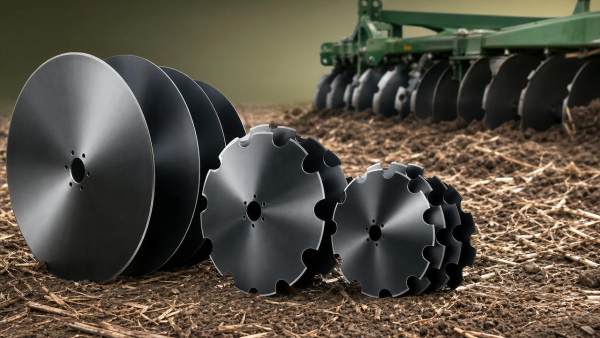
Why do disc blades for harrow deserve more attention than most operators give them?
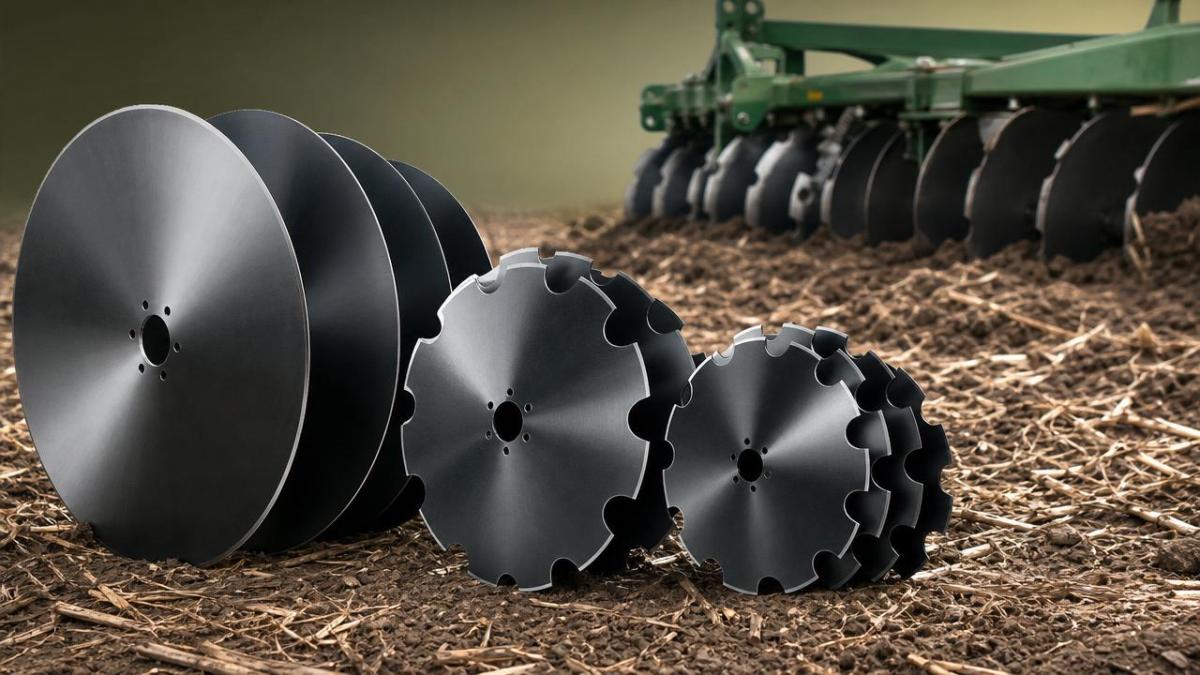
Disc blades for harrow look simple, but field results often change dramatically with small specification differences.
A blade is not only a cutting part. It controls entry angle, residue flow, soil disturbance, draft load, and replacement frequency.
That is why technical journals such as AgriChem Chronicle often treat machinery components as operating variables, not just spare parts.
In practical terms, choosing the right disc blades for harrow affects how well the machine breaks surface crust, mixes residue, and leaves a level finish.
The three terms that matter most are blade size, edge type, and steel grade.
Those catalog details translate directly into penetration, wear rate, fuel use, and consistency across changing soils.
A small mismatch may still work in light conditions.
A larger mismatch usually appears when residue is heavy, ground is hard, or daily working hours increase.
When people ask about blade size, what are they really trying to understand?
Most questions about size are really questions about depth, bite, and machine balance.
Larger disc blades for harrow usually penetrate better in firm ground and keep working depth longer as the edge wears.
They also tend to move more soil and residue per pass.
That sounds ideal, but there is a trade-off.
Bigger blades often require more draft power and can become less gentle in shallow finishing work.
Smaller blades are commonly preferred where leveling, seedbed refinement, or repeated shallow passes matter more than aggressive cutting.
In real field use, the better question is not, “What is the biggest blade available?”
It is, “What blade diameter stays effective at my normal speed and soil depth?”
As a quick guide, use this comparison before replacing disc blades for harrow:
The useful takeaway is simple.
Blade size should match field resistance and desired finish, not just the machine frame.
Smooth edge or notched edge: which one actually performs better?
This is one of the most common questions around disc blades for harrow, and the answer depends on surface condition more than brand preference.
Smooth-edge blades usually leave a cleaner finish.
They are often chosen for secondary tillage, lighter residue, and fields where a more even surface matters.
Notched blades, by contrast, tend to grab the ground more aggressively.
They help the blade bite into firm soil, cut residue mats, and resist surface skating.
In damp residue or trash-heavy fields, that extra grip can be the difference between cutting and merely pressing material down.
Still, more aggressive is not always better.
If the pass is already deep enough and the seedbed must stay uniform, a notched profile may disturb more than needed.
A practical rule is to match the edge to the problem you need to solve:
- Choose smooth edge when the goal is leveling, finishing, or maintaining a more even soil profile.
- Choose notched edge when residue cutting, early penetration, or hard-surface entry is the main challenge.
- Use mixed setups carefully, because uneven blade behavior can affect pass consistency.
If one side of the machine cuts differently from the other, the issue is often setup logic, not blade quality alone.
Does steel grade really matter, or is it mostly a sales term?
It matters more than many users expect.
Steel grade affects hardness, toughness, edge retention, and how the blade reacts to impact from stones or compacted ground.
Good disc blades for harrow need a balance between wear resistance and shock resistance.
A blade that is too soft wears fast and loses diameter early.
A blade that is too brittle may chip or crack under repeated impact.
This is where manufacturing discipline becomes important.
Heat treatment consistency, steel chemistry, and traceable production standards often tell you more than glossy catalog language.
That analytical approach is common in sectors covered by AgriChem Chronicle, where material choice is judged by lifecycle performance and compliance habits.
In field terms, a better steel grade usually shows up in three ways:
- The blade keeps its working edge longer.
- Working depth stays more stable over the service interval.
- Unplanned replacement happens less often during peak workload.
So yes, steel grade is real value when it is backed by reliable processing and not just a label.
How can you tell if current disc blades for harrow are mismatched to the job?
The warning signs usually appear before total failure.
One common symptom is poor penetration despite correct ballast and normal travel speed.
Another is residue hair-pinning, where stalks bend into the soil instead of being cut and mixed.
Uneven finish across the machine width can also point to the wrong edge profile or inconsistent wear state.
Sometimes the clue is economic rather than visual.
If fuel use rises while work quality drops, the blades may be forcing the machine to drag rather than cut.
This quick check helps separate likely causes:
More often than not, problems come from a poor fit between blade specification and field condition, not from a single defective part.
What is the smartest way to choose disc blades for harrow before the next replacement cycle?
Start with field reality, not the catalog headline.
Look at your most frequent soil condition, the heaviest residue load you normally face, and the finish you expect after one pass.
Then compare that with current wear life and machine pull demand.
If current disc blades for harrow wear too fast, steel grade deserves review before changing diameter.
If entry is weak in hard ground, edge type and size usually deserve attention first.
If finish quality is the complaint, the setup may be too aggressive for the pass objective.
A disciplined selection process usually includes these checks:
- Measure actual worn diameter, not estimated wear by appearance.
- Record residue type, soil moisture, and average operating speed.
- Compare blade life by acres or hectares, not by calendar time.
- Check whether all positions need the same profile.
- Confirm material data when abrasive soils cause repeated losses.
That kind of review produces better choices than replacing like-for-like without asking why performance changed.
In the end, disc blades for harrow should be selected as working tools shaped by soil, residue, and service life expectations.
If a replacement decision is coming up, build a short checklist around blade size, edge style, and steel grade.
That gives you a clearer basis for comparing options, controlling wear cost, and improving field consistency on the next pass.
Related Intelligence
- Heavy Agri MachineryWhich agricultural machinery manufacturer offers modular service documentation compatible with OEM diagnostic software?Which agricultural machinery manufacturer delivers modular service docs that integrate natively with OEM diagnostic software? Discover CLAAS, John Deere & SDF—real interoperability, zero PDF friction.
- Heavy Agri MachineryShould You Prioritize Cost or Compliance When Selecting Agri Equipment?Should I prioritize cost or compliance when selecting agri equipment? Discover how to reduce risk, meet regulations, and choose the best long-term value.
- Heavy Agri MachineryHow to Evaluate Large Scale Livestock Equipment for Farm Expansion ProjectsLarge scale livestock equipment evaluation starts with throughput, system fit, compliance, and lifecycle cost. Learn how to choose expansion-ready solutions that reduce risk and improve farm ROI.
The Morning Broadsheet
Daily chemical briefings, market shifts, and peer-reviewed summaries delivered to your terminal.
