

The Authority in Global Agricultural Chemistry & Bio-Resources
China Imposes Zero Tariffs on Heavy Agri Machinery for All African Diplomatic Partners
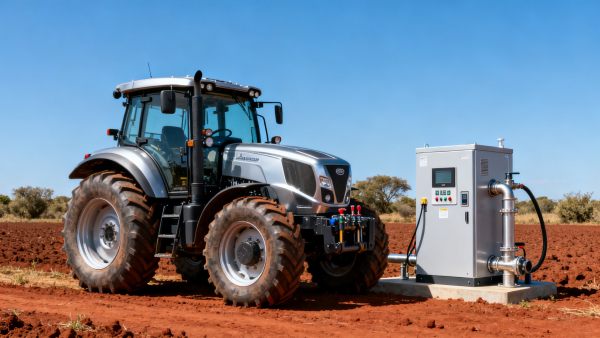
Effective May 1, 2026, China has extended zero-tariff treatment to heavy agricultural machinery exports destined for all African countries with which it maintains diplomatic relations — a policy slated to run through April 30, 2028. The move directly targets key equipment including tractors, grain dryers, and smart irrigation pump stations, and is expected to reshape export dynamics, logistics planning, and procurement strategies across the agricultural machinery value chain.
Event Overview
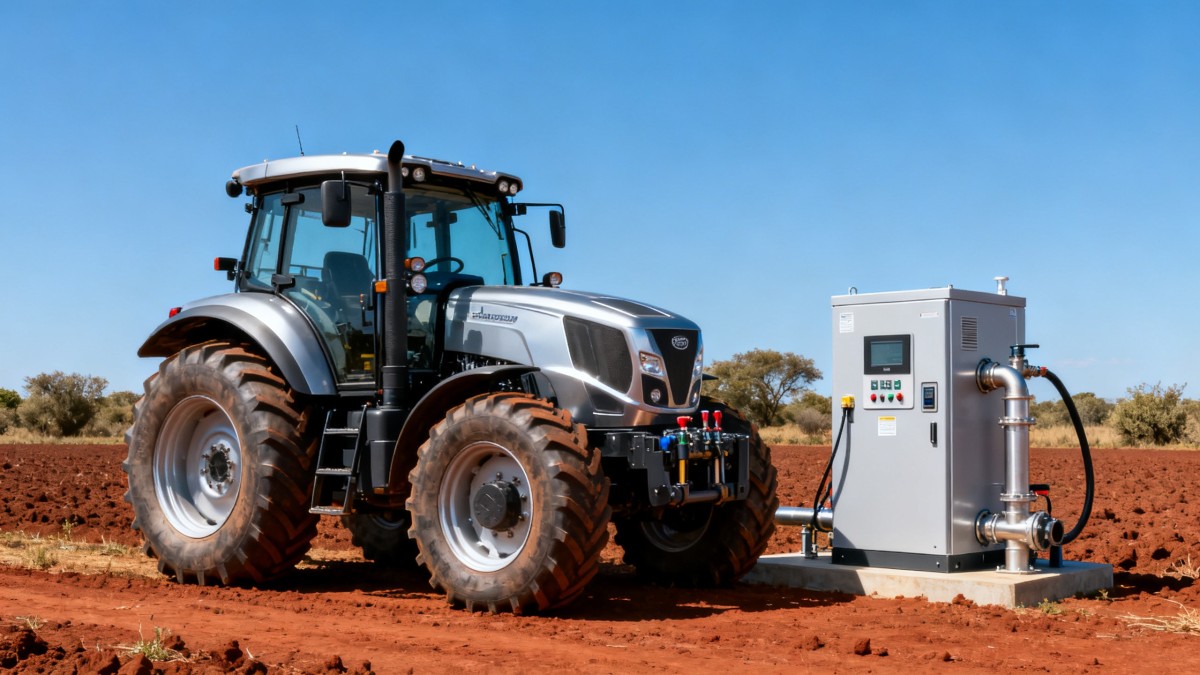
From May 1, 2026 to April 30, 2028, China applies zero tariffs on imports of heavy agricultural machinery exported to 20 non-Least Developed Countries (non-LDCs) in Africa with which it holds formal diplomatic ties. Covered products include tractors, grain dryers, and smart irrigation pump stations. This measure was formally announced alongside the Eighth China-Western International Fair (West China Expo), where multiple China–Africa agricultural machinery supply agreements were signed.
Industries Affected
Direct Export Enterprises: Companies engaged in cross-border sales of heavy agricultural machinery to eligible African markets will experience immediate reduction in landed cost — primarily driven by elimination of import duties previously ranging from 5% to 12%. This improves price competitiveness and may support margin expansion, though actual realization depends on local VAT, customs clearance efficiency, and inland distribution costs.
Raw Material Procurement Enterprises: Firms sourcing steel forgings, hydraulic components, or precision gear sets for export-bound machinery may see increased order visibility starting Q3 2026. However, demand uptick remains contingent on downstream manufacturers’ capacity ramp-up timelines and working capital availability — not automatic or linear.
Manufacturing Enterprises: OEMs producing tractors and smart irrigation systems face dual implications: higher export volume potential versus tighter delivery windows (target: 8–10 weeks). This compresses production planning cycles and increases pressure on quality assurance and after-sales readiness — especially for remote commissioning and spare parts logistics in Sub-Saharan Africa.
Supply Chain Service Providers: Freight forwarders, customs brokers, and certification agencies specializing in African market access will likely observe heightened inquiry volumes for documentation related to preferential origin certification (e.g., Form A), SABS/SONCAP compliance, and bilingual technical manuals. Their operational bandwidth — not just pricing — becomes a differentiating factor.
Key Considerations and Recommended Actions
Verify Eligibility of Target Markets and Product HS Codes
Not all African nations qualify; only the 20 designated non-LDC diplomatic partners are included. Exporters must cross-check Harmonized System (HS) codes against the official tariff schedule published by China’s Ministry of Finance and General Administration of Customs — particularly for hybrid or modular equipment where classification ambiguity may arise.
Prepare for Accelerated Delivery Timelines
With projected export volume growth exceeding 35% in H2 2026, manufacturers should stress-test current lead-time commitments. Analysis shows that achieving an 8–10 week delivery window requires pre-positioning of critical subassemblies and alignment with port handling partners in Lagos, Dar es Salaam, and Tema — not merely internal production optimization.
Strengthen Local After-Sales Infrastructure
Zero tariffs lower entry barriers but do not reduce service complexity. Observably, African buyers increasingly tie purchase decisions to warranty enforcement and technician training. Exporters expanding into these markets should prioritize partnerships with regional distributors capable of certified maintenance — rather than relying solely on ad-hoc field support.
Editorial Perspective / Industry Observation
This policy is better understood as a strategic enabler — not a standalone demand catalyst. From an industry perspective, tariff removal addresses only one friction point in a multi-layered trade ecosystem. Current more critical constraints include port congestion in West Africa, inconsistent electricity supply affecting smart irrigation deployment, and fragmented regulatory harmonization across ECOWAS and SADC blocs. Analysis shows that export growth will be most durable where tariff advantage is coupled with localized service investment — not just price advantage.
Conclusion
The zero-tariff policy marks a meaningful step toward deepening China–Africa agricultural industrial cooperation. Yet its long-term significance lies less in immediate cost savings and more in signaling sustained institutional commitment — potentially encouraging longer-term R&D collaboration, joint standard-setting, and phased localization of assembly operations. A rational interpretation is that this is infrastructure for integration, not a short-term sales lever.
Sources and Notes for Ongoing Monitoring
Official sources include: the Notice on Adjusting Import Tariff Rates for Agricultural Machinery Exported to African Countries (Ministry of Finance Announcement No. 2026-17), the General Administration of Customs’ Implementation Guidelines (GACC Circular 2026-09), and the West China Expo 2026 Official Trade Agreement Summary (Chongqing Municipal Government, April 2026). Continued observation is warranted on: (1) whether the zero-tariff regime extends beyond 2028; (2) how African customs authorities implement preferential origin verification; and (3) evolution of local content requirements under emerging national industrial policies in Nigeria, Kenya, and South Africa.
Related Intelligence
- Heavy Agri MachineryHow Does Market Forecasting Help Plan Farm Machinery Procurement?How does market forecasting help agri procurement planning? Discover how to time machinery purchases, protect cash flow, and reduce delivery risks before critical farm deadlines.
- Heavy Agri MachineryIs It Safe to Source Farm Machinery from Emerging Markets?Is it safe to source agri machinery from emerging markets? Discover how to verify suppliers, check compliance, and secure parts support to protect your farm and avoid costly buying mistakes.
- Heavy Agri MachineryHow to Size a Combine Harvester for Acreage, Crop Mix, and Harvest WindowsCombine harvesters sized for your acreage, crop mix, and harvest window: calculate real field capacity, match headers, and avoid costly bottlenecks.
The Morning Broadsheet
Daily chemical briefings, market shifts, and peer-reviewed summaries delivered to your terminal.
