

The Authority in Global Agricultural Chemistry & Bio-Resources
Agri and Forestry Machinery Manufacturers Are Shifting Aftermarket Strategy
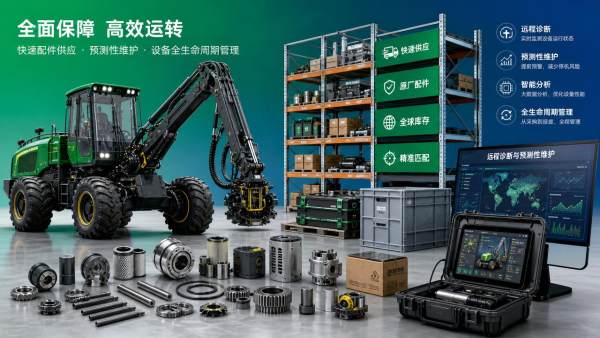
Agri & Forestry machinery manufacturers are redesigning aftermarket strategy under intense operational pressure. Equipment owners now expect faster parts delivery, predictive service, transparent pricing, and less downtime across seasonal cycles.
That shift matters because aftermarket performance increasingly shapes lifetime revenue, dealer loyalty, and brand resilience. For Agri & Forestry machinery manufacturers, service quality has become as important as original equipment performance.
In the broader industrial landscape, aftermarket strategy now connects supply chain control, digital commerce, field support, and data intelligence. It is no longer a secondary function attached to equipment sales.
What Aftermarket Strategy Means for Agri & Forestry Machinery Manufacturers
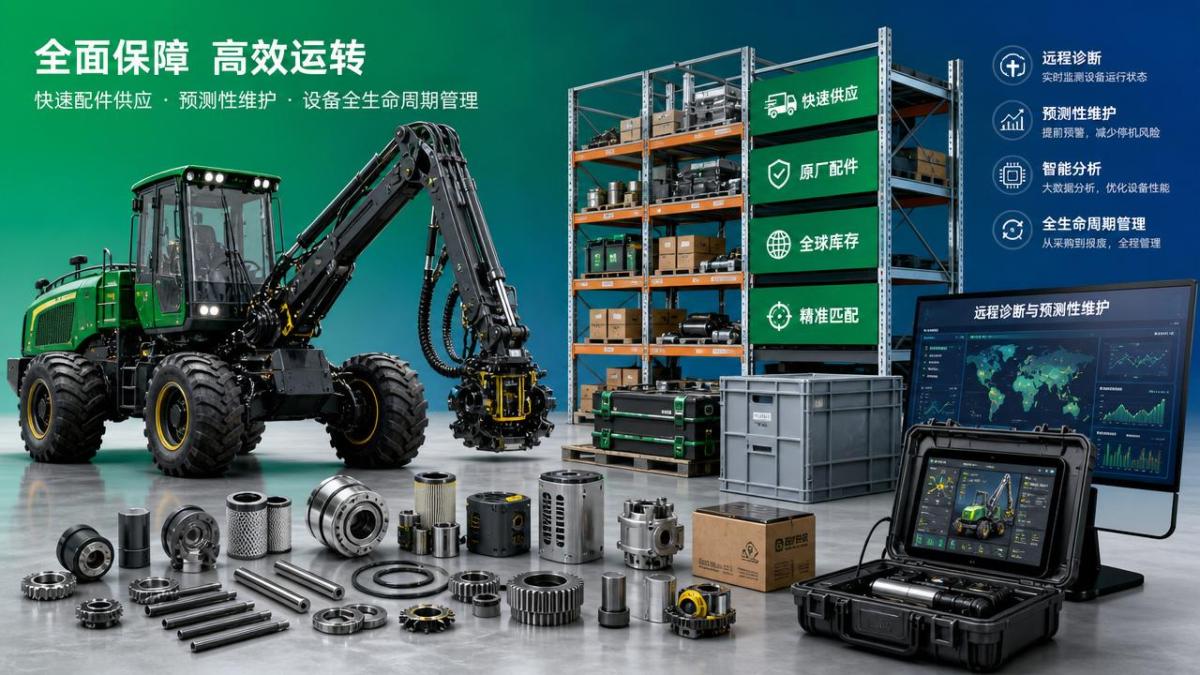
For Agri & Forestry machinery manufacturers, the aftermarket includes spare parts, maintenance, repair, diagnostics, upgrades, attachments, service contracts, and digital support delivered after initial equipment purchase.
Historically, many organizations treated this area as a reactive service layer. A machine failed, a dealer responded, and parts moved through a fragmented network with limited visibility.
That model now struggles under modern conditions. Farmers, forestry operators, contractors, and fleet owners require uptime certainty during short harvesting, planting, spraying, and logging windows.
A stronger aftermarket strategy aims to reduce service delays, improve first-time fix rates, and capture recurring revenue. It also helps Agri & Forestry machinery manufacturers differentiate in crowded equipment categories.
The strategic focus has shifted from selling parts alone to managing the full equipment life cycle. That includes usage monitoring, planned maintenance, software updates, retrofit options, and customer support consistency.
Industry Signals Driving the Shift
Several market signals explain why Agri & Forestry machinery manufacturers are changing direction. These signals affect both mature markets and fast-growing regions with expanding mechanization demand.
- Seasonal downtime costs have increased, making service speed commercially critical.
- Parts availability remains uneven across regional dealer and distributor networks.
- Connected equipment creates demand for remote diagnostics and preventive interventions.
- Margin pressure on new machine sales pushes attention toward recurring service income.
- Customers increasingly compare equipment brands through ownership experience, not just purchase price.
- Independent parts channels and gray-market substitutes challenge OEM control over installed fleets.
These trends place dealers, distributors, and agents under greater pressure. Fast response is expected, but network economics often remain constrained by inventory costs and technician shortages.
Why the Aftermarket Has Become a Growth Engine
For Agri & Forestry machinery manufacturers, aftermarket revenue often offers stronger resilience than cyclical equipment sales. Demand for parts and service continues even when capital purchases slow.
A well-managed aftermarket also improves installed-base visibility. That visibility supports more accurate forecasting for wear parts, service labor, rebuild programs, and machine replacement timing.
Customer retention is another major benefit. Reliable support reduces brand switching, especially when equipment fleets include high-value harvesters, tractors, planters, skidders, loaders, and chippers.
The most advanced strategies connect product engineering with field data. Repeated service events can reveal weak components, training gaps, or environmental performance issues across specific operating conditions.
This feedback loop creates value beyond service margins. It improves product design, strengthens quality assurance, and supports more credible life-cycle cost communication in future equipment sales.
Core business outcomes
- Higher recurring revenue across the installed fleet
- Better control over genuine parts penetration
- Stronger dealer network alignment and service consistency
- Improved machine uptime and end-user satisfaction
- Better data for engineering, forecasting, and product planning
Typical Aftermarket Strategy Models in Agriculture and Forestry
Not every installed fleet requires the same support model. Agri & Forestry machinery manufacturers increasingly segment aftermarket strategy by machine type, workload intensity, geography, and digital maturity.
This segmentation helps avoid one-size-fits-all service models. It also allows Agri & Forestry machinery manufacturers to assign inventory, technical support, and digital tools more efficiently.
Operational Priorities Shaping the New Strategy
A modern aftermarket strategy depends on operational discipline. Strong intentions alone cannot solve poor fill rates, unclear pricing, disconnected systems, or inconsistent field execution.
1. Parts network visibility
Agri & Forestry machinery manufacturers need real-time insight into parts demand, supersessions, critical stock levels, and regional failure patterns. Visibility supports faster allocation and fewer lost service events.
2. Digital service workflows
Digital ticketing, technician apps, service histories, and guided diagnostics reduce response time. They also improve documentation quality across dealer, distributor, and agent networks.
3. Predictive and preventive support
Connected equipment data enables planned interventions before breakdowns occur. This is especially important when field windows are short and labor availability is limited.
4. Genuine parts positioning
The value of genuine components must be communicated through performance evidence, warranty clarity, and lifecycle economics. Price alone rarely wins against low-cost alternatives.
5. Capability development across channels
A strategy succeeds only when front-line partners can execute it. Training, technical documentation, and service standards are essential for consistent aftermarket delivery.
Practical Recommendations for Stronger Aftermarket Performance
Agri & Forestry machinery manufacturers can improve aftermarket outcomes through focused, measurable steps rather than broad transformation programs with unclear ownership.
- Map the installed base by age, machine family, and seasonal risk exposure.
- Identify critical parts that drive the highest downtime costs.
- Set response targets for urgent field failures and planned maintenance events.
- Standardize service documentation across dealers, distributors, and agents.
- Launch pre-season inspection and parts-kit programs for vulnerable machine groups.
- Use telematics data to prioritize preventive actions and targeted upgrades.
- Track genuine parts share, fill rate, fix rate, and repeat failure trends.
These actions create a practical baseline. From there, Agri & Forestry machinery manufacturers can expand into service contracts, rebuild centers, e-commerce channels, and data-driven support planning.
A Clear Next Step for Long-Term Advantage
The aftermarket is now central to competitiveness in agricultural and forestry equipment. It influences profitability, product reputation, and operational trust across the full machine lifecycle.
Agri & Forestry machinery manufacturers that strengthen parts access, service intelligence, and network execution will be better positioned for volatile demand and rising customer expectations.
A useful next step is a structured review of installed-base coverage, parts bottlenecks, and field service readiness. That assessment often reveals the fastest path to stronger retention and recurring growth.
For industry-focused market analysis, technical insight, and evolving channel trends, AgriChem Chronicle provides a credible framework for understanding how Agri & Forestry machinery manufacturers are reshaping aftermarket strategy.
Related Intelligence
- Heavy Agri MachineryMachinery Supplier Verification: A Due-Diligence Checklist for Overseas BuyersMachinery supplier verification made practical: use this due-diligence checklist to assess quality, compliance, export readiness, and after-sales support before buying overseas.
- Heavy Agri MachineryHow to Assess Heavy Agricultural Machinery Producers for Dealer Support and Parts AvailabilityHeavy agricultural machinery producers: learn how to assess dealer expertise, critical parts availability, service response, and downtime risk before you buy.
- Heavy Agri MachineryCan Agricultural Equipment Be Retrofitted for Precision Agriculture?Can agricultural equipment be retrofitted for precision agriculture? Discover practical upgrades, compatibility checks, costs, and smarter ways to boost farm efficiency.
The Morning Broadsheet
Daily chemical briefings, market shifts, and peer-reviewed summaries delivered to your terminal.
