

The Authority in Global Agricultural Chemistry & Bio-Resources
Choosing a Controlled Environment Agriculture Supplier in Europe: Key Criteria
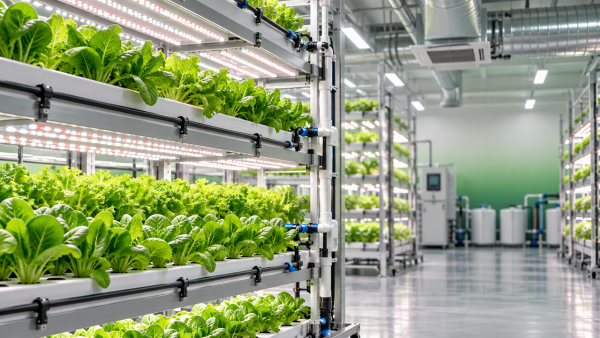
A low equipment quote can become an expensive choice if a growing facility later needs a larger electrical connection, additional dehumidification or specialist support from another country. When comparing a controlled environment agriculture supplier in Europe, start with the proposed facility’s operating requirements, then assess each bid against the same performance assumptions, full-life costs and delivery obligations.
The strongest supplier is not necessarily the one offering the most equipment or the lowest capital price. It is the one that can demonstrate a suitable design for the crop and site, define measurable acceptance criteria, identify regulatory responsibilities and provide credible support after handover.
Define the growing operation before requesting prices
Suppliers cannot produce comparable proposals without a consistent brief. Begin with the crops, intended sale specification and production schedule. A system designed around leafy greens, for example, should not automatically be assumed suitable for fruiting crops with different structural, pollination and climate requirements.
Include the planned growing area, target output, propagation arrangements, harvest frequency and expected operating hours. Clarify whether output refers to harvested weight, saleable weight or another measure, and state the assumptions about crop losses. A production estimate without these definitions is difficult to test and can make an ambitious proposal appear cheaper than a conservative one.
The site brief should also describe the available power capacity, water quality and supply, drainage, building envelope and access for installation. Provide local climate information where relevant, particularly for greenhouse or hybrid facilities. Ask bidders to identify missing information and explain how each uncertainty affects their design or price.
Decide early whether the purchase covers a complete growing facility or a defined package, such as lighting, irrigation or climate control. A single integrator may simplify coordination, but procurement still needs visibility of subcontractors and interfaces. Separate equipment packages can offer more control over component selection, while leaving more integration and warranty coordination with the buyer.
Compare designs against the same operating conditions
A greenhouse, an indoor vertical farm and a hybrid facility do not have interchangeable cost structures. Greenhouses use available daylight but must respond to seasonal and weather variation. Indoor systems offer more control over light and climate, but their energy and cooling requirements can be substantial. The appropriate choice depends on the site, crop, production target and local utility conditions—not on the format alone.
Ask each supplier to submit a design basis that connects its equipment selection to the intended operation. It should describe temperature, humidity, airflow, lighting, irrigation and nutrient delivery across relevant growing stages. Review the proposal with the people who will run the facility: an apparently efficient layout may restrict cleaning access, crop movement or maintenance.
Pay particular attention to interactions between systems. Lighting adds heat; dehumidification changes cooling and heating loads; irrigation failures can affect an entire production zone. Ask how the design responds to equipment failure, utility interruptions and periods when outdoor conditions are most demanding. Redundancy has a cost, so request both the proposed level and the operational consequence of a failure without it.
Separate a modelled estimate from a guarantee
Energy consumption and output forecasts are useful only when their boundaries are clear. Request the assumed climate, tariff structure, crop schedule, operating hours and equipment efficiencies behind each calculation. Confirm whether estimates include propagation, pumps, ventilation, dehumidification, cooling, heating, controls and other relevant loads. A figure covering only grow lights cannot be compared fairly with one covering the whole facility.
Where a supplier offers a performance commitment, establish what is guaranteed, how it will be measured and which conditions must be met. Crop output may depend on seeds, labour, growing practices and utility reliability outside the equipment supplier’s control. A contractual guarantee should distinguish those dependencies from the supplier’s responsibilities.
Build a cost comparison that survives installation
Use a common cost schedule rather than comparing headline quotations. A lower equipment price may exclude design work, freight, installation, commissioning or the local trades needed to connect the system. It may also rely on existing infrastructure that needs upgrading before the facility can operate.
Model costs over a defined period using the same electricity, water and labour assumptions for every bid. Run a sensitivity check with higher utility costs and lower saleable output rather than treating a single forecast as certain. Include the cost of finance and replacement cycles where they are relevant to the investment decision.
Ask for a priced list of optional items and exclusions. A proposal that leaves essential safety works or control integration as an unpriced option is not a complete alternative to one that includes them. Where information is unavailable, record an allowance and its uncertainty rather than silently treating the item as free.
Test European delivery and compliance responsibilities
European delivery capability is more than the ability to ship equipment into the region. Establish which legal entity will contract, invoice and provide service, where equipment will be dispatched from, and who is responsible for customs, duties and import formalities where applicable. Confirm the delivery terms, point at which risk transfers, and treatment of damage or delays.
For equipment placed on the relevant market, ask the supplier to identify the applicable conformity requirements and provide the corresponding documentation, including declarations and technical information where required. CE marking may be relevant to machinery and electrical equipment, but it is not a blanket certification of a complete farm’s agronomic performance or of every local installation requirement.
Local rules can also affect building works, electrical connections, water abstraction and discharge, fire safety, worker safety and food production. The applicable obligations depend on the country, site and equipment. Put responsibility for identifying permits, preparing submissions and obtaining approvals into the project scope; do not assume the equipment supplier automatically owns every obligation.
Request documentation in the language needed by operators and local authorities where applicable. Manuals, wiring diagrams, maintenance instructions and control-system documentation should be available at handover, not left as an unspecified post-installation deliverable.
Verify experience with evidence that matches the project
A supplier’s general experience in horticulture does not establish that it can deliver the proposed crop, facility scale or level of automation. Request examples of comparable installations and ask what the supplier actually supplied: design, equipment, integration, commissioning or ongoing service. Where references are available and the reference operators consent, ask about commissioning, unresolved issues and support responsiveness as well as production performance.
Examine the proposed supply chain for critical components. Identify original manufacturers, manufacturing locations where relevant, lead times and substitutes that may be used if a component becomes unavailable. A bidder should explain whether substitutions require approval and whether they change energy consumption, compatibility or warranty terms.
Financial and delivery capacity matter too. Ask who will manage the project, which work is subcontracted and how progress will be reported. For a complex installation, a detailed programme should show design approvals, equipment manufacture, site readiness, delivery, installation and commissioning dependencies. A short promised lead time is of limited value if it excludes utility connection or assumes a site is ready before that can realistically be confirmed.
Specify acceptance before signing
Acceptance should verify that the supplied system works as contracted, not merely that equipment has arrived. Define factory tests where appropriate, site tests after installation, the instruments and methods used, and the records the supplier must provide. Measures might include control response, irrigation distribution, alarm operation and equipment performance under agreed conditions.
Some conditions may not occur during the commissioning window. Agree how seasonal performance will be checked later, what temporary acceptance permits, and how defects will be corrected. Avoid tying the entire acceptance process to a crop yield that cannot be assessed within the agreed period or is affected by factors beyond the supplier’s scope.
The contract should also identify the remedy for missed milestones or failed tests, any exclusions, warranty start date and the process for resolving disputes between equipment suppliers. Where multiple parties are involved, assign one party responsibility for each interface: for example, the connection between irrigation controls and the central management system. An interface left unassigned can delay commissioning even when both pieces of equipment function independently.
Look beyond the warranty period
Ask for a service plan covering response channels, support hours, remote diagnostics, on-site attendance and the availability of local technicians. Distinguish a response time from a repair time: acknowledging an alarm does not guarantee that a replacement component or technician is available.
Confirm which spare parts should be held on site, their shelf life where relevant, and how long the supplier expects to support critical equipment. Check whether third-party parts can be used without affecting the warranty. For software-dependent systems, establish who owns operational data, how it can be exported, what happens if a subscription ends and whether basic controls remain available during an internet outage.
Before awarding the contract, score bids against the mandatory requirements first: site suitability, safety and compliance documentation, defined performance tests and service coverage. Compare costs only after normalising exclusions and assumptions. Any remaining uncertainty should become a priced clarification, a contract condition or an explicit risk accepted by the buyer—not an undocumented expectation.
Related Intelligence
- Smart GreenhouseChoosing a Controlled Environment Agriculture Supplier in Europe: Key CriteriaChoosing a controlled environment agriculture supplier in Europe? Compare design, lifetime costs, compliance and support to make a confident investment.
- Smart GreenhouseChoosing Stainless Steel Smart Greenhouse Systems: Corrosion and ControlsStainless steel smart greenhouse systems need more than a corrosion-resistant frame. Discover how to compare steel grades, controls, integration, and maintenance before you buy.
- Smart GreenhouseCan Industrial Farming Systems Integrate With Existing GMP Lines?Can industrial farming systems integrate with existing GMP lines? Explore contamination controls, traceability, and equipment requirements to plan a compliant, cost-effective integration.
The Morning Broadsheet
Daily chemical briefings, market shifts, and peer-reviewed summaries delivered to your terminal.