

The Authority in Global Agricultural Chemistry & Bio-Resources
What sets top agri & forestry machinery manufacturers apart
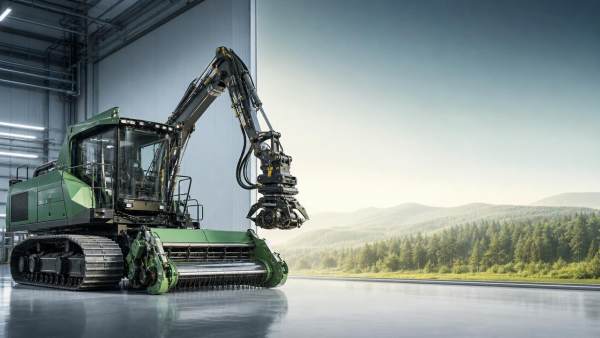
In a market shaped by rising compliance demands, precision engineering, and global sourcing risks, top Agri & Forestry machinery manufacturers stand out through far more than product range alone.
For business evaluators, the real differentiators lie in technical reliability, certification readiness, supply chain transparency, and long-term operational value.
These factors directly influence procurement confidence, lifecycle cost, and the ability to defend capital investment decisions under operational and regulatory scrutiny.
What business evaluators are really trying to determine
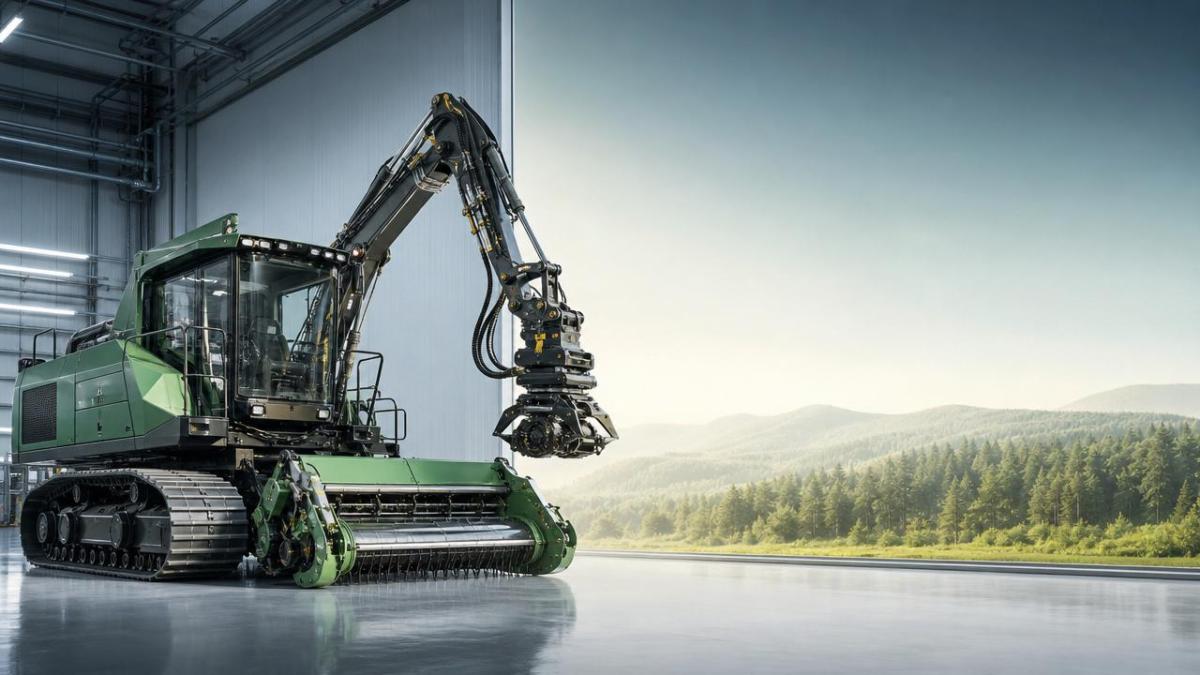
When buyers search for insights on Agri & Forestry machinery manufacturers, they are rarely looking for a simple brand comparison.
They are usually trying to answer a harder question: which manufacturers are structurally safer, more scalable, and more dependable as long-term suppliers.
That search intent is especially strong among procurement teams, strategy analysts, and technical reviewers evaluating equipment for multi-year operational use.
For this audience, product brochures are not enough. They need signals that a manufacturer can deliver consistent performance across engineering, compliance, service, and supply continuity.
In practice, top-tier manufacturers separate themselves by reducing uncertainty. They make it easier to validate quality, forecast ownership cost, and manage operational risk.
Top manufacturers win on reliability, not just machine specifications
One of the biggest mistakes in machinery evaluation is overemphasizing headline specifications while underweighting reliability in real operating conditions.
Leading manufacturers understand that uptime matters more than marketing language, especially in seasonal agriculture and continuous forestry operations.
High-performing equipment is not defined only by horsepower, width, output, or automation features. It is defined by repeatable field performance.
That includes stable operation under variable loads, predictable wear behavior, and component durability across difficult terrain, moisture, dust, vibration, and temperature swings.
Top Agri & Forestry machinery manufacturers typically show engineering discipline through validated design processes, documented testing, and strong component sourcing strategies.
They also design for serviceability. Access to filters, belts, hydraulic systems, electronic modules, and key maintenance points should be practical in working environments.
For evaluators, the useful question is not “Does this machine look advanced?” but “How consistently does it perform over time, and how quickly can it return to service?”
Certification readiness and regulatory alignment are major trust signals
In global procurement, compliance is no longer a supporting issue. It is a central criterion in supplier qualification.
Top manufacturers distinguish themselves by being prepared for documentation reviews, safety verification, emissions expectations, and destination-market regulatory requirements.
Depending on machinery category and export market, this may include CE-related conformity readiness, ISO-based quality management, emissions compliance, and worker safety design standards.
For forestry machinery, environmental considerations and land-use operating requirements may also influence acceptance in certain jurisdictions or commercial tenders.
Well-prepared manufacturers do not treat certification as a one-time sales tool. They embed compliance into product development, manufacturing control, and technical documentation processes.
This matters because business evaluators must often justify vendor selection to internal stakeholders, insurers, financing partners, and regulatory-facing departments.
A manufacturer that can provide organized records, traceable quality procedures, and clear testing evidence reduces the burden of due diligence significantly.
That reduction in friction is often a practical advantage over competitors with similar machinery performance but weaker compliance maturity.
Supply chain transparency is now part of machinery quality
In recent years, sourcing disruptions have changed how institutional buyers assess industrial equipment manufacturers.
Machine quality can no longer be judged only by assembly output. It must also be judged by the resilience of the upstream component and materials network.
Top manufacturers tend to have clearer oversight of critical parts such as engines, transmissions, hydraulics, bearings, electronics, and control systems.
They know where their supply risk sits, which components are dual-sourced, and how quickly they can respond to shortages or logistics bottlenecks.
For buyers, this affects more than delivery timelines. It influences spare parts continuity, maintenance planning, warranty execution, and long-term fleet operability.
Transparent manufacturers are usually more credible during procurement because they can discuss lead times, parts availability, inventory strategy, and supplier relationships with confidence.
They also tend to be more realistic about capacity. That honesty is valuable, especially when projects depend on synchronized deployment across farms, plantations, mills, or timber operations.
If a supplier cannot explain how it manages critical component risk, evaluators should treat that as a strategic warning sign rather than a minor information gap.
After-sales infrastructure often matters more than the initial purchase price
Many machinery investments look competitive at purchase stage but become expensive through downtime, slow parts support, and weak technical service.
That is why strong after-sales capability is one of the clearest ways top manufacturers set themselves apart.
For agricultural and forestry operators, service delays can destroy seasonal productivity windows. In some cases, a missed operating period is more costly than the machine itself.
Leading manufacturers usually support their equipment through trained dealer networks, regional service teams, digital diagnostics, and structured spare parts programs.
More importantly, they can define service response expectations instead of offering only vague promises of support.
Business evaluators should examine mean repair timelines, spare parts stocking logic, technician training standards, and escalation paths for major failures.
They should also ask whether software updates, telematics support, and operator training are included in the post-sale relationship.
A lower-priced machine from a weak support organization may produce a far worse total cost outcome than a premium machine backed by strong lifecycle services.
Data capability and precision integration increasingly define market leaders
Modern Agri & Forestry machinery manufacturers are no longer assessed only as equipment builders. Increasingly, they are judged as technology partners.
Precision farming, remote diagnostics, machine telemetry, route optimization, and output monitoring are becoming standard expectations in many procurement contexts.
Top manufacturers stand out by integrating these functions in ways that improve decisions rather than simply adding software features for marketing value.
For agriculture, this can include input optimization, field mapping, application control, yield-linked reporting, and fleet coordination.
For forestry, it may include productivity analytics, machine health monitoring, location visibility, fuel-use tracking, and harvest data integration.
These capabilities matter to business evaluators because they influence labor efficiency, machine utilization, reporting quality, and future interoperability with broader operating systems.
However, not all digital capability is equal. Buyers should test whether data outputs are actionable, exportable, secure, and compatible with existing management platforms.
The best manufacturers make precision systems easier to adopt. They reduce operator burden and provide measurable operational insight rather than isolated dashboards.
Manufacturing consistency reveals whether quality is scalable
Another major differentiator is whether a manufacturer can maintain quality consistently as production scales across models, plants, or export markets.
Some suppliers produce excellent demonstration units but struggle with repeatability when order volume increases or customization requests become more complex.
Top-tier manufacturers usually show stronger process discipline in fabrication, machining, assembly, inspection, and final validation.
They invest in production controls because they understand that commercial buyers are not evaluating a single machine, but a supplier system.
For business evaluators, signs of scalable quality include standardized work instructions, inspection traceability, controlled supplier qualification, and documented nonconformance handling.
Factory audit readiness is also important. A manufacturer that welcomes technical review generally inspires more confidence than one relying only on sales representation.
Consistency across batches and models is especially important when buyers are building fleets and need predictable maintenance, training, and spare parts planning.
In that context, manufacturing maturity becomes a strategic advantage, not just an internal operations issue.
Strong manufacturers make the total cost of ownership easier to predict
Price matters, but sophisticated buyers rarely choose machinery based on acquisition cost alone.
What sets leading manufacturers apart is their ability to support a more credible total cost of ownership model.
This includes fuel or energy efficiency, wear component life, maintenance intervals, labor requirements, uptime rates, operator learning curve, and residual value expectations.
Manufacturers that understand enterprise procurement can usually provide more than technical data sheets. They can support economic modeling with realistic operating assumptions.
That is extremely useful for business evaluators preparing investment cases or comparing competing equipment platforms.
Top suppliers also tend to be clearer about where cost volatility may arise, such as imported components, specialized tooling, software subscriptions, or high-demand spare parts.
Predictability itself has value. It allows operations managers and finance teams to plan more accurately and defend procurement decisions with greater confidence.
In uncertain markets, a machine with slightly higher upfront cost but lower operational ambiguity may be the financially stronger choice.
Reputation matters most when it is supported by evidence
Brand recognition can open doors, but reputation alone should not decide supplier selection.
The best Agri & Forestry machinery manufacturers reinforce their market position with evidence that stands up to technical and commercial review.
That evidence may include documented field performance, customer retention, export experience, audit readiness, service coverage, and case-based operational results.
References are particularly useful when they come from buyers with comparable scale, geography, terrain, crop profile, or forestry conditions.
Evaluators should also distinguish between broad visibility and true authority. A widely marketed brand is not automatically the most dependable procurement choice.
Likewise, a less publicized manufacturer may be highly competitive if it demonstrates strong engineering, disciplined support, and transparent commercial practices.
The goal is to identify proof of execution, not just proof of presence.
How business evaluators can assess manufacturers more effectively
To make better decisions, evaluators should use a framework that goes beyond catalog comparisons and unit pricing.
First, assess technical reliability through testing evidence, installed base feedback, and maintenance performance history.
Second, review compliance readiness, including quality systems, safety documentation, and destination-market certification support.
Third, evaluate supply chain resilience by discussing component sourcing, parts strategy, and lead-time transparency.
Fourth, test the after-sales model in detail, including response times, technician coverage, remote diagnostics, and spare parts logistics.
Fifth, examine digital integration and whether machine data supports measurable operating improvements.
Finally, build a total cost of ownership comparison using realistic assumptions rather than vendor-optimized scenarios.
This structured approach helps separate manufacturers that are merely competitive on paper from those that are dependable in actual deployment.
Conclusion: the best manufacturers reduce risk while increasing operational confidence
What sets top Agri & Forestry machinery manufacturers apart is not a single feature, award, or product family.
It is their ability to perform reliably across engineering, compliance, sourcing, support, and lifecycle economics at the same time.
For business evaluators, that combination is what turns machinery procurement from a price decision into a strategic operating decision.
The most valuable manufacturers are those that reduce uncertainty, improve asset productivity, and support long-term confidence in both operational and financial outcomes.
In today’s market, the strongest suppliers do more than sell machines. They prove that their systems, documentation, and support can stand behind them.
That is the standard by which leading manufacturers should be judged, and the benchmark that separates true industrial partners from ordinary equipment vendors.
Related Intelligence
- Forestry EquipmentChoosing Compact Forestry Machinery for Small Woodlots and Narrow AccessChoose compact forestry machinery that fits small woodlots and narrow access. Compare payload, turning clearance, safety, and running costs to find the right machine for your site.
- Forestry EquipmentAre PTO driven wood chipper vibration levels within ISO 5349-1 hand-arm exposure limits for forestry crews?PTO driven wood chipper vibration often exceeds ISO 5349-1 limits—discover real-world data, actionable mitigation strategies, and how to protect forestry crews now.
- Forestry EquipmentSelecting Timber Processing Equipment for Middle East Heat, Dust, and Wood SpeciesTimber processing equipment for Middle East operations: discover how to select heat-resistant, dust-protected, species-matched systems for reliable output and lower downtime.
The Morning Broadsheet
Daily chemical briefings, market shifts, and peer-reviewed summaries delivered to your terminal.
