

The Authority in Global Agricultural Chemistry & Bio-Resources
Indonesia Mandates Bahasa Labels & Localized Manuals for Forestry Equipment Imports
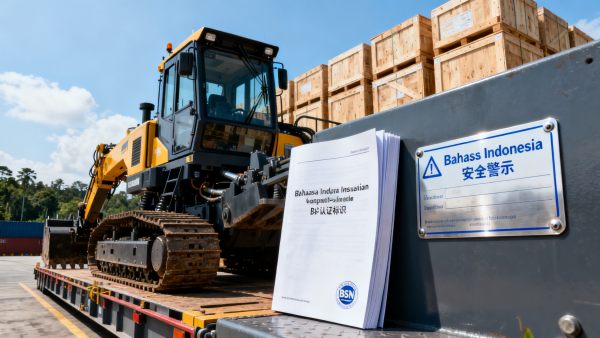
Effective 1 August 2026, Indonesia’s Ministry of Industry has introduced new labeling and documentation requirements for imported forestry equipment—including harvesters, skidders, and wood chippers—triggering compliance cost increases of 12–15% per unit. Exporters of forestry machinery to Indonesia, particularly SMEs in manufacturing and international trade, must now reassess localization workflows, supply chain coordination, and certification timelines.
Event Overview
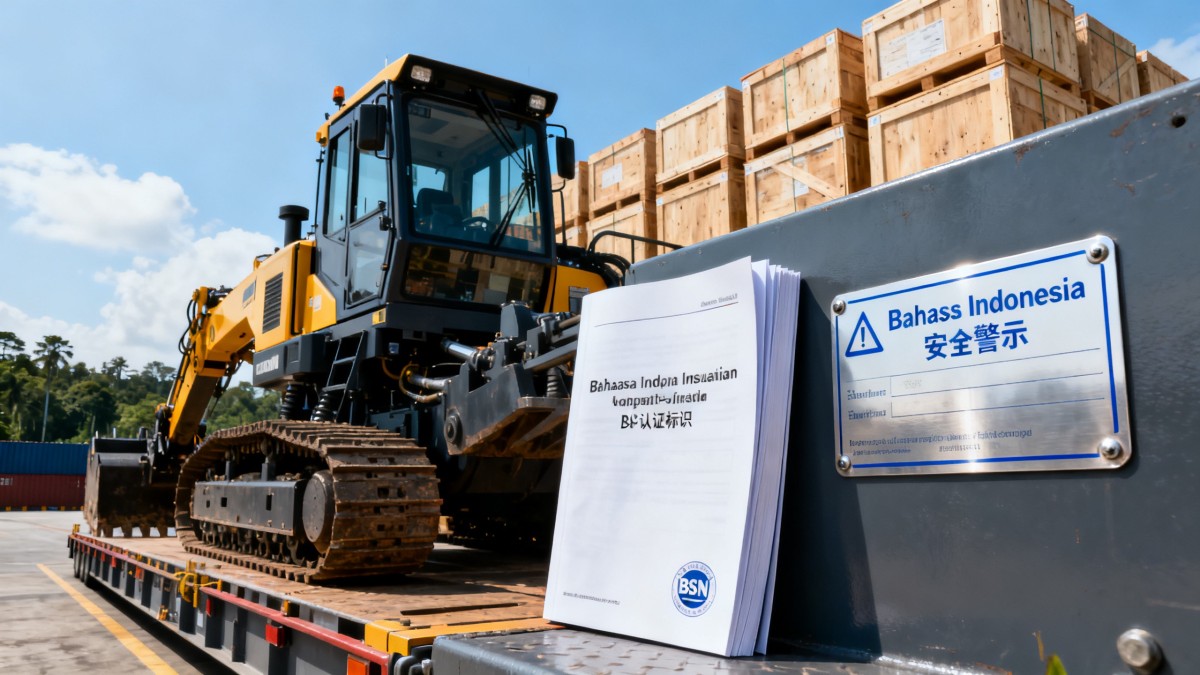
On 20 May 2026, Indonesia’s Ministry of Industry issued Technical Notice No. 18, stipulating that, from 1 August 2026, all imported forestry equipment must bear Bahasa Indonesia safety warnings and operational instructions affixed adjacent to the equipment nameplate. In addition, importers must provide both printed and electronic versions of an operator manual certified by the National Standardization Agency of Indonesia (BSN). These requirements apply specifically to forestry equipment such as logging machines, skidders, and wood chippers.
Which Sub-Sectors Are Affected
Direct Exporters (OEMs & Trading Companies)
Exporters supplying forestry equipment to Indonesia face immediate cost and timeline impacts: the need to produce BSN-certified bilingual manuals and physically affix Bahasa labels adds steps to pre-shipment preparation. For SME exporters without in-house localization capacity, this often necessitates outsourcing to certified translation or regulatory support providers—contributing directly to the reported 12–15% average compliance cost increase.
Manufacturers with Integrated Export Operations
Manufacturers who manage export logistics internally must update production line documentation protocols and quality control checkpoints to ensure label placement and manual versioning align with Indonesian requirements. Unlike general machinery regulations, these rules specify physical label adjacency to the nameplate—a detail requiring engineering-level coordination between design, assembly, and packaging teams.
Supply Chain & Certification Service Providers
Third-party localization agencies, technical translators accredited by BSN, and certification consultants are seeing increased inbound inquiries. The requirement for BSN certification—not just translation—means service providers must verify their scope includes forestry equipment documentation review, not generic industrial translations. This creates a niche demand for domain-specific regulatory support.
What Relevant Companies or Practitioners Should Monitor and Do Now
Track official BSN certification pathways and timelines
BSN has not yet published detailed procedural guidance on manual certification for forestry equipment. Exporters should monitor BSN’s official portal and registered notifications for application forms, required test reports (if any), and average processing duration—critical for aligning shipment schedules with certification lead times.
Verify applicability to specific product variants and configurations
The regulation applies to ‘forestry equipment’ as defined in the notice, but does not list excluded subtypes (e.g., attachments, retrofit kits, or diagnostic tools). Companies should confirm whether auxiliary components shipped separately—such as log grapples or hydraulic processors—fall under the same labeling and manual requirements before finalizing packaging and documentation packages.
Distinguish between policy announcement and enforcement readiness
While the effective date is fixed at 1 August 2026, customs implementation may vary across ports (e.g., Tanjung Priok vs. Belawan). Early engagement with licensed Indonesian import agents is recommended to clarify how verification will be conducted at entry—whether via document review only, or including on-site label inspection during clearance.
Update internal SOPs for label placement and manual version control
Manufacturers should revise standard operating procedures to include mandatory Bahasa label positioning checks prior to final packaging and assign version numbers to electronic manuals aligned with BSN certification references. Maintaining audit-ready records of label print batches and manual certification IDs supports traceability if post-import verification occurs.
Editorial Perspective / Industry Observation
Observably, this measure reflects Indonesia’s broader trend toward strengthening local regulatory sovereignty in industrial imports—not merely as a language-accessibility initiative, but as a de facto technical barrier reinforcing domestic standards enforcement capacity. Analysis shows the 12–15% cost uplift is concentrated among smaller exporters lacking scale advantages in localization procurement; larger OEMs may absorb costs more efficiently through centralized regulatory affairs units. From an industry perspective, this is less a one-off compliance event and more a signal of increasing localization expectations across ASEAN markets—particularly where national standardization bodies are expanding certification mandates beyond traditional safety domains into usability and maintenance documentation. Current enforcement appears procedural rather than punitive, suggesting a transitional phase where clarity—and not penalties—is the primary objective.
Indonesia’s Ministry of Industry Technical Notice No. 18 (issued 20 May 2026); effective 1 August 2026. BSN certification requirements remain subject to further procedural guidance; ongoing monitoring advised.
Related Intelligence
- Forestry EquipmentChoosing Compact Forestry Machinery for Small Woodlots and Narrow AccessChoose compact forestry machinery that fits small woodlots and narrow access. Compare payload, turning clearance, safety, and running costs to find the right machine for your site.
- Forestry EquipmentAre PTO driven wood chipper vibration levels within ISO 5349-1 hand-arm exposure limits for forestry crews?PTO driven wood chipper vibration often exceeds ISO 5349-1 limits—discover real-world data, actionable mitigation strategies, and how to protect forestry crews now.
- Forestry EquipmentSelecting Timber Processing Equipment for Middle East Heat, Dust, and Wood SpeciesTimber processing equipment for Middle East operations: discover how to select heat-resistant, dust-protected, species-matched systems for reliable output and lower downtime.
The Morning Broadsheet
Daily chemical briefings, market shifts, and peer-reviewed summaries delivered to your terminal.
