

The Authority in Global Agricultural Chemistry & Bio-Resources
US-China Talks Cut Non-Tariff Barriers for Botanical Extracts
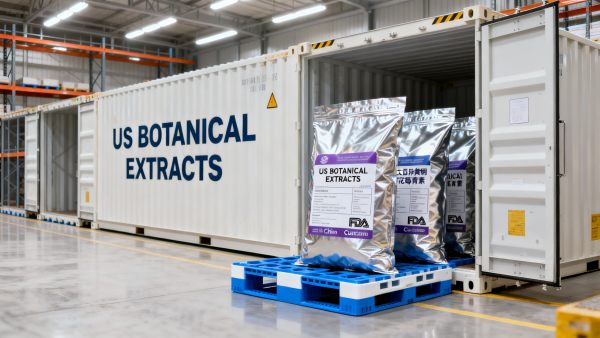
On May 14, 2026, China’s Ministry of Commerce announced a preliminary breakthrough in US-China economic and trade consultations concerning non-tariff barriers affecting agricultural products—specifically targeting botanical extracts. This development signals measurable progress in regulatory alignment for high-value natural ingredient trade between the two countries.
Confirmed Outcomes of the Bilateral Consultation
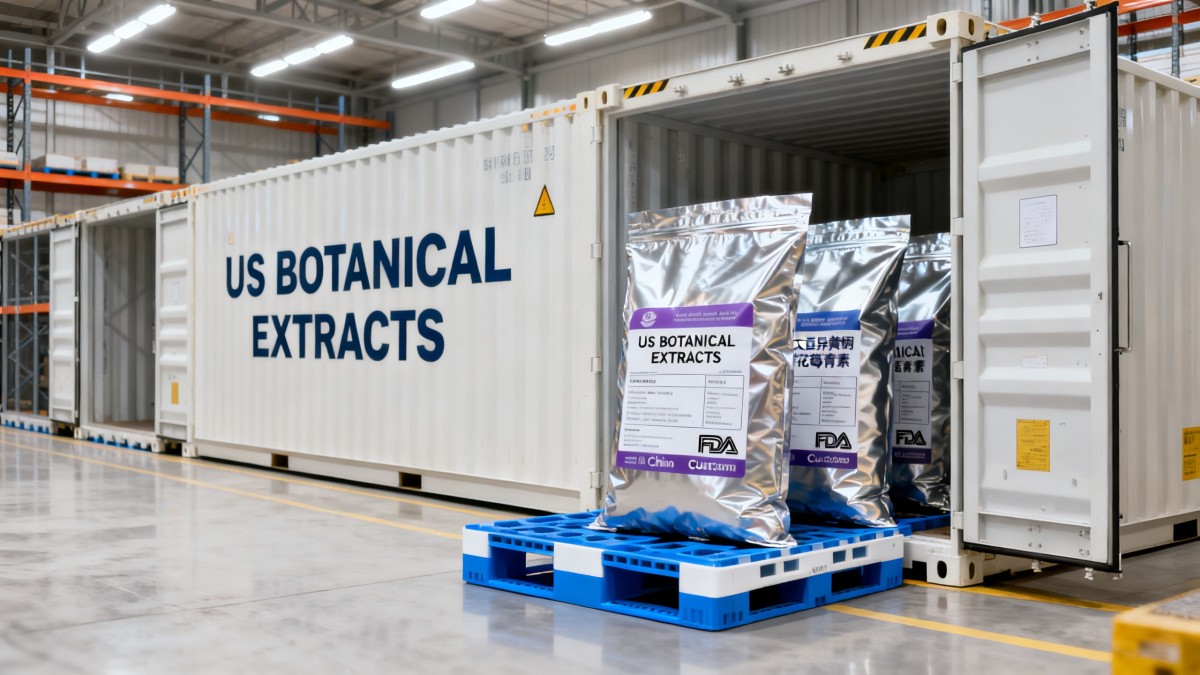
According to the official announcement issued on May 14, 2026, the United States agreed to streamline the Generally Recognized as Safe (GRAS) determination process for botanical extracts under the U.S. Food and Drug Administration (FDA). A dedicated fast-track submission channel has been opened for comprehensive toxicological dossiers. Concurrently, China will implement quarantine and inspection facilitation measures for imported high-value botanical extracts from the U.S., including soy isoflavones and blueberry anthocyanins.
Impact Across Industry Stakeholders
Export-Oriented Trading Enterprises
These firms face reduced time-to-market for U.S. entry, as GRAS pathway acceleration lowers pre-market approval lead times. They must now prioritize dossier completeness—including species identification, extraction methodology, and full toxicological profiles—to qualify for the fast-track channel.
Raw Material Sourcing Companies
With Chinese import facilitation for U.S.-origin soy isoflavones and blueberry anthocyanins, sourcing strategies may shift toward diversified, quality-assured upstream suppliers. Buyers should monitor batch-level phytosanitary documentation and traceability requirements aligned with new inspection protocols.
Manufacturing & Formulation Firms
Downstream processors relying on imported botanical actives may experience improved supply continuity and cost predictability. However, they must verify that incoming materials retain GRAS eligibility post-import and meet updated labeling and purity specifications under evolving FDA guidance.
Supply Chain & Compliance Service Providers
Third-party labs, regulatory consultants, and certification bodies are likely to see increased demand for GRAS dossier preparation, toxicology study coordination, and China Customs pre-clearance support. Capacity planning for technical documentation review and bilingual regulatory translation will be critical.
Key Actions for Enterprise Preparedness
Align GRAS Submissions with FDA Fast-Track Requirements
Companies preparing for U.S. market access must ensure toxicological dossiers meet FDA’s updated scope and format expectations—including genotoxicity, subchronic toxicity, and ADI derivation—and submit via the newly established expedited channel.
Verify Phytosanitary Documentation for U.S.-Sourced Imports
Importers of U.S.-produced soy isoflavones and blueberry anthocyanins must confirm that consignments include validated origin certificates, processing records, and residue test reports compliant with China’s revised inspection thresholds.
Update Internal Quality Agreements with U.S. Suppliers
Contracts and specifications should explicitly reference GRAS status maintenance, stability data retention periods, and responsibilities for post-market safety monitoring—particularly where ingredients serve functional food or dietary supplement applications.
Industry Perspective: Beyond Immediate Compliance
Analysis shows this agreement marks a strategic recalibration—not just of procedural timelines, but of how regulatory science is leveraged in bilateral trade. From an industry perspective, the GRAS fast-track reflects growing recognition of standardized toxicological assessment as a proxy for safety assurance, reducing reliance on case-by-case evaluations. What deserves closer attention is whether this model could extend to other natural product categories—such as fermented botanicals or enzymatically modified extracts—where regulatory ambiguity has historically constrained market entry. Observably, manufacturers investing early in harmonized testing protocols and digital dossier management systems will gain first-mover advantage in leveraging both U.S. and Chinese facilitations.
Toward Regulatory Convergence in Natural Ingredients
This milestone does not eliminate compliance complexity, but it redefines its contours: shifting emphasis from barrier navigation to evidence readiness. For global botanical ingredient stakeholders, the core implication lies in the growing premium placed on scientific rigor, documentation transparency, and proactive regulatory engagement—rather than reactive adaptation. Sustainable competitiveness will increasingly hinge on integrated compliance capability across both export and import jurisdictions.
Source Attribution & Ongoing Monitoring
This article synthesizes the official information provided: title, event date (May 14, 2026), and summary statement from China’s Ministry of Commerce. Specific official source links were not provided in the input and should be verified continuously. Stakeholders are advised to closely track forthcoming FDA guidance documents on GRAS fast-track implementation, China Customs’ detailed inspection protocols for botanical imports, and sector-specific feedback from industry associations on operational readiness and documentation bottlenecks.
Related Intelligence
- Smart GreenhouseGreenhouse Equipment for Vertical Farming: Choosing Lighting and VentilationChoose greenhouse equipment for vertical farming with confidence. Compare lighting, airflow, and moisture control to improve crop uniformity and manage costs. Explore the guide.
- Forestry EquipmentChoosing Compact Forestry Machinery for Small Woodlots and Narrow AccessChoose compact forestry machinery that fits small woodlots and narrow access. Compare payload, turning clearance, safety, and running costs to find the right machine for your site.
- APIs & IntermediatesProcurement Planning: Which Resource Reports Help Prevent Material Shortages?Discover how procurement planning resource reports reveal usable stock, shortage dates, and supplier risks so you can prevent material shortages and keep production on track.
The Morning Broadsheet
Daily chemical briefings, market shifts, and peer-reviewed summaries delivered to your terminal.
