

The Authority in Global Agricultural Chemistry & Bio-Resources
Nigeria Enforces Mandatory Naira Settlement for All Imports/Exports from May 2026
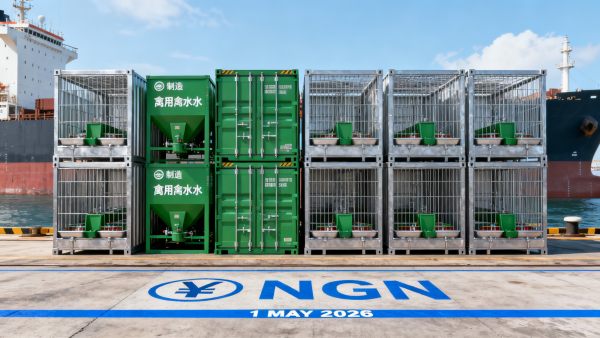
Nigeria’s new foreign exchange regulation—effective 1 May 2026—requires all import and export transactions to be settled exclusively in Nigerian Naira (NGN), with strict restrictions on USD cash and spot foreign exchange. This measure directly impacts Chinese exporters of commercial feed pellets, poultry housing & caging systems, and feeding & watering systems, introducing challenges in receivables timing, FX volatility exposure, and cross-border payment channel reliability.
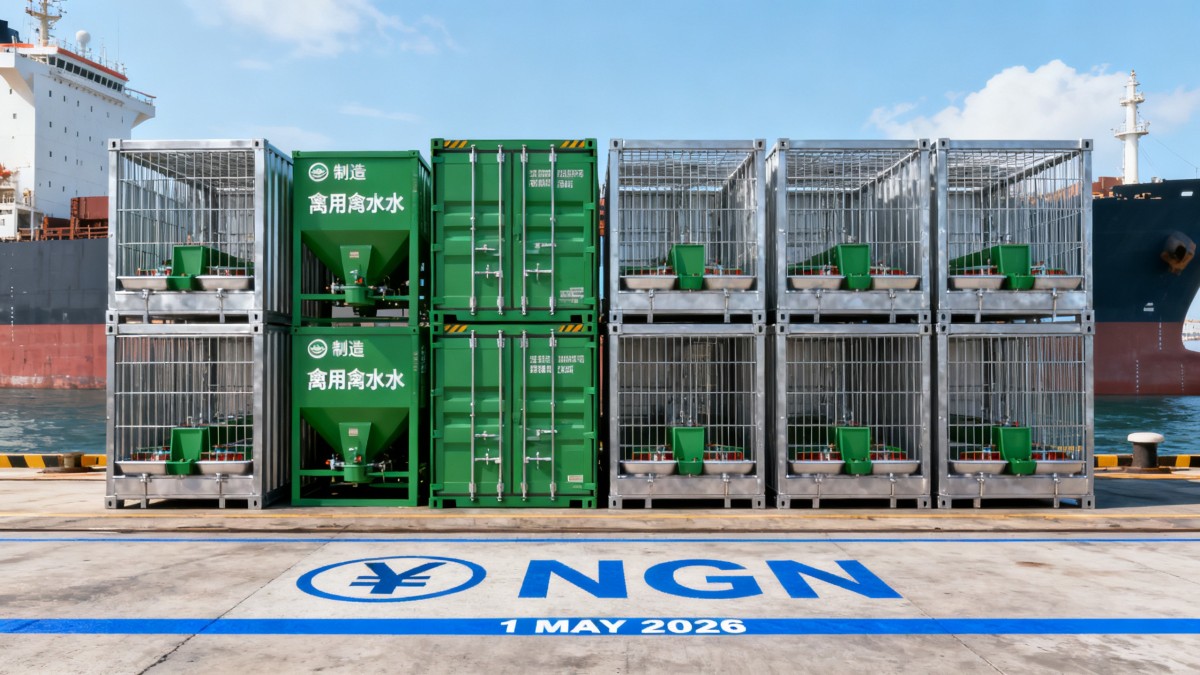
Regulatory Mandate Takes Effect on 1 May 2026
Beginning 1 May 2026, Nigeria will require full Naira settlement for all cross-border trade activities. USD-denominated cash payments and spot foreign exchange settlements are explicitly prohibited for import and export transactions. The policy applies uniformly across goods categories, including agricultural machinery components and livestock infrastructure equipment.
Impact Across Trade and Supply Chain Roles
Direct Exporters
Chinese manufacturers exporting commercial feed pellets, poultry housing & caging, and feeding & watering systems face delayed receivables due to mandatory local currency conversion. Payment processing now depends on Nigerian importers’ ability to secure NGN liquidity—and on domestic banking capacity to handle Naira-based trade documentation.
Manufacturers and Assemblers
Domestic production planning must now account for extended cash conversion cycles. Working capital models require recalibration, especially where USD-denominated input costs (e.g., imported sensors or galvanizing agents) remain unchanged while revenue is received in volatile NGN.
Supply Chain Service Providers
Freight forwarders, trade finance intermediaries, and customs brokers must adapt documentation workflows to reflect NGN invoicing, local tax compliance (e.g., VAT and withholding tax calculations in NGN), and updated bank guarantee formats aligned with Central Bank of Nigeria (CBN) directives.
Key Operational Priorities for Affected Enterprises
Reassess Payment Terms and Currency Clauses
Revise sales contracts to specify NGN invoicing, define acceptable NGN clearing mechanisms (e.g., CBN-licensed banks or designated settlement platforms), and incorporate FX risk allocation clauses—particularly for long-lead-time orders placed before May 2026.
Engage Nigerian Importers on Local Payment Pathways
Proactively coordinate with Nigerian buyers to confirm their access to NGN liquidity sources, verify eligibility under CBN’s approved importer schemes, and jointly explore hedging instruments such as NGN forward contracts offered by local financial institutions.
Validate Banking Channel Compatibility
Confirm whether existing correspondent banking relationships support NGN credit transfers, and assess fallback options—including use of multilateral trade platforms or regional settlement infrastructures—if primary channels experience delays or rejections.
Industry Perspective: A Shift Toward Localized Financial Infrastructure
Analysis shows this policy signals a structural pivot—not merely an FX control measure—but toward deepening domestic financial intermediation for trade. From an industry perspective, it accelerates the need for exporters to integrate local currency risk management into core commercial strategy rather than treating it as a peripheral treasury function. What deserves closer attention is how rapidly Nigerian banks scale NGN trade financing capacity—and whether parallel reforms in invoice verification, dispute resolution, and customs valuation will accompany the settlement mandate.
Strategic Implications for Global Agri-Tech Suppliers
This regulation marks a material shift in market entry conditions for agri-infrastructure suppliers targeting Nigeria. It elevates financial compliance and local partner coordination to the same strategic tier as technical specifications and after-sales service capability. Success will increasingly hinge not only on product performance but also on operational fluency in NGN-based trade execution—making early alignment with Nigerian financial and regulatory stakeholders essential.
Source Information and Ongoing Monitoring
This article is generated exclusively from the user-provided title, effective date (1 May 2026), and event summary. Specific official source links were not provided in the input and should be verified continuously. Stakeholders are advised to monitor updates from the Central Bank of Nigeria, the Nigerian Customs Service, and the Federal Ministry of Industry and Trade—particularly regarding implementation guidelines, exemptions (if any), and reporting requirements for cross-border invoices and settlement confirmations.
Related Intelligence
- Smart GreenhouseGreenhouse Equipment for Vertical Farming: Choosing Lighting and VentilationChoose greenhouse equipment for vertical farming with confidence. Compare lighting, airflow, and moisture control to improve crop uniformity and manage costs. Explore the guide.
- Forestry EquipmentChoosing Compact Forestry Machinery for Small Woodlots and Narrow AccessChoose compact forestry machinery that fits small woodlots and narrow access. Compare payload, turning clearance, safety, and running costs to find the right machine for your site.
- APIs & IntermediatesProcurement Planning: Which Resource Reports Help Prevent Material Shortages?Discover how procurement planning resource reports reveal usable stock, shortage dates, and supplier risks so you can prevent material shortages and keep production on track.
The Morning Broadsheet
Daily chemical briefings, market shifts, and peer-reviewed summaries delivered to your terminal.
