

The Authority in Global Agricultural Chemistry & Bio-Resources
Gulf States Roll Out Energy & Eco Regulations in May 2026
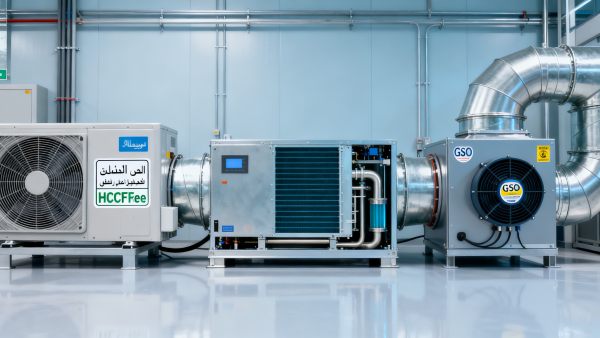
Starting 1 May 2026, Saudi Arabia, Kuwait, and Oman implemented new energy efficiency and environmental compliance requirements affecting Climate Control & Ventilation, Aeration & Water Tech, and Commercial Feed Pellet production line equipment exporters. These measures signal tightening regulatory alignment across Gulf markets — particularly for manufacturers and exporters supplying technical equipment to the region.
Event Overview
Effective 1 May 2026: (1) Saudi Arabia updated its energy and water efficiency standards for washing machines; (2) Kuwait imposed a full import ban on air-conditioning units containing hydrochlorofluorocarbons (HCFCs); and (3) Oman introduced mandatory technical certification for electric scooters and electric vehicles. All three measures require affected equipment to carry localized labeling and undergo third-party testing prior to market entry.
Industries Affected
Direct Exporters of Climate Control & Ventilation Equipment
Exporters supplying HVACR units — especially those integrated into commercial or industrial feed pellet production lines — face direct compliance obligations in Kuwait (HCFC phaseout) and Saudi Arabia (updated efficiency benchmarks). Non-compliant units risk customs rejection or delayed clearance.
Manufacturers of Aeration & Water Tech Systems
Producers of water-efficient or energy-integrated aeration systems — including those used in aquaculture, wastewater treatment, or feed processing — must verify whether their products fall under Saudi Arabia’s revised water and energy performance thresholds for washing-machine-adjacent equipment categories (e.g., pump-driven water recirculation modules).
Suppliers to Commercial Feed Pellet Production Lines
Feed pellet line integrators and OEM component suppliers may be indirectly impacted: if their systems include certified HVACR units (e.g., cooling conveyors), HCFC-free compressors, or water-recycling subsystems subject to Saudi labeling rules, they must ensure full traceability and documentation for downstream compliance claims.
Supply Chain & Certification Service Providers
Third-party testing labs, local representative offices, and labeling compliance consultants are seeing increased demand for Gulf-specific certification support — especially for Oman’s new EV/scooter technical certification framework, which may extend to low-voltage motorized equipment used in automated feed handling.
What Relevant Enterprises Should Monitor and Do Now
Track official implementation guidance from national authorities
While the effective date is confirmed as 1 May 2026, detailed test protocols, acceptable certification bodies, and transitional provisions (e.g., grace periods for existing stock) remain pending publication by Saudi SASO, Kuwait’s Public Authority for Industry, and Oman’s DG Standards. Exporters should subscribe to official notifications and monitor updates through accredited local representatives.
Identify high-exposure product categories by market
Focus verification efforts on: (a) air-conditioning units with HCFC refrigerants destined for Kuwait; (b) washing-machine-related water/energy subsystems (e.g., recirculating rinse pumps) bound for Saudi Arabia; and (c) any motorized transport or handling equipment (e.g., battery-powered conveyor trolleys) shipped to Oman that could fall under the scope of its new electric vehicle certification mandate.
Distinguish policy intent from operational rollout
The regulations reflect broader Gulf environmental commitments (e.g., KSA Vision 2030 sustainability goals, Kuwait’s National Climate Change Plan), but enforcement capacity and inspection rigor will vary. For now, the requirements are best understood as formal entry conditions — not yet as active audit triggers — meaning pre-market conformity remains the primary compliance lever.
Prepare documentation and labeling workflows early
Local language labeling (Arabic script), Arabic-language user manuals, and test reports from SASO-/GSO-/Oman-accredited labs must be finalized before shipment. Delays in securing lab capacity — especially for HCFC refrigerant analysis or water-efficiency cycle testing — are already being reported. Exporters should initiate test requests no later than Q1 2026 for May-bound consignments.
Editorial Observation / Industry Perspective
Observably, this coordinated timing across three Gulf states does not indicate harmonized regulation — each measure stems from distinct national frameworks and enforcement agencies. Rather, it signals converging priorities around refrigerant phaseouts, appliance-level resource efficiency, and electrified mobility safety. Analysis shows these are early-stage regulatory signals, not fully matured regimes: gaps remain in cross-border recognition of test reports, and no regional mutual recognition agreement currently covers these specific certifications. From an industry perspective, the May 2026 rollouts are better understood as a stress test for export readiness — revealing where supply chains lack embedded compliance capacity, rather than as an immediate trade barrier.
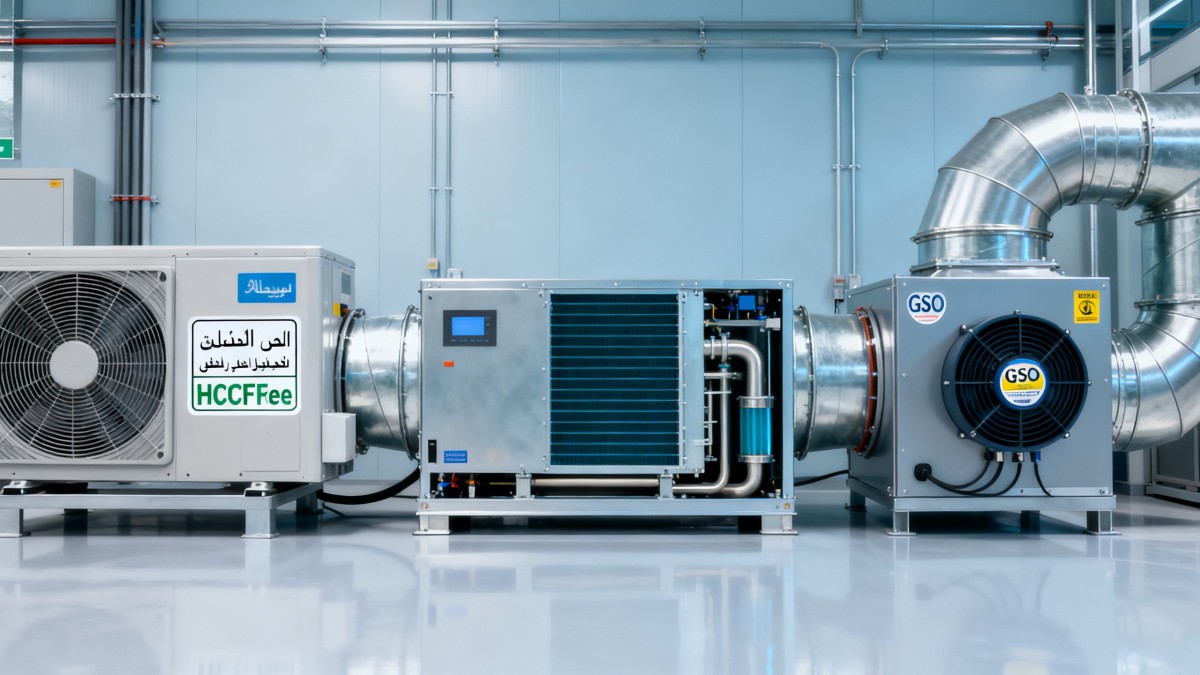
This development underscores how environmental and energy performance requirements are increasingly embedded in technical market access conditions — especially for equipment supporting industrial infrastructure. It is not a one-off policy shift, but part of a measurable trend toward stricter, more granular conformity expectations across Gulf export markets. Current readiness depends less on reacting to May 2026 and more on institutionalizing pre-shipment compliance checks as standard operating procedure.
Source: Official announcements from the Saudi Standards, Metrology and Quality Organization (SASO), Kuwait Public Authority for Industry (PAI), and Oman Authority for Standardization and Metrology (DG Standards), all dated Q4 2025 and confirming 1 May 2026 implementation. Note: Specific test methodologies, scope exclusions, and enforcement timelines remain under review and require ongoing monitoring.
Related Intelligence
- Smart GreenhouseGreenhouse Equipment for Vertical Farming: Choosing Lighting and VentilationChoose greenhouse equipment for vertical farming with confidence. Compare lighting, airflow, and moisture control to improve crop uniformity and manage costs. Explore the guide.
- Forestry EquipmentChoosing Compact Forestry Machinery for Small Woodlots and Narrow AccessChoose compact forestry machinery that fits small woodlots and narrow access. Compare payload, turning clearance, safety, and running costs to find the right machine for your site.
- APIs & IntermediatesProcurement Planning: Which Resource Reports Help Prevent Material Shortages?Discover how procurement planning resource reports reveal usable stock, shortage dates, and supplier risks so you can prevent material shortages and keep production on track.
The Morning Broadsheet
Daily chemical briefings, market shifts, and peer-reviewed summaries delivered to your terminal.
