

The Authority in Global Agricultural Chemistry & Bio-Resources
K-REACH Introduces Expedited Registration for Supply-Critical Chemicals in South Korea
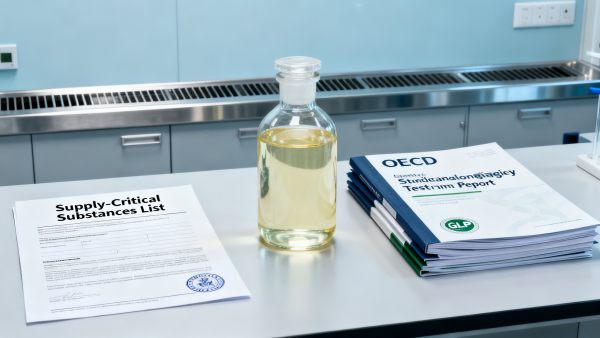
Effective 1 May 2026, South Korea’s K-REACH regulation will implement a special expedited registration pathway for chemical substances listed on the newly established ‘Supply-Critical Substances List’—including agrochemical intermediates and food-grade enzyme excipients. This change directly affects exporters of agrochemicals and food-grade enzymes to the Korean market, introducing both opportunity and new compliance obligations.
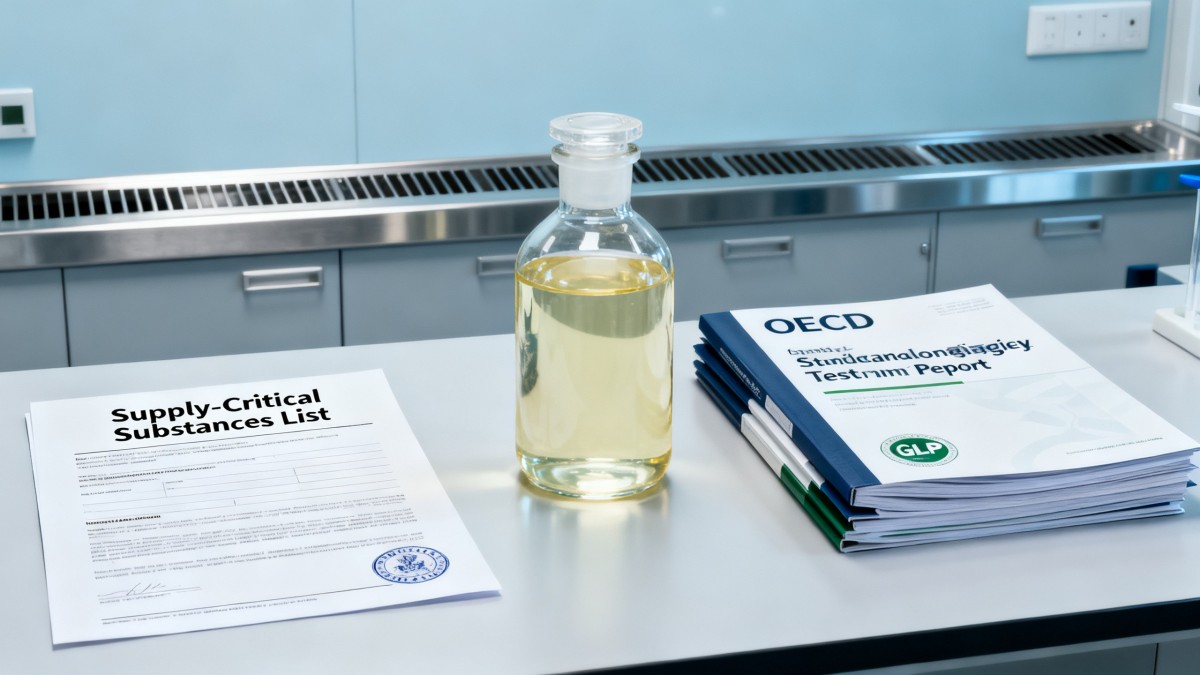
K-REACH Launches Fast-Track Registration for Designated Substances
Beginning 1 May 2026, the Korean Ministry of Environment will activate a streamlined registration process under K-REACH for specific substances classified as supply-critical. Eligible substances include intermediates used in agricultural chemical manufacturing and excipients employed in food-grade enzyme formulations. To qualify, applicants must submit a complete toxicological data package and formally commit to stable, uninterrupted supply to the Korean market. Failure to meet either requirement may result in customs clearance delays for affected shipments.
Impact Across the Supply Chain
Exporters Engaged in Direct Trade with Korea
Companies exporting agrochemicals or food-grade enzymes directly to South Korea now face dual considerations: accelerated market access if compliant, but heightened documentation and supply assurance requirements. Registration success hinges on timely submission of validated toxicology dossiers—not just summaries—and demonstrable production continuity.
Raw Material Sourcing Entities
Buyers procuring intermediates or excipients for final formulation must verify whether their upstream suppliers have initiated or completed this fast-track registration. Unregistered inputs may disrupt downstream registration timelines or trigger requalification efforts.
Contract Manufacturers and Formulators
Facilities producing finished agrochemical or enzyme products for Korean distribution must ensure all listed substances in their bill of materials are covered under an active fast-track registration—either by themselves or their raw material vendors. Gaps could invalidate product registrations or delay commercial launch.
Logistics and Regulatory Compliance Service Providers
Third-party consultants and customs brokers must update internal checklists to confirm fast-track registration status and validate supporting documents—including toxicology reports and supply commitment letters—prior to shipment release.
Key Compliance Priorities for Affected Businesses
Validate Substance Inclusion on the Official Supply-Critical List
Confirm whether your exported substance appears on the published list; only listed items qualify for the expedited route. Non-listed substances remain subject to standard K-REACH registration timelines and data requirements.
Prepare and Submit a Full Toxicological Data Package
This is not a simplified dossier. Required elements include, at minimum: acute toxicity, repeated-dose toxicity, mutagenicity, reproductive toxicity, and environmental fate data—all generated per OECD test guidelines and GLP standards.
Formalize and Document Long-Term Supply Commitments
A signed, dated statement committing to consistent supply volume and delivery reliability over a minimum three-year horizon is mandatory. Supporting evidence—such as capacity planning documents or multi-year supply contracts—may be requested during verification.
Align Export Documentation with K-REACH Registration Status
Commercial invoices, packing lists, and certificates of origin must clearly reference the registered substance name, K-REACH registration number (once assigned), and the applicable fast-track designation to prevent customs hold-ups.
Industry Perspective: A Strategic Shift in Regulatory Risk Management
Analysis shows that this measure reflects a broader regulatory evolution—not merely a procedural adjustment. From an industry perspective, it signals South Korea’s increasing emphasis on supply chain resilience alongside traditional safety assessment. What deserves closer attention is how rapidly registrants must operationalize end-to-end traceability: linking laboratory test reports to production batch records, and connecting those to contractual supply assurances. It is more appropriate to understand this as a convergence of chemical safety governance and industrial policy—where regulatory efficiency is explicitly tied to demonstrable market reliability.
Strategic Implications for Global Suppliers
This fast-track mechanism does not lower scientific or evidentiary thresholds; rather, it rewards proactive, well-documented readiness. For global suppliers, its true value lies not in speed alone—but in creating a verifiable, auditable foundation for long-term market access. Success hinges less on reactive compliance and more on embedding toxicological transparency and supply integrity into core R&D and procurement workflows.
Source Attribution and Verification Notes
This article was developed exclusively from the user-provided information: title, event date (2026-05-01), and summary description. Specific official source links were not provided in the input and should be verified continuously. Stakeholders are advised to monitor updates from the Korea National Institute of Environmental Research (KNIER) and the Chemicals Management Information System (CMIS), particularly regarding the finalized ‘Supply-Critical Substances List’, detailed guidance on toxicological data acceptance, and enforcement protocols for supply commitments.
Related Intelligence
- Smart GreenhouseGreenhouse Equipment for Vertical Farming: Choosing Lighting and VentilationChoose greenhouse equipment for vertical farming with confidence. Compare lighting, airflow, and moisture control to improve crop uniformity and manage costs. Explore the guide.
- Forestry EquipmentChoosing Compact Forestry Machinery for Small Woodlots and Narrow AccessChoose compact forestry machinery that fits small woodlots and narrow access. Compare payload, turning clearance, safety, and running costs to find the right machine for your site.
- APIs & IntermediatesProcurement Planning: Which Resource Reports Help Prevent Material Shortages?Discover how procurement planning resource reports reveal usable stock, shortage dates, and supplier risks so you can prevent material shortages and keep production on track.
The Morning Broadsheet
Daily chemical briefings, market shifts, and peer-reviewed summaries delivered to your terminal.
