

The Authority in Global Agricultural Chemistry & Bio-Resources
What drives polymer custom synthesis costs at pilot scale?
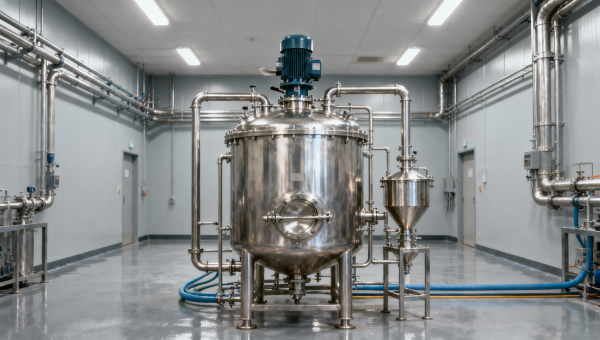
Pilot-scale polymer custom synthesis costs are driven by the work required to deliver a defined quantity of usable material with agreed properties. Raw materials are only part of the quote. Process development, reactor occupancy, purification, analytical testing, and the treatment of unsuccessful batches often explain larger differences between proposals. A meaningful comparison starts with the same delivery basis: dry polymer mass, specification, release tests, documentation, and responsibility for additional development.
The largest cost increases often occur where a laboratory procedure leaves unanswered questions. A reaction that produces an acceptable sample in glassware may need substantial adaptation when viscosity rises, heat removal slows, or isolation becomes difficult. A credible pilot quote makes those uncertainties visible and separates charges for resolving them from charges for producing material.
Establish what the quoted kilogram contains
A price per kilogram has limited meaning without a clear definition of the delivered product. Polymer supplied as a solution includes solvent mass; wet filter cake contains retained liquid; dried material still has an agreed moisture or residual-solvent limit. Comparing these formats without correcting the mass basis can make the more expensive proposal appear cheaper.
The useful comparison is total project cost divided by the mass of polymer that meets the agreed acceptance criteria. Total project cost includes development, production, testing, packaging, and any separately charged disposal or shipment. For solutions and dispersions, the calculation should identify polymer solids content and whether the carrier itself forms part of the required product.
Specification breadth also changes the denominator. Material with the correct average molecular weight may still fail on molecular-weight distribution, residual monomer, color, or insoluble content. A quote based on “polymer produced” leaves a different commercial exposure from one based on an accepted, released quantity.
Molecular specifications determine how difficult the synthesis becomes
Polymer identity alone does not define manufacturing difficulty. Two materials made from the same monomers can require different reaction control because their molecular weights, architectures, end groups, or composition profiles differ. A broad molecular-weight distribution may be acceptable for one application, while another requires tighter control and more extensive characterization.
Narrow dispersity, defined end-group functionality, and block architecture can introduce demands for purified reagents, oxygen exclusion, carefully controlled addition, or intermediate sampling. These requirements consume development time and may reduce operating flexibility. Their cost should be tied to a functional requirement rather than included merely because a laboratory sample was characterized that way.
Copolymer composition deserves particular attention. The charged monomer ratio does not automatically equal the composition of the isolated polymer. Different monomer reactivities and changing concentrations during reaction can affect incorporation. Where composition influences performance, the quote needs an agreed measurement method and a strategy for controlling it.
Analytical definitions matter as well. Molecular-weight results from size-exclusion chromatography depend on the method, solvent, calibration, and detector configuration. A numerical specification without a shared method creates a risk of rejection based on measurement differences. Establishing that method before production is generally less disruptive than investigating conflicting results after delivery.
Reactor time follows heat transfer and viscosity
Pilot production does not scale in direct proportion to laboratory batch mass. Heat-transfer area, mixing behavior, and available cooling capacity change with equipment size. In an exothermic polymerization, the safe feed rate may limit throughput even when the vessel has spare volume. Reaction calorimetry or other process-safety work adds an initial charge when existing data do not support the proposed operating conditions.
Viscosity creates a separate constraint. As polymer concentration or conversion increases, circulation can weaken and temperature differences become harder to control. Reducing solids content may improve mixing, but it also increases solvent use and the volume that must later be processed. A nominally larger reactor therefore does not necessarily deliver a proportionally larger mass of finished polymer.
Equipment compatibility affects both access and cost. A process may require pressure capability, corrosion-resistant wetted surfaces, effective handling of viscous material, or protection from moisture. If those requirements restrict the usable equipment, scheduling options narrow. Charges may reflect setup, cleaning, and reserved occupancy as well as reaction time.
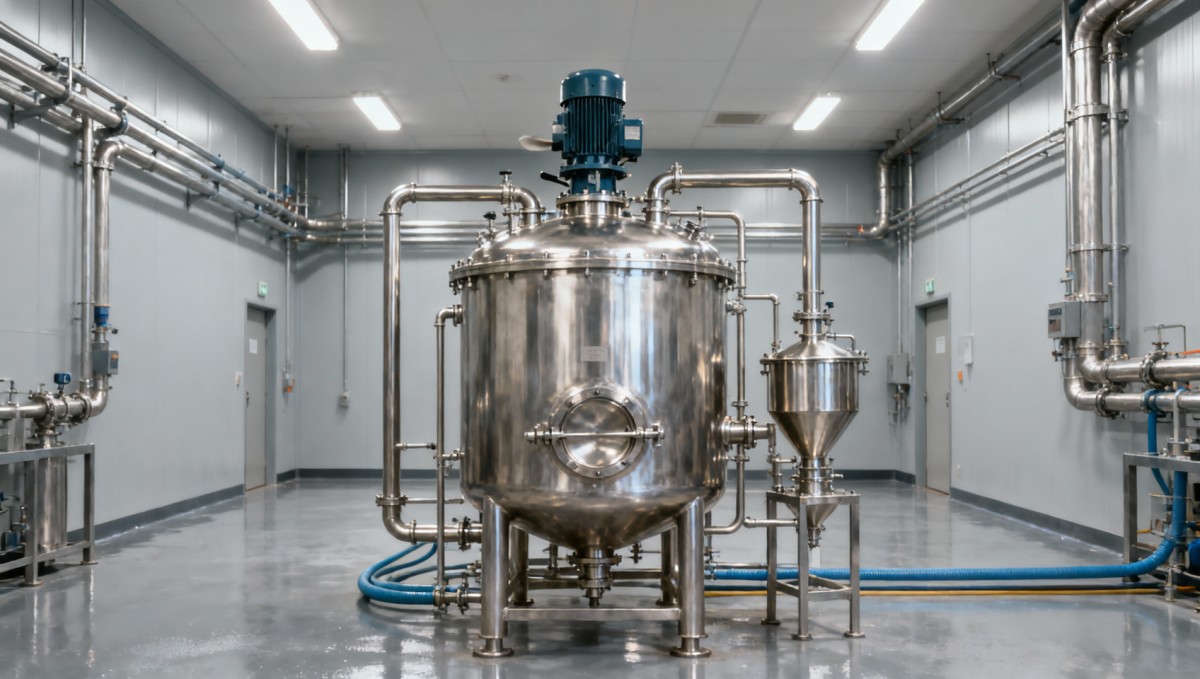
The batch schedule should extend through charging, conditioning, reaction, cooling, transfer, and cleaning. A short reaction followed by slow discharge and extensive cleaning can occupy equipment longer than a slower reaction with straightforward handling. Comparing only reaction hours conceals that difference.
Isolation can cost more than making the polymer
A laboratory isolation method is not automatically a practical pilot process. Precipitation into a large excess of nonsolvent may produce an excellent analytical sample while creating substantial liquid waste and a difficult filtration step at greater scale. Sticky solids, fine particles, gels, and compressible filter cakes each create different handling problems.
Purification costs depend on what must be removed and how strongly it remains associated with the polymer. Unreacted monomer, catalyst residues, salts, oligomers, and odor-causing compounds do not respond to the same treatment. Repeated washing adds material, labor, and waste charges; membrane processing introduces compatibility and fouling questions; solvent exchange increases processing volume and equipment time.
Drying is often underestimated. A polymer can retain solvent after its surface appears dry, and aggressive heating may cause degradation, discoloration, or changes in handling properties. The required residual-solvent level, thermal sensitivity, and final physical form determine the drying approach and duration. Milling a dried mass into powder adds another operation and may introduce dust-control requirements.
A proposal should therefore connect its isolation route to the acceptance specification. Supplying a solution can remove unnecessary drying and redissolution when the next processing stage uses the same solvent. That saving disappears if the receiving process requires a different carrier or cannot tolerate the remaining impurities.
Feedstock cost includes qualification and handling
Monomer price matters, but the lowest purchase price does not always produce the lowest batch cost. Water, inhibitors, trace metals, or other impurities can affect initiation, reaction rate, molecular weight, and color. The relevant purity requirement follows the chemistry; imposing a higher grade without evidence can add expense without improving the delivered material.
Commercial monomers supplied with stabilizers illustrate this tradeoff. Stabilizers support storage and transport, while some polymerization routes require their removal or controlled management. Any preparation step adds handling time and may alter storage limits. The quotation should state whether it assumes use as received, purification immediately before charging, or qualification of a particular feedstock source.
Specialty reagents also create purchasing costs beyond the amount consumed. Minimum order quantities, packaging sizes, limited shelf life, and unused balances can all affect a small campaign. Ownership of remaining material should be explicit, especially when it is charged in full but could support later batches.
Compare the assumptions behind each price
Proposals become easier to evaluate when they expose the same commercial and technical boundaries. The following distinctions often explain why apparently similar pilot campaigns carry different totals.
A fixed price is meaningful only within its stated scope. A low initial amount with open-ended development, purification, or testing charges provides less budget certainty than a higher amount with defined deliverables. Conversely, a large contingency may be unnecessary when a well-documented route already runs on compatible equipment.
Yield uncertainty and repeat batches need separate treatment
“Yield” can describe monomer conversion, isolated polymer recovery, or the fraction that meets specification. These measures answer different questions. High conversion does not guarantee high recovery if polymer remains in transfer lines or is lost during filtration. High recovery does not guarantee acceptance if molecular weight or residual monomer falls outside the agreed limits.
The estimate should trace expected losses through reaction, transfer, purification, sampling, and finishing. At pilot scale, equipment hold-up can represent a meaningful share of a small batch. Increasing the charge may improve recovery per unit of input, but only if mixing, cooling, and downstream capacity remain adequate.
Repeat-batch terms should distinguish causes. An exploratory run that reveals an unresolved scale-up problem is different from a batch made outside approved operating instructions. The contract needs a defined review process, access to relevant records, and agreement on who pays for investigation, reprocessing, or replacement. Without those terms, the apparent unit price excludes a major source of exposure.
Spend development money where it reduces a defined uncertainty
Useful development work answers questions that affect equipment choice, specification compliance, or the probability of completing the campaign. A mixing assessment, isolation trial, or analytical-method comparison can prevent a larger pilot expense when it addresses a known weakness. Repeating familiar laboratory synthesis without testing the expected scale constraint offers less decision value.
A staged scope makes that distinction concrete. Early work can establish whether the proposed concentration remains stirrable, whether the isolation produces a manageable solid, and whether the analytical method distinguishes acceptable material. The next commitment then rests on observable results. Each stage needs a deliverable and a decision point; otherwise, staged billing merely divides an undefined project into smaller invoices.
Documentation also affects the cost of subsequent supply. A pilot batch accompanied by operating ranges, material balances, analytical methods, and recorded deviations provides a stronger basis for repeat production or transfer. If those records are excluded, a later campaign may require paid reconstruction of knowledge already generated.
The most useful final quotation states the expected released quantity, the work included to achieve it, and the conditions that trigger a change in price. Any remaining contingency should attach to a named uncertainty—such as filtration behavior or drying time—with an agreed way to resolve it before further spending.
Related Intelligence
- Custom SynthesisWhat drives polymer custom synthesis costs at pilot scale?Explore pilot-scale polymer custom synthesis cost drivers, from reactor time to purification and testing. Learn how to compare quotes and avoid hidden costs.
- Custom SynthesiscGMP Chemical Synthesis Services: How to Assess API Scale-Up ReadinessCompare chemical synthesis cGMP services with confidence. Learn how to assess API scale-up readiness, process safety, quality controls, and supplier capabilities before committing.
- Custom SynthesisCustom Polymer Synthesis: What to Specify Before Requesting a QuotePlanning polymer custom synthesis? Learn what to specify—from molecular weight and purity to testing and costs—to compare quotes confidently and avoid costly surprises.
The Morning Broadsheet
Daily chemical briefings, market shifts, and peer-reviewed summaries delivered to your terminal.