

The Authority in Global Agricultural Chemistry & Bio-Resources
cGMP Chemical Synthesis Services: How to Assess API Scale-Up Readiness
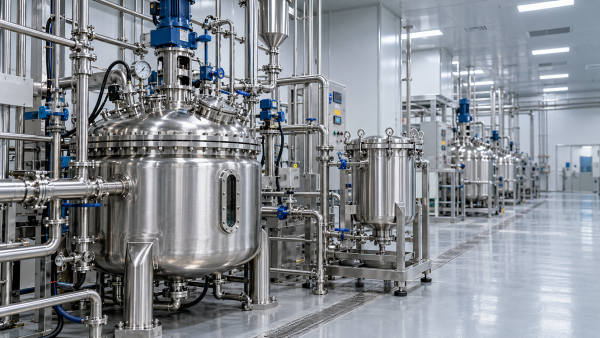
An API process is ready for scale-up when the proposed manufacturing site can explain, with supporting evidence, how it will preserve product quality and control process hazards at the intended scale. A successful laboratory batch establishes feasibility. Readiness requires a defensible connection between that result, the receiving equipment, the analytical controls, and the procedures that operators will execute.
For technical evaluators comparing chemical synthesis cGMP services, the strongest candidate is the partner whose process understanding matches the next manufacturing commitment. An early clinical campaign may proceed with defined development gaps and a credible plan to close them. A process approaching commercial manufacture requires stronger evidence of reproducibility, an established control strategy, and an appropriate qualification and validation plan. The decision should reflect the development stage, intended market, and consequences of failure.
Start by defining exactly what the partner must deliver: the intended batch size, required API attributes, campaign quantity, development stage, and receiving site. Include relevant physical properties, such as particle size or solid form, where these affect downstream processing or drug product performance. Without this reference point, a supplier can demonstrate substantial chemistry capability while leaving the actual manufacturing requirement unanswered.
Connect laboratory results to the proposed equipment
The first technical review should follow the process step by step through the proposed plant. Ask the supplier to identify where scale changes reaction performance, impurity formation, isolation, or handling. A useful assessment explains the mechanism behind each concern and identifies the evidence needed to resolve it. A list of reactor capacities provides little insight into whether the route will behave predictably inside them.
Mixing and heat transfer deserve particular attention because operating conditions do not translate directly from glassware to production vessels. The same agitator speed can produce very different circulation and shear in different geometries. A reagent addition that appears controlled in a small reactor may create local concentration gradients or exceed heat-removal capability at larger scale. Relevant evidence may include mixing assessments, calorimetry, addition-rate studies, and experience with comparable reaction systems.
Workup and isolation can impose tighter constraints than the reaction itself. An extraction may become difficult if phase separation is slow or emulsions persist. A crystallization may produce a different particle population when cooling, seeding, or agitation changes. Filtration performance depends on cake properties, while drying can affect residual solvents, degradation, or solid form. Request evidence covering these operations rather than accepting reaction yield as the principal measure of readiness.
The equipment review should therefore address the complete operating sequence:
- Can the proposed vessel accommodate working volume, foaming, gas evolution, and required agitation throughout the step?
- Can heating, cooling, and dosing systems maintain the intended conditions during both normal operation and credible deviations?
- Are filters, centrifuges, dryers, and transfer systems suitable for the material’s physical and containment requirements?
- Are sampling points, intermediate storage arrangements, and permissible hold times compatible with the planned schedule?
A pilot batch is useful when it tests meaningful uncertainties. Its value depends on whether its equipment and operating conditions represent the proposed manufacturing process. If it uses a different isolation method, unusually dilute conditions, or extensive manual intervention, a successful result may leave major transfer risks unresolved. Ask what each demonstration batch is intended to establish and which acceptance criteria will determine whether the process can advance.
Thermal safety requires its own evidence. The assessment should consider reaction heat, reagent accumulation, decomposition, gas generation, and the consequences of interrupted cooling or agitation where relevant. A supplier should be able to translate those findings into operating limits, safeguards, and an appropriate emergency response. A generic statement that a reaction is “well established” cannot establish safe operation for a particular concentration, addition strategy, or equipment configuration.
Determine whether quality control survives changes in scale
A compliant release result provides evidence about the tested batch. Scale-up readiness also requires an explanation of how the process controls the attributes that matter. Review the relationship between material attributes, process parameters, in-process controls, and API critical quality attributes. Where that relationship remains uncertain, the development plan should identify the experiment or manufacturing observation needed to clarify it.
Impurity control is a useful way to test the depth of process understanding. Ask the supplier to explain where significant impurities originate, which conditions increase their formation, and how subsequent operations remove or limit them. Relevant sources may include starting materials, side reactions, degradation, catalysts, reagents, and recovered solvents. The assessment should address mutagenic impurities, nitrosamine risks, residual solvents, or elemental impurities where the chemistry and materials make them applicable.
Pay attention to impurities that could respond differently at scale. Longer heat-up and cooling periods may increase degradation. Slower mixing can change competing reaction pathways. Intermediate storage can introduce instability that was absent during uninterrupted laboratory work. A purification step that appears effective in one batch may be sensitive to impurity loading, solvent composition, or crystallization conditions. Challenge studies and justified purge assessments can help establish the limits within which the control strategy remains effective.
Raw material variability belongs in the same discussion. A supplier should identify attributes that can influence performance, even when incoming material meets its purchase specification. Water content, impurity profiles, particle properties, or catalyst characteristics may affect conversion, selectivity, and isolation. Where appropriate, supplier qualification, additional incoming tests, or process controls should address those sensitivities. A second source becomes credible after its technical suitability has been assessed.
Analytical capability must support these judgments. A method that reports assay and major impurities may still be unsuitable for monitoring a critical low-level impurity or distinguishing relevant solid forms. Review specificity, sensitivity, sample preparation, stability, and performance in the actual sample matrix. The extent of qualification or validation should fit the development stage and intended use; method transfer to the receiving laboratory also needs a defined protocol and acceptance criteria.
Ask how unexpected analytical results will be investigated. The response should cover laboratory investigation, manufacturing review, escalation, and the authority to decide batch disposition. Repeated testing without a scientifically justified investigation can conceal a process problem. During development, a partner’s ability to interpret an adverse result and adjust the control strategy is more informative than an assurance that every batch will pass.
Verify the site and quality system behind the proposal
Evaluate the facility that will perform the work, including any subcontracted operations. A corporate presentation may combine capabilities distributed across several locations. Establish where synthesis, milling, testing, storage, and release will occur, and which organization holds responsibility at each interface. Changes between sites or laboratories can introduce additional transfer work, documentation requirements, and scheduling dependencies.
“GMP certified” is too broad to settle the assessment. Regulatory status, inspection scope, and the relevance of any certificate depend on the jurisdiction and activity involved. Review the evidence applicable to the intended API work, including relevant inspection history, significant observations, and corrective actions. An inspection outcome informs the evaluation, but does not establish that a particular route is technically ready or that every proposed operation falls within the same scope.
A focused quality review should examine how the site manages deviations, change control, training, equipment qualification, cleaning, computerized systems, and data integrity. For a multiproduct facility, assess how cleaning and containment controls address cross-contamination risks associated with the proposed materials. Where potency or other hazards demand special controls, the assessment must connect those requirements to actual equipment, procedures, and demonstrated operating capability.
Documentation should make the process executable and reconstructable. Development reports need enough detail to explain why operating ranges were selected. Manufacturing instructions should identify additions, sampling, endpoints, allowable holds, and responses to foreseeable deviations. Batch records must capture what happened, including interventions. For manual operations, ask how the supplier will prevent critical knowledge from depending on one chemist’s memory or an informal instruction.
The quality agreement and technical transfer plan should make responsibilities explicit. Important interfaces include material approval, analytical changes, deviation reporting, subcontractor oversight, release decisions, and access to records. Commercial confidentiality may limit unrestricted document sharing, but technical evaluators still need enough evidence to assess material risks. Controlled document review or an appropriate confidentiality arrangement can support that assessment.
Turn the evidence into a decision about the next batch
Readiness is best assessed against the next proposed commitment. A route may be ready for an engineering batch while requiring further work before GMP manufacture. A process may be suitable for clinical supply while still needing development before commercial qualification. These distinctions should be explicit in the proposal, schedule, and budget so that the buyer understands what the next campaign will establish.
Request a concise gap register connecting each unresolved issue to its potential effect, the evidence needed, an accountable owner, and a decision point. Separate gaps that require experiments from those that can be closed through document review or procedural work. “Optimize crystallization” is too vague to manage. A useful entry identifies the uncertainty—such as filtration performance or solid-form consistency—and the result required before manufacturing proceeds.
The schedule should follow these technical dependencies. Analytical readiness, starting-material availability, equipment access, cleaning work, and quality review can all affect batch timing. Ask whether the quoted delivery date includes testing, investigation contingencies, documentation review, and release, or only completion of synthesis. Compare proposals using the same delivery endpoint and assumptions; otherwise, the shortest schedule may simply omit necessary work.
A practical selection decision can take one of three forms:
- Proceed: Evidence supports the intended scale and stage, with remaining actions controlled through an agreed execution plan.
- Proceed after defined development: The route appears viable, but specific experiments, analytical work, or equipment demonstrations must satisfy acceptance criteria before the manufacturing commitment.
- Reconsider the route or provider: A significant hazard, equipment mismatch, quality limitation, or unresolved technical uncertainty prevents a credible plan for the proposed batch.
Before awarding the work, ask the proposed project team to walk through the batch from material receipt to API release. At each sensitive operation, they should be able to describe the expected behavior, the evidence supporting it, and the response if the process departs from expectation. The discussion should involve process chemistry, engineering, analytical, manufacturing, and quality personnel where their responsibilities intersect.
The decisive output is an agreed account of what the next batch is expected to prove and what must already be established before it starts. When those boundaries are clear, technical evaluators can judge whether the proposed spend buys manufacturing progress, useful development evidence, or exposure to an unresolved problem. A credible partner can make that distinction concrete before equipment is booked and material is committed.
Related Intelligence
- Custom SynthesiscGMP Chemical Synthesis Services: How to Assess API Scale-Up ReadinessCompare chemical synthesis cGMP services with confidence. Learn how to assess API scale-up readiness, process safety, quality controls, and supplier capabilities before committing.
- Custom SynthesisCustom Polymer Synthesis: What to Specify Before Requesting a QuotePlanning polymer custom synthesis? Learn what to specify—from molecular weight and purity to testing and costs—to compare quotes confidently and avoid costly surprises.
- Custom SynthesisThird-Party Testing of Chemical Synthesis Impurities: Methods and Detection LimitsExplore chemical synthesis impurities third party testing methods, detection limits, and reporting essentials to verify supplier claims and make confident sourcing decisions.
The Morning Broadsheet
Daily chemical briefings, market shifts, and peer-reviewed summaries delivered to your terminal.