

The Authority in Global Agricultural Chemistry & Bio-Resources
What Happens When a Chemical Synthesis Batch Fails QC Testing?

What Happens When a Chemical Synthesis Batch Fails QC Testing?
A failed quality control result can put production schedules, procurement commitments, and product safety at risk. Understanding what happens if a chemical synthesis batch fails QC testing starts with a critical distinction: an out-of-specification result triggers an investigation, not automatic disposal—and certainly not repeated testing until the batch passes.
For fine chemical and active pharmaceutical ingredient (API) manufacturers, the immediate response is usually to hold the affected material, preserve the evidence, and determine whether the result reflects a laboratory problem or a genuine manufacturing failure. The eventual decision may be rejection, justified reprocessing, or release supported by a documented investigation. Which route is acceptable depends on the chemistry, the evidence, the intended use, and the applicable quality requirements.
Put the batch on hold before debating the result
An out-of-specification (OOS) result falls outside an established specification or acceptance criterion. Examples include excessive residual solvent, an impurity above its limit, inadequate assay, or a failed identity test. A result that remains within specification but differs unexpectedly from historical performance may instead require an out-of-trend investigation. These situations should not be treated as interchangeable.
Once an OOS result is identified, the batch should remain unavailable for release or unintended use while the issue is assessed. Depending on the site, this involves physical segregation, an electronic inventory block, or both. Merely attaching a “hold” label is inadequate if warehouse staff can still allocate the material to a shipment.
The laboratory should preserve relevant preparations where practicable, along with chromatograms, instrument records, calculations, sample records, and electronic audit trails. Production should protect the corresponding batch documentation. Quality personnel then assess whether other batches, shared equipment, or material already distributed could be affected. If product has shipped, a separate distribution and patient, user, or environmental risk assessment may be necessary; recall is not an automatic consequence of every OOS result.
Check the laboratory without assuming the laboratory is wrong
The initial laboratory assessment asks a narrow question: is there a scientifically supportable reason why this result does not represent the batch?
The analyst and supervisor typically review sample preparation, dilution calculations, reference standards, instrument performance, method execution, and system suitability. They should also examine the raw data rather than relying only on the final reported number. An unexpected chromatographic peak, for example, might reflect contamination during preparation, but it might also be a genuine process impurity. Its unfamiliarity proves neither explanation.
A documented preparation error can justify invalidating an affected result when the evidence establishes the error and its relevance. An analyst saying “I may have pipetted incorrectly” is not equivalent evidence. Neither is a passing result obtained the next morning.
Retesting must answer a question, not search for a pass
Retesting may be appropriate under a predefined, scientifically justified plan. The investigation should specify what is being tested, why, how many determinations are appropriate, and how the results will be evaluated. Those decisions should not change simply because the first additional result is inconvenient.
Resampling is a different action. Taking fresh material from the batch requires justification that addresses sampling adequacy or representativeness; it is not a routine escape from a failed original sample. Likewise, averaging an OOS result with passing retests does not erase the failure. For pharmaceutical production, FDA guidance on OOS investigations specifically addresses these risks.
When the result holds up, follow the chemistry through production
If no conclusive laboratory cause is established, the investigation generally expands into manufacturing. That review should follow the actual process rather than stop at a checklist of signed records.
Consider a crystallized intermediate with excessive residual solvent. Relevant questions include whether the dryer achieved the required vacuum, whether the material formed a dense cake, whether loading changed, and whether the drying endpoint was adequately demonstrated. A recorded jacket temperature alone cannot establish what happened throughout the product bed.
An elevated reaction by-product points elsewhere: addition rate, mixing, temperature excursions, reaction endpoint, raw-material variability, or an extended hold before work-up. A purity failure after a raw-material supplier change warrants examination of incoming impurity profiles, not just confirmation that the supplier’s certificate met the purchasing specification.
These are investigation paths, not diagnoses. The evidence must connect the proposed cause to the observed failure. Review may need to extend to previous or subsequent batches, particularly where equipment, recovered solvents, starting materials, or processing conditions are shared.
Sometimes the cause remains inconclusive. That does not make the original failure disappear. The disposition must account for the unresolved evidence and the limits of what additional testing can demonstrate.
Decide whether recovery is technically sound—and permitted
The useful question is not simply, “Can we make the assay pass?” It is, “Can an authorized operation produce material whose overall quality is adequately understood?” A treatment that reduces one impurity may create another, alter crystal form, or affect downstream processing.
Reprocessing and reworking are not interchangeable
Under ICH Q7 terminology for APIs, reprocessing generally involves returning material to the process and repeating an established processing step. Reworking involves processing outside the established manufacturing process. This distinction affects the evaluation, documentation, and potentially the regulatory implications of the proposed recovery route.
Repeating an established crystallization step may qualify as reprocessing. Using a different purification route to remove an unexpected impurity may constitute reworking. Neither should be improvised on the production floor. The quality unit needs to approve the approach, with suitable assessment of impurity profiles, process effects, and any relevant stability or filing commitments. Reworked API material requires particular scrutiny under ICH Q7.
Additional drying can look like an easy recovery, but the underlying failure matters. If prolonged heat exposure degrades the compound, lowering residual solvent could worsen another quality attribute. The acceptable processing window—not the delivery deadline—should determine whether further drying is defensible.
For APIs, blending a failing batch with acceptable material merely to bring it within specification is not an acceptable remedy under ICH Q7. Dilution does not resolve the quality failure.
Sometimes rejection is the defensible outcome
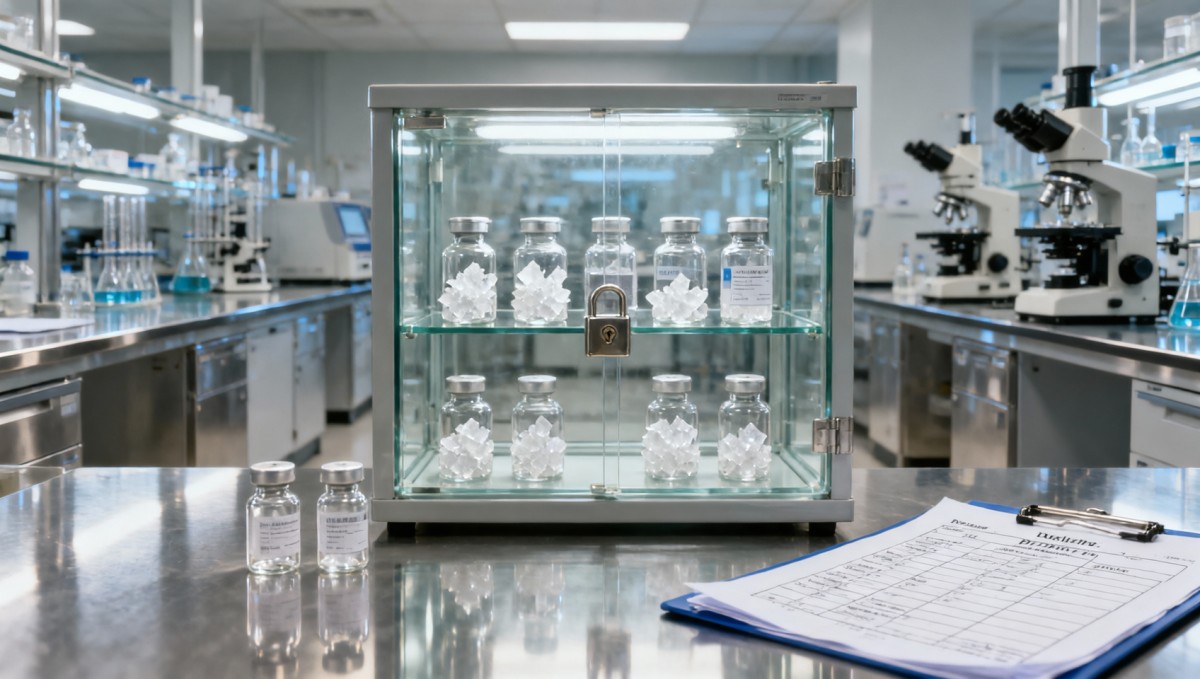
Rejection becomes appropriate when quality cannot be assured or no acceptable recovery route exists. Examples may include unresolved contamination, uncertain identity, or an impurity that cannot be adequately characterized or controlled. Rejected material needs controlled storage and documented disposition so it cannot re-enter the supply chain unintentionally.
Disposal must follow applicable waste and environmental requirements. A possible alternative use for a nonpharmaceutical chemical requires its own technical, contractual, and legal assessment; it is not permission to relabel unsuitable material and sell it into another market.
What procurement teams should ask while the investigation is open
For a buyer, “the batch is under investigation” is a status update, not a delivery plan. The most useful supplier discussion separates confirmed facts from proposed actions and unresolved risks.
- Which attribute failed? Identity, impurity, moisture, and residual-solvent failures have different implications for suitability and recovery.
- What is the affected scope? Establish whether the concern is limited to one batch or may involve other lots, equipment, or starting materials.
- What decision gates remain? Ask whether laboratory assessment, manufacturing investigation, recovery approval, or final quality review is outstanding.
- What supports the replacement date? An available production slot is not the same as released replacement stock. Include processing, testing, quality review, and shipping constraints.
- What documentation will accompany disposition? Request an appropriate investigation summary, traceability information, and any required change notifications, subject to confidentiality arrangements.
A customer concession cannot substitute for required pharmaceutical compliance. For other fine chemicals, whether a specification deviation can be accepted depends on intended use, safety, contracts, and applicable law. Material unsuitable for one application is not automatically suitable for another.
For AgriChem Chronicle’s coverage of fine chemicals and primary-industry supply chains, this is the commercially important distinction: technical recoverability and dependable availability are separate questions. Procurement needs both answered before committing downstream production.
Close the failure, not just the batch record
Batch disposition and investigation closure are related but different decisions. A rejected batch may leave an unresolved equipment problem. A successfully reprocessed batch may still expose a weak drying endpoint or inadequate raw-material control.
Corrective and preventive actions should follow the evidence. Depending on the cause, that could mean repairing vacuum equipment, revising sampling, strengthening incoming-material controls, or changing process monitoring through an approved change-control system. “Retrain the operator” is a weak response when the actual problem is an ambiguous instruction or unreliable instrument.
Effectiveness checks should test whether the identified problem has been controlled. One passing batch may provide useful evidence, but it does not automatically demonstrate that a recurring mechanism has been eliminated.
The regulatory basis also matters. FDA’s Investigating Out-of-Specification (OOS) Test Results for Pharmaceutical Production guidance and ICH Q7, Good Manufacturing Practice Guide for Active Pharmaceutical Ingredients, are relevant pharmaceutical references, not universal rules for every industrial chemical. Other sectors require assessment against their own obligations.
Before relying on a recovered batch, look for a coherent chain of evidence: what failed, what the investigation established, why the disposition is justified, and who approved it. A fresh certificate of analysis should report the outcome—not replace that reasoning.
Related Intelligence
- Custom SynthesisWhat drives polymer custom synthesis costs at pilot scale?Explore pilot-scale polymer custom synthesis cost drivers, from reactor time to purification and testing. Learn how to compare quotes and avoid hidden costs.
- Custom SynthesiscGMP Chemical Synthesis Services: How to Assess API Scale-Up ReadinessCompare chemical synthesis cGMP services with confidence. Learn how to assess API scale-up readiness, process safety, quality controls, and supplier capabilities before committing.
- Custom SynthesisCustom Polymer Synthesis: What to Specify Before Requesting a QuotePlanning polymer custom synthesis? Learn what to specify—from molecular weight and purity to testing and costs—to compare quotes confidently and avoid costly surprises.
The Morning Broadsheet
Daily chemical briefings, market shifts, and peer-reviewed summaries delivered to your terminal.