

The Authority in Global Agricultural Chemistry & Bio-Resources
How to Find and Compare Whitepapers in a Structured Database
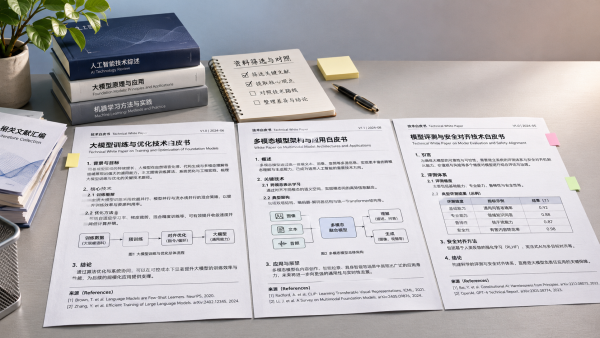
A structured whitepaper database is most useful when it lets you move beyond a keyword search: you can narrow documents by meaningful fields, inspect their sources, and compare findings against the same research question. The database helps organize the evidence, but the document itself still determines how much confidence its claims deserve.
Start by defining the decision or question behind your search. “Find information on aquaculture” will produce a broad and inconsistent set of results. “Compare approaches to monitoring water quality in recirculating aquaculture systems” gives you a clearer basis for selecting documents, checking methods, and identifying gaps.
Turn a broad topic into a searchable question
Before opening a database, write down the subject, the intended application, and the conditions that could change the answer. For a technical procurement question, those conditions might include the material involved, the production setting, the intended market, and the stage of evaluation.
For example, a search for an active pharmaceutical ingredient could focus on manufacturing routes, impurity control, or supply continuity. Those are related topics, but a whitepaper about one may offer little evidence for the others. Likewise, a document about a small-scale extraction process may explain the chemistry well without showing how the process performs in commercial production.
Choose two or three concepts that must appear in a useful result, then list alternative terms for each. An author might describe the same subject using a full chemical name, an abbreviation, a process name, or an application. Search these variations separately if the platform does not handle synonyms well.
- Subject: What material, technology, process, or market are you investigating?
- Application: What will the information help you assess or decide?
- Boundaries: Which geography, production scale, publication period, or operating conditions matter?
- Evidence needed: Are you looking for experimental results, a technical explanation, market analysis, or a supplier’s description of its approach?
These boundaries are working assumptions, not permanent filters. If a search returns too little, remove one restriction at a time and record what changed.
Search the database in passes
Begin with a focused search using the central technical terms. Scan the titles and abstracts before applying every available filter. This first pass reveals the vocabulary authors use and may expose terms that mean something different in another industry.
Then narrow the results using fields that directly support your question. Topic, publication date, document type, author, and organization are often useful starting points, where the database provides them. A date filter is valuable when a topic changes quickly, but older papers can still explain a process or provide a baseline. Excluding them automatically may remove useful context.
Search results depend on how well documents have been indexed. An author may be missing from a record even when the document names one, and a relevant paper may sit under a broader category than expected. If a highly specific filter produces few results, try the same search without it and inspect the records manually.
Use quoted phrases or field-specific searches when the platform supports them, especially for names that appear in unrelated contexts. Broaden the search with alternative terms, related processes, and common abbreviations. Search the full text when an important condition may appear in the methods section rather than the title or abstract.
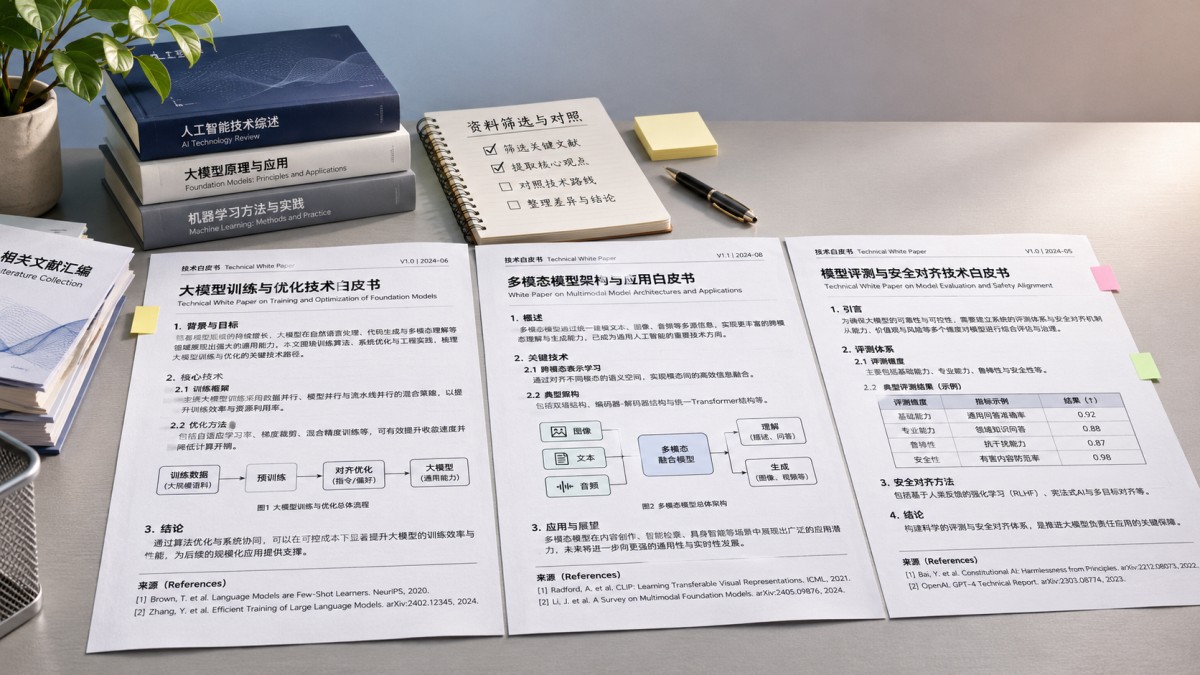
Keep a short search log: the database, terms, filters, date searched, and the reason you changed the search. This makes it easier to repeat the work later and helps a colleague understand why certain documents were included.
Read the record before relying on the document
A structured record is a screening tool. It can tell you whether a paper appears relevant and help you locate the original source, but fields such as “topic” or “industry” are descriptions, not evidence of quality. Open the full document whenever a claim will influence a substantive conclusion.
Check who produced it and why. A manufacturer’s whitepaper may contain useful process details, but it may emphasize the conditions under which its approach performs well. An independent research paper may provide more methodological detail while addressing a narrower question than a buyer faces. A market report may synthesize several sources without providing the underlying data. These differences affect how each document should be used.
Look for the publication date and, where available, the version or revision date. A recent upload is not necessarily a recent study: a database may have added an older document later. If a paper has been revised, compare the version you downloaded with the one cited by other sources, particularly when figures or recommendations have changed.
Also distinguish editorial review from peer review. A document described as reviewed or curated may have passed an editorial process, but that description alone does not establish that its methods were independently assessed through academic peer review. If review status matters to your work, look for a clear description of the process.
Compare findings on equal terms
Two whitepapers can reach different conclusions without either being wrong. They may study different materials, scales, locations, time periods, or definitions of success. Before comparing their conclusions, extract the conditions under which each conclusion was produced.
A simple comparison sheet is often enough. Give each document one row and record the details needed to answer your question. The following fields work for many technical searches; add or remove columns according to the decision.
Record the authors’ exact terms before translating them into your own categories. “Yield,” for instance, can refer to different stages of a process. A comparison based on that word alone may combine measurements with different starting points or units. The same issue arises when equipment papers use “capacity” to describe a design rating in one case and an observed operating result in another.
When a paper reports an improvement, identify the baseline. A comparison against an earlier configuration, a laboratory control, or a general industry assumption tells you different things. Look for the conditions of the comparison and whether the document explains how the measurement was made.
If papers disagree, describe the disagreement in the comparison sheet instead of averaging the claims or choosing the newest result. One paper may concern a different feedstock; another may evaluate a different operating scale. If the difference cannot be explained from the documents, record that the evidence does not resolve the question.
Separate technical evidence from commercial claims
Whitepapers are published for different purposes. Some present original research; others explain a technology, summarize a market, or support a sales conversation. A commercial purpose does not automatically make a paper unusable, but it changes what you should look for.
For a technical claim, find the supporting method, test conditions, and data. For a market claim, look for the source of the underlying information, the scope of the market, and the assumptions behind any forecast. For a supplier capability claim, distinguish a description of a proposed process from evidence that the process has been performed at the scale and under the conditions you require.
References are useful leads, but a long bibliography is not a substitute for checking whether the cited source supports the statement. Follow important citations back to their original context. Several papers may repeat the same underlying source, so a claim appearing in multiple documents is not necessarily supported by multiple independent lines of evidence.
Apply the same care to statements about regulatory or quality requirements. A whitepaper can explain how an author interprets a framework or describes a control process. It cannot, on its own, establish that a particular material, facility, or transaction meets every requirement relevant to your use.
Choose a database that fits the research task
The best collection for a search is the one that covers the relevant subject and exposes enough information to evaluate its records. A large general repository can be useful for exploring unfamiliar terminology across disciplines. A specialist collection may make it easier to find papers using industry-specific categories and terminology. Neither scope guarantees complete coverage.
Before investing time in a platform, run a small trial search using a topic you know reasonably well. Check whether it returns relevant documents, whether filters behave as expected, and whether you can reach the full text or a clear source record. Note whether results include publication dates, authors, document types, and links to original publishers. Export or citation tools can help when you need to share findings, but they are less useful if the underlying records are incomplete.
Coverage and access also matter. Some databases index documents they do not host; others provide only selected papers or require an account for full text. A record without accessible methods may still be useful as a lead, but it may not be enough to support a detailed comparison.
For topics spanning primary industries and fine chemicals, a specialist publication such as AgriChem Chronicle can be one place to identify relevant technical and market material. Use it alongside other appropriate sources when the question calls for broader coverage or independent perspectives; assess each document on its own evidence.
Finish with a traceable set of findings
Save the documents you actually used, their source links, and the date you accessed them. Keep your notes separate from the authors’ conclusions, and include page numbers for claims that may need to be revisited. This is especially helpful when a report is updated or a document moves to a new location.
Then write a short finding for each part of your original question: what the documents support, under which conditions, where they disagree, and what remains outside their scope. If the available papers describe laboratory processes but your decision concerns commercial operation, that gap belongs in the finding.
Your next step should follow from the gap. You may need a more targeted search, the original study behind a summary, or technical information from a supplier. A well-structured search does more than produce a list of whitepapers: it leaves a clear path from the question to the evidence used to answer it.
Related Intelligence
- APIs & IntermediatesBioprocessing Equipment Investment Costs: Budgeting Beyond Purchase PriceExplore bio processing equipment investment cost beyond purchase price. Budget for installation, utilities, validation, and lifetime expenses with confidence.
- APIs & IntermediatesPlanning for ISO Standards in Aquaculture: Where Should Farms Start?Aquaculture ISO planning starts here: choose the right standard, assess farm risks and build an audit-ready system with practical steps for your team.
- APIs & IntermediatesTraceable Chemical Intermediates: How to Verify Batch History Before PurchaseTraceable chemical intermediates start with a verified batch history. Learn what to check before purchase and reduce sourcing risks.
The Morning Broadsheet
Daily chemical briefings, market shifts, and peer-reviewed summaries delivered to your terminal.
