

The Authority in Global Agricultural Chemistry & Bio-Resources
Traceable Chemical Intermediates: How to Verify Batch History Before Purchase
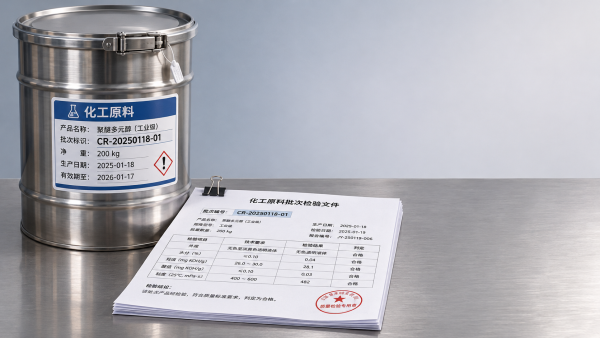
A certificate of analysis can show that a chemical intermediate met selected specifications when it was tested. It cannot, by itself, establish where the batch was made, whether it was repacked, or how it was handled before delivery. To buy traceable chemical intermediates, connect the offered lot to its manufacturer, production and testing records, and each relevant transfer in the supply chain.
Start with the exact batch being offered, not a sample certificate or a general supplier profile. If the lot has not yet been produced or allocated, agree on the evidence the supplier must provide before shipment and make acceptance conditional on reviewing it. The depth of review should reflect how the material will be used, the consequences of a quality failure, and the requirements that apply to the finished product.
Start with the batch identifiers
Ask the seller for the manufacturer’s name and manufacturing site, the original batch number, and the quantity available from that batch. Compare these details with the quotation, specification, certificate of analysis (CoA), container label and shipping documents as they become available. The material name, grade and batch reference should form a consistent trail.
A distributor may assign its own lot number after receiving or repacking material. A different number is not automatically a problem, but the distributor should be able to link it to the original manufacturer’s batch. If several original batches were combined, ask for the identity and proportions of the source lots, the reason for combining them, and the controls used. A buyer who needs a single manufacturing batch should state that requirement before ordering.
Also check that the chemical identity is sufficiently precise for the intended use. Similar names can refer to different salts, isomers, grades or concentrations. A matching product name has little value if the specification describes a different form from the one your process requires.
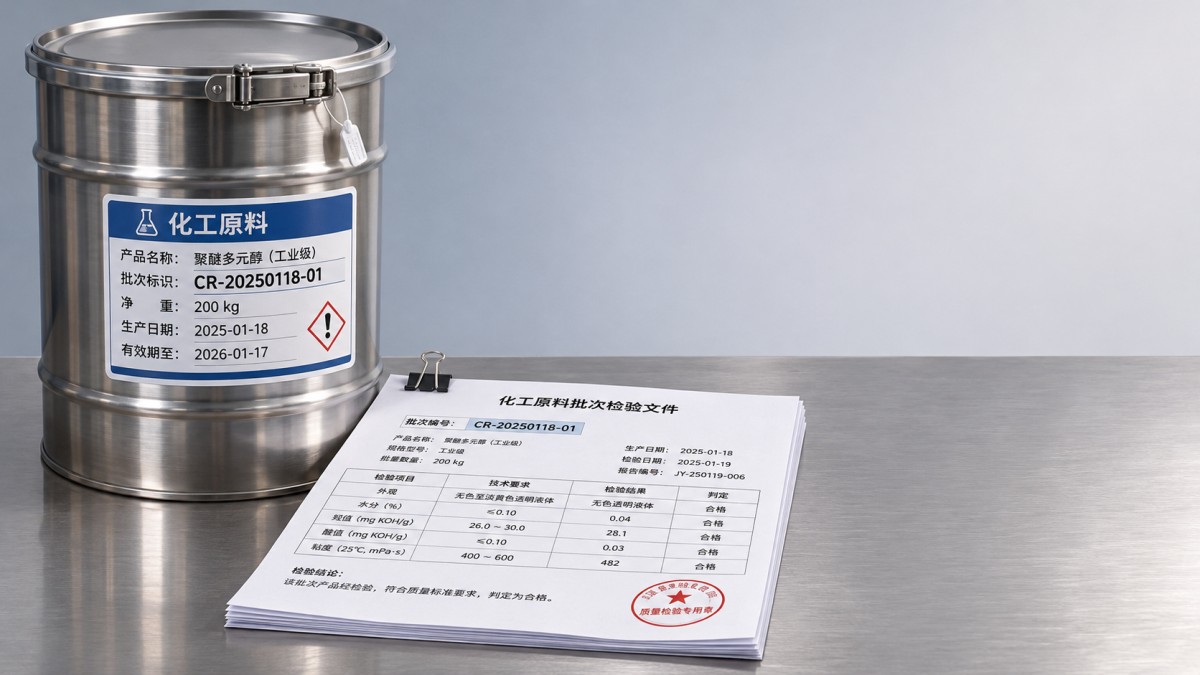
Read the certificate of analysis as evidence, not proof of the whole history
A useful CoA identifies the material, batch, testing organization, tests, acceptance limits and reported results. It should also be identifiable as an approved document, with the relevant dates and authorization. Compare the results against your own agreed specification, including impurities and other properties that can affect your process. A “pass” statement without the underlying results may be insufficient where individual values matter.
Look beyond the headline assay. Depending on the chemistry and use, water content, residual solvents, an individual impurity or a physical property may matter as much as overall purity. A batch can meet the supplier’s standard specification and still be unsuitable for your process if your acceptance criteria differ. Agree on the test methods or their suitability where results could depend on how the test is performed.
Establish whose CoA you are reading. A manufacturer’s certificate, a distributor’s certificate and an independent laboratory report answer different questions. A distributor may have tested the material itself, transferred results from the manufacturer’s certificate, or performed only selected identity checks. Ask which applies and request the original manufacturer’s certificate where access is appropriate.
If the material has been repacked, relabelled or stored for an extended period, determine whether the original test results remain an adequate basis for acceptance. Retesting can provide evidence about current quality, but the scope must be appropriate: an identity test alone will not reveal every change that may have occurred during storage.
Follow the material from production to the offered container
The aim is to establish a documented link between the manufacturing batch and the containers you will receive. For a direct purchase, the chain may be relatively short. With distributors, brokers, warehouses or repackers involved, each change of custody or identity can add a point where information is lost.
Request a clear account of the route, supported by documents appropriate to the transaction. The following questions usually expose the gaps that matter:
- Who manufactured the batch? Identify the actual production site, not just the company issuing the quotation. If manufacturing was outsourced, establish the relationship and who controls quality decisions.
- Who held or handled it afterward? Identify relevant distributors, storage locations and repacking parties. Commercially sensitive details may be shared under confidentiality arrangements or reviewed during an audit.
- Was the material altered? Repacking, blending, drying or other processing can affect both traceability and quality. Ask who performed the activity, under what controls, and which lot numbers connect the input to the output.
- How was it stored and transported? Compare the conditions used with the material’s specified requirements. For a moisture-sensitive intermediate, for example, container integrity and exposure during repacking may be more consequential than the length of the distribution chain alone.
- What will identify the delivered goods? Confirm the labels, original and distributor lot references, container count and documentation that will accompany the shipment.
Full manufacturing records may contain proprietary information and are not always provided with a routine quotation. That does not make verification impossible. Depending on the risk, an agreed record review, quality questionnaire, audit, or controlled disclosure can provide evidence without requiring unrestricted access to a recipe. The appropriate arrangement is one that lets the buyer establish the relevant facts and address discrepancies.
Decide how far upstream the trail needs to go
Traceability does not necessarily mean that every starting material must be disclosed to every buyer. For a low-risk intermediate used in a noncritical process, identifying the manufacturer, batch, testing and distribution history may be proportionate. A material used in a tightly controlled pharmaceutical supply chain may require a deeper assessment of manufacturing controls, changes and upstream materials, depending on its role and the applicable quality framework.
Define those expectations before comparing quotations. Ask your technical and quality teams which attributes or process changes could affect the downstream product. A change in a manufacturing route, solvent, source of a critical input or production site may alter the impurity profile even when the stated assay remains within specification. The relevant question is whether the supplier can identify and communicate changes that could affect the agreed material.
For an intermediate intended for API manufacture, do not assume that a general quality certificate or a claim of “GMP compliant” establishes suitability for your intended use. Clarify the material’s role, the controls expected at that stage and the evidence your quality team needs. Requirements depend on the product, process, market and applicable quality system.
Put traceability requirements into the purchase terms
A promising document review can lose value if the purchase order permits the seller to substitute a different lot or site without notice. Record the agreed manufacturer, grade, specification and, where already allocated, batch number. If allocation will happen later, require batch-specific documents early enough for review before shipment or use.
For recurring supply, a quality agreement or equivalent written terms can address:
- Which party issues the CoA and which records accompany each delivery.
- Whether repacking, blending, subcontracting or site changes require prior notification or approval.
- How long relevant records and retained samples are kept, where applicable, and how they can be accessed for an investigation.
- How deviations, out-of-specification results, complaints and potential recalls are communicated.
- Whether the supplier must notify the buyer of changes that could affect identity, quality or traceability.
Agree on what happens if documentation is incomplete or a batch differs from the approved offer. This may mean holding shipment, placing delivered material in quarantine, requesting additional evidence or rejecting the lot. Procurement, quality and technical teams should know who can release a conditional hold; a commercial deadline should not silently become acceptance.
Compare total sourcing cost, including the cost of weak records
The lowest quoted price can be attractive, particularly for a readily available intermediate. Compare it with the cost of receiving and qualifying the material. Additional identity testing, document review, site assessment, longer receipt holds and investigation time can change the economics. So can the operational impact of an unusable batch or an interruption while an alternative source is qualified.
These costs are not identical for every purchase. A supplier with a well-documented distribution chain may justify a higher price for a critical input, while a simpler review may be adequate for material with limited downstream consequences. Ask each bidder to state what is included: manufacturer documentation, lot-specific test results, storage information, change notifications and support during an investigation. Compare offers on the same basis before treating the price difference as a saving.
Independent testing can be a sensible purchase condition when an attribute is especially important or the supply chain introduces handling risk. It should answer a defined question, such as whether a specified impurity meets your limit. Testing alone does not reconstruct an undocumented chain of custody, and a complete paper trail does not replace testing needed for the intended use.
What to do when the batch history has gaps
Separate a document that has not yet been supplied from information that does not exist. A seller may need time or a confidentiality agreement to obtain a manufacturer’s record. More serious concerns arise when the seller cannot identify the production site, cannot connect its lot number to the original batch, or gives conflicting accounts of repacking or storage.
Resolve discrepancies in writing and assess whether the explanation is supported by records. A corrected certificate should be controlled and attributable; an informal statement that two unrelated lot numbers are “the same” is a weak basis for acceptance. If a material change or handling step cannot be reconstructed, consider whether additional evidence can close the gap. If it cannot, the remaining uncertainty may be incompatible with the intended use, regardless of the quoted price.
Before committing, make the next decision explicit: approve the identified batch, approve a supplier subject to batch-specific review, or continue sourcing. That distinction prevents a favorable supplier assessment from being mistaken for approval of material whose history has not yet been established.
Related Intelligence
- APIs & IntermediatesBioprocessing Equipment Investment Costs: Budgeting Beyond Purchase PriceExplore bio processing equipment investment cost beyond purchase price. Budget for installation, utilities, validation, and lifetime expenses with confidence.
- APIs & IntermediatesPlanning for ISO Standards in Aquaculture: Where Should Farms Start?Aquaculture ISO planning starts here: choose the right standard, assess farm risks and build an audit-ready system with practical steps for your team.
- APIs & IntermediatesTraceable Chemical Intermediates: How to Verify Batch History Before PurchaseTraceable chemical intermediates start with a verified batch history. Learn what to check before purchase and reduce sourcing risks.
The Morning Broadsheet
Daily chemical briefings, market shifts, and peer-reviewed summaries delivered to your terminal.
