

The Authority in Global Agricultural Chemistry & Bio-Resources
How Should Milling Machinery Be Maintained to Extend Its Service Life?
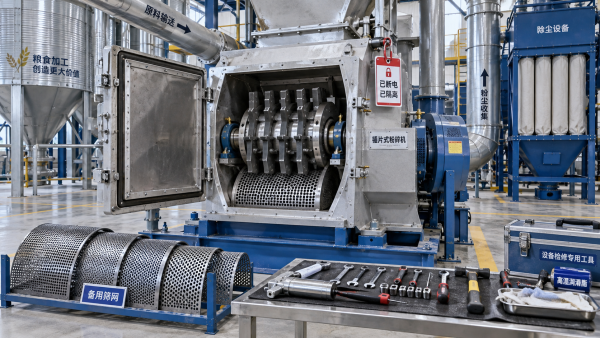
Milling machinery lasts longer when maintenance controls the conditions that cause wear: contaminated feed, uneven loading, poor lubrication, restricted airflow, misalignment, and operation with damaged grinding components. Cleaning and scheduled inspections provide the foundation, but maintenance decisions should also respond to changes in vibration, temperature, particle size, and energy use.
For grain and feed processors, learning how to maintain processing machinery to extend service life begins with the specific machine and its operating conditions. A hammer mill processing abrasive material needs a different inspection routine from a roller mill handling clean grain. The manufacturer’s instructions should establish lubricant specifications, adjustment procedures, and service intervals; operating records should help determine whether inspections need to happen sooner.
Which maintenance tasks have the greatest effect on service life?
The highest-value tasks protect the grinding assembly, bearings, and drive system while keeping material moving through the mill as intended. These systems interact. A blocked screen can reduce discharge capacity and increase loading; worn grinding elements can encourage operators to compensate with unsuitable settings or excessive recirculation. Replacing one damaged component without correcting the operating condition leaves the next component exposed.
Start with four priorities:
- Keep contamination out. Inspect feed-cleaning equipment, magnets, and other specified separation devices. Stones and metal can damage grinding surfaces, screens, and internal assemblies.
- Maintain consistent feed. Check feeders and controls for surging, bridging, or uneven distribution. Repeated overloads place avoidable stress on the drive and grinding system.
- Protect bearings and transmission components. Use the specified lubricant, maintain seals, and check alignment, tension, and coupling condition.
- Replace wear parts before secondary damage develops. Inspect grinding elements, screens, mounts, and fasteners against the manufacturer’s acceptance criteria.
Supporting equipment belongs in this routine. A neglected feeder, aspiration duct, or discharge conveyor can create symptoms that appear to originate inside the mill. Before changing grinding settings, check whether material supply and discharge remain stable.
What should be checked each shift, and what requires a shutdown?
During operation, operators can observe accessible indicators without opening guards or approaching moving parts. Useful checks include feed stability, motor load, discharge behavior, unusual sound, and readings from installed temperature or vibration sensors. Compare readings under similar material and throughput conditions; a change in feedstock can alter the load even when the machine is healthy.
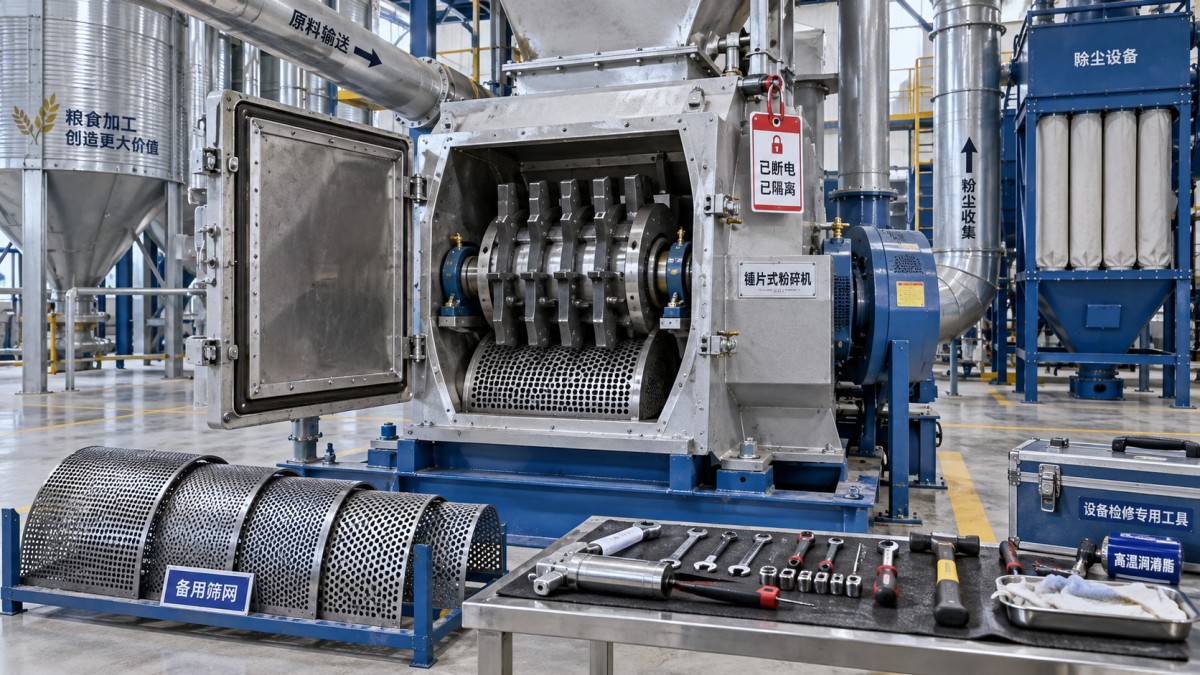
Physical inspection, cleaning inside the machine, lubrication near exposed moving components, and adjustment generally require safe isolation. Follow the site’s lockout/tagout procedure, isolate relevant electrical and other energy sources, control stored energy, and verify isolation before work starts. Account for rotor coast-down and prevent connected equipment from feeding material into the work area. A stopped control panel does not establish safe isolation.
Once access is safe, inspect the machine in a consistent order:
- Look for accumulated material, foreign objects, rubbing marks, and evidence of leakage.
- Examine grinding elements, screens, retaining hardware, and internal wear surfaces.
- Check accessible seals, mounts, drive components, and lubrication points.
- Confirm guards, access covers, tools, and loose parts are accounted for before restart.
After maintenance, follow the manufacturer’s startup procedure and observe operation before returning to normal throughput. Record what changed and whether the original symptom disappeared. A repair is incomplete if the machine runs again but continues to show the same abnormal load or vibration.
How should a mill be cleaned without creating new problems?
Cleaning should remove deposits that interfere with cooling, discharge, inspection, or product hygiene. Focus on screen openings, aspiration passages, feeder pockets, accessible internal ledges, and the areas around bearings and motor cooling surfaces. Deposits can conceal cracks and leaks, making inspection less effective.
Choose the cleaning method for the material and equipment. In dry grain and feed operations, introducing water into equipment designed for dry cleaning can leave moisture in bearings, electrical assemblies, or product-contact areas. Where wet cleaning is permitted, follow the specified protection, drainage, drying, and inspection procedures before restart.
Compressed air also requires judgment. Blowing deposits into the room can disperse combustible dust or force contamination into seals and electrical equipment. Use the site’s approved dust-control methods and collection equipment suitable for the material and hazardous-area conditions. Do not use an ordinary vacuum where a combustible-dust assessment calls for appropriately rated equipment.
Cleaning frequency should reflect how quickly deposits return. If buildup repeatedly restricts airflow or blocks a screen, investigate moisture, feed characteristics, aspiration performance, and operating settings. More frequent cleaning may control the symptom, but correcting its cause reduces both wear and maintenance effort.
How much lubrication is enough?
The correct amount is the quantity specified for the particular bearing or lubrication system, applied at an interval appropriate to its duty. “More grease” is an unreliable response to rising bearing temperature. Overgreasing can cause churning and heat, while inadequate lubrication or contaminated grease can damage bearing surfaces.
A usable lubrication record identifies the lubricant, quantity, application point, interval, and procedure. It should distinguish bearings that need relubrication from sealed or otherwise maintenance-free units. Centralized systems need checks for reservoir condition, blocked lines, damaged fittings, and actual delivery to lubrication points.
Keep dispensing equipment clean and prevent accidental mixing. Lubricants with different formulations may be incompatible, and a change should follow the equipment supplier’s guidance. In food or feed applications, use the lubricant classification required by the lubrication point and contamination risk. Suitability for incidental food contact does not establish suitability for every speed, temperature, or load.
If a bearing runs hot after lubrication, assess the timing and other symptoms. Excess grease, incorrect lubricant, misalignment, excessive belt tension, contamination, or developing bearing damage may all require consideration. Repeatedly adding lubricant can obscure the problem and delay the repair.
When should hammers, rollers, screens, and other wear parts be replaced?
Replace wear parts using physical condition and process performance together. Appearance alone can be misleading: a component may remain intact while its worn profile reduces grinding efficiency. Conversely, lower throughput may result from poor feeding or blocked aspiration rather than worn grinding surfaces.
Hammer mills
Inspect hammers for uneven wear, cracking, damaged mounting holes, and differences across the assembly. Check pins, retaining devices, screens, and internal wear plates at the same time. Worn or damaged mounting components can compromise an otherwise serviceable hammer set.
Rotate, reverse, or replace hammers only as the design permits. Follow the specified arrangement and weight-matching requirements to preserve rotor balance. Substituting one hammer without considering the complete assembly can introduce vibration and shorten bearing life. Cracked components or damaged retention hardware require prompt attention under the manufacturer’s rejection criteria.
Roller mills
Check roll surfaces, gap consistency, alignment, scraper condition, and feed distribution across the roll width. Uneven feeding can concentrate wear and produce inconsistent grinding. Worn corrugations may require approved reconditioning or replacement, depending on the roll design and remaining usable material.
Avoid compensating for deteriorated surfaces by repeatedly tightening the gap without checking alignment and load. This can increase mechanical stress while leaving the underlying wear unresolved. For other milling designs, apply the same principle: inspect the working surfaces and their supporting components as a system.
Set replacement criteria before parts reach failure. The maintenance record should connect measured wear with particle-size results, throughput, and load. That relationship helps schedule a planned intervention before a worn part damages adjacent equipment.
Which warning signs justify stopping the machine?
Sudden severe vibration, metallic impact noises, smoke, burning odors, visible damage, or rapidly rising temperature should trigger a stop using the site’s established procedure. Protective trips should be investigated before restart. Repeatedly resetting a trip or increasing its limit can expose the machine to the condition the protection was intended to detect.
Less dramatic changes still deserve investigation. A gradual rise in energy per unit of output, increasing particle-size variability, or recurring bearing-temperature changes may support a planned inspection. Their meaning depends on context: harder material, different moisture content, or a finer product specification can also increase energy demand.
Useful condition monitoring therefore needs a baseline. Record normal operating behavior for representative products and loads, then compare like with like. Motor current indicates loading, but power measured over production time and related to saleable output gives a more useful view of energy performance where suitable metering is available.
Vibration and temperature trends can guide investigation; neither alone identifies a failed component. Take measurements at consistent locations under comparable conditions, and use competent analysis when interpreting vibration data. Check feed, airflow, buildup, and fasteners alongside the bearings and rotor rather than assuming every abnormal reading indicates bearing failure.
How should maintenance intervals be set for different operating conditions?
Use the manufacturer’s schedule as the starting point, then review it against operating hours, material abrasiveness, contamination exposure, moisture, loading, and previous inspection findings. Continuous operation and occasional production impose different demands. A calendar-based schedule alone may miss that difference.
Separate routine observation from intrusive maintenance. Operators can review accessible indicators each shift; internal wear checks belong in planned shutdowns; specialist work such as alignment verification, balancing, or bearing replacement should follow the machine’s requirements and observed condition.
Shorten inspection intervals when records show wear approaching its limit sooner than expected, deposits accumulating rapidly, or recurring changes in vibration and temperature. Extending intervals requires evidence that condition remains acceptable and must respect manufacturer requirements. A machine continuing to run is insufficient evidence.
For seasonal equipment, include shutdown storage and recommissioning. Remove retained product, protect against moisture as specified, and inspect lubrication, seals, electrical connections, and signs of corrosion or pest damage before use. Idle equipment can deteriorate even when its operating-hour count remains unchanged.
What records help prevent repeat failures?
A practical maintenance log should capture operating hours, material processed, observed symptoms, inspection findings, parts replaced, lubricant applied, and restart results. Include photographs or measurements where they help track wear. “Bearing changed” provides little diagnostic value compared with a record of the damaged bearing, seal condition, alignment checks, and operating load.
Review recurring faults before ordering another replacement. Repeated bearing failures at the same location warrant investigation of alignment, fit, sealing, lubrication, loading, and installation practices. Repeated screen damage should prompt checks of contamination control, mounting, and internal clearances. Keep suitable critical spares available, with the correct part specifications and storage conditions.
The useful measure of maintenance is stable production over time: consistent grinding, predictable wear, and fewer unexplained interventions. When a repaired mill returns to its normal operating range and stays there, the work has addressed the condition shortening its life. When the same symptom returns, the next shutdown should investigate the cause before repeating the replacement.
Related Intelligence
- Milling MachineryHow Should Milling Machinery Be Maintained to Extend Its Service Life?Learn how to maintain processing machinery to extend service life with practical milling maintenance tips on cleaning, lubrication, and wear checks to reduce downtime.
- Milling MachineryWhat Is the Difference Between Primary and Secondary Grain Processing?What is the difference between primary and secondary grain processing? Compare key operations, equipment needs, and quality risks to choose the right investment for your business.
- Milling MachineryCan Agricultural Scientists Validate Grain Processing Machinery?Can agricultural scientists validate process machinery performance? Discover how grain equipment testing verifies throughput, quality, and efficiency before you invest.
The Morning Broadsheet
Daily chemical briefings, market shifts, and peer-reviewed summaries delivered to your terminal.