
The Authority in Global Agricultural Chemistry & Bio-Resources
Indonesia BPOM Updates Natural Ingredients Import List
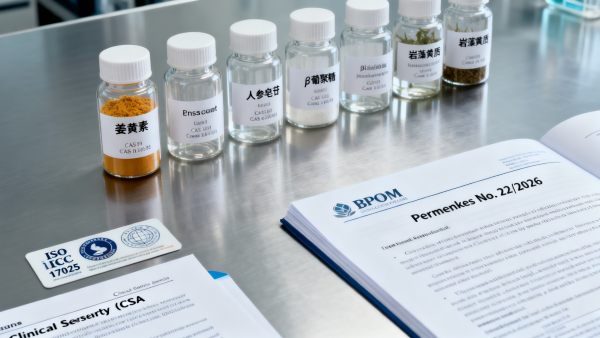
On May 14, 2026, Indonesia’s National Agency of Drug and Food Control (BPOM) issued an updated regulation—Permenkes No. 22/2026—revising the Guidelines for Import Permits of Natural-Origin Foods and Dietary Supplements. The revision introduces a new mandatory requirement for clinical safety summaries (CSA) for all natural ingredients derived from plant extracts, fungal polysaccharides, and algal bioactive compounds. This development directly affects international exporters, ingredient suppliers, and manufacturers targeting the Indonesian health and nutrition market.
Event Overview
On May 14, 2026, BPOM published Permenkes No. 22/2026, amending the import permit guidelines for natural-origin foods and dietary supplements. Under the revised rule, import applications for natural ingredients—including plant extracts, fungal polysaccharides, and algal active components—must be accompanied by a Clinical Safety Summary (CSA). The CSA must be issued by an ISO/IEC 17025-accredited laboratory and include human tolerability, sensitization potential, and long-term intake assessment data. Applications lacking this documentation will not be accepted for review.
Which Subsectors Are Affected
Direct Trading Enterprises
Companies exporting natural ingredients into Indonesia face immediate procedural impact: customs clearance now hinges on submission of a validated CSA. Without it, shipments may stall at port or be rejected outright. This increases pre-shipment preparation time and introduces dependency on third-party lab coordination.
Raw Material Sourcing Firms
Firms sourcing botanicals, fungi, or algae for formulation—especially those supplying to Indonesian brands or contract manufacturers—must verify whether their existing supplier dossiers include CSA-compliant data. Absence of such documentation may trigger renegotiation of supply terms or require requalification of materials.
Manufacturers & Formulators
Domestic and overseas manufacturers producing dietary supplements or functional foods for the Indonesian market must ensure that each natural ingredient in their product portfolio meets the CSA requirement. This applies even if the ingredient is incorporated indirectly via intermediate blends or premixes.
Supply Chain & Regulatory Support Providers
Regulatory consultancies, import license agents, and logistics partners handling BPOM submissions must update internal checklists and client advisories to include CSA validation as a non-negotiable pre-submission step. Failure to flag this may result in application rejection and reputational exposure.
What Relevant Companies or Practitioners Should Focus On and How to Respond Now
Monitor Official BPOM Communications and Implementation Timelines
Permenkes No. 22/2026 took effect upon publication, but BPOM may issue technical circulars clarifying scope, grandfathering provisions, or transitional arrangements. Stakeholders should subscribe to BPOM’s official notifications and track updates via its e-registration portal (POM-Online).
Identify High-Risk Ingredient Categories and Review Existing Dossiers
Focus first on plant-derived actives (e.g., curcumin, ginsenosides), fungal beta-glucans, and marine algal compounds (e.g., fucoxanthin, astaxanthin). Cross-check whether current supplier-provided safety dossiers contain human-based tolerability and sensitization data—and whether the testing lab holds valid ISO/IEC 17025 accreditation recognized by BPOM.
Distinguish Between Policy Signal and Operational Enforcement
While the regulation is formally in force, early enforcement patterns—such as frequency of CSA verification, acceptance criteria for older studies, or flexibility for minor ingredient variations—remain unconfirmed. Companies should treat initial submissions as test cases and document BPOM feedback rigorously.
Initiate Lab Engagement and Timeline Planning Ahead of Next Import Cycle
ISO/IEC 17025-accredited labs with human safety assessment capability are limited globally. Lead times for CSA generation can exceed 8–12 weeks. Firms planning imports after Q3 2026 should initiate lab scoping and study design alignment no later than July 2026.
Editorial Perspective / Industry Observation
Observably, this update signals BPOM’s shift toward evidence-based risk assessment for natural ingredients—not just contaminants or adulterants, but intrinsic biological activity. It does not introduce a full pre-market approval system for ingredients, but rather embeds clinical safety evaluation into the import gatekeeping process. Analysis shows this is less a sudden regulatory shock and more a calibrated escalation aligned with ASEAN harmonization trends and increasing consumer demand for substantiated safety claims. From an industry perspective, it reflects growing convergence between food supplement regulation and pharmaceutical-grade evidence expectations—particularly for high-potency or novel natural actives.
Current implementation appears focused on documentation integrity rather than retrospective disqualification. However, continued observation is warranted regarding BPOM’s interpretation of ‘long-term intake assessment’ (e.g., minimum duration, population relevance) and whether CSAs from non-Indonesian regulators (e.g., EFSA, Health Canada) will be granted mutual recognition.
Conclusion
This regulatory update marks a structural tightening of import requirements for natural ingredients in Indonesia—not a temporary adjustment, but a formalized elevation of evidentiary standards. It underscores that compliance is now contingent on proactive, science-backed dossier preparation—not just label accuracy or GMP alignment. For stakeholders, it is best understood not as a barrier, but as a signal to align ingredient qualification practices with internationally benchmarked clinical safety frameworks.
Information Sources
Primary source: Indonesia’s Ministry of Health Regulation No. 22/2026 (Peraturan Menteri Kesehatan Republik Indonesia Nomor 22 Tahun 2026), published by BPOM on May 14, 2026. Implementation details, including list of recognized laboratories and acceptable CSA formats, remain subject to ongoing BPOM guidance and are currently under observation.
Related Intelligence
- Natural IngredientsIndonesia BPOM Updates Natural Ingredients Import ListIndonesia BPOM Updates Natural Ingredients Import List: New Clinical Safety Summary required for plant extracts & fungal products by Aug 1, 2026—act now to avoid delays.
- Natural IngredientsHainan Unveils 18 Measures for Travel-Based Elder Care, Expanding Demand for Natural Ingredients & Food-Grade EnzymesNatural ingredients & food-grade enzymes gain momentum as Hainan’s 18 elder care measures boost demand for botanical extracts, functional foods, and export-ready health solutions.
- Natural IngredientsBrazil ANVISA Opens Fast-Track for Chinese Plant Protein PowdersBrazil ANVISA fast-track for Chinese plant protein powders — soy, pea & rice proteins now qualify for 15-day notification. GMP-certified exporters gain faster market access to Brazil’s health & wellness sector.
The Morning Broadsheet
Daily chemical briefings, market shifts, and peer-reviewed summaries delivered to your terminal.
