

The Authority in Global Agricultural Chemistry & Bio-Resources
FDA Requires Full Botanical Import Profiles 72 Hours Ahead
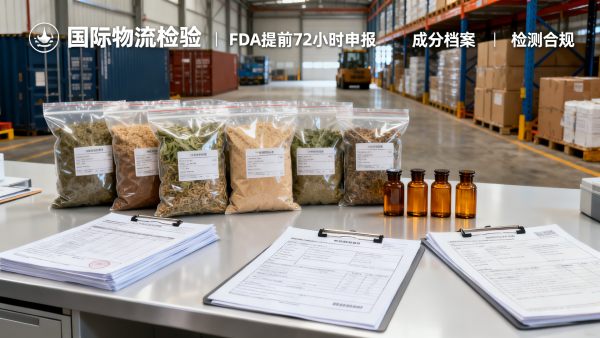
On June 20, 2026, the U.S. Food and Drug Administration brought into effect a new import filing requirement for products containing plant extracts. For importers and exporters involved in food, dietary supplements, natural ingredients, and related product categories, the change deserves close attention because it moves compliance preparation further upstream: a full ingredient profile must now be submitted through the FDA Prior Notice system at least 72 hours before entry, with direct implications for customs timing, documentation readiness, and shipment risk.
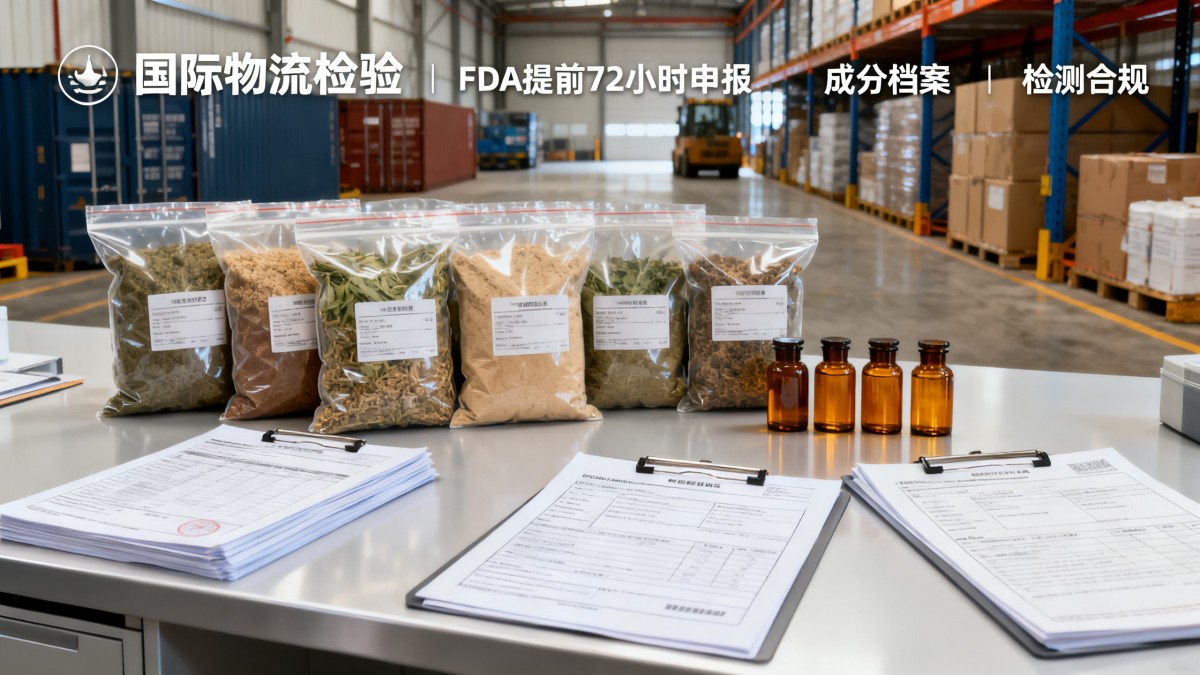
What the new filing requirement now covers
According to the information provided, the FDA rule took effect on June 20, 2026 and applies to imported food, dietary supplements, and natural ingredient products that contain plant extracts. The required submission must be completed through the FDA Prior Notice system no later than 72 hours before arrival.
The filing must include a complete ingredient profile, including quantitative information as well as test reports covering solvent residues, heavy metals, and pesticide residues. The update directly affects exporters in Botanical Extracts, Natural Ingredients, and Food Grade Enzymes. If the requirement is not met, shipments may face automatic detention and secondary inspection.
Where the operational pressure is likely to appear
Pre-shipment compliance moves closer to the front of the timeline
From an industry perspective, direct trading companies are likely to feel the impact first because the rule ties customs clearance more closely to document completeness before goods reach the border. The main pressure point is timing: submission is no longer a last-minute procedural step if the ingredient profile and test documents are not already organized.
Raw material and formulation coordination becomes more sensitive
For procurement teams and manufacturers using botanical extracts, natural ingredients, or food grade enzymes, the likely effect is on internal coordination. Where multiple ingredients or extract specifications are involved, the business focus may shift toward whether quantitative composition data and related testing records can be aligned in time for filing.
Logistics and customs service providers face higher documentation dependency
Supply chain service providers, including customs and shipment coordination roles, may be affected because clearance efficiency now depends more directly on whether the importer-side filing package is complete 72 hours in advance. What deserves closer attention is that a documentation gap can turn into a timing problem, and then into detention or secondary inspection exposure.
What companies should watch in practice
Check whether product scope is interpreted consistently
Analysis shows that companies handling mixed portfolios should focus first on identifying which imported products fall within the plant extract-related scope described in the rule. This is especially relevant for businesses operating across food, supplement, and natural ingredient categories.
Prepare the filing package before shipment scheduling
Observably, the practical issue is not only what must be submitted, but when it must be ready. Companies may need to align shipment booking, internal review, and test-document collection with the 72-hour filing window rather than treating customs preparation as a downstream task.
Review supplier documentation and reporting readiness
For firms that rely on upstream suppliers, a key concern is whether suppliers can provide complete quantitative composition data and the specified test reports in a format usable for FDA Prior Notice submission. In practice, supplier qualification and document consistency may become more important than before.
Set expectations with customers on lead time risk
Because non-compliance may trigger automatic detention and secondary inspection, exporters and import-side partners should pay attention to delivery communication. Analysis shows that lead-time commitments may need to account for documentation review and filing readiness, not only production and transport schedules.
Why this looks like more than a routine filing update
As an editorial observation, this development is better understood as an operational compliance signal rather than a simple procedural adjustment. The confirmed facts do not show a broader policy outcome beyond the new filing requirement, but they do indicate that the FDA is placing greater emphasis on advance visibility into ingredient composition and testing records for relevant imported products.
It is more appropriate to understand this as a concrete short-term rule change with possible longer-term implications that still need observation. The immediate result is clear: affected businesses must adapt their filing and documentation workflow. The broader significance, including how strictly the rule reshapes routine trade processes across categories, remains something the industry should continue to watch.
How the industry may best read this update now
At this stage, the most balanced reading is that the FDA requirement creates an immediate compliance checkpoint for shipments involving plant extracts, while also signaling tighter expectations around import documentation quality. The rule should not be overstated as a full market shift based on the available facts, but it should not be treated as a minor paperwork change either.
For affected exporters, importers, manufacturers, and service partners, the near-term priority is practical execution: identifying in-scope products, confirming document availability, and adjusting lead-time planning around the 72-hour submission requirement.
Basis of this article and points for continued verification
This article is generated based on the user-provided news title, event date, and event summary. The factual section is limited to the information provided: the FDA effective date of June 20, 2026, the 72-hour advance submission requirement through the Prior Notice system, the required full ingredient profile and related test reports, the affected product categories, and the stated enforcement consequences.
For this type of industry update, relevant source types typically include official regulatory notices, company compliance updates, industry association releases, authoritative media coverage, and standards-related documents. A specific official source link was not provided in the input, so further verification remains necessary. Continued attention should focus on any subsequent official wording, implementation clarifications, and practical interpretation affecting filing scope and execution.
Related Intelligence
- Botanical ExtractsChoosing Botanical Extracts for Pharmaceuticals: Potency, Purity, and ComplianceBotanical extracts for pharmaceuticals: learn how to assess potency, purity, traceability, and GMP compliance for confident, regulatory-ready supplier selection.
- Botanical ExtractsBotanical Extracts Market Outlook: Supply, Pricing, and Buyer RisksBotanical extracts market insights on supply, pricing, quality control, and buyer risks—compare suppliers confidently and protect your sourcing strategy.
- Botanical ExtractsEurope Botanical Extracts Market: Key Growth Drivers, Risks, and OpportunitiesEurope botanical extracts market insights: explore growth drivers, regulatory risks, supply-chain challenges, and scalable opportunities for compliant, high-value ingredients.
The Morning Broadsheet
Daily chemical briefings, market shifts, and peer-reviewed summaries delivered to your terminal.
