

The Authority in Global Agricultural Chemistry & Bio-Resources
RAS Orders Surge as Green Rules Tighten
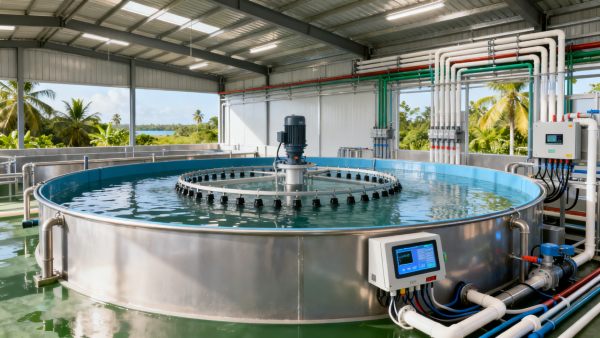
The timing of the event is not specified in the provided information, but the development points to a clear regulatory shift in Southeast Asian aquaculture procurement. Based on a joint notice referenced from the Thai fisheries authority and the Vietnam fisheries association, demand for recirculating aquaculture systems (RAS) rose sharply in 2026 Q2 after newly introduced green certification requirements in Indonesia and the Philippines required RAS to replace traditional net cages. This matters not only for aquaculture operators, but also for component suppliers, exporters, procurement teams, certification-related service providers, and logistics partners, because the rule-driven demand increase is now showing up directly in delivery schedules and sourcing pressure.
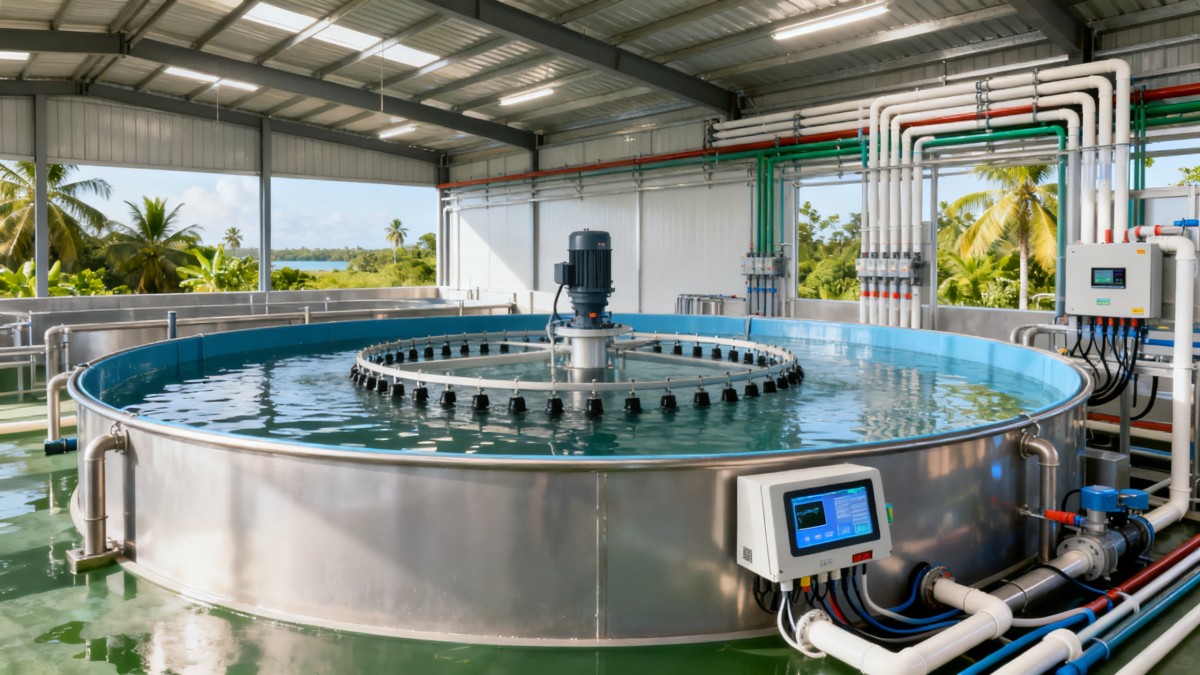
What the confirmed update shows
The confirmed facts are limited but significant. The reported increase in Southeast Asian RAS purchasing reached 300% year on year in 2026 Q2. The stated driver was the introduction of new green certification requirements in Indonesia and the Philippines that made RAS a mandatory replacement for traditional net-cage farming in the relevant context described by the input.
The same update also states that two key component categories are facing regional shortages: high-efficiency microporous aeration diffusers and intelligent water-quality sensing modules, both within the Aeration & Water Tech category. Among mainstream Chinese suppliers, average lead times reportedly extended from 10 weeks to 18 weeks, and some orders have already moved to emergency air freight arrangements.
Where the pressure is likely to appear first
Procurement shifts from price comparison to compliance timing
From an industry perspective, buyers of RAS equipment may be affected first because the trigger is not ordinary expansion demand but a certification-linked replacement requirement. That changes the practical focus of purchasing from simply comparing equipment cost to securing compliant system configurations and delivery windows that match project schedules. What deserves closer attention is whether procurement files, technical specifications, and supplier commitments are being updated to reflect the certification-driven shift toward RAS.
Component suppliers and exporters face execution risk
Suppliers of aeration and water-quality modules, especially those serving cross-border orders, may feel the strain in production scheduling, export planning, and after-sales commitments. Analysis shows that when lead times move from 10 weeks to 18 weeks, the issue is not only delayed shipment; it can also affect contract fulfillment, spare-parts planning, installation sequencing, and customer acceptance milestones. Export-oriented firms should therefore pay closer attention to delivery clauses, product documentation, technical alignment, and traceability records linked to the supplied modules.
Logistics and service providers may see more urgent fulfillment requests
Because some orders have already shifted to air freight on an emergency basis, supply-chain service providers may see demand move toward faster but more expensive execution. Observably, this raises practical questions around shipping mode selection, handover timing, and coordination between equipment delivery and onsite system commissioning. For service providers, the change is less about a new transport rule and more about how regulation-driven procurement can suddenly compress delivery tolerance across the project chain.
Certification and inspection-related businesses should watch document consistency
Certification-related service firms and inspection participants may also be affected if buyers begin requesting more detailed evidence that supplied systems and subcomponents fit the updated green certification pathway. Analysis shows that, even where the input does not provide detailed implementation rules, businesses involved in testing, certification support, or document review should watch for changes in technical file expectations, bid documents, and compliance declarations tied to RAS adoption.
What companies should monitor now
Check whether project documents reflect the new certification path
Companies selling into the affected markets should review whether quotations, technical offers, and order documents clearly match the RAS-based compliance expectation referenced in the update. Where execution details remain unclear, it is more appropriate to treat this as a point for active monitoring rather than assume a fully uniform enforcement standard.
Reassess lead-time assumptions for key Aeration & Water Tech parts
Businesses should not rely on earlier delivery benchmarks if high-efficiency aeration diffusers and intelligent sensing modules are now in regional short supply. Observably, procurement plans, installation calendars, and customer communication may need adjustment where prior assumptions were built around a 10-week lead time rather than an 18-week cycle.
Prepare for tighter review of technical and supply documents
What deserves closer attention is the possibility that customers, certification stakeholders, or project owners may place greater weight on technical specifications, module compatibility records, supply commitments, and supporting documentation. The input does not provide a formal checklist, so companies should treat this as a compliance-preparation issue rather than a confirmed new documentation rule.
Watch the cost and service implications of emergency shipping
Where air freight is already being used as an emergency measure, firms should monitor how this affects delivery promises, project margins, spare-parts planning, and after-sales response. Analysis shows that urgent shipping can solve immediate timing problems, but it may also shift pressure to installation readiness and service coordination if the broader component shortage remains unresolved.
Why this looks like an execution signal, not just a demand spike
Analysis shows that this update is more meaningful than a routine purchasing surge because the reported demand increase is linked to green certification requirements rather than discretionary investment alone. That makes the development relevant as an execution signal: regulatory or certification change is now influencing actual buying behavior and exposing where the supply chain is least flexible.
At the same time, it would be premature to treat the situation as a fully settled regulatory end-state. The input does not include detailed enforcement language, formal implementation timelines, or standardized procurement rules across all affected projects. It is more appropriate to understand this as a strong signal of rule-driven market movement that still requires continued observation of implementation details and market feedback.
How the market is likely to read this for now
The immediate significance of the event lies in the connection between certification requirements and real supply-chain stress. In practical terms, the market is not only reacting to a rise in RAS demand; it is also being forced to confront shortages in specific Aeration & Water Tech components that can slow compliant system delivery.
A balanced reading is that this development should currently be understood as a landed change in procurement behavior, and as an early execution-stage indicator for compliance, sourcing, and delivery management. It should not yet be read as proof that every downstream rule, document standard, or service requirement has fully stabilized.
Basis of this article and what still needs verification
This article is generated from the user-provided news title, event timing note, and event summary. The specific official source link was not provided in the input, so continued verification remains necessary. For developments of this kind, relevant source categories usually include official notices, regulator publications, fisheries or trade authority updates, industry association releases, standards-related documents, procurement materials, and reporting from established industry media.
Further monitoring is still needed on certification implementation details, enforcement wording, tender document changes, technical specification alignment, industry feedback, and how companies in the supply chain are executing against longer lead times and emergency shipping arrangements.
Related Intelligence
- Aeration & Water TechWhat RO water treatment systems deliver consistent 98% salt rejection at 25°C with feed TDS over 3,000 ppm?RO water treatment systems that deliver proven 98% salt rejection at 25°C with >3,000 ppm TDS—engineered for API synthesis, aquaculture & grain processing.
- Aeration & Water TechCan pond aeration systems maintain dissolved oxygen above 5 mg/L during summer stratification in catfish ponds?Pond aeration systems can sustain >5 mg/L DO during summer stratification—when engineered for mixing *and* oxygen transfer. See field-proven data & design essentials.
- Aeration & Water TechHow to Choose Alarm Water Monitoring Systems for Critical Water FacilitiesAlarm water monitoring systems: learn how to select reliable sensors, alarms, communications, and workflows to protect critical water facilities and prevent costly failures.
The Morning Broadsheet
Daily chemical briefings, market shifts, and peer-reviewed summaries delivered to your terminal.
