

The Authority in Global Agricultural Chemistry & Bio-Resources
RAS Order Surge Extends Lead Times, Drives Vietnam Assembly
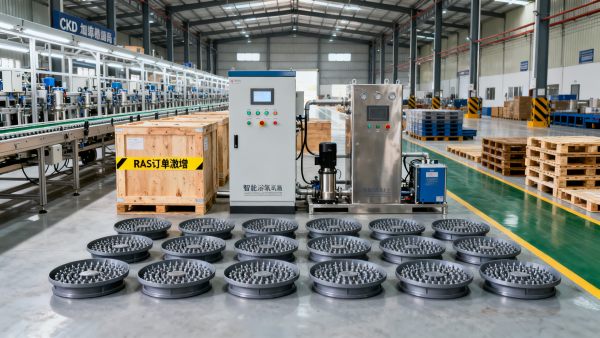
On June 18, 2026, an industry update signaled that a sharp rise in Southeast Asian RAS project demand is no longer only a market story but also a trade and delivery-rule issue for Aeration & Water Tech suppliers. With standard lead times for key equipment moving from 8 weeks to 16–18 weeks and Chinese exporters starting CKD assembly in Bac Ninh, the development deserves attention from exporters, project buyers, procurement teams, and after-sales operators because tariff exposure, delivery planning, and documentation expectations are beginning to affect execution at the same time.
What the June 18 update confirms
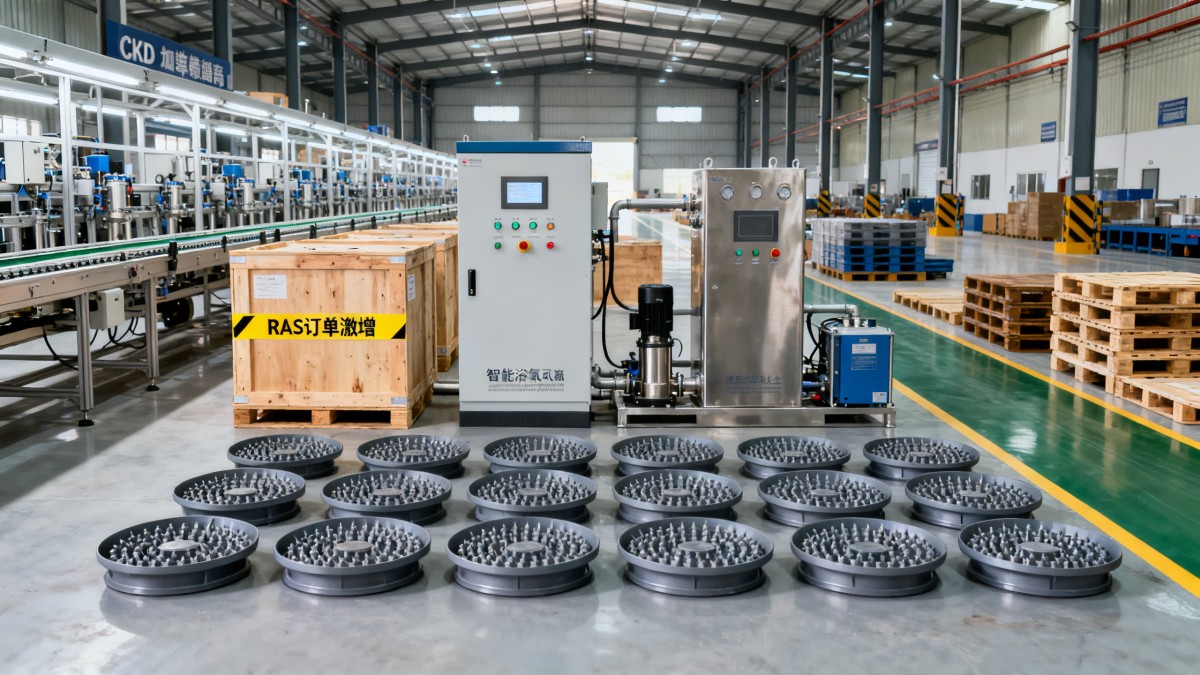
According to a joint notice from the Thailand aquaculture association and Singapore-based Aquaculture Asia on June 18, Southeast Asian RAS project orders in the second quarter of 2026 increased by 312% year on year. The rise directly boosted demand for core Aeration & Water Tech equipment, including micro-porous aeration discs, intelligent dissolved oxygen controllers, and ozone generation modules.
The same update states that major Chinese export suppliers have extended standard lead times from 8 weeks to 16–18 weeks. It also states that CKD localized assembly has been launched in the Bac Ninh industrial area of Vietnam with the stated purpose of shortening end-delivery cycles and avoiding a 35% ASEAN anti-dumping duty.
Where the pressure is likely to appear first
Export transactions now face a tighter trade-execution window
From an industry perspective, exporters of RAS-related equipment may be affected first because the confirmed lead-time extension changes how delivery commitments are structured in quotations, contracts, and shipment planning. What deserves closer attention is whether sales teams, project coordinators, and logistics partners align commercial documents with the longer production cycle and with any change created by CKD assembly arrangements.
Project buyers and procurement teams must reassess timing assumptions
For buyers and procurement functions, the immediate issue is not only price or availability but whether technical procurement schedules still match real supply conditions. Analysis shows that equipment with longer lead times can affect ordering sequences, installation coordination, and acceptance preparation, especially when the equipment involved includes aeration, dissolved oxygen control, and ozone modules that are central to system integration.
Assembly localization raises new compliance and traceability questions
Observably, the start of CKD assembly in Vietnam may shift attention toward product traceability, technical file consistency, parts-origin records, and after-sales responsibility across borders. The confirmed fact is the launch of local assembly; the part that still requires ongoing attention is how market participants interpret documentation, quality responsibility, and service response once supply is no longer based only on direct finished-goods export.
Service and support teams may see execution complexity increase
After-sales providers and channel-side service operators may also need to follow this change closely because longer lead times and localized assembly can affect spare-parts planning, commissioning schedules, and fault-response coordination. What deserves closer attention is whether project documentation, warranty terms, and component lists remain consistent across export and assembly stages.
Practical points companies should monitor now
Review delivery terms against updated supply reality
Analysis shows that companies involved in bidding, contracting, or project scheduling should closely compare current purchase commitments with the newly reported 16–18 week standard lead time. Where delivery clauses were built around an 8-week assumption, operational and contractual friction may emerge if documents are not updated in time.
Check trade and tariff treatment around CKD arrangements
Because the update explicitly links Vietnam assembly to avoiding a 35% ASEAN anti-dumping duty, exporters and import-side procurement teams should pay closer attention to the trade treatment of CKD shipments, supporting documents, and supplier declarations used in cross-border transactions. The available information does not provide detailed execution rules, so this is better treated as a live compliance checkpoint rather than a settled operating standard.
Keep technical and tender documents aligned
For projects already moving through specification review or tender preparation, it is practical to verify whether equipment descriptions, origin-related statements, assembly references, and delivery schedules remain internally consistent across bids, technical files, and commercial paperwork. Observably, this matters more when procurement decisions depend on exact equipment scope and timing.
Prepare for traceability and service handoff questions
What deserves closer attention is the handoff between manufacturing, localized assembly, and downstream service support. Companies may need to keep a closer record of component identity, assembly responsibility, and post-delivery support arrangements, particularly where the supply route changes during project execution.
Why this reads as an execution signal rather than a simple demand story
Analysis shows that the most important meaning of this update is not only that RAS demand is rising, but that supply-chain responses are already taking a trade and compliance shape. The combination of longer lead times and CKD assembly suggests that companies are reacting to both delivery pressure and tariff exposure at the same time.
It is more appropriate to understand this as an execution signal already affecting procurement and trade behavior, while still recognizing that the detailed compliance treatment, market acceptance, and document practice around localized assembly require continued observation. In other words, the facts confirm adjustment has started, but the full operating implications are not yet fully visible from the provided information alone.
How the market should read the latest move
From an industry perspective, this development is best read as a practical shift in how RAS equipment supply is being organized under demand pressure and trade constraints. The confirmed changes in lead time and assembly location are concrete. The broader implications for compliance practice, procurement standards, and service execution should be followed carefully, but not overstated beyond the facts currently available.
Basis of this article and what still needs verification
This article is based on the user-provided news title, event date, and event summary. For developments of this kind, relevant source categories usually include official notices, regulatory releases, customs or trade-administration information, industry association communications, standards documents, and reporting by authoritative trade media.
No specific official source link was provided in the input, so the precise official link remains unconfirmed and should be continuously verified. What still needs observation includes any later clarification on trade treatment, compliance interpretation, tender-document language, certification expectations, industry feedback, and how companies implement localized assembly in practice.
Related Intelligence
- Aeration & Water TechWhat RO water treatment systems deliver consistent 98% salt rejection at 25°C with feed TDS over 3,000 ppm?RO water treatment systems that deliver proven 98% salt rejection at 25°C with >3,000 ppm TDS—engineered for API synthesis, aquaculture & grain processing.
- Aeration & Water TechCan pond aeration systems maintain dissolved oxygen above 5 mg/L during summer stratification in catfish ponds?Pond aeration systems can sustain >5 mg/L DO during summer stratification—when engineered for mixing *and* oxygen transfer. See field-proven data & design essentials.
- Aeration & Water TechHow to Choose Alarm Water Monitoring Systems for Critical Water FacilitiesAlarm water monitoring systems: learn how to select reliable sensors, alarms, communications, and workflows to protect critical water facilities and prevent costly failures.
The Morning Broadsheet
Daily chemical briefings, market shifts, and peer-reviewed summaries delivered to your terminal.
