

The Authority in Global Agricultural Chemistry & Bio-Resources
RAS Parts Delays Push German Buyers Toward Local Options
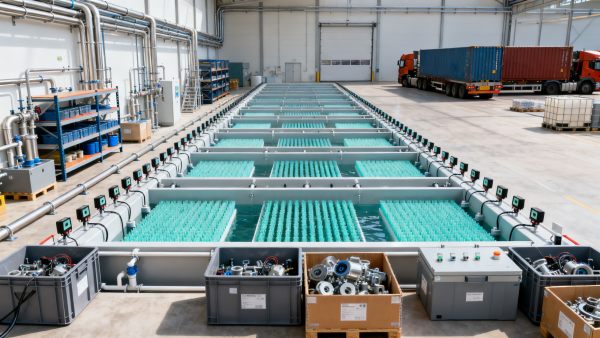
The timing of the underlying disruption was not specified in the available information, but a June 25, 2026 notice from Bundesverband Aquakultur has brought renewed attention to a growing supply-chain issue for RAS Systems in Germany. With the Gulf of Aden-Suez route still unavailable due to the ongoing Red Sea crisis, key components exported from China are now moving on a longer route around the Cape of Good Hope, extending average transit time to 49 days, or 21 days more than before. That matters not only for equipment exporters and German buyers, but also for project delivery teams, system integrators, and aquaculture operators whose schedules depend on timely installation of core modules.
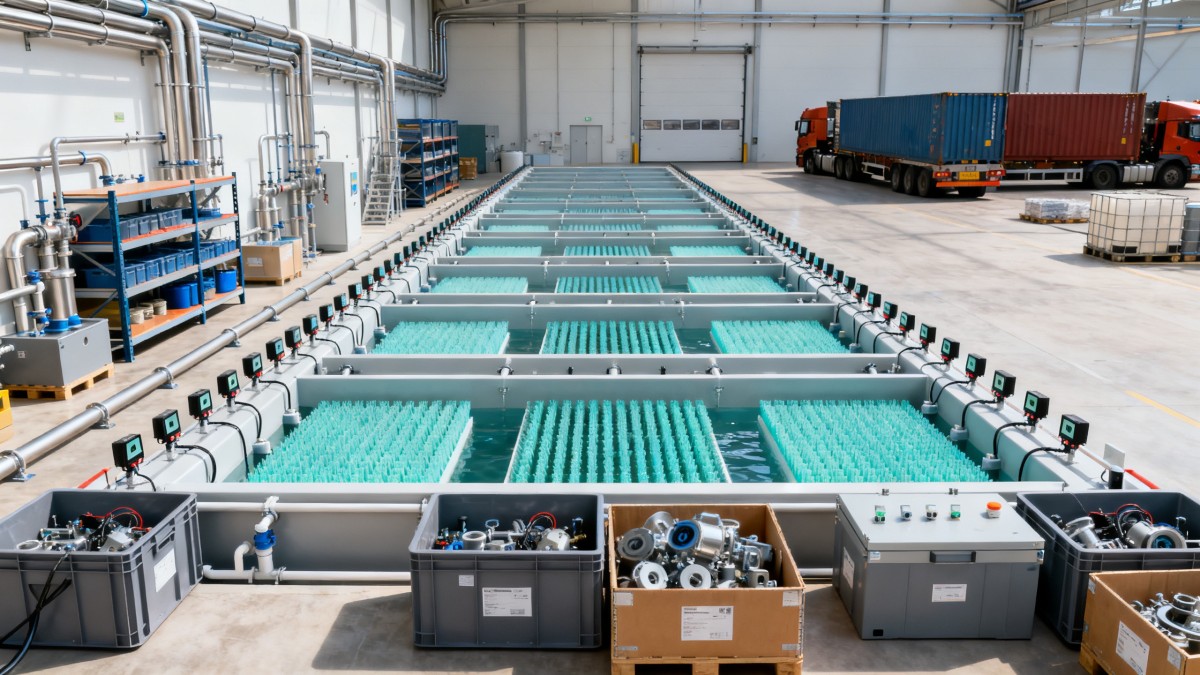
What Has Been Confirmed So Far
According to the June 25, 2026 communication cited from Bundesverband Aquakultur, the Gulf of Aden-Suez shipping corridor remains unusable as the Red Sea crisis continues. As a result, core RAS Systems components exported from China, including biofilter modules and DO sensor arrays, are being shipped via the Cape of Good Hope.
The reported average transport cycle for those shipments has risen to 49 days, representing an increase of 21 days. The same notice indicates that major recirculating aquaculture projects in Germany have already been delayed. It also states that multiple German system integrators are accelerating evaluations of an alternative model that combines local assembly in Eastern Europe with SKD modules supplied from China.
Where the Pressure Is Building Along the Chain
Project delivery is becoming more exposed to component timing
From an industry perspective, RAS project developers and integrators are likely to feel the most immediate pressure because biofilter modules and DO sensor arrays sit close to functional commissioning rather than peripheral procurement. When transit time stretches by three weeks, project sequencing, installation windows, and customer handover plans may all come under strain. What deserves closer attention is whether delays remain limited to delivery calendars or begin to affect contracting and project prioritization.
Chinese exporters face a higher execution burden
For exporters of key RAS components, the impact is less about demand visibility in the short term and more about execution reliability. Longer ocean lead times can put more weight on shipment planning, order confirmation, and communication around expected arrival dates. Observably, buyers may now place greater emphasis on whether suppliers can support split delivery, modular shipment planning, or documentation that fits a more complex fulfillment path.
German buyers are now evaluating structure, not just price
For German purchasers and system buyers, the issue extends beyond freight delay alone. The reported shift toward evaluating Eastern Europe assembly plus China-sourced SKD modules suggests that procurement teams are examining supply resilience at the system architecture level. Analysis shows that the key question is no longer only where a part is sourced, but where final assembly and delivery risk can be better controlled.
Regional service and assembly partners may gain strategic relevance
Supply-chain service providers and regional assembly partners may also become more relevant if buyers continue assessing localized fallback models. This does not yet confirm a structural shift, but it does indicate that service capability closer to the end market may become a more important factor in RAS equipment delivery decisions.
What Companies Should Watch Now
Track whether routing disruption continues to shape quoted lead times
Companies involved in RAS equipment trade should watch how future delivery commitments are stated in contracts, quotations, and customer updates. The immediate practical issue is whether the longer route remains the working assumption for core components shipped from China to Germany and nearby markets.
Focus on components that can delay commissioning
Not every item in a project has the same scheduling impact. Based on the information provided, biofilter modules and DO sensor arrays deserve particular attention because they were specifically identified in the current disruption. Firms should distinguish between components that can be buffered and components whose late arrival can directly hold up commissioning.
Prepare for customer discussions around assembly models
The reported evaluation of Eastern Europe assembly with China-origin SKD modules suggests that buyers may increasingly ask suppliers about delivery configuration, assembly location, and interface responsibility. For exporters, integrators, and service providers, this makes customer communication a commercial issue as much as a logistics issue.
Separate stated alternatives from executable alternatives
Analysis shows that one of the most important near-term distinctions is between an option being evaluated and an option being operationally ready. Companies should pay attention to whether localization discussions remain exploratory or begin to appear in actual procurement arrangements, project planning, or supplier qualification processes.
Why This Looks Like More Than a One-Off Delay
Observably, this development should not be read only as a shipping inconvenience. It points to a vulnerability in how imported core RAS components are tied to project timelines in the German market. At the same time, it would be premature to describe the situation as a confirmed long-term restructuring of sourcing. It is more appropriate to understand this as a live industry signal: logistics disruption is now strong enough to push buyers into evaluating alternative assembly and supply configurations, but the final commercial outcome still requires continued observation.
How This News Is Best Understood
At this stage, the most balanced reading is that the reported 21-day extension in transport time has moved from a logistics issue into a project-delivery issue for parts of the RAS Systems market. For companies tied to export, integration, procurement, and commissioning, the practical significance lies in delivery certainty and fallback planning rather than in broad market conclusions. It is more appropriate to understand this as an active supply-chain warning sign with potential strategic implications, rather than as a settled market realignment.
Basis for This Article and Ongoing Verification
This article is based on the user-provided news title, the note that the event timing was not specified, and the supplied event summary citing a June 25, 2026 communication from Bundesverband Aquakultur. For this type of industry development, commonly relevant source categories include official notices, company statements, industry association updates, authoritative media coverage, and standard-setting or trade-related documentation.
A specific official source link was not provided in the input, so the underlying statement and any subsequent commercial changes still require ongoing verification. Follow-up attention should focus on whether the shipping constraint persists, whether project delays broaden beyond the cases already referenced, and whether the Eastern Europe assembly plus China SKD model moves from evaluation into actual implementation.
Related Intelligence
- RAS SystemsHow to Vet Middle East Oxygenation System Suppliers for RAS ProjectsOxygenation system suppliers Middle East: learn how to vet RAS partners for proven performance, resilience, local service, and lifecycle value.
- RAS SystemsRAS System Cost Model: What Investors Should Budget Beyond Initial EquipmentRAS system cost model guide for investors: budget beyond equipment for energy, compliance, working capital, resilience, and sustainable returns.
- RAS SystemsRAS Technology Explained: How Biofiltration and Oxygen Control Work TogetherRAS technology explained: discover how biofiltration and oxygen control work together to maintain stable water quality, protect fish health, and improve aquaculture performance.
The Morning Broadsheet
Daily chemical briefings, market shifts, and peer-reviewed summaries delivered to your terminal.
