

The Authority in Global Agricultural Chemistry & Bio-Resources
China-Mongolia AEO Recognition Continues in June

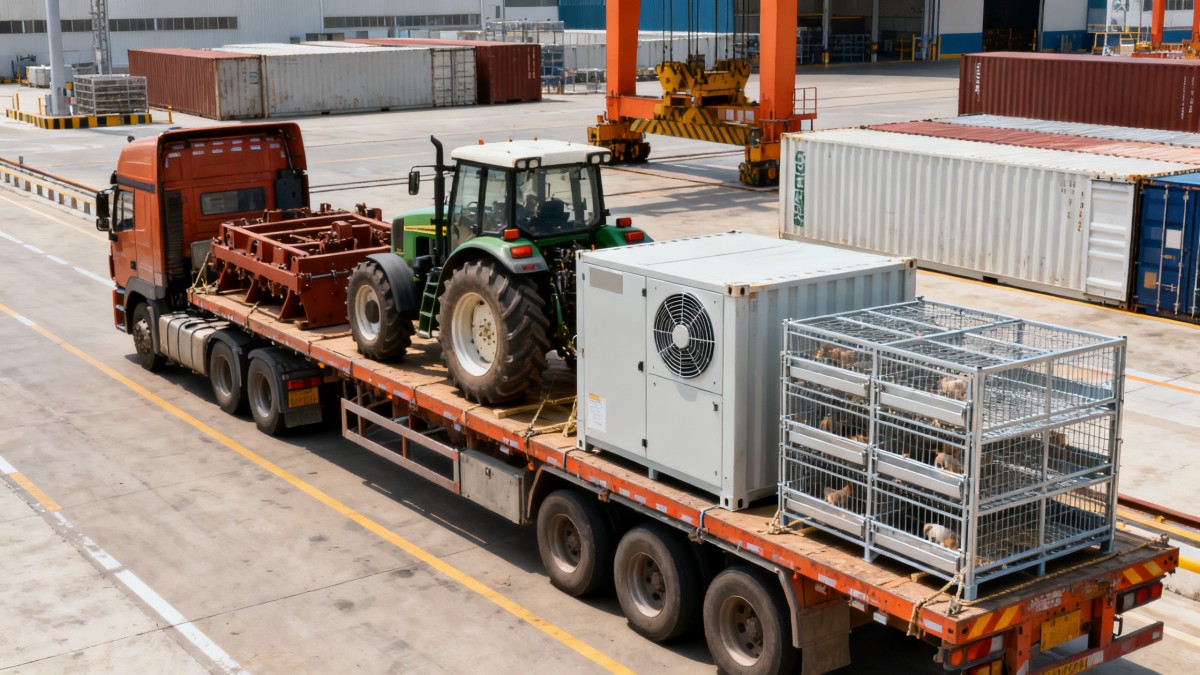
In June 2026, the continued application of the China-Mongolia AEO mutual recognition arrangement signals an ongoing customs facilitation framework rather than a one-off announcement. For certified companies on both sides, the practical changes include lower inspection rates, priority clearance, and simplified documentation. For Chinese exporters shipping Heavy Agri Machinery, Poultry Housing & Caging, and Climate Control & Ventilation equipment to Mongolia, this matters most at the customs, delivery, and supply chain coordination stages, where shorter clearance cycles and lower logistics uncertainty can directly affect execution.
What the arrangement currently confirms
The confirmed fact is that in June 2026, the China-Mongolia customs AEO mutual recognition arrangement remained in effect. Under this arrangement, certified enterprises from both sides can receive customs facilitation measures including reduced inspection rates, priority customs clearance, and simplified document handling.
The information provided also confirms that this mechanism is favorable for Chinese companies exporting Heavy Agri Machinery, Poultry Housing & Caging, and Climate Control & Ventilation equipment to Mongolia. The stated effect is a shorter customs clearance cycle and reduced uncertainty in logistics.
Where the practical effects may appear first
Exporters handling equipment shipments to Mongolia
From an industry perspective, exporters are the most directly affected group because the arrangement relates to customs treatment at the border. The likely impact is concentrated in shipment release speed, inspection frequency, and document processing. Companies in Heavy Agri Machinery, Poultry Housing & Caging, and Climate Control & Ventilation should pay closer attention to whether their AEO-related status, shipment files, and export documentation remain aligned with the requirements used in actual customs clearance.
Manufacturers coordinating production and delivery schedules
Analysis shows that manufacturers may feel the effect not only in export procedures but also in planning. When customs uncertainty is lower, delivery scheduling, packaging readiness, and outbound coordination can become more predictable. What deserves closer attention is that this does not remove the need for complete technical documents, shipping papers, or product-related files. The benefit is facilitation, not exemption from normal compliance preparation.
Buyers and procurement teams managing project timelines
For procurement teams and buyers involved in cross-border equipment purchasing, the arrangement may influence expected lead times and handover planning. This is especially relevant where imported equipment is tied to installation, commissioning, or seasonal use. Observably, the main issue to watch is whether procurement assumptions are being updated based on facilitated clearance for certified parties, while still leaving room for case-by-case execution differences.
Supply chain and logistics service providers
Supply chain service providers may also be affected because the arrangement can change how border timing risk is assessed. In practice, lower inspection rates and priority treatment may help reduce variability in customs processing. Even so, logistics operators still need to track document completeness, consignee coordination, and any execution-level customs requirements that may affect actual release timing.
What companies should monitor in the near term
Check whether certification status is being used effectively
Companies that expect to benefit should first review whether their relevant AEO certification position is clear in actual export operations. Analysis shows that a facilitation mechanism only becomes operationally meaningful when certification status, filing information, and shipment execution are consistently reflected in trade documents and customs-facing processes.
Keep document packages consistent with facilitated clearance
Because the confirmed benefit includes simplified documentation, companies should pay attention to the quality and consistency of customs paperwork, technical materials, and shipment records. It is more appropriate to understand this as a need for tighter document discipline, not as a sign that supporting materials can be relaxed.
Focus on the product lines named in the current information
The current information specifically points to Heavy Agri Machinery, Poultry Housing & Caging, and Climate Control & Ventilation equipment. For companies active in these categories, closer monitoring is warranted at the quotation, export preparation, and delivery-commitment stages. If internal sales or procurement teams continue using older assumptions about border timing, they may miss the practical value of the arrangement.
Watch for further execution language and market feedback
No detailed operational guidance is provided in the input beyond the continuation of mutual recognition and the listed facilitation measures. For that reason, companies should continue watching for official wording, implementation practice, tender document references, and feedback from actual shipments before treating the current development as a fully uniform execution outcome across all cases.
Why this looks more like an execution signal than a new rule shock
Observably, this development is better read as a sign of continued rule implementation than as a sudden regulatory shift. The value lies in the persistence of a recognized customs facilitation mechanism and in the operational predictability it may provide to certified traders. At the same time, analysis shows that the market still needs to observe how consistently the benefits are reflected in day-to-day customs handling, document review, and shipment scheduling.
How the market may reasonably interpret this update
The most balanced reading is that the continued China-Mongolia AEO mutual recognition arrangement offers a practical trade facilitation signal for certified enterprises, especially those exporting equipment categories already identified in the current information. It should not be overstated as a universal reduction of all cross-border risk, but it is relevant enough to influence planning around customs clearance, delivery timing, and logistics coordination. At this stage, it is more appropriate to understand the update as an active execution framework with continuing relevance, while keeping attention on how implementation is reflected in actual trade operations.
Basis of this article and what still needs verification
This article is based on the user-provided news title, event date, and event summary. For events of this type, commonly relevant source categories may include official notices, releases from regulatory authorities, customs or trade administration information, industry association updates, standard-setting documents, and reporting by authoritative media. No specific official source link was provided in the input, so the exact official publication path still requires follow-up verification. Further observation is also needed regarding implementation details, certification-related execution practice, wording used in tender or procurement documents, market feedback, and how companies apply the arrangement in real export operations.
Related Intelligence
- Heavy Agri MachineryEvaluating Farm Equipment Distributors: Parts Availability and Service CoverageCompare farm equipment distributors on critical parts availability, service coverage, and repair response. Learn what to verify before buying to reduce costly downtime.
- Heavy Agri MachineryHow Does Market Forecasting Help Plan Farm Machinery Procurement?How does market forecasting help agri procurement planning? Discover how to time machinery purchases, protect cash flow, and reduce delivery risks before critical farm deadlines.
- Heavy Agri MachineryIs It Safe to Source Farm Machinery from Emerging Markets?Is it safe to source agri machinery from emerging markets? Discover how to verify suppliers, check compliance, and secure parts support to protect your farm and avoid costly buying mistakes.
The Morning Broadsheet
Daily chemical briefings, market shifts, and peer-reviewed summaries delivered to your terminal.
