

The Authority in Global Agricultural Chemistry & Bio-Resources
China Launches Field Training for Embodied AI in Smart Farming
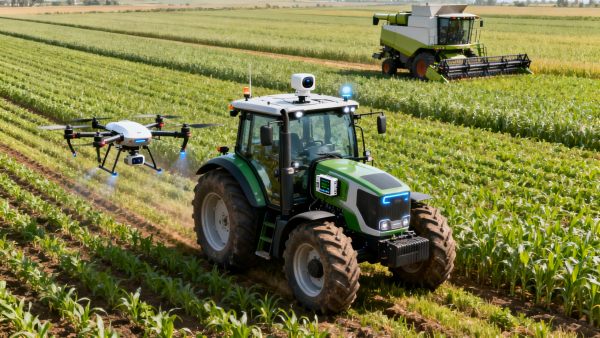
On June 10, 2026, China’s Ministry of Industry and Information Technology and the State-owned Assets Supervision and Administration Commission jointly launched a 2026 special action focused on real-world training for humanoid robots and embodied intelligence. The program centers on agricultural use cases including autonomous navigation, multimodal perception, and closed-loop operation systems, making it a development worth watching for heavy agricultural machinery makers, AI controller suppliers, equipment integrators, and overseas technology providers serving China’s farm equipment market.
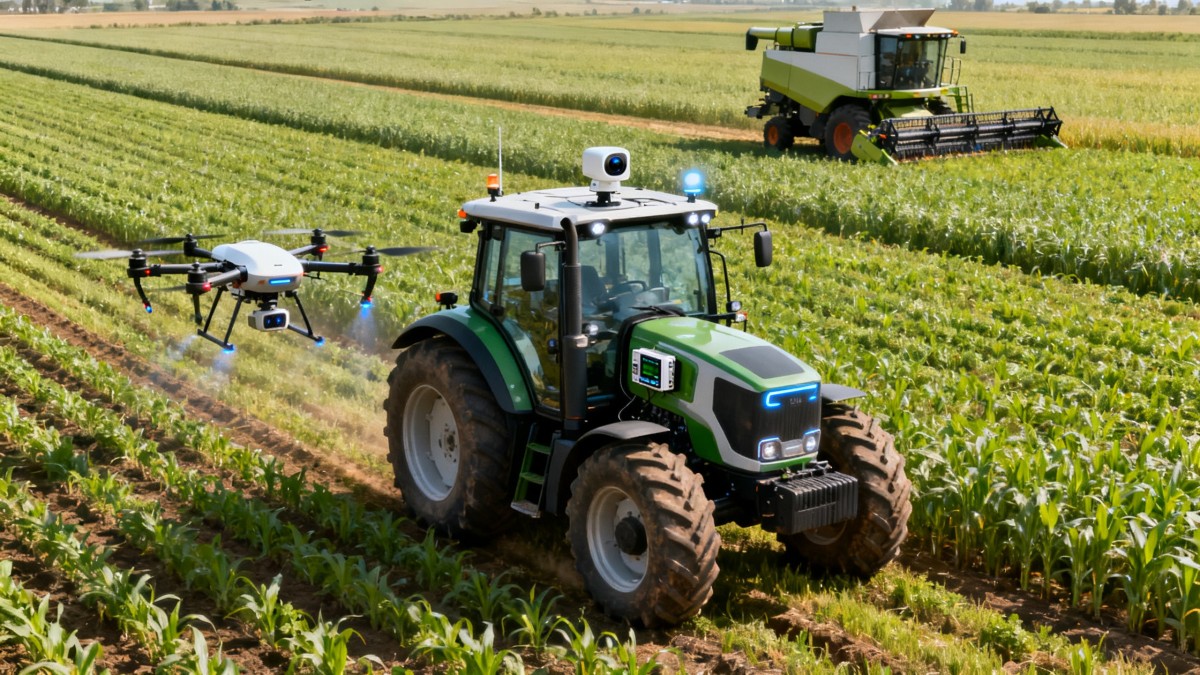
What the June 10 launch confirms
According to the information provided, the new special action is aimed at real-scene training for humanoid robots and embodied intelligence in 2026. Its stated focus in agricultural settings includes autonomous navigation, multimodal sensing, and the development of closed-loop operating systems.
The same information indicates that the initiative is expected to speed up the evolution of domestic heavy agricultural machinery toward intelligent complete-machine platforms. It also points to tractors, harvesters, and crop-protection drones as equipment categories likely to carry domestic AI controllers and edge inference modules.
The announcement further indicates higher expectations for overseas integrators in three areas: technology compatibility in procurement, openness of software interfaces, and the responsiveness of localized service support.
Why the supply chain is paying attention
Equipment manufacturers face a platform-level shift
From an industry perspective, tractor, harvester, and agricultural drone manufacturers may be affected because the direction outlined by the action is not limited to a single component upgrade. It points toward a more integrated machine architecture in which sensing, control, and on-device inference need to work together in field operations. What deserves closer attention is how product development, supplier selection, and system integration requirements may change around that shift.
AI module and controller suppliers move closer to core integration
Suppliers of domestic AI controllers and edge inference modules may see their role become more central in the equipment stack. Analysis shows that the impact is likely to be felt most directly in controller integration, perception-to-action coordination, and field deployment readiness rather than in standalone hardware delivery alone. For these suppliers, interface fit, deployment stability, and adaptation to agricultural operating conditions become key points to monitor.
Overseas integrators may face stricter commercial and technical demands
For overseas integrators selling into this market, the pressure is likely to appear in procurement qualification, software interoperability, and post-sales responsiveness. Observably, the information provided does not say that market access rules have changed, but it does signal that buyers may place greater weight on whether imported technologies can connect smoothly with domestic AI control systems and whether local support can match project timelines.
Service and delivery partners may need faster response loops
Service providers involved in deployment, integration, and maintenance may also be affected because closed-loop agricultural operations depend on coordination between software, hardware, and field feedback. The main business impact may show up in commissioning, troubleshooting, and ongoing localization support, especially where multiple systems need to work together on operational equipment.
What companies should monitor next
Watch for follow-up wording and implementation details
Analysis shows that companies should distinguish between the policy signal already visible in the launch and any later operational requirements that may follow. The immediate fact is the start of the special action; the practical business impact will depend on how subsequent official language defines priorities, participation mechanisms, and technical expectations.
Review interface openness and system compatibility
For equipment makers and integrators, one practical focus is whether current software interfaces and controller architectures can support deeper coordination with domestic AI and edge inference modules. This is especially relevant where equipment platforms already rely on mixed technology stacks.
Prepare for procurement and delivery questions earlier
Suppliers and service teams should pay attention to how customers may revise technical checklists, integration requirements, and service expectations. In practical terms, procurement discussions may increasingly focus on compatibility, integration boundaries, delivery readiness, and local support response rather than on component supply alone.
Separate signal strength from confirmed outcomes
What deserves closer attention is the difference between a directional signal and a completed market transition. The current information points to acceleration in smart heavy agricultural machinery, but companies should avoid treating that as proof that all product categories or procurement patterns have already shifted.
How this development is best understood for now
Observably, this news is more meaningful as a directional industry signal than as proof of a finished market result. It connects embodied intelligence and humanoid robot training with real agricultural operating scenarios, which matters because it brings AI capability development closer to complete-machine deployment logic in farm equipment.
Analysis shows that the strongest immediate implication is not a confirmed change in market share or purchasing volume, but a rise in the importance of compatibility, interface openness, and localized service capacity. That is why manufacturers, integrators, and suppliers are likely to track follow-up implementation details closely.
Why this matters beyond the announcement itself
At this stage, this development is best understood as a practical signal that agricultural intelligence in China is being framed around real-scene operation capability rather than isolated digital features. For the industry, the key point is not to overstate immediate outcomes, but to recognize that product architecture, technical coordination, and service readiness may become more important in upcoming projects tied to smart heavy agricultural machinery.
A neutral reading is that the announcement indicates acceleration in direction, while the depth of actual business impact still requires continued observation.
Basis of this article and what still needs verification
This article is based on the user-provided news title, event date, and event summary. For this type of industry update, relevant source categories usually include official notices, company statements, industry association releases, authoritative media coverage, and standards-related documents.
No specific official source link was provided in the input, so the precise official documentation still requires further verification. Areas that merit continued monitoring include any follow-up official wording, implementation rules, and whether procurement or integration requirements become more clearly defined in later disclosures.
Related Intelligence
- Heavy Agri MachineryEvaluating Farm Equipment Distributors: Parts Availability and Service CoverageCompare farm equipment distributors on critical parts availability, service coverage, and repair response. Learn what to verify before buying to reduce costly downtime.
- Heavy Agri MachineryHow Does Market Forecasting Help Plan Farm Machinery Procurement?How does market forecasting help agri procurement planning? Discover how to time machinery purchases, protect cash flow, and reduce delivery risks before critical farm deadlines.
- Heavy Agri MachineryIs It Safe to Source Farm Machinery from Emerging Markets?Is it safe to source agri machinery from emerging markets? Discover how to verify suppliers, check compliance, and secure parts support to protect your farm and avoid costly buying mistakes.
The Morning Broadsheet
Daily chemical briefings, market shifts, and peer-reviewed summaries delivered to your terminal.
