

The Authority in Global Agricultural Chemistry & Bio-Resources
K-REACH Fast-Track Registration for Supply-Critical Agrochemicals Starts May 2026
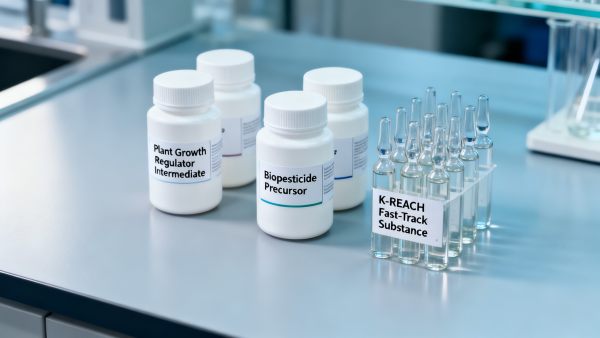
South Korea’s Ministry of Environment launched a special fast-track registration pathway under K-REACH on May 1, 2026, targeting supply-critical chemical substances—specifically active ingredients used in agrochemicals, including plant growth regulator intermediates and biopesticide synthesis precursors. This regulatory adjustment aims to alleviate supply bottlenecks and streamline market access for foreign exporters, particularly agrochemical and custom synthesis manufacturers based in China.
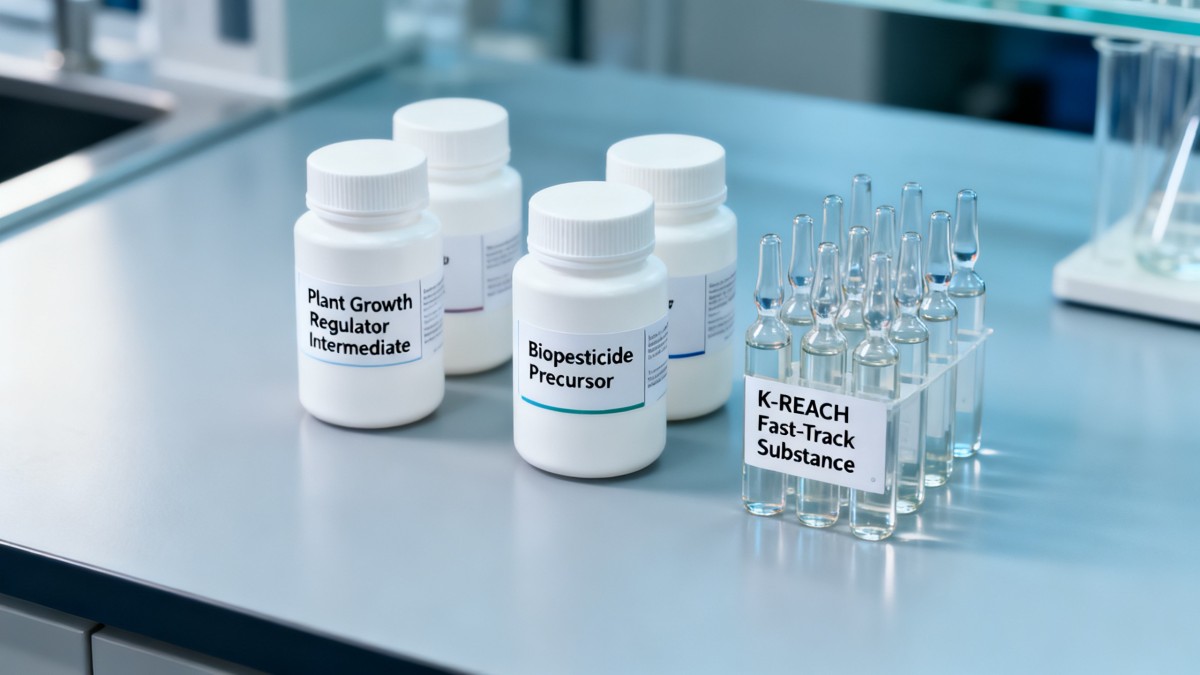
K-REACH Emergency Registration Pathway Enters Force
Effective May 1, 2026, the Korean Ministry of Environment opened a six-month temporary registration window under the K-REACH framework for chemicals classified as ‘supply-critical’. Eligible substances are limited to agricultural active ingredients—such as intermediates for plant growth regulators and precursors for biopesticide synthesis. The pathway significantly reduces data submission requirements, especially for ecotoxicological and toxicological test dossiers. As a result, the average registration processing time for qualifying substances is shortened to 12 working days.
Impact Across the Agrochemical Supply Chain
Direct Exporters
Agrochemical and custom synthesis enterprises exporting to South Korea will experience accelerated regulatory clearance. The reduced timeline—from months to under two weeks—directly supports faster contract execution, inventory planning, and responsiveness to Korean formulation partners’ procurement cycles.
Raw Material Sourcing Firms
Companies procuring key intermediates for downstream agrochemical production must now verify whether their Korean-bound materials fall within the newly designated ‘supply-critical’ category. Early classification determines eligibility for the fast-track route—and thus influences sourcing timelines, documentation preparation, and supplier coordination.
Contract Manufacturing Organizations (CMOs)
CMOs engaged in synthesis or formulation for Korean clients face revised compliance expectations. While full K-REACH registration remains mandatory for non-qualifying substances, CMOs supplying eligible intermediates must align internal quality records, batch traceability systems, and technical dossiers with the simplified data requirements of the emergency pathway.
Regulatory & Compliance Service Providers
Consultancies and testing laboratories supporting K-REACH submissions must adapt service offerings to prioritize rapid dossier assembly, targeted testing strategies, and pre-submission readiness checks—especially for substances falling under the six-month temporary window.
Key Actions for Export-Ready Enterprises
Confirm Substance Eligibility Before Submission
Verify whether the specific agrochemical active ingredient—or its precursor—is officially listed or functionally recognized by Korean authorities as ‘supply-critical’. Only substances meeting this designation qualify for the fast-track process.
Prepare Streamlined Technical Documentation
While full test data packages are waived, applicants must still submit identity verification, use information, exposure scenarios, and existing safety data (e.g., from OECD-compliant studies). Maintain traceable links between batch records and submitted dossiers.
Align Internal Timelines with the 6-Month Window
The emergency registration period expires November 30, 2026. Applications submitted after that date revert to standard K-REACH timelines and data requirements—making early assessment and submission critical.
Coordinate with Korean Importers on Joint Submission Roles
Under K-REACH, non-Korean manufacturers must appoint an Only Representative (OR) in Korea. Confirm OR capacity, data-sharing agreements, and joint submission responsibilities well ahead of filing to avoid delays.
Industry Perspective: A Strategic Shift in Regulatory Agility
Analysis shows this initiative reflects a broader trend in East Asian chemical regulation—not toward lowering safety standards, but toward adaptive risk-based prioritization. What deserves closer attention is how such ‘urgency pathways’ may reshape long-term compliance strategy: firms investing in modular, reusable data packages and standardized substance identification workflows gain disproportionate advantage during time-bound windows. Observably, the emphasis on intermediates—not final formulations—signals Korean authorities’ intent to stabilize upstream inputs first, suggesting future expansions may target other high-leverage nodes in the specialty chemical value chain.
Strategic Implication for Global Agrochemical Trade
This fast-track mechanism does not replace core K-REACH obligations but introduces a pragmatic, time-limited instrument to prevent market disruption. Its significance lies less in permanent deregulation and more in demonstrating regulatory responsiveness to real-world supply constraints—offering a model other jurisdictions may observe. For exporters, success hinges not on speed alone, but on precise substance classification, disciplined documentation hygiene, and proactive engagement with Korean regulatory representatives.
Source Attribution & Verification Guidance
This article was generated exclusively from the provided title, event date (May 1, 2026), and summary description. Specific official source links were not provided in the input and should be verified continuously. Stakeholders are advised to monitor updates from the Korean Ministry of Environment, the National Institute of Environmental Research (NIER), and official K-REACH guidance portals for final implementation details, list updates, and interpretation clarifications—particularly regarding eligibility criteria, OR responsibilities, and post-window transition rules.
Related Intelligence
- Smart GreenhouseGreenhouse Equipment for Vertical Farming: Choosing Lighting and VentilationChoose greenhouse equipment for vertical farming with confidence. Compare lighting, airflow, and moisture control to improve crop uniformity and manage costs. Explore the guide.
- Forestry EquipmentChoosing Compact Forestry Machinery for Small Woodlots and Narrow AccessChoose compact forestry machinery that fits small woodlots and narrow access. Compare payload, turning clearance, safety, and running costs to find the right machine for your site.
- APIs & IntermediatesProcurement Planning: Which Resource Reports Help Prevent Material Shortages?Discover how procurement planning resource reports reveal usable stock, shortage dates, and supplier risks so you can prevent material shortages and keep production on track.
The Morning Broadsheet
Daily chemical briefings, market shifts, and peer-reviewed summaries delivered to your terminal.
