

The Authority in Global Agricultural Chemistry & Bio-Resources
Choosing Grain Silo Storage in Germany: Capacity, Costs and Site Needs
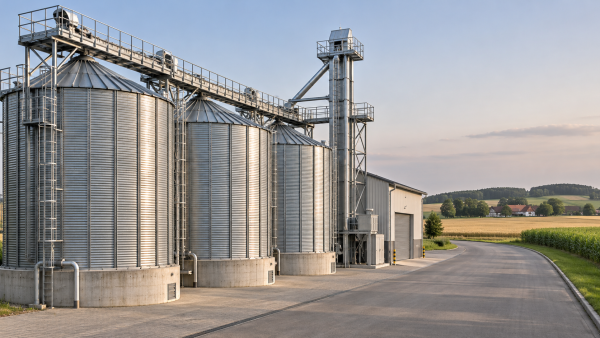
The right grain silo is the one that holds the crop when your site is busiest, protects its condition until dispatch, and fits the practical limits of the property. A low equipment price can quickly lose its appeal if the project also needs major groundworks, a new dryer, longer conveyors or expensive changes to vehicle access.
For buyers evaluating silo storage in Germany, the most useful starting point is a storage and handling plan: how much grain arrives, how long it stays, which batches must remain separate and how quickly it must move. Those answers determine the capacity, layout and services that suppliers need to price.
Size storage for the busiest point in the season
Annual grain volume is not the same as required storage capacity. A facility that handles a large volume over a year may need relatively modest capacity if grain leaves regularly. Conversely, a farm or merchant holding most of its intake for later sale needs space for the peak amount on site, including grain already in store when the next deliveries arrive.
Build the estimate around the period of greatest occupancy. Include expected incoming grain, existing stock, planned dispatches and any capacity reserved for operational flexibility. If intake can continue during poor drying or transport conditions, consider how much grain could accumulate before normal movement resumes.
Use saleable storage capacity, not just nominal silo volume, when comparing quotations. Grain occupies volume according to its bulk density, which varies by crop and condition. A silo quoted in tonnes for one grain may hold a different weight of another. Ask suppliers to state the crop and bulk-density assumptions behind their capacity figures, as well as any allowance for unusable space.
Capacity also has to match the way grain is marketed. One large silo may provide economical space for a single, uniform crop, but it can restrict access when different grades, varieties or customers require separation. Several smaller silos offer more segregation and dispatch options, although they introduce additional equipment, foundations and cleaning points. The better choice depends on whether that flexibility will actually be used.
Compare silo designs against the work they need to do
A silo’s purchase cost matters, but its geometry and discharge arrangement also shape labour, cleaning and future throughput. Compare complete operating arrangements rather than treating all storage bins as interchangeable.
Discharge deserves particular attention. A hopper can help grain flow toward an outlet, but flow still depends on the material and the outlet design. Flat-bottom systems may use powered equipment to move residual grain toward the discharge point. Ask how each proposed system handles the final portion of grain, how it is cleaned between batches and what access is required for maintenance.
Consider expansion at the same time as the initial purchase. A modular layout can be useful when future volumes are uncertain, provided the site has space and the first phase allows for later conveyors, foundations and vehicle routes. Buying a smaller first phase is less attractive if expansion would require dismantling equipment or relocating utilities.
Protect grain quality with a complete handling plan
A silo is only one part of a grain-quality system. The condition of grain at intake, the time it remains in storage and the ability to monitor it are just as important as the storage structure itself.
Aeration can help manage stored grain temperature and reduce conditions that encourage deterioration. Its usefulness depends on the grain’s condition, the airflow system, the surrounding air and how the system is operated. Aeration should not be treated as a substitute for a drying system when incoming grain needs significant moisture removal. If harvest deliveries can arrive wetter than the intended storage condition, establish where drying takes place and how wet grain will be handled while waiting.
Ask suppliers to explain how air will reach the stored grain, where fans and air outlets will sit, and how the proposed arrangement fits the crops and storage periods in the specification. Temperature monitoring can help operators identify developing problems, but readings are useful only when someone can interpret them and act. Access for sampling, inspection and maintenance belongs in the design discussion.
Gentle, dependable transfer also matters. Excessive handling can damage grain, generate fines and make cleaning harder. A high-capacity silo connected to a slow intake or discharge system can become a bottleneck; equally, a fast intake system offers limited value if drying or storage cannot keep pace. Compare the capacity of each stage under the same operating assumptions.
Assess the German site before fixing the layout
Site constraints can change both the preferred silo type and the total project cost. A supplier’s layout should show the complete movement of grain and vehicles, not just the footprint of the silo itself.
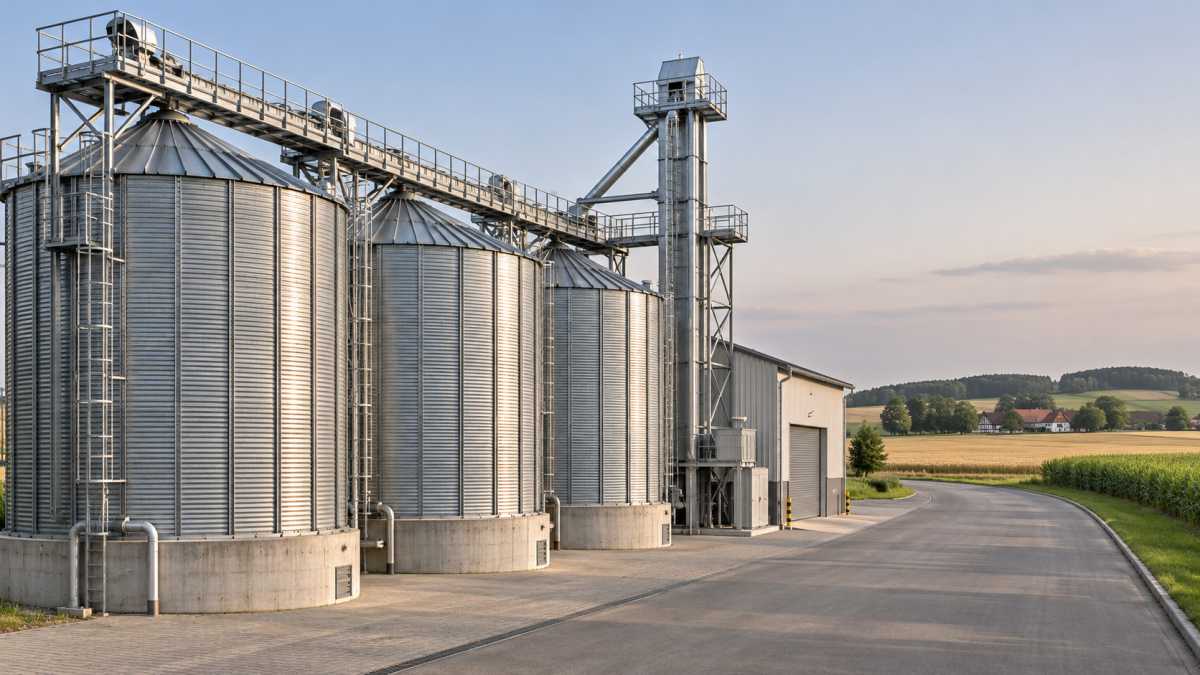
Start with ground conditions and foundations. A filled silo places substantial loads on the ground, and local conditions influence the foundation design. Drainage, existing underground services and the possibility of settlement all affect the civil works. The structure, foundation and ground assessment need to be coordinated rather than purchased as unrelated elements.
Then examine access. Delivery vehicles need room to enter, queue, unload, turn and leave without obstructing routine operations. Dispatch vehicles may need a different route or loading position. Check that intake pits, elevators and loading points can be reached safely in the conditions expected during harvest, including wet weather.
Height and clearance are equally important. A taller installation may reduce the ground area occupied by storage but can affect conveyor design, access equipment and the surrounding site. Allow space for roof access, inspection, maintenance, dust management and future replacement of equipment. Nearby buildings, boundaries, overhead lines and existing traffic routes can all constrain the design.
Electricity supply should be assessed against the combined needs of fans, conveyors, elevators, controls and any drying equipment. The relevant question is not merely whether power is available, but whether the supply and distribution arrangements can support the intended operation. A system that requires a substantial electrical upgrade may alter the comparison between otherwise similar quotations.
Understand the full cost of grain silo storage in Germany
A useful cost comparison separates the silo package from the work needed to make it operational. Equipment quotations may cover different scopes, so a lower headline figure does not necessarily represent a lower installed cost.
Ask each bidder to identify included work, exclusions and the interfaces where another contractor must take responsibility. For example, a quote may include a fan but exclude its electrical connection, or include a silo outlet but exclude the conveyor needed to reach the loading point. Those gaps should be priced before comparing bids.
Operating costs also depend on how the facility is used. A design that saves labour during frequent batch changes may justify a higher initial cost. For a silo filled once and emptied in a limited number of movements, that same feature may have less value. Compare options using the expected pattern of use, including realistic maintenance access and downtime.
Build safety and approval requirements into procurement
German projects may require building, operational or environmental assessments depending on the site and proposed installation. The responsible permitting authorities, project designers and relevant insurers should be involved while the layout is still flexible. Local planning constraints, fire protection, noise, dust and traffic can influence what is feasible and what documentation is needed.
Grain dust requires particular attention because combustible dust can create fire and explosion hazards under certain conditions. The design and operating arrangements should address dust control, ignition sources, equipment selection, cleaning and safe maintenance. The required protective measures depend on the installation and its risk assessment; they should be reflected in both the equipment specification and the site plan.
Confined-space risks are another procurement issue, not simply an operating procedure to address later. Grain can engulf a person, and moving equipment presents additional hazards. Prefer designs that reduce the need to enter a silo for routine work, and establish how isolation, access and rescue arrangements will be managed when entry cannot be avoided.
Give suppliers a specification they can price consistently
A comparable request for quotation gives suppliers the same operating assumptions and asks them to identify their proposed solution. Include the crops, required usable capacity, intended storage periods, segregation needs and expected intake and dispatch patterns. Describe existing equipment and utilities, the available site area, vehicle movements and any planned expansion.
Require each response to show a layout, equipment scope, capacity assumptions and the responsibilities for foundations, installation, electrical work and commissioning. Ask how the system will be cleaned and maintained, what operator training and documentation are included, and how spare parts and service support are arranged in Germany.
Before placing an order, compare the proposals against the busiest operating scenario as well as the normal one. The strongest choice is the system that can receive, condition, store and release the required grain within the site’s practical limits, with a clearly priced route from delivery of the equipment to reliable operation.
Related Intelligence
- Grain Silos & StorageChoosing Grain Silo Storage in Germany: Capacity, Costs and Site NeedsExplore silo storage Germany options and compare capacity, installed costs and site requirements to choose the right grain storage system.
- Grain Silos & StorageGrain Silo Comparison: Steel vs. Concrete for Long-Term StorageGrain silo comparison: Explore steel vs. concrete for long-term storage, from durability and moisture control to lifecycle costs and expansion.
- Grain Silos & StorageGrain Conveyor Compliance: OSHA Requirements for Grain Handling FacilitiesGrain conveyor compliance starts with safer operations. Explore OSHA requirements for guarding, lockout, dust control and maintenance in grain handling facilities.
The Morning Broadsheet
Daily chemical briefings, market shifts, and peer-reviewed summaries delivered to your terminal.