

The Authority in Global Agricultural Chemistry & Bio-Resources
Choosing a Grain Processing Machinery Manufacturer: Capacity and Service
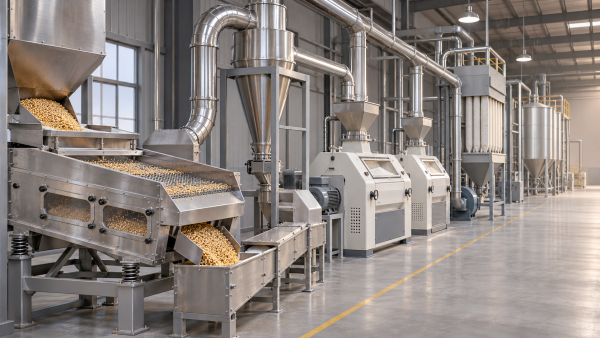
Choose a grain processing machinery manufacturer by testing two claims together: whether the proposed line can sustain the required output with your actual grain, and whether the supplier can support that line when it needs parts, adjustment or repair. A low equipment price is less attractive if the capacity assumes cleaner grain than your facility receives or if a failed component takes weeks to replace.
Consider a plant comparing bids for a cleaning and milling line. Each proposal may show the same nominal throughput, yet one rate could refer to incoming grain while another refers to finished product. Before comparing prices, establish a common operating basis, ask for evidence behind each capacity claim, and put service obligations into the purchase agreement.
Define capacity in terms the contract can measure
Start with the output the facility must deliver, not the largest number in a brochure. Specify the grain or grains to be processed, the desired finished products, required quality, operating hours and expected variation in incoming material. Distinguish between peak hourly throughput and a rate that must be sustained over a shift or other agreed period.
Give bidders the same information wherever possible. A useful request for quotation should identify:
- Feed material: grain type and variety, moisture range, foreign material, broken kernels and known seasonal variation.
- Product requirements: target particle size or grade, allowable impurities, yield expectations and any limits on grain damage.
- Operating pattern: planned hours, changeovers, cleaning intervals and whether the line must handle several products.
- Site constraints: available space, utilities, existing equipment interfaces, environmental conditions and access for maintenance.
Ask each supplier to state capacity at the same measurement point: for example, tonnes of raw grain entering the line per hour or tonnes of acceptable finished product leaving it per hour. Those are not interchangeable figures. Cleaning losses, separation, moisture changes and product specifications can all affect the relationship between input and saleable output.
A line can also contain a bottleneck even when every machine has a plausible individual rating. Compare the capacity of receiving, conveying, cleaning, conditioning, processing, separation and packing equipment under the proposed configuration. Ask the manufacturer to identify the limiting stage and explain what happens when incoming grain is wetter or contains more foreign material than the design basis.
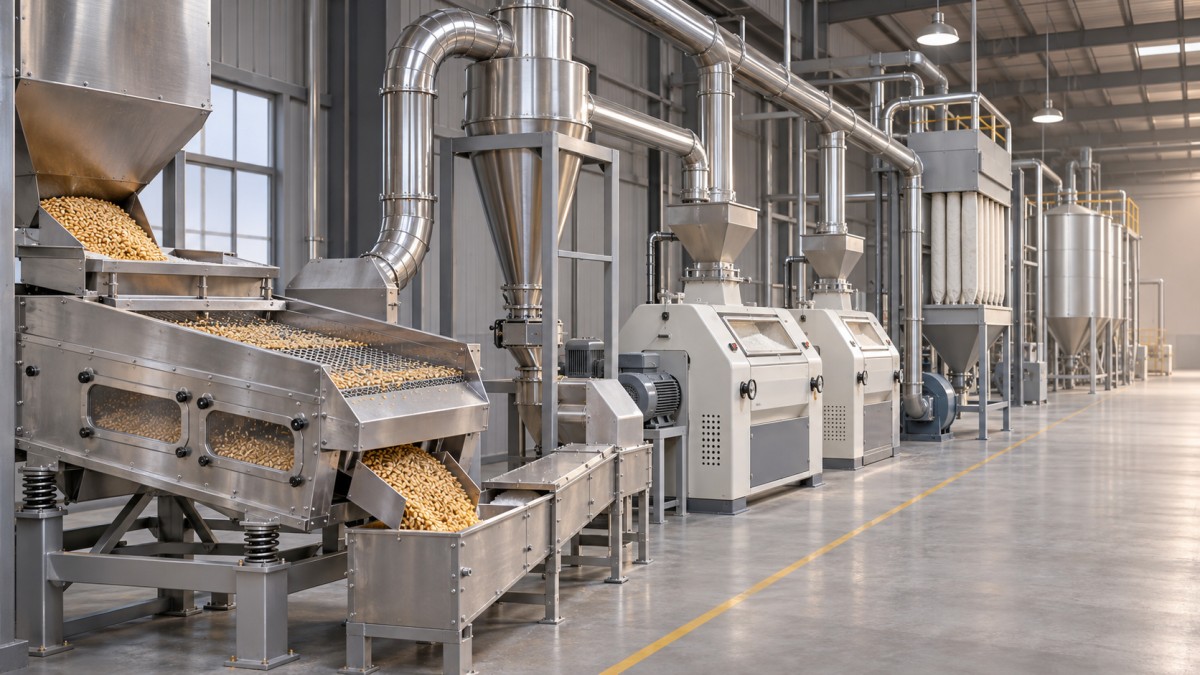
Ask for evidence behind the rated throughput
A manufacturer’s capacity statement is most useful when its conditions are visible. Request the grain characteristics, machine settings, product specification and operating period behind any quoted rate. A short demonstration at a favorable setting may establish that a machine can reach a rate, but it does not by itself establish sustained production or acceptable product quality.
Where a trial is practical, agree in advance on the sample, method and measurements. Representative grain matters more than an exceptionally clean sample. Define who supplies and prepares it, how the material is fed, when the line is considered stable, how output and losses are measured, and whether moisture or impurities differ from the agreed specification. Record both throughput and quality; a higher feed rate is not useful if it produces an unacceptable finished product.
For a complete line, ask whether the proposed rate includes expected interruptions such as screen changes, bin transfers or routine cleaning. Suppliers may reasonably exclude some activities from a machine rating, but procurement needs those exclusions to estimate usable production time. When a physical trial is not feasible, request the engineering basis and comparable operating conditions used to size the equipment, then record unresolved assumptions as purchasing risks rather than treating them as verified performance.
Capacity margin is not a substitute for a design basis
Extra capacity can accommodate feed variation or planned growth, but oversizing every component increases capital cost and may create operating inefficiencies. Ask the supplier which stages need margin and why. A line designed for a future expansion should also identify which conveyors, controls, dust collection components and utilities would need to change when throughput increases.
Check the minimum practical operating rate as well as the maximum. A plant running several grain types or smaller batches may need stable separation and consistent product quality below the headline capacity. Request settings or configuration changes required when switching products, along with expected changeover activities and any parts that must be replaced.
Compare service as a deliverable, not a promise
“Technical support available” leaves too much open when production stops. Ask each bidder to describe how support is requested, who receives the call, which languages and hours are covered, and when a qualified technician can respond. Separate remote acknowledgement from diagnosis, dispatch and arrival: they are different service events and may have different conditions.
For on-site work, clarify travel arrangements, customer responsibilities and charges. A nearby representative may be helpful, but confirm whether that representative can diagnose controls, perform mechanical repairs and obtain parts, or must refer every issue to another location. For remote assistance, check what connectivity is required, who authorizes access and how support proceeds if the connection is unavailable.
Service capability should match the equipment in the offer. A supplier with strong mechanical support may still rely on a separate controls integrator. Establish who coordinates troubleshooting across drives, sensors, software and third-party machines so that a fault at an interface does not become a dispute between vendors.
Spare parts and wear components
Request a parts list divided into routine wear items, recommended commissioning spares and components whose failure could stop the line. Depending on the equipment, relevant items may include screens, belts, bearings, rollers, seals, sensors and drive components. Ask for part numbers, quantities, current quotation validity and stated availability, including whether parts are stocked locally or sourced elsewhere.
Do not assume that a standard-looking component is interchangeable. Confirm approved specifications and any restrictions on alternatives. For custom-fabricated parts, ask about drawings, lead times and the process for ordering replacements if the original contact is unavailable. The initial purchase should include a reasoned spare-parts package, not necessarily every item on the supplier’s list: weigh the consequence of failure against shelf life, storage conditions and replenishment time.
Put competing offers on the same cost basis
The purchase price is only one part of the decision. Build a comparison that separates equipment cost from expenses that may sit outside the quoted package. Ask suppliers to mark every item as included, excluded or subject to an allowance. In particular, inspect the boundaries between the machinery and the rest of the facility.
Use the same planning period and production assumptions for every bid. Where energy use, wear life or repair frequency is uncertain, keep those items as ranges or clearly labeled assumptions rather than presenting them as guaranteed savings. A cheaper line may still be the right choice, but the comparison should show whether its lower price depends on exclusions, a different capacity definition or a narrower service scope.
Set acceptance terms before issuing the order
Performance criteria are easier to negotiate before equipment is built and delivered. The contract should connect the agreed feed conditions to measurable results: throughput at a defined point, finished-product specification, sampling method and the duration of the acceptance run. It should also state which utilities, operators and input materials the buyer must provide.
Agree on a process for deviations. If the feed material falls outside the specified range, decide how the test will be adjusted or repeated. If performance falls short under agreed conditions, define the supplier’s opportunity and responsibility to correct the issue, the retest procedure and any contractual remedies. Payment milestones can be linked to defined events, but their wording should reflect the commercial and legal requirements of the purchase.
Factory testing and site acceptance serve different purposes. A factory test may reveal assembly or controls problems before shipment; site testing checks the installed line with actual interfaces and utilities. Neither should be assumed to replace the other. Clarify which test each bidder includes and which functions can realistically be demonstrated before installation.
Check the handover your team will actually receive
A functioning machine is not a complete handover if operators cannot adjust it or maintenance staff cannot identify a failed part. Request operating and maintenance manuals, equipment drawings, electrical documentation, parts identification and recommended service intervals in an agreed language and format. Establish whether control backups, software access and updates are included, and what restrictions apply to troubleshooting or replacement of electronic components.
Training should cover normal start-up and shutdown, safe isolation, product changeovers, adjustment limits, routine inspection and common fault indications. Specify who will be trained, whether training occurs before or during commissioning, and whether a return session is available after the team has operated the line. Confirm that documentation corresponds to the delivered configuration rather than only a generic machine family.
Before selecting a supplier, resolve the remaining exceptions in writing. A credible offer should make clear what capacity is being sold, under which grain conditions, who supports the equipment and what happens if the installed line does not meet the agreed test. Those details make a price comparison usable long after the quotation has been approved.
Related Intelligence
- Milling MachineryChoosing a Grain Processing Machinery Manufacturer: Capacity and ServiceChoose a grain processing machinery manufacturer with confidence. Compare capacity, service, spare parts and acceptance terms before you buy.
- Milling MachineryWhat Makes a Grain Processing Facility FDA-Ready?Discover what makes a grain processing facility FDA ready, from hazard controls to traceability. Explore practical steps to close safety gaps and strengthen inspection readiness.
- Milling MachineryWhen does a bran finisher improve flour recovery in wheat milling?Discover when a bran finisher boosts saleable flour recovery in wheat milling. Learn how to assess bran, optimize settings, and validate gains without compromising flour quality.
The Morning Broadsheet
Daily chemical briefings, market shifts, and peer-reviewed summaries delivered to your terminal.